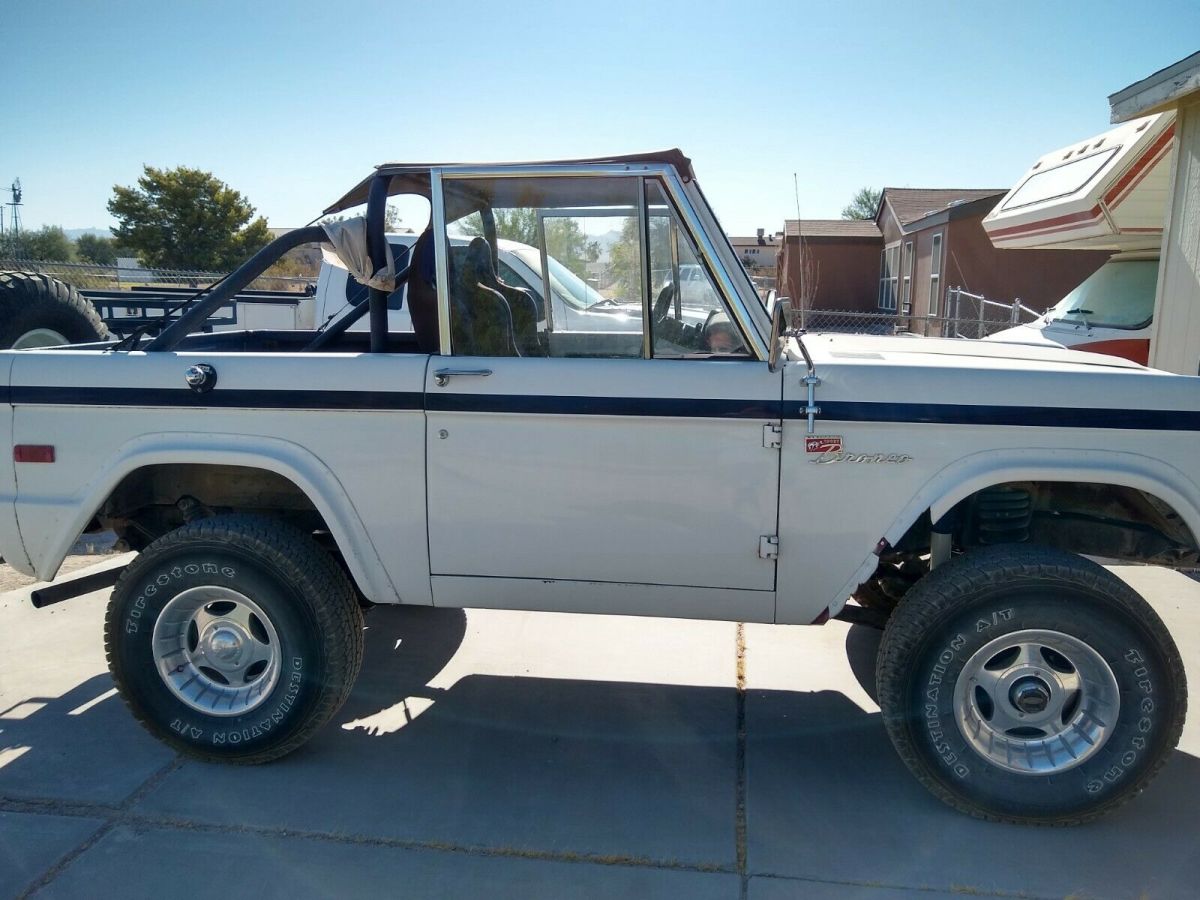
The 1970 early Bronco represents a pivotal model year for Ford’s first-generation utility vehicle, marking a transition from a purely agricultural and utilitarian workhorse into a more refined, styled recreational vehicle. Sourced from the golden era of the classic 1966–1977 Ford Bronco generation, the 1970 model year introduced distinct cosmetic updates, improved safety equipment, and powertrain refinements that make highly sought-after specimens among vintage truck collectors and restorers in 2026.
Understanding the 1970 early Bronco requires examining its factory specifications, body styles, mechanical underpinnings, and the evolving collector landscape surrounding these iconic four-wheel-drive vehicles.
Evolution of the First-Generation Bronco
Ford introduced the Bronco in August 1965 for the 1966 model year, specifically engineered to compete against the Jeep CJ-5 and the International Scout. Conceived by engineer Paul G. Axelrad and styled under the direction of Eugene Bordinat, the early Bronco utilized a unique, dedicated frame rather than a modified passenger car chassis.
By 1970, the Bronco had graduated from its initial bare-bones configuration. While it retained its trademark boxy silhouette, short wheelbase, and cut-out rear wheel arches, Ford began incorporating comfort features and visual styling cues that catered to a growing demographic of off-road enthusiasts and lifestyle drivers. The 1970 model year stood right in the middle of the first-generation run, benefiting from early engineering improvements while avoiding the heavier emissions equipment that choked later 1974–1977 models.
Body Styles and Trim Configurations
The 1970 Ford Bronco was offered in three distinct body styles, each catering to different consumer needs:
- Roadster (U13): The doorless, roofless configuration featuring plastic insert doors and a fold-down windshield. By 1970, demand for the Roadster had plummeted drastically, making factory-original 1970 Roadsters exceedingly rare today.
- Half-Cab / Sports Utility (U14): A pickup truck configuration featuring a fixed steel cab enclosure behind the front bucket seats and a short pickup bed in the rear.
- Wagon (U15): The most popular body style by 1970, featuring a full-length steel hardtop, side windows, and seating for up to five passengers across front bucket seats (or an optional bench) and a rear bench seat.
Exterior Styling and Trim Updates
For the 1970 model year, subtle visual changes separated the Bronco from its 1966–1969 predecessors. Side marker reflectors were integrated into the front and rear fenders to comply with evolving federal safety regulations. The front grille, stamped from aluminum, retained its straightforward rectangular mesh pattern, while bright metal trim packages (such as the Sport package) added chrome drip rails, wheel-lip moldings, and upgraded interior appointments.
Mechanical Specifications and Powertrains
Underneath the steel hood, the 1970 early Bronco offered robust mechanical systems designed for durability and off-road capability.
Engines
The base engine for the 1970 model year remained Ford’s reliable 170 cubic-inch (2.8 L) "Thriftpower" inline-six, producing approximately 105 horsepower. However, the vast majority of buyers opted for the optional small-block V8 engine.
- 302 cubic-inch (4.9 L) Windsor V8: Introduced to the Bronco lineup in 1969, the 302 V8 became a dominant choice by 1970. Equipped with a Ford two-barrel carburetor, it produced a factory-rated 205 horsepower and 300 lb-ft of torque. This engine provided the low-end grunt necessary for navigating deep mud, sand, and steep inclines.
Transmission and Transfer Case
Power routed through a heavy-duty three-column manual transmission (colloquially known as the "three-on-the-tree") as standard equipment. A floor-shifted three-speed manual or a three-speed C4 automatic transmission were available as options, with the automatic gaining significant popularity among urban buyers and trail drivers alike.
The drivetrain utilized a Dana 20 transfer case paired with a part-time four-wheel-drive system. Front axles were Dana 30 units (with Dana 44 heavy-duty front axles phasing in late in the model year or standard on specific heavy-duty packages), while the rear featured a Ford 9-inch axle with robust gear ratios, frequently optioned with Trac-Lok limited-slip differentials.
| Component | Base Specification | Optional Upgrades |
|---|---|---|
| Engine | 170 CID Inline-6 (105 hp) | 302 CID Windsor V8 (205 hp) |
| Transmission | 3-speed manual (Column shift) | 3-speed manual (Floor shift), 3-speed C4 automatic |
| Transfer Case | Dana 20 (Part-time 4WD) | N/A |
| Front Axle | Dana 30 | Dana 44 |
| Rear Axle | Ford 9-inch (Open differential) | Ford 9-inch with Trac-Lok Limited-Slip |
| Brakes | 11-inch drum brakes (Non-power) | Front power disc brakes (aftermarket/dealer conversions) |
Suspension and Handling Characteristics
The early Bronco’s suspension setup was revolutionary for its time, utilizing coil springs in the front combined with radius arms and a track bar. This radius-arm front suspension provided superior articulation over obstacles compared to the rigid leaf-spring setups found on competing vehicles.
The rear suspension relied on traditional semi-elliptic leaf springs. While effective for load-bearing and towing, the rear end tended to ride stiffly when unladen. Steering was handled by a non-power-assisted Ross cam-and-lever steering box, which required considerable effort at low speeds, particularly when paired with wide aftermarket tires. Power steering became an increasingly common dealer-installed or factory-ordered luxury by 1970, drastically improving drivability.
Interior Features and Ergonomics
The interior of a 1970 Bronco was strictly utilitarian. Painted sheet metal dominated the dashboard and door panels, with minimal sound deadening or carpeting.
- Seating: Vinyl bucket seats were standard up front, with an optional rubber floor mat replacing traditional carpeting. A rear bench seat was standard on Wagon models.
- Instrumentation: A single, central round instrument cluster housed the speedometer, flanked by gauges for fuel level, water temperature, oil pressure, and alternator output.
- Climate Control: A basic heater and defroster unit was standard; factory air conditioning was not offered on early Broncos until later in the production run, making aftermarket vintage-style AC units popular upgrades for modern restorations.
Common Mechanical Issues and Restoration Considerations
Restoring or maintaining a 1970 early Bronco requires attention to specific areas prone to wear and environmental damage over decades of service:
- Rust Susceptibility: Like most vehicles of this era, early Broncos were constructed with untreated sheet metal prone to moisture retention. Critical rust areas include the rocker panels, rear wheel arches, floorboards, inner and outer fender wells, and the door posts. Inspecting these structural points is vital before purchasing a project vehicle.
- Steering Play: The original steering linkages and cam-and-lever steering boxes develop excessive play over time. Many owners convert to modern power steering setups, such as Borgeson or modern integral power steering boxes, to improve highway tracking.
- Electrical Systems: The factory electrical system utilized glass-tube fuses and an external voltage regulator. Upgrading to a modern blade-type fuse panel and a higher-output alternator prevents common electrical failures.
Collecting and Valuing 1970 Early Broncos
The market for first-generation Ford Broncos has evolved significantly. Once treated merely as affordable farm trucks or hunting vehicles, early Broncos have transformed into blue-chip collector items.
Prices vary drastically based on condition, originality, and configuration:
- Project Vehicles: Non-running trucks with significant rust require extensive metalwork and mechanical overhauls, typically commanding entry-level collector prices.
- Restored Drivers: Vehicles featuring clean, rust-free bodies, upgraded power steering, disc brakes, and a healthy 302 V8 engine represent the core of the hobby.
- Concours Restorations / Restomods: Professionally restored stock examples or high-end "restomods" (incorporating modern Coyote V8 engines, updated chassis, and luxury interiors) routinely command substantial investments at major collector car auctions.
Frequently Asked Questions
What engines were available in the 1970 Ford Bronco?
Ford offered two primary engines in 1970: the standard 170 cubic-inch inline-six and the optional 302 cubic-inch Windsor V8. The V8 is significantly more desirable today due to its power output and compatibility with modern performance upgrades.
Did the 1970 Bronco have front disc brakes?
No. Factory 1970 Broncos came equipped with four-wheel drum brakes. Because drum brakes require heavy pedal effort and are prone to fade, many owners install aftermarket front disc brake conversion kits for safety and improved stopping power.
How can I identify a genuine 1970 Bronco from other model years?
You can verify the model year and original configuration by inspecting the safety certification label on the driver's kick panel, checking the VIN stamped on the frame, and examining specific exterior trim details like the federally mandated side marker reflectors introduced for the 1970 model year.
Is the 1970 Bronco hard to drive on modern highways?
Stock early Broncos feature short wheelbases (92 inches), stiff leaf-spring rear suspensions, and manual steering, making them feel nimble off-road but somewhat "wandering" at modern highway speeds. Modern upgrades like power steering, radial tires, and corrected suspension caster angles greatly improve highway cruising comfort.
Are replacement sheet metal panels available for restoration?
Yes. A robust aftermarket supply chain produces nearly every exterior and interior sheet metal replacement part for 1966–1977 Broncos, including full floor pans, rocker panels, quarter panels, and door skins, making full restorations viable.
Next Actions for Enthusiasts and Buyers
For prospective buyers or restorers targeting a 1970 early Bronco, the most critical first step is conducting a thorough physical inspection of the frame and body structure for rust. Prioritize vehicles with solid metal foundations over those with fresh cosmetic paint hiding structural corrosion. Securing a Marti Report using the vehicle's VIN can also provide definitive verification of original factory options, paint codes, and production statistics.