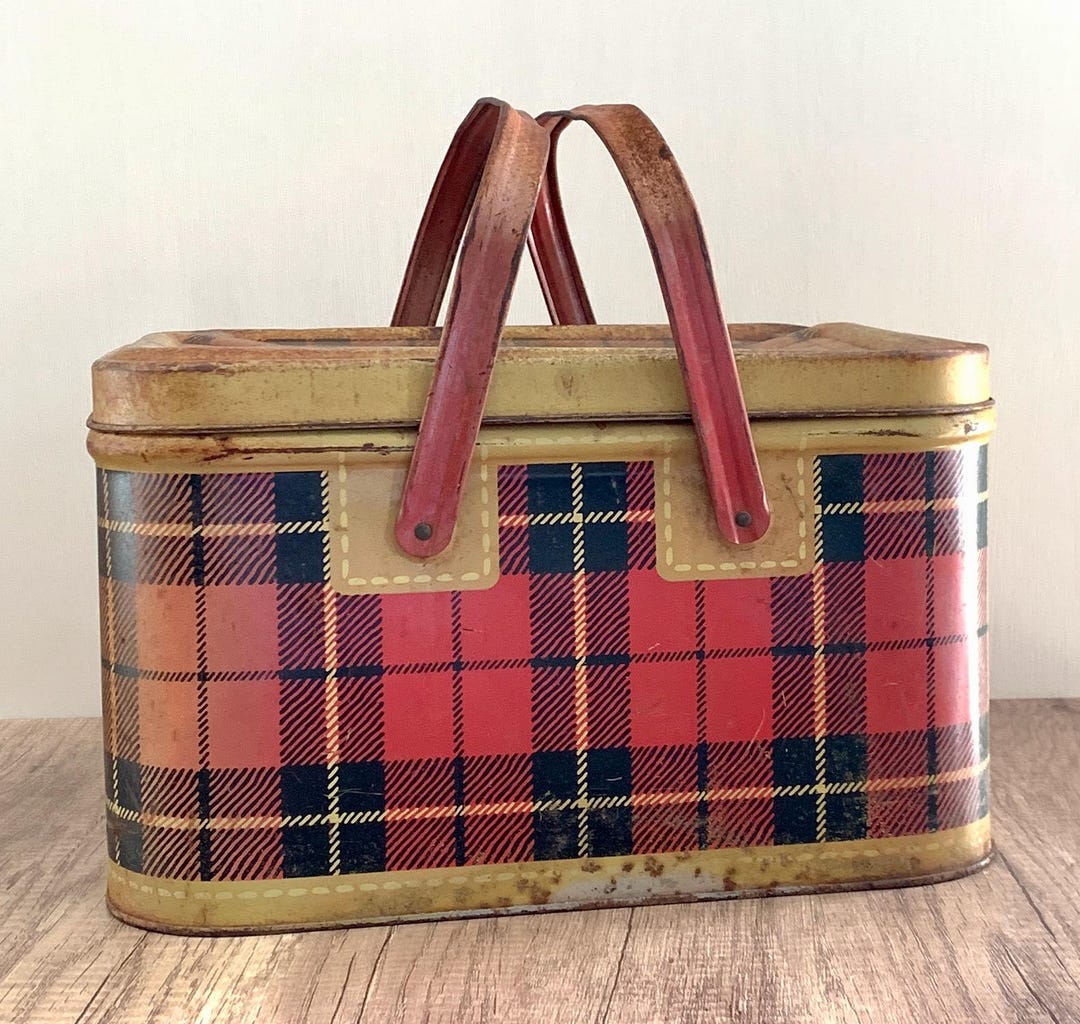
A 1950s picnic basket is a mid-century outdoor dining kit characterized by sturdy woven wood, tin, or vinyl-lined construction, often featuring fitted tinware, Bakelite handles, and bright retro patterns. Popularized by brands like RedMon and Burlington, these baskets embody post-war suburban leisure and remain highly sought after by collectors today.
The Post-War Outdoor Leisure Boom
The 1950s marked a pivotal shift in American and Western European social life. Following the end of World War II, economic growth, increased automobile ownership, and the development of the Interstate Highway System in the United States transformed weekend recreation. Family road trips, visits to state parks, and afternoon gatherings in suburban backyards became central cultural activities.
The picnic basket evolved during this era from a simple, utility-driven storage box into an essential consumer symbol of suburban domesticity and leisure. Families sought durable, portable equipment that could hold complete meal setups, from thermoses of coffee to chilled sandwiches and fresh fruit. Manufacturers responded by mass-producing specialized picnic hampers designed to fit neatly into the trunk of a family sedan.
Beyond practical transport, these baskets reflected mid-century aesthetic sensibilities. Design trends shifted away from the heavy, dark wicker hampers of the Victorian and Edwardian eras toward lighter woods, vibrant vinyl accents, and eye-catching graphic prints. Historical photo collections at the Library of Congress document how outdoor dining became an integral aspect of post-war suburban community life and family recreation.
Distinctive Design Features and Key Materials
A 1950s picnic basket is instantly recognizable due to the specific combination of natural materials and newly commercialized synthetic polymers characteristic of post-war manufacturing.
1950s Picnic Basket Anatomy
- Exterior Structure
- Woven Ash / Oak Wood Splint
- Lithographed Sheet Metal (Skotch Kooler style)
- Vinyl-Laminated Fiberboard (Hawkeye style)
- Hardware & Fasteners
- Steel Wire Swivel Handles
- Brass-Plated Turn-Latches & Piano Hinges
- Bakelite / Molded Plastic Handles
- Interior Outfitting
- Oilcloth or Vinyl Lining (Plaid / Geometric)
- Elastic Fabric Straps for Utensils
- Fitted Compartments for Flasks & Enamelware
Exterior Shell Construction
- Woven Wood Splints: The majority of classic 1950s picnic baskets were constructed from woven ash, oak, or maple wood splints. Machine-sliced wood ribbons were woven over sturdy wooden frames, providing a lightweight yet structural shell that permitted airflow while protecting fragile contents.
- Lithographed Tin and Metal: Metal coolers and picnic hampers gained immense popularity in the mid-1950s. Cold-rolled sheet metal was printed with vibrant plaid, tartan, or atomic patterns using industrial offset lithography before being stamped into shape.
- Vinyl-Laminated Fiberboard: Higher-end models featured pressboard or heavy fiberboard wrapped in washable, weather-resistant vinyl. These designs often imitated leather grain or basketweave textures while providing superior moisture resistance.
Interior Fabrics and Linings
Interiors were lined with wipeable materials designed to handle spills and food contact. Brightly colored vinyl sheeting, oilcloth, and rubberized fabrics were standard. Popular interior motifs included:
- Red, green, and yellow tartan plaids
- Checkerboard grid patterns
- Gingham prints
- Atomic age abstract geometric graphics
Hardware and Accessories
Mid-century manufacturing introduced precise stamping for steel hinges, latches, and handle mounts. Handles were typically made from drop-forged wire wrapped in plastic, solid carved wood, or molded Bakelite. Baskets designed as complete "fitted kits" featured internal elastic bands or metal clips attached to the inner lid, securing molded plastic plates, tin cups, aluminum vacuum flasks, and stainless steel utensils.
Major 1950s Picnic Basket Manufacturers
Several prominent manufacturers dominated the mid-century market, each bringing unique construction styles and branding to their product lines.
| Manufacturer | Key Style / Line | Notable Features |
|---|---|---|
| Burlington Basket Company | Hawkeye Picnic Baskets | Woven wood, vinyl tops, fitted |
| W.C. Redmon Company | RedMon Wood Splint Basket | Stained ash wood, drop handles |
| Hamilton Metal Products Co. | Skotch Kooler / Skotch Grill | Tartan lithographed metal |
| Brexton | Fitted English Picnic Hampers | Leatherette exterior, enamelware |
Burlington Basket Company (Hawkeye)
Based in Burlington, Iowa, the Burlington Basket Company was one of the largest manufacturers of woven basketry in the United States. Their flagship line, marketed under the brand name Hawkeye, dominated the 1950s market. Hawkeye baskets typically featured tight wood-splint weaves, folding dual handles, and optional padded vinyl lids that served double duty as seat cushions during outdoor meals.
W.C. Redmon Company
Operating out of Peru, Indiana, the W.C. Redmon Company produced durable, affordable wood-splint picnic hampers. Redmon baskets are distinguished by their rich, honey-toned wood stains, dark green or red accent striping, and sturdy wire bail handles. Many Redmon models included hinged wooden lids held in place by fabric straps or interior chain stops.
Hamilton Metal Products Company (Skotch Kooler)
While technically categorized as insulated picnic coolers, the Skotch Kooler line designed by Petra Cabot for Hamilton Metal Products in the early 1950s redefined outdoor food transport. Made of lithographed steel with a distinctive red and yellow plaid pattern, fiber insulation, and a leatherette handle, the Skotch Kooler became an immediate icon of mid-century American design. Exhibited in modern design archives such as the Smithsonian Institution, Petra Cabot's work bridged the gap between functional housewares and high mid-century graphic design.
Brexton (United Kingdom)
For British and European consumers, Brexton was the premiere maker of luxury fitted picnic baskets in the 1950s. Brexton hampers featured hardshell exterior cases lined with synthetic leatherette, filled with custom-molded ceramic or melamine tea sets, stainless steel cutlery, glass condiment jars, and tartan-wrapped vacuum flasks.
Comprehensive Comparison of 1950s Picnic Basket Types
Understanding the structural differences between 1950s basket styles helps collectors and vintage enthusiasts evaluate authenticity, utility, and market value.
| Style / Type | Primary Materials | Included Accessories | Key Strengths | Common Weaknesses | Estimated Vintage Value |
|---|---|---|---|---|---|
| Traditional Wood Splint | Woven ash or oak wood, metal hinges | None or simple plastic insert | Lightweight, excellent ventilation, timeless aesthetic | Wood splints can splinter or crack if dried out | $35 – $80 |
| Fitted Hawkeye Vinyl-Top | Woven wood body, vinyl lid, metal latches | Plastic plates, cups, cutlery strapped to lid | Padded seat top, wipeable lid, secured tableware | Vinyl lid prone to cracking, missing accessories | $60 – $150 |
| Lithographed Tin / Metal | Sheet steel, foam or fiberglass insulation | Removable tray or insulated beverage crock | Excellent durability, iconic mid-century graphics | Prone to exterior rust, denting, and scratched paint | $50 – $175 |
| Imported Hardshell Fitted Hamper | Leatherette-wrapped wood box, chrome latches | Full melamine/ceramic place settings, flasks | Complete dining kit, highly structured protection | Heavy, fragile ceramic components, vulnerable leatherette | $100 – $300+ |
How to Identify and Date an Authentic 1950s Picnic Basket
Determining whether a picnic basket was manufactured during the 1950s—rather than the late 1930s or early 1970s—requires examining material details, hardware type, labels, and manufacturing techniques.
Authentication Checklist
- Hardware Inspection
- Check for flathead or early Phillips screws
- Look for stamped steel turn-latches (brass-plated)
- Confirm presence of wire bail handles with Bakelite grips
- Label Verification
- Check interior underside of lid for paper/foil tags
- Inspect for stamped ink maker marks (e.g., "Hawkeye - Burlington, IA")
- Material & Color Indicators
- Verify presence of 1950s color palettes (forest green, mint, yellow, cherry red)
- Examine fabric/vinyl lining for authentic mid-century plaid or atomic prints
Hardware and Fasteners
- Screws and Rivets: Baskets built in the 1950s primarily used nickel- or brass-plated steel rivets and flathead or early Phillips-head machine screws. Avoid items assembled with modern plastic rivets or hot-melt adhesives.
- Latches: Look for spring-loaded wire clasps or simple turn-style brass latches. Slide latches or modern magnetic closures indicate later production runs (1970s or later).
- Handles: 1950s handles were typically made from drop-forged steel wire encased in hard plastic tubes, carved wood blocks, or molded Bakelite.
Markings and Manufacturer Stamps
- Burlington Hawkeye: Check the underside of the wood lid for a red-and-gold foil decal reading "Hawkeye Basket - Burlington, Iowa" or an ink stamp directly on the wood splint.
- RedMon: RedMon baskets often carried a small rectangular paper tag glued inside the basket or a burn-stamp on the bottom panel.
- Skotch Kooler: Look for Petra Cabot's trademark signature lithographed near the bottom rim of the metal body.
Color Palettes and Patterns
1950s baskets feature color palettes distinct from other decades:
- 1950s: Deep forest green, butter yellow, cherry red, mint green, dark red/green plaid, and atomic geometric motifs.
- 1970s comparison: Earth tones dominated the 1970s (avocado green, harvest gold, burnt orange, brown floral prints).
Preservation, Cleaning, and Restoration Guide
Preserving an original 1950s picnic basket requires balancing gentle cleaning methods with structural conservation to avoid damaging aged wood, metal, or vinyl.
Cleaning & Restoration Workflow
- Step 1: Debris Removal
- Vacuum interior with soft brush attachment to remove dry dust
- Step 2: Shell Cleaning
- Woven Wood: Wipe with damp cloth dipped in diluted mild dish soap
- Metal Shells: Clean with non-abrasive auto wax or mild soap water
- Vinyl Linings: Wipe down with warm water and isopropyl alcohol mix
- Step 3: Wood Conditioning
- Apply light coat of food-grade mineral oil or boiled linseed oil
- Step 4: Rust Treatment & Hardware Care
- Polish brass/steel hardware with fine steel wool (0000 grade) and machine oil
Cleaning Woven Wood Splints
- Dry Vacuuming: Use a soft brush attachment on a vacuum cleaner to remove loose dirt and dust from between the woven splints.
- Damp Cleaning: Mix a few drops of mild dish soap into warm water. Dip a microfiber cloth into the solution, wring it out until barely damp, and gently wipe down the splints. Do not submerge woven wood baskets in water, as wood fibers will swell, warp, and weaken.
- Conditioning: Dry wood splints become brittle over time. Apply a light coat of food-grade mineral oil or boiled linseed oil with a soft brush to restore flexibility and depth of color. Allow 48 hours in a well-ventilated area for the oil to dry completely.
Restoring Lithographed Metal and Coolers
- Surface Cleaning: Wash lithographed metal surfaces with warm water and mild detergent using a soft sponge. Never use abrasive scouring pads, which will scratch the original printed artwork.
- Addressing Rust: If fine rust spots appear along seams or handles, gently rub the area using 0000 ultra-fine steel wool dipped in light machine oil (such as 3-In-One oil).
- Protecting Paint: Apply a thin coat of non-abrasive automotive paste wax over lithographed metal surfaces to seal the finish and prevent future oxidation.
Eliminating Musty Odors
Decades of storage in attics, basements, or garages often leave vintage baskets with musty smells.
- Sunlight Aeration: Place the open basket outdoors in direct sunlight for 4 to 6 hours on a dry, low-humidity day. UV rays naturally kill mildew spores.
- Odor Absorbents: Place a bowl of dry baking soda or activated charcoal briquettes inside the closed basket for 48 to 72 hours.
- Avoid Perfumed Sprays: Do not spray chemical air fresheners directly onto vintage wood or fabric linings; these can leave permanent oil stains or degrade vintage synthetic coatings.
Collector's Value and Purchasing Considerations
When evaluating a 1950s picnic basket for purchase or appraisal, several factors determine market value and collectibility.
Value Determinants
- Completeness of Accessories (Adds up to 60% of total value)
- Original Thermos flasks with intact caps
- Matching plastic or enamel place settings
- Period-correct cutlery and condiment containers
- Structural Integrity
- Unbroken wood splints
- Functional latches and un-rusted hinges
- Intact vinyl linings without tears
- Maker & Design Rarity
- Iconic designers (e.g., Petra Cabot for Skotch)
- Rare colorways or mint-condition foil brand labels
Accessory Completeness
Fitted baskets command significantly higher prices when all original accessories remain intact. A missing thermos, broken plastic cup, or absent salt shaker can reduce a fitted basket's market value by 30% to 50%. Ensure original vacuum bottles do not have broken interior glass liners, as replacing period-accurate thermoses can be difficult.
Condition Assessment
- Grade A (Mint/Near Mint): No broken wood splints, vivid paint/lithography without rust, intact original interior lining, complete accessory set with working latches.
- Grade B (Very Good): Minor surface scuffs, light tarnishing on metal hardware, complete or nearly complete accessories, strong structural frame.
- Grade C (Fair/Restorable): Minor cracking in wood splints, light rust along seams, missing accessories, noticeable staining on interior vinyl.
Frequently Asked Questions
How can you distinguish a 1950s picnic basket from a 1970s model?
A 1950s picnic basket typically features primary colors, dark forest greens, pastel tones, and red/green tartan plaids, paired with brass turn-latches and Bakelite or metal wire handles. In contrast, 1970s baskets predominantly feature earth tones (burnt orange, harvest gold, avocado green), plastic hinges, heavy vinyl weave, or dark brown stains.
Are 1950s picnic baskets safe to use for direct food contact today?
It is recommended to pack food in modern, sealed containers before placing it inside a vintage 1950s basket. Original plastic plates, cups, and vinyl linings may contain degraded polymers or chemical additives not compliant with modern food-safety standards. Using food-safe barriers preserves both your health and the basket's original interior fabric.
What is the most valuable type of vintage 1950s picnic basket?
Complete, mint-condition English fitted hampers (such as those by Brexton) and pristine Petra Cabot Skotch Kooler sets tend to command the highest market prices, often reaching $200 to $350. Collector demand is highest for items that retain all original accessories, including intact vacuum flasks and undamaged porcelain or enamel plates.
How do you remove musty odors from a vintage woven picnic basket?
Remove musty smells by airing out the basket in dry, direct sunlight for several hours. Placing an open container of baking soda or activated charcoal inside the closed basket for two to three days will absorb trapped odors without damaging delicate wood splints or fabric linings.
Did 1950s picnic baskets feature built-in refrigeration?
Most 1950s picnic baskets did not feature active refrigeration. They relied instead on insulation materials like fiberglass, cork, or felt sandwiched between metal or vinyl walls, paired with separate ice tins or vacuum flasks to keep food and beverages cold.
Practical Recommendations for Collectors and Decorators
Whether sourcing a 1950s picnic basket as a functional recreation accessory, a display piece for a mid-century home interior, or an investment item, follow these practical guidance steps:
- Inspect Frame Joints First: When buying in person, check the bottom four corners and lid hinges. Wood splints usually split at structural stress points first. Repairing split wood splints requires specialized basketry weaving and original materials.
- Verify Thermos Integrity: If purchasing a fitted kit, unscrew the vacuum bottle top and shine a flashlight inside. If the silvered inner glass container is cracked or shattered, the thermos cannot hold cold or hot liquids safely.
- Store in Climate-Controlled Spaces: Avoid storing vintage wood or vinyl baskets in unconditioned attics or humid basements. High humidity encourages mold growth on original oilcloth, while extreme heat dries out wood splints, causing them to crack under stress.
- Use Modern Protective Liners: If using the basket for actual outdoor picnics, line the interior base with a modern removable towel or silicone mat to catch accidental grease or liquid leaks.