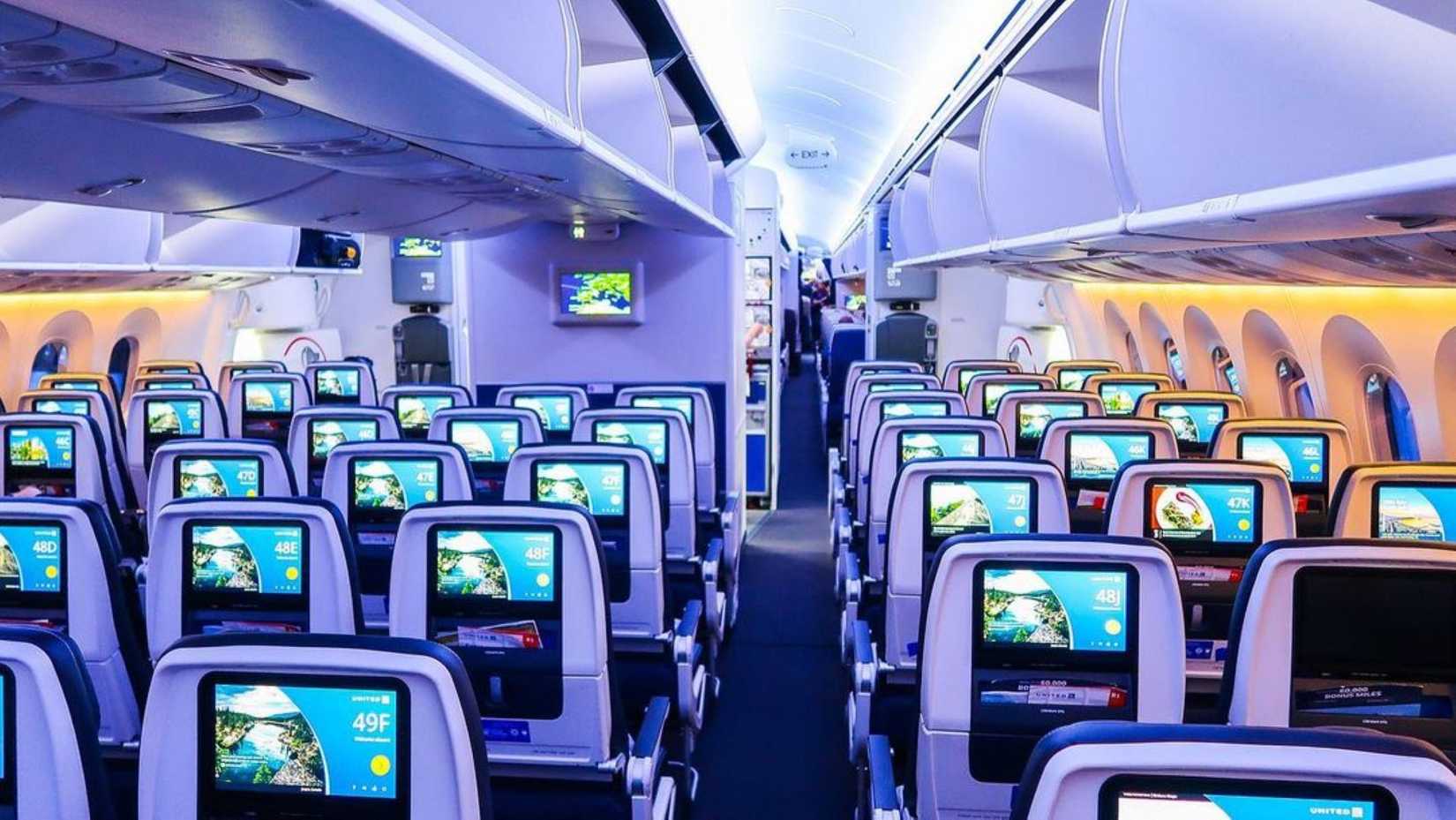
In 2024, United Airlines strategically deployed its Boeing 787-10 Dreamliner fleet across 13 primary long-haul and high-density domestic routes. These routes centered on United’s major hubs, including Newark (EWR), Chicago O’Hare (ORD), and Los Angeles (LAX), serving key international destinations such as Frankfurt, Tokyo Haneda, and Paris, alongside premium transcontinental links.
The Strategic Role of the Boeing 787-10 in United’s 2024 Network
As we look back from 2026, the year 2024 stands out as a pivotal period for United Airlines’ "United Next" growth strategy. At the heart of this expansion was the Boeing 787-10, the largest variant of the Dreamliner family. While the 787-8 and 787-9 are often praised for their extreme range—enabling "long and skinny" routes like San Francisco to Singapore—the 787-10 was United's choice for high-demand corridors where passenger capacity and cargo volume were paramount.
The 787-10 is approximately 18 feet longer than the 787-9, allowing for a significantly higher seat count. For United, this meant a configuration that balanced premium cabins with a massive economy section, making it the ideal "hub-to-hub" workhorse. In 2024, United utilized the -10 variant to replace older, less efficient aircraft on transatlantic routes and to bolster capacity on competitive domestic lines between the East and West Coasts.
Understanding these 13 routes requires a look at how United balanced fuel efficiency with the need to move large volumes of passengers. The 787-10 offers a 25% improvement in fuel per seat compared to the aircraft it replaced, a critical factor in the 2024 operating environment where fuel costs and carbon footprints were under intense scrutiny.
Detailed Analysis of the 13 Primary 787-10 Routes
United’s 2024 schedule for the 787-10 was characterized by consistency. While seasonal adjustments occurred, the following 13 routes represented the core of the aircraft's utilization.
1. Newark (EWR) to Frankfurt (FRA)
This was arguably the most critical international route for the 787-10 in 2024. As a major Star Alliance hub-to-hub connection, the EWR-FRA route required massive capacity to accommodate both business travelers and connecting passengers heading deeper into Europe and Africa via Lufthansa. The 787-10’s large Polaris cabin was frequently sold out on this segment.
2. Newark (EWR) to Paris Charles de Gaulle (CDG)
Paris remained a top-tier destination for both leisure and corporate travel. United deployed the 787-10 here to compete directly with Air France and other legacy carriers. The aircraft’s advanced humidity control and lower cabin altitude were marketed heavily to premium travelers looking to arrive in the "City of Light" feeling refreshed.
3. Newark (EWR) to Tel Aviv (TLV)
Despite various operational challenges in the region during 2024, the EWR-TLV route remained a high-priority corridor for the 787-10 when flying. The aircraft's ability to carry significant belly cargo was a major factor here, as this route often sees high volumes of specialized freight alongside high passenger load factors.
4. Newark (EWR) to Barcelona (BCN)
A mix of high-end tourism and growing business interests in Catalonia made Barcelona a prime candidate for the 787-10. In 2024, United leveraged the aircraft’s 318-seat capacity to meet the summer surge in Mediterranean travel, often outperforming the smaller 767s previously used on the route.
5. Newark (EWR) to Brussels (BRU)
As the "Capital of Europe," Brussels is a steady market for diplomatic and corporate travel. United’s use of the 787-10 on this route in 2024 provided a consistent product for travelers connecting to United’s partner, Brussels Airlines.
6. Newark (EWR) to Rome Fiumicino (FCO)
Rome saw record-breaking American tourism in 2024. United capitalized on this by deploying its largest Dreamliner to FCO. The 787-10’s efficiency allowed United to offer competitive pricing while maintaining a high-yield Premium Plus (Premium Economy) section, which was particularly popular with leisure travelers.
7. Chicago O’Hare (ORD) to Tokyo Haneda (HND)
The shift from Narita to Haneda for many major U.S. routes was well-established by 2024. United’s ORD-HND service used the 787-10 to bridge two of the world’s most important financial centers. The aircraft's cargo capacity was vital for the "just-in-time" supply chains between the American Midwest and Japan.
8. Chicago O’Hare (ORD) to Frankfurt (FRA)
Similar to the Newark route, the Chicago-Frankfurt line is a cornerstone of the Star Alliance network. Using the 787-10 allowed United to move hundreds of passengers daily into Lufthansa's primary hub, facilitating seamless connections for travelers originating in the U.S. interior.
9. Chicago O’Hare (ORD) to Munich (MUC)
Munich serves as Lufthansa’s secondary hub and a gateway to Southern Germany and the Alps. In 2024, United utilized the 787-10 to provide a consistent hard product (Polaris seats) that matched the high expectations of the Bavarian business community.
10. Los Angeles (LAX) to Tokyo Haneda (HND)
On the transpacific front, the LAX-HND route was a showcase for the 787-10. This flight path is shorter than the ORD or EWR routes, allowing the 787-10 to operate without any weight restrictions, maximizing both passenger and cargo revenue.
11. San Francisco (SFO) to Tokyo Haneda (HND)
San Francisco is United’s primary gateway to Asia. While the 787-9 is often used for longer hops to Singapore or Sydney, the 787-10 was the perfect fit for the high-density SFO-HND market in 2024, catering to the tech industry's constant demand for transpacific travel.
12. Newark (EWR) to Los Angeles (LAX)
This domestic "Premium Transcon" route was a critical part of United’s 2024 strategy. By using a widebody international aircraft like the 787-10 on a domestic leg, United was able to offer a true lie-flat Polaris experience and a Premium Plus cabin on a coast-to-coast flight, attracting high-value corporate contracts.
13. Newark (EWR) to San Francisco (SFO)
Similar to the LAX route, the EWR-SFO corridor is one of the most profitable in the world. The 787-10 served as a high-capacity shuttle between United’s two most important coastal hubs. In 2024, this route also served as a "positioning" flight, moving the aircraft between international missions while generating significant domestic revenue.
2024 Route Specifications and Frequency Table
The following table summarizes the typical operations for these 13 routes during the 2024 calendar year.
| Route (From-To) | Approx. Distance (Miles) | Primary Hub | Typical 2024 Frequency |
|---|---|---|---|
| EWR to FRA | 3,850 | Newark | 2x Daily |
| EWR to CDG | 3,650 | Newark | Daily |
| EWR to TLV | 5,690 | Newark | Daily (Variable) |
| EWR to BCN | 3,830 | Newark | Daily (Seasonal Peak) |
| EWR to BRU | 3,665 | Newark | Daily |
| EWR to FCO | 4,280 | Newark | Daily |
| ORD to HND | 6,300 | Chicago | Daily |
| ORD to FRA | 4,340 | Chicago | Daily |
| ORD to MUC | 4,520 | Chicago | Daily |
| LAX to HND | 5,480 | Los Angeles | Daily |
| SFO to HND | 5,160 | San Francisco | Daily |
| EWR to LAX | 2,450 | Newark/LAX | Multiple Daily |
| EWR to SFO | 2,565 | Newark/SFO | Multiple Daily |
The Onboard Experience: United’s 787-10 Configuration
Travelers on these 13 routes in 2024 experienced a standardized four-cabin configuration. This consistency was a major selling point for United, as it guaranteed a certain level of comfort regardless of whether the passenger was flying from Newark to Rome or Chicago to Tokyo.
United Polaris Business Class
The 787-10 featured 44 Polaris pods. These seats were arranged in a 1-2-1 configuration, ensuring every passenger had direct aisle access. The "all-forward-facing" layout was a significant upgrade over older "dormitory-style" business class cabins found on some legacy widebodies. In 2024, United continued its partnership with Saks Fifth Avenue for bedding, which remained a benchmark for transatlantic comfort.
United Premium Plus
With 21 seats in a 2-3-2 configuration, Premium Plus was the "sweet spot" for many 2024 travelers. These seats offered more recline, legrests, and improved dining compared to standard economy. On the 13 routes identified, Premium Plus often saw the highest percentage of paid upgrades, as travelers sought more space on the 8- to 12-hour flights.
Economy Plus and United Economy
The remainder of the aircraft consisted of 54 Economy Plus seats (with extra legroom) and 199 standard Economy seats. The 787-10’s 3-3-3 layout in economy is the industry standard for the Dreamliner. However, the 787-10’s larger windows and advanced air filtration systems helped mitigate the "tightness" often felt on long-haul flights in high-density configurations.
Technical Considerations: Why the 787-10?
United's selection of the 787-10 for these specific routes was driven by technical data. While the 787-10 is the largest of the family, it has the shortest range (approximately 6,330 nautical miles). This is why you did not see it on ultra-long-haul routes like SFO to Singapore or Houston to Sydney in 2024.
Instead, United optimized the aircraft for "medium-long" routes. The 787-10’s maximum takeoff weight (MTOW) is high enough to carry a full load of passengers and a significant amount of cargo on an 8-hour flight to Europe or a 10-hour flight to Japan. By 2024, United had mastered the "payload-range" trade-off, using the 787-10 where it could fly full without needing to leave seats or cargo behind to save weight for fuel.
Engine Performance
The fleet was powered by the GEnx-1B engines. These engines were a key factor in the aircraft’s reliability in 2024. They provided the necessary thrust for the heavy -10 variant while maintaining the quiet noise profile that the Dreamliner is famous for. For passengers, this meant a quieter cabin, which reduces fatigue—a major benefit on the 13 routes listed.
Common Challenges and Operational Realities in 2024
While the 787-10 was a success, operating 13 major routes with a specific aircraft type comes with logistical hurdles. In 2024, United faced several challenges:
- Supply Chain Delays: Like many airlines, United dealt with parts shortages that occasionally required swapping the 787-10 for a 787-9 or a 777. This occasionally led to "down-gauging," where fewer seats were available than originally sold.
- Air Traffic Control Congestion: Specifically at Newark (EWR), the 787-10's large size meant it required specific gate assignments and taxiway clearances, which could be tricky during peak departure banks for European flights.
- Geopolitical Sensitivity: Routes like EWR-TLV were subject to sudden cancellations or re-routings, requiring United to be nimble with where they sent their 787-10 aircraft when a primary route was unavailable.
Frequently Asked Questions
Which United hub had the most 787-10 routes in 2024?
Newark Liberty International Airport (EWR) was the primary hub for the Boeing 787-10 in 2024. It served as the launchpad for most of the transatlantic routes, including Frankfurt, Paris, and Rome, as well as the high-frequency domestic links to LAX and SFO.
Does the 787-10 have a different Polaris cabin than the 787-9?
The hard product (the seat itself) is identical to the Polaris seats found on the 787-9 and the retrofitted 777s and 767s. However, because the 787-10 fuselage is wider than the 767 and has a different layout than the 777, the cabin feels more spacious. In 2024, the 787-10 was considered one of the most consistent ways to experience the Polaris product.
Why wasn't the 787-10 used for London Heathrow (LHR) in 2024?
While United does fly to London from multiple hubs, they frequently used the Boeing 767-300ER "High-J" (High Business Class) configuration for LHR in 2024. The 767-300ER High-J featured 46 Polaris seats in a much smaller overall aircraft, which suited the premium-heavy, high-frequency nature of the London market better than the larger, economy-heavy 787-10.
Is the 787-10 better for avoiding jet lag?
The 787-10, like all Dreamliners, is built with composite materials that allow for higher cabin humidity and a lower effective cabin altitude (around 6,000 feet compared to 8,000 feet on older aluminum jets). This significantly reduces the physical toll of long-haul travel on the 13 routes mentioned, helping passengers arrive at their destinations feeling more hydrated and less fatigued.
How many seats are on United’s 787-10?
In 2024, United’s 787-10 was configured with 318 seats: 44 in Polaris Business, 21 in Premium Plus, 54 in Economy Plus, and 199 in standard Economy. This made it one of the highest-capacity aircraft in United's fleet, second only to the Boeing 777-300ER.
Practical Recommendation for Travelers
If you are planning travel that mirrors these 2024 routes in the current year of 2026, the Boeing 787-10 remains a top choice for passenger comfort. When booking, prioritize the Premium Plus cabin if the price gap from Economy is reasonable; the 2-3-2 layout on the Dreamliner provides significantly more shoulder room and a much quieter experience. For those flying Newark to the West Coast, always check the aircraft type—opting for the 787-10 over a standard narrowbody (like a 737) provides a vastly superior experience with international-grade amenities on a domestic flight.