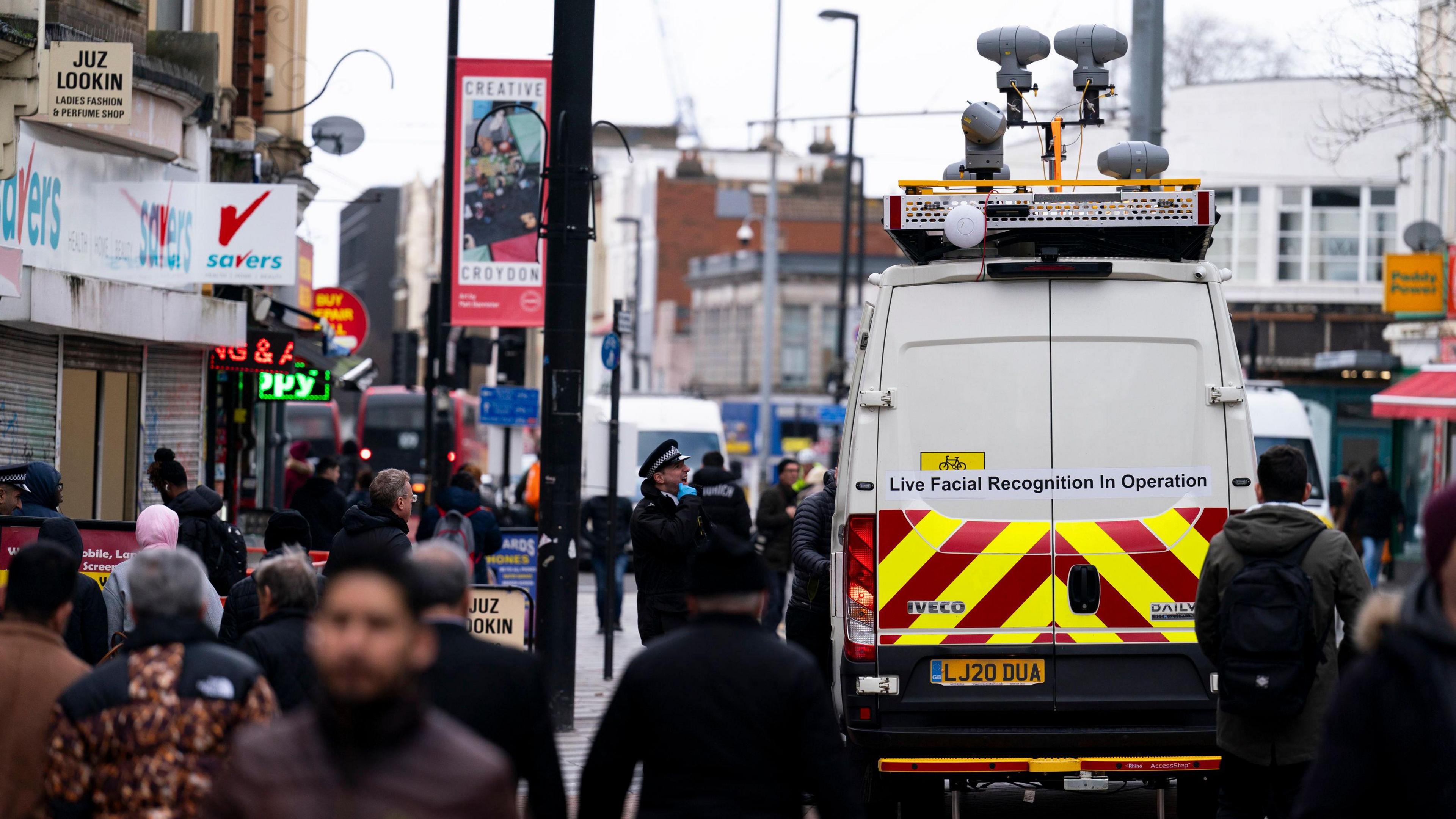
The viral "10 Year Challenge" social media trend unexpectedly provided computer vision researchers with a massive, crowdsourced dataset of longitudinal facial images, throwing a spotlight on the inherent technical boundaries, aging vectors, and algorithmic failure modes that continue to challenge modern facial recognition systems.
Introduction to the 10 Year Challenge and Computer Vision
When millions of users across social media platforms uploaded side-by-side photographs of themselves separated by a decade under the banner of the "10 Year Challenge," they created a unique trove of data. For everyday internet users, it was a harmless exercise in nostalgia and self-comparison. For computer scientists, biometric engineers, and surveillance researchers, it offered a fascinating case study in how machine learning algorithms handle longitudinal biometric drift—the natural physiological changes a human face undergoes over extended periods.
Facial recognition technology has transitioned from theoretical academic research into widespread commercial, law enforcement, and border security infrastructure. However, despite rapid advancements in deep learning, convolutional neural networks (CNNs), and transformer-based vision models, time remains one of the most stubborn variables in biometric accuracy. The fundamental question highlighted by phenomena like the 10 Year Challenge is simple yet technically demanding: can an algorithm trained on a person's face at age twenty reliably recognize them at age thirty, forty, or seventy?
Exploring the limits of facial recognition accuracy across a decade requires unpacking how these systems work, the physiological barriers imposed by human aging, the specific environmental variables that degrade performance, and the ongoing efforts by developers to mitigate these mathematical blind spots.
The Mechanics of Modern Facial Recognition
To understand why a ten-year gap poses a severe test for facial recognition systems, one must first examine how these systems map and evaluate human faces. Modern facial recognition does not merely look at a face the way a human does; it translates visual data into high-dimensional mathematical representations known as feature vectors or embeddings.
Feature Extraction and Embeddings
When an enrollment image is captured, the system detects the face, aligns it geometrically (normalizing for pitch, yaw, and roll), and passes it through a deep neural network. This network extracts distinctive geometric and textural patterns—the distance between the pupils, the width of the nose bridge, the contour of the jawline, and millions of microscopic skin texture gradients. These features are compressed into a vector, which is essentially a string of numbers plotting coordinates in a vast mathematical space.
When a verification or identification attempt occurs later, a new image is captured, converted into its own vector, and compared against the enrolled vector using distance metrics like cosine similarity or Euclidean distance. If the distance falls below a pre-calculated threshold, the system declares a match.
The Problem of Static Enrolment vs. Dynamic Reality
The core vulnerability in this process is that a facial template is often treated as static, while the human face is inherently dynamic. When an individual enrolls in a database—whether for a smartphone unlocking mechanism, a corporate access control system, or a national identity program—that specific vector captures their biometric signature at one specific moment in time.
If a system relies on a five- or ten-year-old template without regular updates, it must bridge a widening mathematical gap caused by natural physiological evolution. While bone structure remains relatively stable after skeletal maturity, soft tissues, skin elasticity, dental configurations, and secondary physical characteristics shift continuously.
Physiological Aging Vectors Over a Decade
Human aging is not a uniform process, nor does it affect all facial features equally. When evaluating 10-year accuracy limits, biometric researchers categorize aging vectors into distinct anatomical and textural components.
| Aging Vector | Anatomical / Physical Change | Impact on Recognition Accuracy |
|---|---|---|
| Skeletal Structure | Stable post-maturity; minor shifting in jaw/nose cartilage. | Minimal negative impact; highly reliable baseline feature. |
| Soft Tissue & Fat | Redistribution, volume loss, gravity-induced sagging. | Moderate to high impact; alters facial contours and volumetric shape. |
| Skin Texture | Collagen degradation, wrinkles, pigmentation changes, sun spots. | High impact on feature extraction; alters fine texture gradients. |
| Hair & Grooming | Hairline recession, graying, facial hair changes, styling. | Variable impact; easily disrupted by voluntary grooming modifications. |
Soft Tissue Redistribution and Volumetric Shifts
Over a ten-year span, the subcutaneous fat pads in the face begin to atrophy and shift downward due to gravity and the loss of collagen and elastin. This changes the overall volume and contour of the cheeks, eyes, and jawline. Algorithms that rely heavily on holistic facial shape or deep geometric contours can experience a drop in confidence scores because the 3D topology of the face has drifted away from the enrolled template.
Textural Degradation and Micro-Features
Fine lines, dynamic wrinkles, crow's feet, and deep expression furrows accumulate over ten years. While deep learning models are remarkably adept at ignoring minor blemishes, deep structural wrinkles can alter the localized gradient fields that texture-based filters analyze. Conversely, changes in skin pigmentation—such as sun damage, melasma, or age spots—can confuse algorithms that incorporate color spaces and contrast gradients into their feature maps.
Secondary Characteristics and Volitional Changes
People change how they present themselves over a decade. Eyebrow shaping, the growth or removal of beards and mustaches, dental work (such as orthodontics or implants that alter jaw shape), and cosmetic interventions (ranging from fillers and Botox to surgical facelifts) introduce artificial variables that interact unpredictably with long-term biometric tracking.
Technical Limitations and Algorithmic Vulnerabilities
The challenges posed by a ten-year gap are compounded by technical limitations inherent to how datasets are compiled, how models are trained, and how environmental factors skew matching performance.
Dataset Bias and Longitudinal Gaps
Historically, many benchmark datasets used to train and test facial recognition algorithms lacked proper longitudinal depth. A dataset compiled primarily of college students or office workers photographed over a few weeks or months cannot adequately prepare a neural network for the realities of decade-long aging.
When algorithms are trained predominantly on short-term variations (such as changing lighting or mild facial expressions), they learn to treat long-term physiological drift as anomalous rather than natural. While databases like the National Institute of Standards and Technology (NIST) Face Recognition Vendor Test (FRVT) series have increasingly emphasized longitudinal performance evaluations, maintaining high True Match Rates (TMR) across multi-year spans remains an active engineering hurdle.
False Negatives vs. False Positives in Aging Models
As a face ages, the risk profile of error rates shifts:
- False Non-Match Rate (FNR): The primary casualty of a 10-year gap is an increase in false negatives. Legitimate users attempting to access secure systems with outdated templates are increasingly rejected because their current facial embedding has drifted past the decision threshold.
- False Match Rate (FMR): Conversely, family members sharing genetic traits (such as parents and children or siblings) may see their similarity scores converge as one ages towards the historical appearance of the other, raising theoretical concerns in high-security identification scenarios.
Environmental and Capture Inconsistencies
A ten-year comparison rarely involves identical capture conditions. An enrollment photo taken in 2016 on a low-resolution smartphone camera under warm indoor lighting will compare poorly against a verification scan captured in 2026 by a high-definition sensor under harsh LED overheads. Sensor noise, focal length distortion, and compression artifacts interact with aging features, compounding the difficulty for the matching algorithm.
Mitigation Strategies and Future Developments
Engineers and biometric standards organizations are actively deploying several strategies to counteract the accuracy limits exposed by decade-long gaps.
Regular Template Updates and Re-Enrollment
The most effective operational countermeasure to longitudinal aging is mandatory or automated template updating. The modern systems often implement "gallery maintenance" policies where, upon a successful high-confidence verification, the system securely updates the user's stored feature vector with the newly captured image. This creates a rolling biometric baseline that tracks gradual physiological changes incrementally, preventing the accumulation of a ten-year mismatch gap.
Age-Invariant Feature Learning
Researchers are developing specialized neural network architectures designed to be age-invariant. These models are trained to isolate and weight stable biometric markers—such as inter-ocular distance, orbital bone structure, and nasal root geometry—while actively down-weighting volatile features like skin texture, localized fat distribution, and hair styling that change rapidly over time.
Generative Aging Simulation in Training
To combat the scarcity of balanced longitudinal datasets, some developers utilize generative adversarial networks (GANs) to synthesize realistic aging progressions from base images. By training recognition models on artificially aged variants of known subjects, the algorithms learn to anticipate the specific mathematical trajectories that facial embeddings take over a five-to-twenty-year period.
Frequently Asked Questions
Does facial recognition fail completely after ten years?
No, facial recognition does not automatically fail after ten years, but accuracy rates decline noticeably without system updates. Stable skeletal features allow many algorithms to achieve successful matches, but the probability of false non-matches increases significantly compared to short-term verifications.
How do beards and weight changes affect 10-year facial recognition accuracy?
Voluntary changes like growing a beard or experiencing significant weight fluctuation over a decade alter soft tissue contours and occlude key facial regions. While modern deep learning models can often look past facial hair, simultaneous aging and major weight shifts compound algorithmic uncertainty.
Can plastic surgery or cosmetic procedures bypass long-term facial recognition?
Major surgical interventions, such as rhinoplasties or facelifts, can alter the underlying geometry and feature vectors enough to cause matching failures against old templates. However, advanced 3D mapping and multi-angle analysis are increasingly capable of detecting structural consistency despite surgical modifications.
How do government agencies handle aging in passport and ID photos?
Government passport and immigration agencies typically require photo renewals every five to ten years precisely because of longitudinal biometric drift. This operational window ensures that identity verification systems do not have to rely on outdated facial templates that exceed reliable accuracy limits.
Practical Next Steps for System Administrators
Organizations deploying facial recognition for access control, identity verification, or security must account for the reality of long-term biometric drift. To maintain operational integrity and minimize user friction:
- Audit Database Freshness: Review existing biometric enrollment databases to identify users whose templates have not been updated within a three- to five-year window.
- Implement Rolling Enrolment: Configure software pipelines to securely update stored feature vectors during successful authentication events under optimal lighting and positioning conditions.
- Establish Exception Workflows: Design clear fallback authentication paths (such as multi-factor authentication or secondary ID checks) for individuals who experience high false-rejection rates due to significant physical aging or medical changes.