The largest malls in the world span multiple continents, functioning as massive commercial ecosystems that integrate luxury retail, indoor theme parks, five-star hotels, and extensive entertainment complexes under a single roof. These architectural marvels redefine urban space, measuring their scale primarily through Gross Leasable Area (GLA)—the total floor area designed for tenant occupancy and exclusive use.
Introduction to Mega-Malls and How Size is Measured
When evaluating the scale of commercial real estate giants, industry standards rely on Gross Leasable Area (GLA) rather than the overall footprint or total built-up area of the property. GLA measures the precise square footage or square meters dedicated to retail storefronts, food courts, entertainment hubs, and consumer services that generate rental income. However, discussions surrounding the largest malls in the world frequently spark debate due to shifting expansions, real estate redevelopments, and differences in how developers report leasable versus non-leasable public spaces.
Mega-malls have evolved far beyond traditional shopping centers. They represent distinct urban destinations that rival small cities in daily foot traffic, energy consumption, and structural complexity. Understanding these retail behemoths requires examining their distinct geographic distribution, tenant mix, architectural innovation, and the logistical challenges of managing millions of square feet of indoor commercial space.
1. Iran Mall (Tehran, Iran)
- Estimated GLA: Approximately 21 million square feet (nearly 1.95 million square meters)
- Location: Tehran, Iran
- Primary Characteristics: Multi-phased mega-development combining traditional Persian architecture with modern retail design, featuring an extensive cultural center, exhibition spaces, and indoor amusement areas.
The Iran Mall stands as a colossal architectural achievement, frequently cited as the largest shopping mall globally based on its total planned and constructed floor space, though its active leasable retail space operates across massive phased zones. Located in the northwest of Tehran near Chitgar Lake, the complex is designed to be a self-sustaining city. It integrates traditional Iranian bazaar aesthetics—complete with domed ceilings, tile work, and indoor water canals—with hyper-modern glass-and-steel atriums.
Beyond retail, the facility houses a massive cultural hub containing a grand library, multiple art galleries, a sprawling permanent exhibition center, and a standardized ice-skating rink. Its hospitality component includes luxury international hotels, while its entertainment infrastructure features an expansive multiplex cinema and a multi-level amusement park. Managing a property of this magnitude requires dedicated power substations, advanced waste management systems, and specialized internal transportation options to help visitors navigate the vast corridors.
2. South China Mall (Dongguan, China)
- Estimated GLA: Approximately 7.1 million square feet (659,000 square meters)
- Location: Dongguan, China
- Primary Characteristics: Notable for its sheer physical capacity and unique history of transformation from a largely vacant structure into a bustling regional hub.
The South China Mall in Dongguan is a testament to ambitious scale and subsequent revitalization. Built during a period of rapid industrial growth in China's Guangdong province, the mall was originally designed to accommodate thousands of stores across distinct zones modeled after international locales, including replicas of the Arc de Triomphe, a Venetian canal system with operational gondolas, and a towering indoor roller coaster.
For years after its opening in 2005, the mall earned international attention as a ghost town due to low initial occupancy rates stemming from its isolated suburban location and early retail strategy. However, over the subsequent decades, strategic infrastructural improvements, surrounding urban expansion, and a pivot toward family entertainment, domestic dining, and accessible retail brands transformed the property into a thriving commercial center. Today, it operates as a major regional destination, demonstrating how massive retail spaces can adapt to changing consumer demands.
3. SM Mall of Asia (Pasay, Philippines)
- Estimated GLA: Approximately 4.2 million square feet (400,000 square meters)
- Location: Pasay, Metro Manila, Philippines
- Primary Characteristics: Waterfront retail complex featuring an iconic arena, amusement park elements, and status as a cultural anchor in Southeast Asia.
Situated along the shores of Manila Bay, the SM Mall of Asia (commonly known as MOA) is a cornerstone of the Philippine retail landscape. Developed by SM Prime Holdings, the complex consists of four main buildings interconnected by walkways, spanning a massive plot of reclaimed land. The mall attracts hundreds of thousands of daily visitors, serving not just as a shopping destination but as a lifestyle hub for the greater metropolitan area.
A defining feature of the Mall of Asia is its integration with the surrounding bay area. It hosts the SM By the Bay amusement park, featuring a giant observation wheel, and sits adjacent to the massive Mall of Asia Arena, which hosts international concerts, sporting events, and large-scale conventions. The facility also features an IMAX theater with one of the world's largest screens and an Olympic-sized ice-skating rink that has served as a training ground for national figure skaters.
4. SM City North EDSA (Quezon City, Philippines)
- Estimated GLA: Approximately 5.4 million square feet (500,000 square meters)
- Location: Quezon City, Philippines
- Primary Characteristics: The pioneering mega-mall of the SM chain, featuring interconnected buildings, green rooftop spaces, and massive transit integration.
Opened in 1985, SM City North EDSA holds historical significance as the first shopping mall built by SM Prime and the catalyst for the modern Philippine retail boom. Over the decades, the complex has undergone continuous expansions, resulting in a sprawling multi-building ecosystem that includes The Main Mall, City Center, The Annex, The Block, and SM North Towers.
The mall serves as a vital transportation interchange in Quezon City, connecting directly to major mass transit lines such as the LRT-1 and MRT-3, as well as various bus and jeepney terminals. This high level of accessibility drives its massive daily foot traffic. Environmental sustainability initiatives at the site include one of the largest rooftop solar power installations on a commercial building in the region, helping offset the immense energy demands of air-conditioning and lighting across its vast floor plates.
5. The Dubai Mall (Dubai, United Arab Emirates)
- Estimated GLA: Approximately 3.7 million square feet (344,000 square meters) of initial core retail, expanding significantly with recent additions.
- Location: Dubai, United Arab Emirates
- Primary Characteristics: Global benchmark for luxury retail, tourism integration, and world-class leisure attractions located at the foot of the Burj Khalifa.
The Dubai Mall is arguably the most famous mega-mall globally, serving as the crown jewel of Downtown Dubai. Developed by Emaar Properties, it forms part of the 20-hectare Downtown complex and welcomes tens of millions of visitors annually. While its strict leasable retail footprint is frequently measured around 3.7 to 4 million square feet, its total built-up area exceeds 13 million square feet, encompassing parking structures, hotels, and massive entertainment zones.
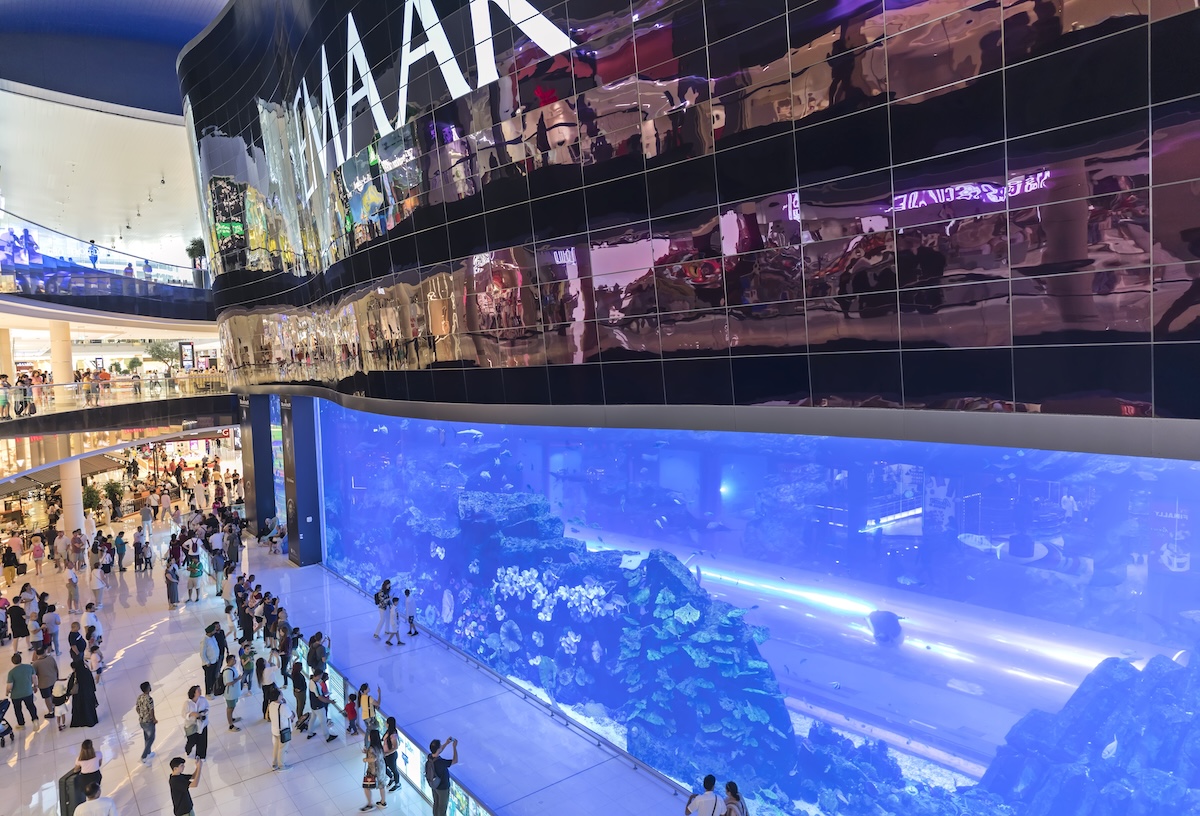
The mall is renowned for its iconic internal attractions, including the Dubai Aquarium and Underwater Zoo—featuring a massive walk-through tunnel and hundreds of marine species—as well as an Olympic-sized ice rink and a multi-story indoor waterfall adorned with fiberglass sculptures of divers. It houses over 1,200 retail outlets, ranging from world-renowned luxury fashion houses in Fashion Avenue to high-street global brands. Its direct connection to the Burj Khalifa and the Dubai Fountain positions it as an essential stop for international tourism.
6. Isfahan City Center (Isfahan, Iran)
- Estimated GLA: Approximately 5.0 million square feet (465,000 square meters)
- Location: Isfahan, Iran
- Primary Characteristics: Multi-functional complex containing a museum, indoor amusement park, five-star hotel, and comprehensive retail spaces.
Isfahan City Center is a monumental commercial and cultural development located in the historic city of Isfahan. Designed by renowned architect Medardo Cadiz, the complex was engineered to blend modern economic infrastructure with regional cultural elements. The multi-story development is divided into distinct phases that serve varied public and commercial functions.
The complex houses hundreds of retail shops, a large food court district, a state-of-the-art multi-screen cinema complex, and an indoor theme park equipped with modern rides. Additionally, Isfahan City Center features a dedicated international trade center, exhibition halls, and a museum space designed to showcase the rich heritage of the region. Ample multi-level parking and direct transit links support the heavy influx of visitors from across central Iran.
7. ICONSIAM (Bangkok, Thailand)
- Estimated GLA: Approximately 5.5 million square feet (525,000 square meters) of total gross floor area, with a substantial luxury and retail leasable core.
- Location: Bangkok, Thailand
- Primary Characteristics: Luxury waterfront development along the Chao Phraya River, featuring a floating indoor market concept and high-end residential towers.
Opened in late 2018, ICONSIAM represents a massive investment in Bangkok's riverside revitalization. This mixed-use development spans two main retail buildings—ICONSIAM proper and ICONLUXE—along with ultra-luxury residential skyscrapers. The project was conceived as a showcase of Thai culture, art, and commerce, bringing high-end global retail together with indigenous traditions.
A defining highlight of the complex is SookSiam, an indoor ground-floor zone designed to replicate a traditional floating market and cultural village. Here, visitors can sample authentic street food from all 75 provinces of Thailand while engaging with local artisans. The upper floors transition into ultra-luxury flagship stores for global designer brands, a multi-level modern art museum, and expansive river-view dining terraces. ICONSIAM's integration with the Chao Phraya river transport network makes it easily accessible via dedicated ferries and rail connections.
8. Central WestGate (Nonthaburi, Thailand)
- Estimated GLA: Approximately 5.9 million square feet (550,000 square meters)
- Location: Nonthaburi, Thailand (Bangkok Metropolitan Region)
- Primary Characteristics: Super-regional lifestyle shopping center designed around a "Super Regional Mall" concept with vast entertainment and furniture anchors.
Central WestGate, developed by Central Pattana, is positioned in the western expansion corridor of the Bangkok Metropolitan Region. Billed as a "Super Regional Mall," its architectural design centers on a massive open atrium known as the "WestGate Hall," which hosts large-scale exhibitions, trade shows, and lifestyle events.
The mall serves as a major retail anchor for suburban Bangkok, featuring hundreds of leading fashion brands, a massive hypermarket, a modern cinema complex, and an expansive indoor playground and edutainment center for families. Its strategic location at the intersection of major transit motorways and mass transit rail lines has made it a central logistics and commercial hub for the surrounding provinces, drawing heavy weekend crowds seeking a comprehensive one-stop destination.
9. SM Megamall (Mandaluyong, Philippines)
- Estimated GLA: Approximately 5.0 million square feet (474,000 square meters)
- Location: Mandaluyong, Metro Manila, Philippines
- Primary Characteristics: Twin-building behemoth connected by a massive bridge, serving as a primary financial and retail powerhouse in Metro Manila.
SM Megamall is a foundational pillar of Philippine commerce, located along the vital Epifanio de los Santos Avenue (EDSA) in the Ortigas Center business district. Originally opened with two main structures—Building A and Building B—the complex expanded significantly with the addition of the Mega Fashion Hall, which houses massive flagship stores for international fast-fashion brands, upscale dining, and an Olympic-sized ice rink.
The two original structures are joined by the Megatrade Hall bridge, which serves as a premier venue for book fairs, consumer expos, and geek culture conventions. SM Megamall accommodates thousands of tenants, ranging from local enterprises to global conglomerates. Its central location within the metropolis, combined with direct pedestrian walkways to the Ortigas MRT station, ensures consistent, high-volume foot traffic throughout the week.
10. Persian Gulf Complex (Shiraz, Iran)
- Estimated GLA: Approximately 4.8 million square feet (450,000 square meters)
- Location: Shiraz, Iran
- Primary Characteristics: Massive southern Iranian commercial center featuring an amusement park, a large hotel, and extensive parking capacity.
The Persian Gulf Complex (also known as Fars Shopping Center) is located on the road connecting Shiraz to Golestan, serving the southern region of Iran. Upon its initial development phases, it was designed to accommodate thousands of active retail stores alongside major entertainment and hospitality amenities.
The complex features a large indoor and outdoor amusement park, complete with a roller coaster and bowling alley, a multi-screen cinema, and a 250-room luxury hotel. It also includes substantial convention and exhibition facilities. Parking logistics are a key feature of the property, designed to accommodate thousands of vehicles to support visitors traveling from surrounding provinces.
Comparative Overview of the World's Largest Malls
| Mall Name | Location | Estimated GLA (sq ft) | Key Attraction / Feature |
|---|---|---|---|
| Iran Mall | Tehran, Iran | ~21,000,000 | Traditional bazaars, grand library, ice rink |
| South China Mall | Dongguan, China | ~7,100,000 | Canals, indoor coasters, revitalization success |
| Central WestGate | Nonthaburi, Thailand | ~5,900,000 | Super regional hub, WestGate Hall |
| ICONSIAM | Bangkok, Thailand | ~5,500,000 | SookSiam floating market, luxury riverfront |
| SM City North EDSA | Quezon City, Philippines | ~5,400,000 | Solar rooftop, historic pioneer complex |
| Isfahan City Center | Isfahan, Iran | ~5,000,000 | Cultural museum, trade center, indoor park |
| SM Megamall | Mandaluyong, Philippines | ~5,000,000 | Mega Fashion Hall, twin-building bridge |
| Persian Gulf Complex | Shiraz, Iran | ~4,800,000 | Amusement park, luxury hotel, convention space |
| SM Mall of Asia | Pasay, Philippines | ~4,200,000 | Arena, IMAX screen, Manila Bay waterfront |
| The Dubai Mall | Dubai, UAE | ~3,700,000+ | Aquarium, Fashion Avenue, Burj Khalifa access |
Frequently Asked Questions
What is the difference between GLA and total built-up area in mega-malls?
Gross Leasable Area (GLA) measures strictly the floor space rented to tenants for commercial and retail activities, generating direct rental revenue. Total built-up area, by contrast, includes structural walls, common walkways, utility rooms, multi-story parking garages, attached hotels, and non-retail exhibition halls. This distinction often creates discrepancies in ranking malls globally.
Why are so many of the world's largest malls located in Asia and the Middle East?
Rapid urbanization, dense metropolitan populations, and extreme climate conditions drive the development of mega-malls in these regions. In areas experiencing intense summer heat or monsoon seasons, fully air-conditioned indoor mega-malls serve as primary community hubs where citizens gather for shopping, dining, and recreation.
How do mega-malls handle energy consumption and sustainability?
Operating facilities spanning millions of square feet requires immense energy, primarily for climate control and lighting. Modern mega-malls increasingly incorporate large-scale rooftop solar panel installations, high-efficiency HVAC recovery systems, LED lighting retrofits, and advanced water recycling plants to reduce operating costs and environmental impact.
Do these massive malls focus exclusively on retail shopping?
No. Modern mega-malls operate on a destination-driven business model where traditional retail often accounts for only half of the total space. Entertainment anchors—such as indoor aquariums, theme parks, ice rinks, cinemas, art galleries, and comprehensive food districts—are essential to driving prolonged visitor dwell time.
Are all spaces in these mega-malls consistently fully leased?
Occupancy rates fluctuate based on economic conditions, real estate saturation, and location accessibility. While prime hubs in major tourism and business centers maintain high occupancy rates, some suburban or historically overbuilt mega-malls have required strategic redesigns, tenant diversification, and government-backed infrastructure upgrades to achieve stability.
Conclusion and Next Actions
Navigating the world's largest malls requires understanding that they operate less like traditional shopping centers and more like autonomous commercial districts. When planning a visit to any of these retail landmarks, research the specific building zones, transit connections, and advance ticket requirements for major attractions like internal theme parks or observation decks to maximize your experience.