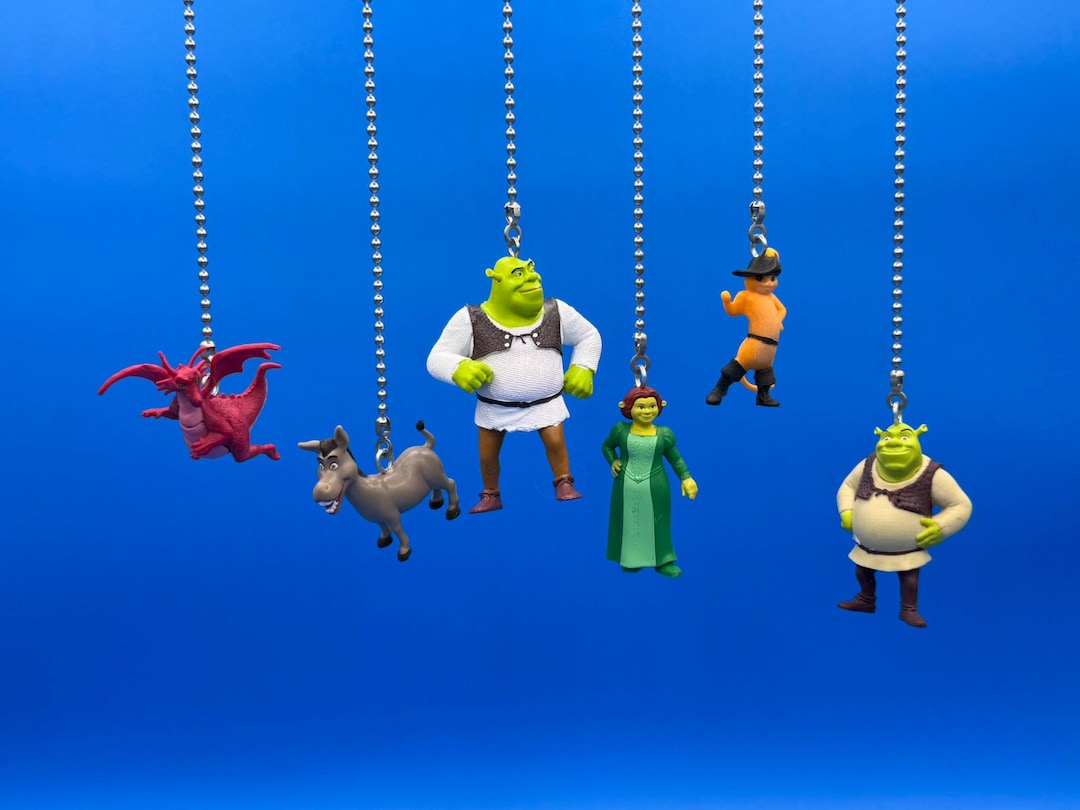
Released by DreamWorks Animation in 2004, Shrek 2 expanded the universe of the original fairy-tale parody by introducing a rich roster of new personalities alongside returning favorites, turning a simple swamp-dwelling adventure into a sprawling, multi-layered satirical epic that remains a high-water mark for animated sequels.
The cinematic landscape of the early 2000s changed forever when Shrek 2 hit theaters, building upon its predecessor's commercial success to become a massive cultural touchstone. While the original film established the basic dynamics of its titular ogre, Princess Fiona, and Donkey, the sequel elevated the narrative by introducing the kingdom of Far Far Away and a complex social hierarchy that threatened to tear the newlyweds apart. Understanding the film requires analyzing its principal players—both old and new—who drive the narrative forward through clever subversions of classic fairy tale tropes, sharp dialogue, and memorable vocal performances. From scheming royalty to reluctant heroes and flamboyant sidekicks, these ten characters form the structural backbone of a story about acceptance, identity, and the challenges of familial expectations.
Shrek
As the central protagonist, Shrek transitions from a solitary, defensive swamp-dweller into a husband grappling with the crushing weight of societal and marital expectations. In Shrek 2, his primary conflict stems from insecurity about his identity as an ogre and whether he is truly worthy of Princess Fiona.
When Fiona’s parents invite the newlyweds to Far Far Away, Shrek is forced to step outside his comfort zone. His resistance to royal protocol forms the emotional core of the first act. Throughout the journey, Shrek confronts the bitter reality that Fiona's family expects a fairytale prince, not a green, mud-bathing ogre. This internal struggle drives him to consume a "Happily Ever After" potion, temporarily transforming himself into a handsome human and Donkey into a majestic white stallion. This physical metamorphosis serves as a clever narrative device, allowing the film to question whether superficial beauty or genuine internal connection matters more. Shrek's ultimate acceptance of his ogre self—and his realization that Fiona loves him for who he is—cements his growth from a defensive recluse into a confident, devoted partner.
Princess Fiona
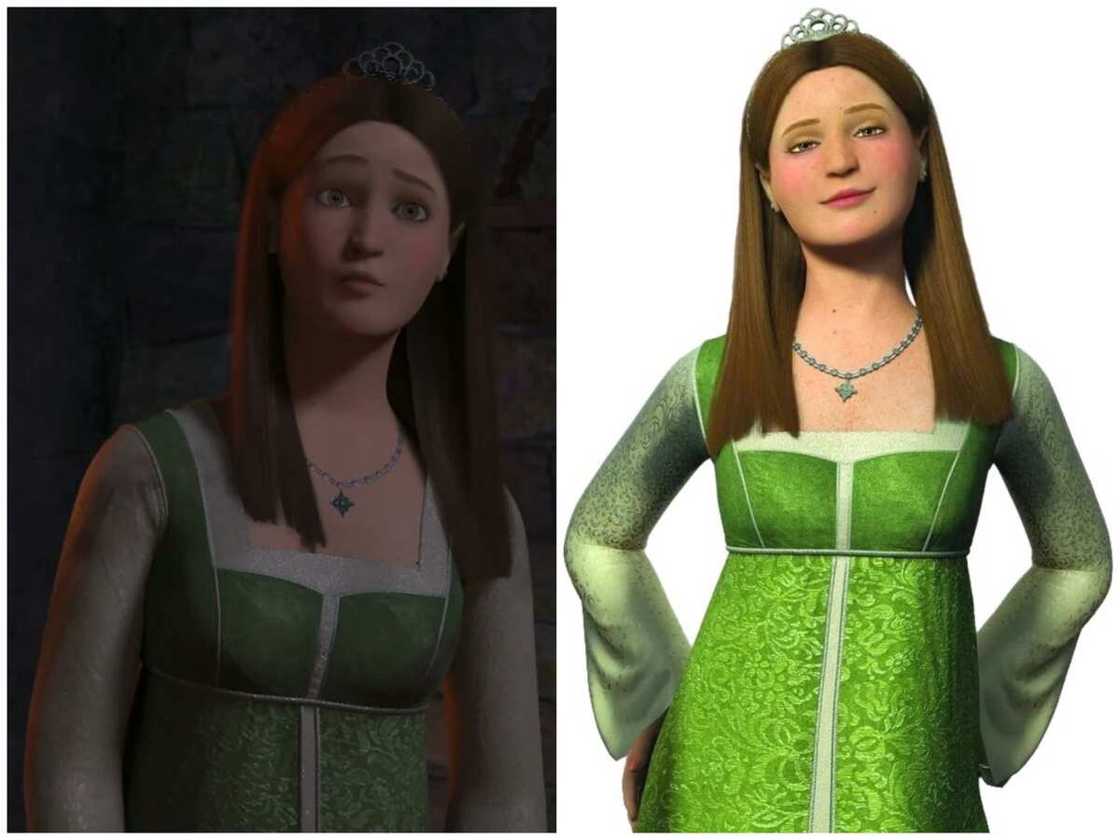
Princess Fiona subverts the traditional damsel-in-distress archetype by embracing her ogre identity and standing up to both her royal parents and external antagonists. In the sequel, Fiona is navigating the honeymoon phase of her marriage to Shrek while wrestling with the consequences of her permanent transformation into an ogre.
Fiona’s character arc explores themes of familial duty versus personal autonomy. Upon arriving in Far Far Away, she faces intense pressure from King Harold and Queen Lillian to conform to royal standards. Her relationship with her father is particularly strained, as Harold struggles to reconcile his idealized vision of his daughter with her current reality. Unlike the first film, where her ogre form was treated as a curse to be broken, Shrek 2 frames her permanent ogre state as a natural, valid choice. When Shrek transforms into a human, Fiona senses that something is fundamentally wrong, proving that her bond with him transcends physical appearance. Her fierce loyalty and unwillingness to abandon her true self make her a formidable anchor for the film's thematic exploration of authentic love.
Donkey
Serving as the comedic motor of the franchise, Donkey returns with his signature hyperactive energy, insecurity, and unwavering loyalty to Shrek. In Shrek 2, Donkey’s role expands as he navigates marital discord with his wife, Dragon, and plays a pivotal part in the quest to secure Shrek and Fiona’s happiness.
Donkey’s comedic timing and musical numbers provide much of the film's levity, but he also acts as a sounding board for Shrek’s deep-seated anxieties. Their dynamic is tested when Donkey undergoes a magical transformation into a white stallion, granting him a taste of elegance and vanity that quickly fades when he realizes the heavy responsibilities and dangers of his new form. Despite his frequent complaining and nervous chatter, Donkey remains fiercely protective of his friends. His intervention during the climax—utilizing his equine agility and strategic thinking—proves that his value extends far beyond comic relief, cementing him as one of cinema’s most enduring sidekicks.
Puss in Boots
Introduced in Shrek 2, Puss in Boots immediately captures audience attention as a suave, swashbuckling feline assassin hired by King Harold to eliminate Shrek. Voiced with charismatic swagger by Antonio Banderas, Puss combines the legendary tropes of Zorro with the undeniable cuteness of a real cat.
Puss’s integration into the narrative is a masterclass in character transition. Initially an antagonist, his loyalties shift after Shrek spares his life during a fierce forest duel. Recognizing an honorable opponent, Puss swears allegiance to the ogre, adding a layer of Spanish-accented bravado and tactical cunning to the trio's dynamic. His iconic wide-eyed, pleading look—capable of disarming even the most hardened enemies—becomes a running gag and a strategic weapon. Beyond his humor, Puss brings genuine heart and physical prowess to the action sequences, quickly establishing himself as an indispensable member of Shrek's inner circle.
Fairy Godmother
The primary antagonist of Shrek 2, the Fairy Godmother is a brilliant subversion of the benevolent, magical mentor archetype found in traditional folklore. Beneath her polished, bubbly, and maternal exterior lies a manipulative, ambitious bureaucrat obsessed with maintaining traditional fairytale monopolies and securing power for her lineage.
Fairy Godmother operates like a ruthless corporate executive, complete with a sprawling potion factory that mass-produces happily-ever-afters. Her motivation is entirely self-serving: she arranged for Prince Charming to rescue Fiona so that her family could inherit the throne of Far Far Away. When Shrek and Fiona’s marriage disrupts this meticulously planned scheme, she employs blackmail, social pressure, and magical coercion against King Harold to enforce her will. Her musical showstopper, "Holding Out for Hero," during the climax underscores her theatricality and absolute control over the kingdom's cultural narrative, making her one of DreamWorks' most sophisticated and entertaining villains.
Prince Charming
Prince Charming is the vain, narcissistic son of the Fairy Godmother, designed as the ultimate send-up of the entitled, genetically blessed royal archetype. Arriving late to the swamp in the opening sequence, he discovers that Shrek has already rescued Fiona, setting off his lifelong grievance.
Charming’s character is defined entirely by his mother's ambition and his own staggering superficiality. He possesses zero genuine charm or resourcefulness, relying entirely on his mother’s political maneuvering and magical interventions to achieve his goals. When he temporarily infiltrates the castle by impersonating human Shrek, his transparent vanity and lack of genuine emotional connection to Fiona immediately expose the ruse. His character serves as a direct foil to Shrek: while Shrek is rough around the edges but fiercely protective and authentic, Charming is aesthetically polished yet completely hollow inside.
King Harold
King Harold, ruler of Far Far Away and Fiona’s father, is a complex character caught between royal obligations, deep-seated secrets, and genuine paternal love for his daughter. Initially horrified by Shrek and Fiona's ogre forms, Harold agrees to the Fairy Godmother’s plot to eliminate Shrek out of a desperate desire to protect his family's reputation and fulfill a past bargain.
Harold’s internal conflict elevates Shrek 2 above a standard animated comedy. It is gradually revealed that Harold was once a human transformed by magical means, drawing a silent parallel between his past and Shrek's present struggles. His quiet anguish as he witnesses his daughter's happiness with an ogre forces him to reevaluate his rigid adherence to royal expectations. In the film's emotional turning point, Harold defies the Fairy Godmother, taking a magical blast intended for Shrek and reverting to his true form—a frog—thereby securing his redemption and earning his daughter's forgiveness.
Queen Lillian
Queen Lillian provides a steady, pragmatic counterweight to King Harold’s rigidity and anxiety. Upon meeting Shrek and Fiona for the first time, her initial shock gives way to a remarkable level of adaptability and unconditional love for her daughter.
Lillian’s character subverts the passive, decorative queen trope. While Harold panics over social decorum and clandestine plots with the Fairy Godmother, Lillian focuses on what truly matters: her family's well-being. During the tense family dinner scene, when tempers flare and food is hurled across the table, Lillian calmly joins in, demonstrating a down-to-earth sensibility that catches everyone off guard. Her quiet strength and acceptance of Shrek help bridge the gap between the swamp and the royal court, making her an essential emotional anchor for the royal family.
The Gingerbread Man (Gingy)
Gingy returns from the first film as a fiercely loyal, fiercely resilient member of Shrek's support network. Despite being made of baked goods, Gingy possesses an outsized personality, sharp wit, and a history of trauma involving milk and the Muffin Man.
In Shrek 2, Gingy’s finest moment arrives during the third act, when the team constructs a giant, flour-based golem named Mongo to storm the castle. Commanding Mongo with a mixture of military precision and infectious enthusiasm, Gingy leads the charge against the royal guard. His dialogue is packed with pop-culture references and dark humor, highlighting how minor sidekicks can be utilized effectively to drive plot momentum and provide memorable comedic beats without overshadowing the main narrative arc.
Pinocchio
Pinocchio rounds out the core ensemble of supporting fairytale creatures, bringing his distinctive anatomical quirks and strict adherence to the truth—or clever semantic loopholes surrounding it—to the sequel's adventures.
Pinocchio’s inclusion in the rescue mission highlights the deep camaraderie among Shrek’s eclectic group of friends. Whether he is awkwardly explaining his choice of women's underwear ("They're briefs!") to avoid lying, or using his extendable wooden nose as a tactical tool during the castle infiltration, Pinocchio proves to be a surprisingly versatile ally. His literal-mindedness and deadpan delivery provide consistent comedic relief, reinforcing the theme that true family is found in the most unexpected places.
| Character | Role in Shrek 2 | Primary Motivation |
|---|---|---|
| Shrek | Protagonist / Husband | Securing acceptance from Fiona's family and retaining his identity |
| Princess Fiona | Protagonist / Wife | Preserving her marriage and embracing her true ogre self |
| Donkey | Sidekick / Friend | Supporting Shrek and managing his own complicated life |
| Puss in Boots | Former Assassin / Ally | Finding honor, redemption, and a new master |
| Fairy Godmother | Main Antagonist | Maintaining fairytale monopolies and royal power |
| Prince Charming | Antagonist / Suitor | Claiming the throne and marrying Princess Fiona |
| King Harold | Supporting / Father | Protecting royal secrets and securing his daughter's future |
| Queen Lillian | Supporting / Mother | Maintaining family unity and accepting her daughter's choices |
| The Gingerbread Man | Supporting / Ally | Helping Shrek rescue Fiona and commanding Mongo |
| Pinocchio | Supporting / Ally | Assisting friends using loyalty and literal truthfulness |
Frequently Asked Questions
Why did Shrek turn into a human in Shrek 2?
Shrek consumes a "Happily Ever After" potion stolen from the Fairy Godmother's factory because he believes his ogre form is the reason for the tension between him, Fiona, and her parents. He hopes that becoming a handsome human will grant him the royal approval and domestic peace he thinks Fiona deserves.
Who voices Puss in Boots in Shrek 2?
Puss in Boots is voiced by acclaimed Spanish actor Antonio Banderas. Banderas brought a distinct swashbuckling bravado and comedic timing to the role, blending the heroics of Zorro with feline mannerisms to create one of the most popular characters in animated film history.
What happens to King Harold at the end of Shrek 2?
King Harold is hit by a magical blast from the Fairy Godmother during the climax. The spell reverts him to his original form, which turns out to be a frog. Instead of viewing this as a curse, Harold embraces his true self, earning the forgiveness and deep respect of both Fiona and Shrek.
How does the Fairy Godmother die in Shrek 2?
During the musical climax at the royal ball, the Fairy Godmother attempts to eliminate Shrek by firing a magical wand blast at him. King Harold uses his armor to deflect the beam back toward her, causing the magical energy to dissolve her into harmless pink bubbles, effectively neutralizing her threat.
Is Mongo the Giant a real fairy tale creature?
Mongo is an original creation for Shrek 2, designed as a giant gingerbread man built by the Muffin Man and his associates. While inspired by the classic gingerbread man folklore, Mongo functions as a parody of giant monster tropes found in cinema, echoing characters like the Stay Puft Marshmallow Man from Ghostbusters.
Conclusion
The enduring appeal of Shrek 2 lies in its expertly written ensemble. By taking familiar archetypes and turning them inside out, the filmmakers created a narrative where every character—from the swamp-dwelling ogre to the scheming royal fairy godmother—serves a distinct thematic purpose. Whether revisiting the film for its sharp pop-culture satire or its surprisingly grounded emotional core about self-acceptance, appreciating the depth of these ten key characters reveals why this sequel remains a cinematic milestone.