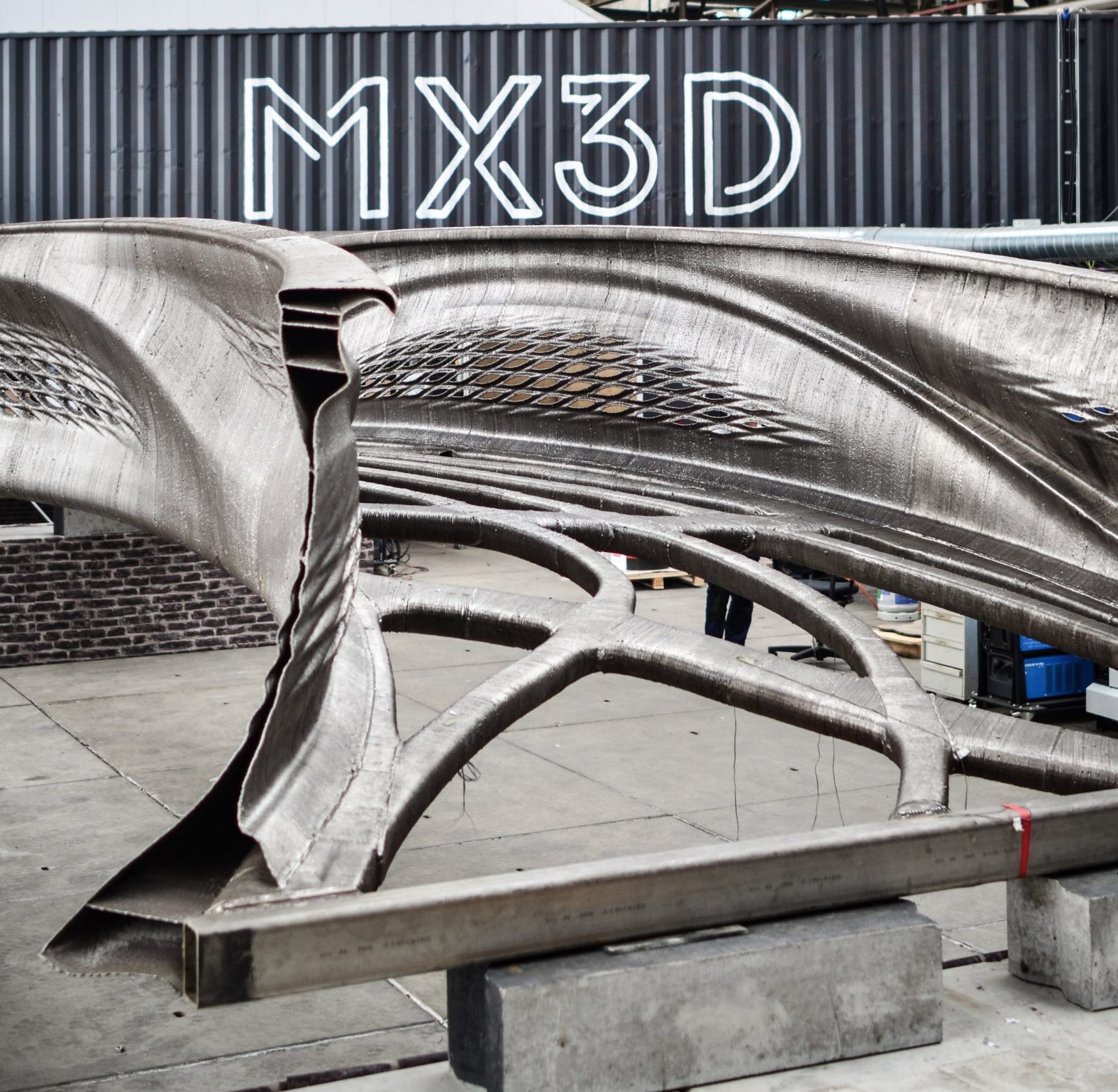
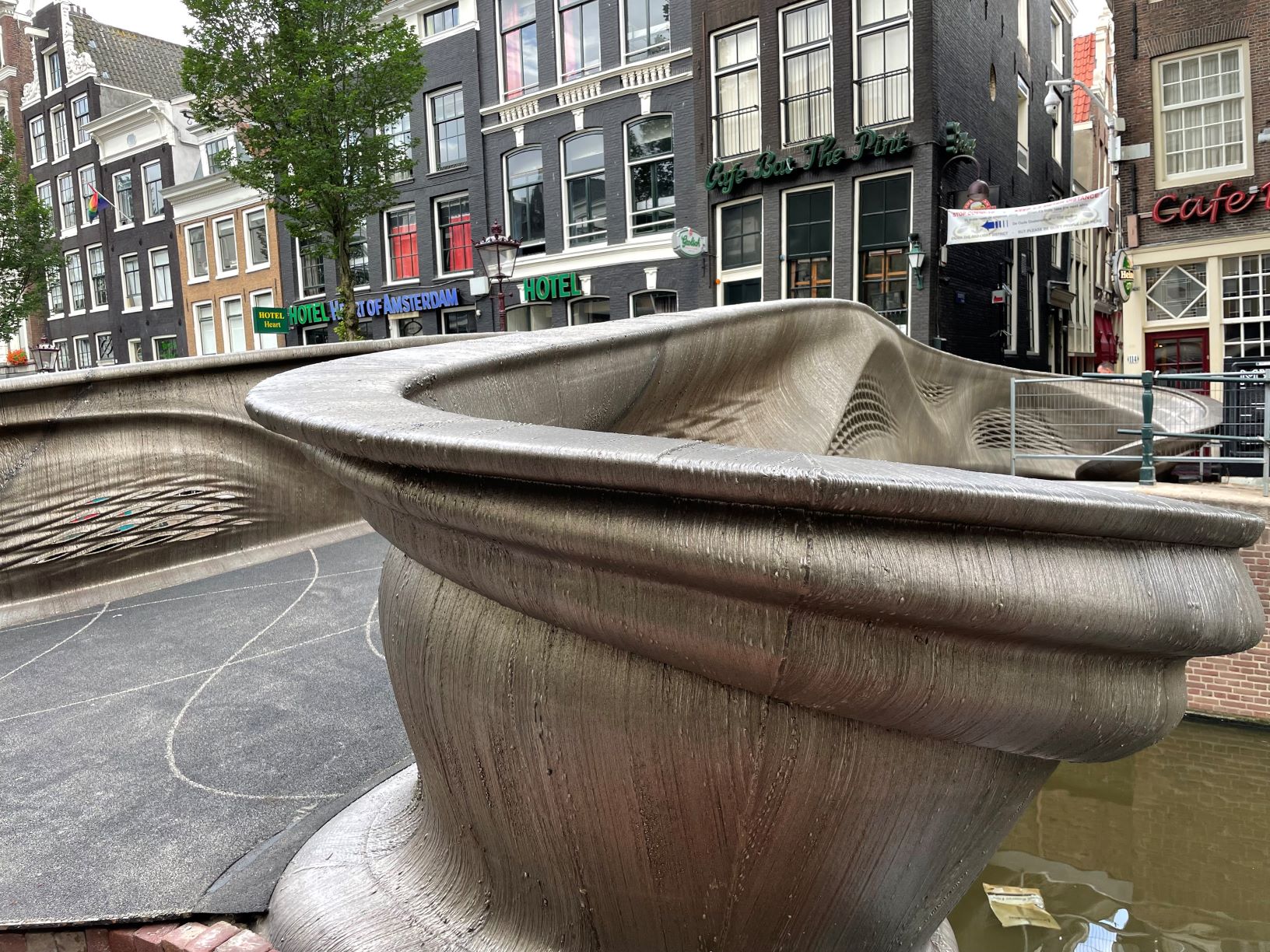
The MX3D bridge in Amsterdam represents a paradigm shift in construction, utilizing robotic Wire Arc Additive Manufacturing (WAAM) to create a functional 12-meter stainless steel structure. By integrating a sophisticated sensor network and a "digital twin," it provides real-time data on structural health, redefining urban infrastructure as an intelligent, responsive asset rather than a static fixture.
The installation of the MX3D bridge over the Oudezijds Achterburgwal canal in Amsterdam’s historic Red Light District was more than a localized renovation; it was a global proof-of-concept for the future of the built environment. As we evaluate its impact in 2026, the bridge stands as a testament to how digital fabrication, material science, and data analytics can converge to solve the pressing challenges of aging urban centers.
The Genesis of the MX3D Project: A Vision for Digital Craftsmanship
The project began as a collaborative effort between the Dutch technology startup MX3D, the Joris Laarman Lab, and a consortium of partners including Arup, Autodesk, and Imperial College London. The primary objective was to demonstrate that large-scale 3D printing had matured beyond experimental prototypes and was ready for the rigors of public use in a dense, historic urban setting.
Traditional bridge construction relies on standardized components—I-beams, plates, and bolts—which often lead to "over-engineered" structures where material is used in places it isn't structurally necessary. The Amsterdam bridge project sought to invert this model. By using 3D printing, the team could place material exactly where the stresses required it, allowing for a fluid, organic aesthetic that mirrors the complexities of biological structures.
The Role of Topology Optimization
A critical component of this innovative design was topology optimization. This is a mathematical approach that optimizes material layout within a given design space for a set of loads and boundary conditions. In the context of the MX3D bridge, software algorithms determined the most efficient path for the steel "ribs" to take, ensuring maximum strength with minimum weight. This not only reduced the total amount of stainless steel required but also created the unique, sculptural form that has become a landmark in the De Wallen district.
Breaking the Mold: The Technical Foundations of Wire Arc Additive Manufacturing (WAAM)
At the heart of the bridge’s construction is Wire Arc Additive Manufacturing (WAAM). Unlike consumer-grade 3D printers that melt plastic filament, WAAM combines industrial robotics with traditional welding techniques.
How the Robotic Process Works
The bridge was printed using 6-axis industrial robots equipped with welding torches. These robots were programmed to deposit layers of molten stainless steel (specifically 308LSi alloy) in a precise sequence.
- Robotic Motion Control: The robots were not confined to a traditional "X-Y-Z" gantry system. Their multi-axis movement allowed them to print in mid-air, creating curved surfaces without the need for temporary support structures.
- Material Deposition: The process involves an electric arc that melts a metal wire, which is then deposited and cooled almost instantly. By repeating this thousands of times, the robots "grew" the bridge from the ground up.
- Structural Integrity: Because the layers are fused at a molecular level during the welding process, the resulting structure possesses mechanical properties comparable to—and in some cases superior to—traditionally forged steel.
The technical depth required to calibrate these robots was immense. Factors such as "bead" width, cooling rates, and structural vibration during printing had to be managed in real-time to prevent warping or internal voids. In 2026, the data gathered during this printing phase continues to inform the programming of new autonomous construction units worldwide.
The "Smart Bridge" Concept: Integration of IoT and Data Analytics
What truly redefines urban infrastructure is not just how the bridge was built, but how it "behaves." The Amsterdam bridge is often referred to as a "living laboratory" due to its extensive sensor network developed by the Alan Turing Institute and Imperial College London.
The Sensor Network
Embedded within the steel structure are dozens of sensors that monitor:
- Structural Strain: Measuring how the metal expands and contracts under the weight of pedestrians.
- Vibration and Displacement: Tracking how the bridge reacts to wind, foot traffic, and even nearby construction.
- Environmental Factors: Monitoring air quality, temperature, and humidity to see how they affect the longevity of the stainless steel.
The Digital Twin
All data collected by these sensors is fed into a Digital Twin—a high-fidelity computer model that mirrors the physical bridge in real-time. In 2026, this digital twin allows city engineers to perform "predictive maintenance." Instead of waiting for a visible crack or rust to appear, engineers can see structural anomalies in the data long before they become safety hazards. This shift from reactive to proactive maintenance is a cornerstone of modern smart city initiatives, drastically reducing long-term operational costs.
Engineering and Safety Standards for 3D Printed Steel
One of the most significant hurdles for the MX3D bridge was regulatory approval. Because no building code existed for "3D printed stainless steel bridges," the engineering firm Arup had to develop a rigorous testing protocol from scratch.
Load Testing and Verification
Before installation, the bridge underwent extensive physical testing at Imperial College London. This included:
- Static Load Tests: Placing heavy weights (equivalent to several tons) on the bridge to measure deflection.
- Dynamic Load Tests: Analyzing how the structure handles rhythmic movement, such as a crowd of people walking in unison.
- Material Fatigue Analysis: Using X-ray and ultrasonic testing to ensure there were no hidden defects in the welded layers.
The success of these tests provided the evidence necessary for the City of Amsterdam to grant a public permit. It served as a global precedent, proving that additive manufacturing could meet—and exceed—the safety standards of traditional civil engineering.
Comparative Analysis: 3D Printing vs. Traditional Bridge Construction
To understand the impact of this innovation, it is helpful to compare the MX3D process with conventional infrastructure methods.
| Feature | Traditional Construction (Steel/Concrete) | 3D Printed (WAAM) Construction |
|---|---|---|
| Material Waste | High (due to offcuts, formwork, and over-engineering) | Minimal (material is deposited only where needed) |
| Design Freedom | Limited by standardized parts and mold shapes | Virtually unlimited; organic and complex geometries |
| Lead Time | Months of off-site fabrication and on-site assembly | Weeks of autonomous robotic printing |
| Maintenance | Reactive; periodic visual inspections | Proactive; real-time sensor monitoring via Digital Twin |
| Labor Requirement | High (specialized welding, crane operators, assembly) | Low (autonomous robots monitored by technicians) |
| Environmental Impact | High carbon footprint from concrete and heavy transport | Lower footprint due to material efficiency and on-site potential |
Sustainability and the Future of Urban Design in 2026
By 2026, the lessons learned from the Amsterdam bridge have permeated the construction industry. The sustainability benefits are the most compelling. By using topology optimization, we can reduce the amount of steel in a structure by up to 30-50% without sacrificing strength. This leads to a direct reduction in the carbon emissions associated with metal production.
Furthermore, the MX3D bridge proved that infrastructure can be beautiful. In an era where urban spaces are becoming increasingly densified, the aesthetic value of public works is vital for community well-being. The bridge doesn't just transport people across a canal; it serves as a piece of public art that celebrates the union of technology and craftsmanship.
Impact on Historic Preservation
Amsterdam's decision to place a high-tech bridge in its oldest district was intentional. It demonstrated that modern technology does not have to clash with heritage. The bridge's organic forms complement the historic brickwork of the Oudezijds Achterburgwal, proving that innovation can enhance rather than erase local character.
Frequently Asked Questions
Does the 3D printed stainless steel bridge rust?
No, the bridge is made from a high-grade stainless steel alloy (308LSi) that is highly resistant to corrosion. Unlike traditional carbon steel bridges that require frequent painting or coating to prevent rust, this bridge maintains its structural integrity and aesthetic finish naturally, even in the humid environment of Amsterdam's canals.
Is the bridge strong enough for vehicles?
The MX3D bridge was specifically designed and permitted for pedestrian and cyclist traffic only. While the WAAM technology is capable of creating structures for heavier loads, the bridge's current dimensions and location were optimized for foot traffic. Its load-bearing capacity was rigorously verified to handle the weight of dense crowds.
How long did it take to print the bridge?
The actual robotic printing process took approximately six months, during which four robots worked simultaneously to deposit the steel layers. However, the total project timeline—including design, engineering, safety testing, and the permit process—spanned several years, as it was the first project of its kind.
Can this technology be used for larger structures like skyscrapers?
Yes, the principles of WAAM and robotic 3D printing are being scaled up. By 2026, we have seen the emergence of "on-site" robotic printing for structural columns and decorative facades. While entire skyscrapers are not yet fully 3D printed, many major infrastructure projects now incorporate 3D printed components to solve complex geometry problems that traditional methods cannot address.
Where is the bridge located exactly?
The bridge spans the Oudezijds Achterburgwal canal at the intersection with the Stoofsteeg in Amsterdam's Red Light District. It replaced an older pedestrian bridge and serves as a vital crossing in one of the city's most visited areas.
Practical Recommendations for Future Infrastructure Projects
For city planners, architects, and engineers looking to emulate the success of the MX3D project in 2026, the following steps are recommended:
- Prioritize Interdisciplinary Collaboration: Success requires the early involvement of material scientists, software engineers, and regulatory bodies alongside traditional architects.
- Invest in Digital Twin Technology: Do not view the bridge as a finished product upon installation. Integrating sensors allows for a lifelong feedback loop that improves safety and reduces maintenance costs.
- Adopt Performance-Based Codes: Work with local authorities to move away from rigid, prescriptive building codes toward performance-based standards that allow for new materials and fabrication methods.
- Leverage Topology Optimization: Use algorithmic design to minimize material use. This is the most effective way to improve the sustainability profile of new infrastructure.
The MX3D bridge is no longer just an "innovative project"; it is the blueprint for a smarter, more resilient urban landscape. By treating infrastructure as a combination of advanced materials and intelligent data, cities can create public works that are as efficient as they are enduring.