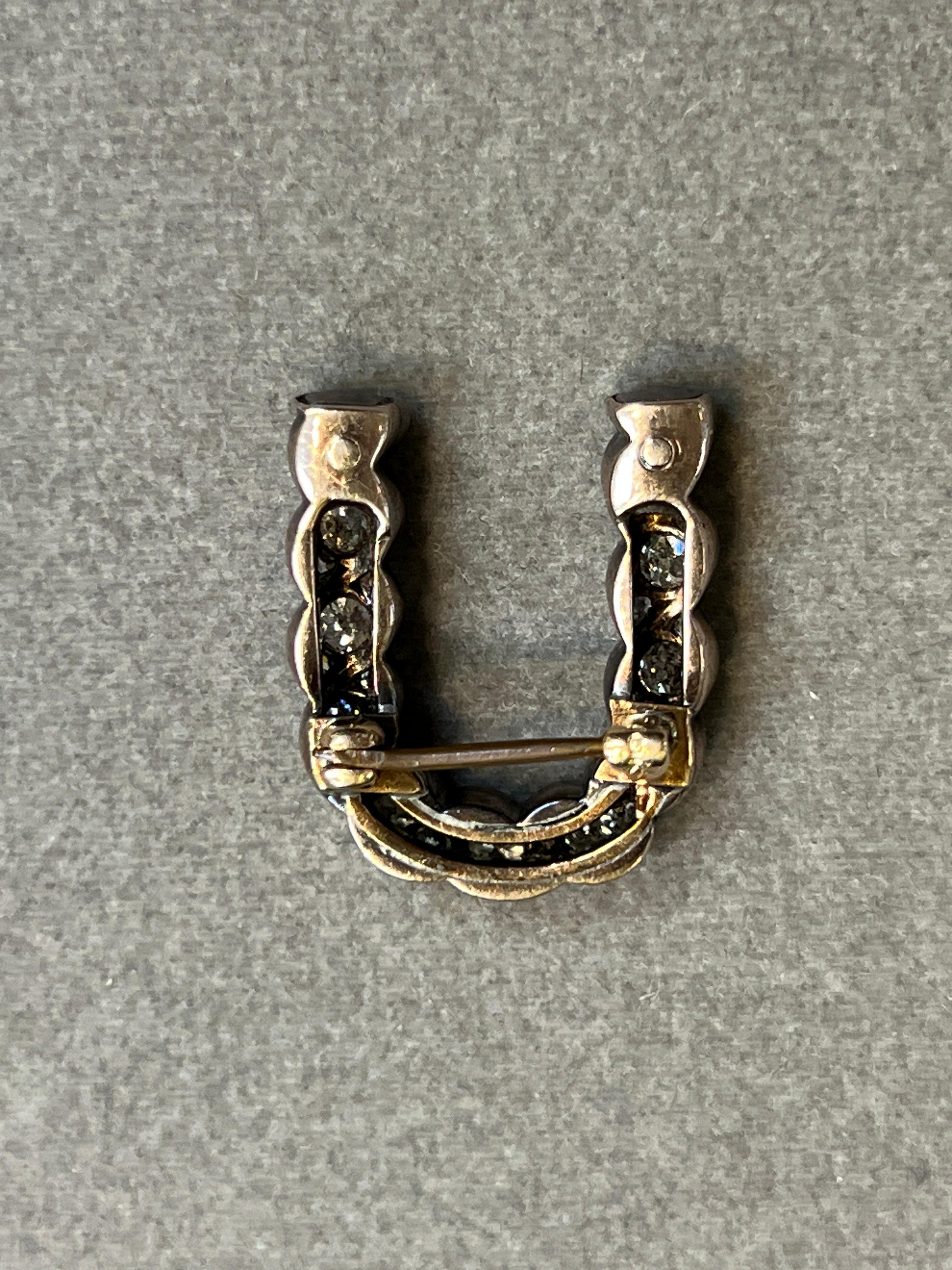
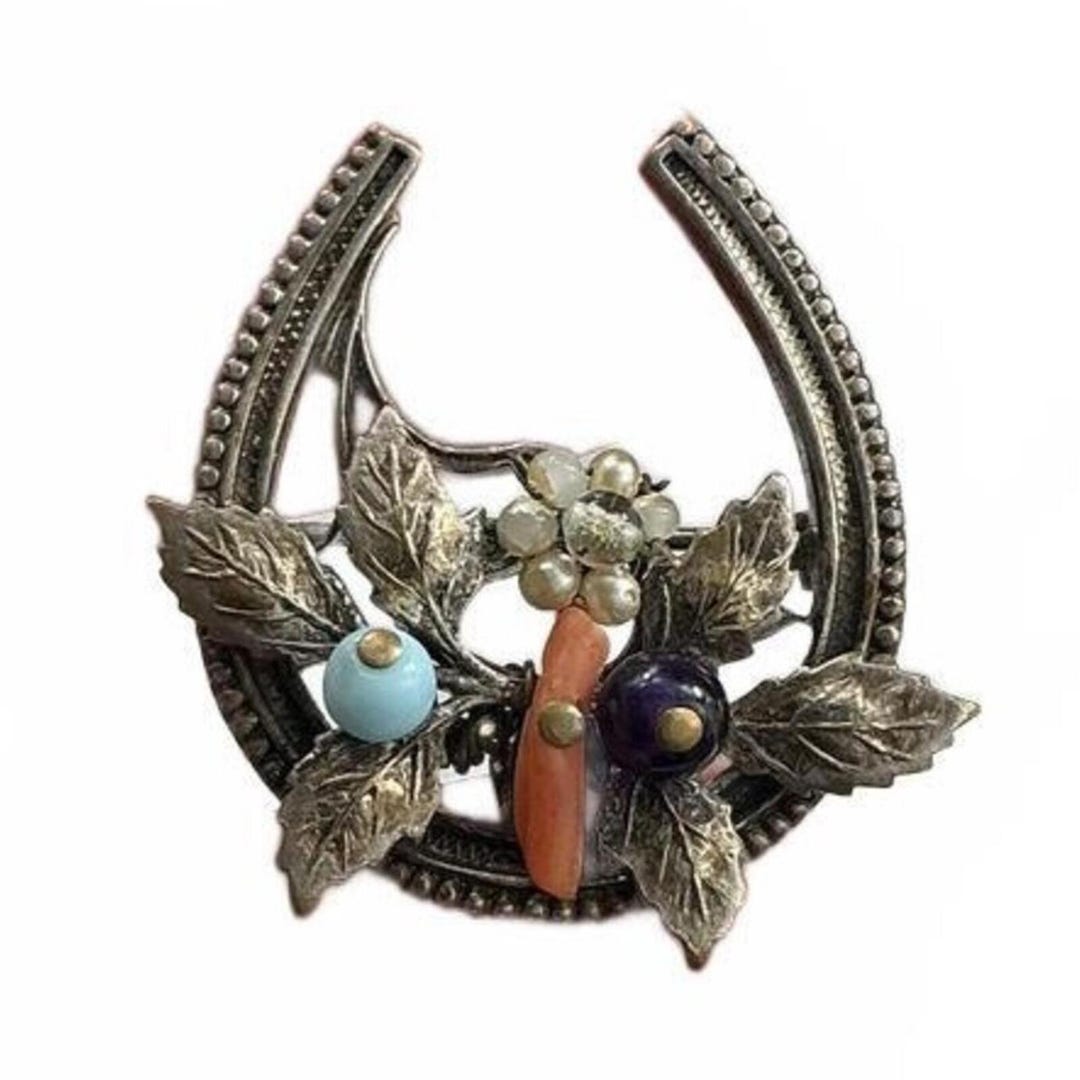
A Victorian horseshoe brooch is a talismanic antique jewelry piece crafted between 1837 and 1901, typically featuring gemstones or metals arranged in an upward-pointing horseshoe shape to symbolize good luck, protection, and prosperity.
Understanding the Victorian Era and Jewelry Context
The Victorian era, spanning the reign of Queen Victoria from June 20, 1837, until her death on January 22, 1901, represents one of the most prolific and stylistically diverse periods in the history of decorative arts. Divided into three distinct periods—Early or Romantic (1837–1860), Mid or Grand (1860–1885), and Late or Aesthetic (1885–1901)—Victorian jewelry reflected profound cultural shifts, industrial advancements, and the personal life of the Queen herself.
During the Romantic period, jewelry was deeply sentimental, often incorporating hair, symbolic flora, and fauna. As the era progressed into the Grand period, following the death of Prince Albert in 1861, designs became heavier, more architectural, and heavily influenced by archaeological discoveries. By the Late Victorian period, motifs lightened significantly, favoring delicate diamond clusters, whimsical insects, and equestrian symbols.
Equestrian motifs, including stirrups, riding crops, buckles, and horseshoes, gained immense popularity across all three sub-periods. This fascination stemmed from the upper-class obsession with fox hunting, horse racing, and country living—pastimes enthusiastically embraced by both the British aristocracy and the royal family. Consequently, a horseshoe brooch was not merely a quirky accessory; it was a socially acceptable, fashionable expression of sport, wealth, and superstition.
Symbolism and Cultural Significance of the Horseshoe
The horseshoe has ancient roots as a potent apotropaic device—an object designed to ward off evil spirits, witches, and misfortune. In European folklore, iron was believed to possess magical properties capable of repelling malevolent entities, fairies, and witches, who supposedly feared blacksmiths and their fiery forges. Because horseshoes were made of iron and secured with seven iron nails (seven being a number associated with luck and perfection), they became natural talismans.
A crucial folkloric debate centers on the orientation of the horseshoe:
- Upward-facing (U-shape): Captures and holds good luck, preventing it from spilling out.
- Downward-facing: Showers good luck and protection down upon anyone passing beneath it.
On Victorian brooches, the horseshoe is overwhelmingly depicted in the upward position (resting on its heels with the points facing upward) to ensure that luck accumulates and stays with the wearer. Jewelers amplified this symbolism by embedding the piece with specific gemstones that carried their own lexicon of meaning, transforming a simple iron or gold shoe into a rich tapestry of Victorian sentiment.
Materials, Gemstones, and Manufacturing Techniques
Victorian jewelers utilized a wide array of materials to construct horseshoe brooches, ranging from high-karat gold to humble base metals, paste stones, and natural organic materials. Examining these construction methods and materials is vital for authenticating any antique piece.
Metals Used in Victorian Brooches
- Gold: Early and mid-Victorian pieces often featured 15-karat or 18-karat yellow gold, while later Victorian jewelry frequently used 9-karat gold or rolled gold, particularly after the British Hallmarking Act of 1854 permitted lower gold standards. Silver was also widely used, especially during the Aesthetic period and in conjunction with diamond settings to enhance the stones' brilliance.
- Base Metals and Pinchbeck: Lower-end or costume pieces incorporated pinchbeck (an alloy of copper and zinc that mimics gold), brass, or iron, sometimes blackened to resemble mourning jewelry or burnished to look like steel.
Gemstone Combinations and Their Meanings
Gemstones were rarely chosen at random. Jewelers often used acrostic arrangements or popular stones of the era:
- Diamonds: Represented eternal love, strength, and invincibility. They were frequently pavé-set or old-mine cut into the face of the horseshoe.
- Pearls: Associated with tears, purity, and modesty. Seed pearls were exceptionally popular during the Romantic period, often woven or seed-stitched over a gold backing.
- Turquoise: Symbolized forget-me-nots, fidelity, and good fortune, frequently used in mid-Victorian cluster designs.
- Paste: High-quality lead glass cut by hand to imitate diamonds, rubies, or sapphires, offering accessibility to the middle classes.
Manufacturing and Findings
Victorian brooches feature distinct mechanical markers of their era. Prior to the invention of the safety catch in the late 19th century, brooch pins extended far beyond the body of the piece and utilized a simple C-clasp or a tubular hinge. The pin itself was typically hand-drawn, meaning it was thicker and less uniform than modern machine-made pins. Additionally, many Victorian brooches include a small integrated loop or bail, allowing the wearer to hang the piece from a chain as a pendant—a versatile dual-purpose design common in the 19th century.
Comparative Overview of Victorian Brooch Types
| Period / Style | Primary Metals | Common Gemstones / Accents | Distinctive Mechanical Features | Typical Valuation Range (USD) |
|---|---|---|---|---|
| Early Victorian (Romantic) | 15K–18K Gold, Pinchbeck | Seed pearls, turquoise, coral, garnets | Long pin extending past edge, simple C-clasp, closed-back settings | $300 – $1,200 |
| Mid Victorian (Grand) | 9K–15K Gold, Silver-topped gold | Diamonds, natural pearls, jet, onyx | Substantial weight, robust hinge, early tube hinges | $500 – $3,500+ |
| Late Victorian (Aesthetic) | 9K Gold, Silver, Rolled gold | Paste, small old-cut diamonds, peridot | Lighter frames, introduction of safety pins/locking clasps late in era | $200 – $1,500 |
| Equestrian / Sporting | Iron, steel, gold, enamel | Ruby accents (riding crops), diamond nails | Often incorporates riding crop or horseshoe nails crossing the shoe | $400 – $2,500 |
How to Identify and Authenticate an Authentic Victorian Piece
Distinguishing an authentic Victorian horseshoe brooch from a modern reproduction or retro piece requires careful inspection of craftsmanship, wear patterns, and hallmarks. Because antique jewelry is frequently replicated, buyers and collectors must systematically evaluate several physical characteristics.
- Examine the Back and Settings: Genuine Victorian pieces feature hand-cut metalwork. Look for closed-back settings in early pieces (where the metal encloses the back of the gemstone) or open-backed high-prong settings in later pieces. Modern castings often show uniform, smooth, machine-tooled interiors, whereas antique pieces exhibit slight irregularities from hand-filing.
- Analyze the Pin and Clasp: The pin should ideally extend past the outer edge of the brooch frame. If the pin is short, stiffly modern, and fitted with a secure locking safety roll-over clasp patented in the 20th century, the finding may have been replaced, or the entire piece is a reproduction.
- Search for Hallmarks and Makers' Marks: British Victorian jewelry often bears assay office marks (such as the crown for Sheffield, the anchor for Birmingham, or the leopard's head for London), a karat mark, and a maker's mark. However, many small brooches were exempt from compulsory hallmarking or have worn down over time. The absence of a hallmark does not automatically disqualify a piece from being antique.
- Evaluate Gemstone Cuts: Inspect diamonds and colored stones under magnification. Victorian diamonds are typically old mine cut or old European cut, characterized by small tables, high crowns, deep pavilions, and large open culets. If the stones are brilliant-cut with uniform modern facets, the piece is likely a later creation.
Valuation, Care, and Preservation
The market value of a Victorian horseshoe brooch depends heavily on material composition, gemstone quality, maker attribution, and overall condition. A simple brass or pinchbeck horseshoe from the late 19th century may command a modest entry-level price, whereas a signed mid-Victorian diamond-and-sapphire horseshoe crafted in 18-karat gold can fetch thousands at specialized fine jewelry auctions.
Maintenance and Cleaning Guidelines
- Avoid Harsh Chemicals: Ultrasonic cleaners and commercial jewelry dips can permanently damage organic gems like pearls, turquoise, and coral, as well as dissolve historical foil backings behind gemstones.
- Gentle Cleaning: Use a soft, damp microfiber cloth to wipe away surface dust. For gold frames, a very mild solution of dish soap and warm water applied with a soft-bristled artist's brush is sufficient, followed by immediate drying.
- Storage: Store antique brooches individually in acid-free tissue paper or lined jewelry compartments to prevent the sharp pins from scratching other items or bending under pressure.
Frequently Asked Questions
Are all Victorian horseshoe brooches made of solid gold?
No. While many high-end pieces feature 9k, 15k, or 18k gold, a significant portion of Victorian jewelry was made from rolled gold, gold-filled metals, pinchbeck, brass, iron, or silver. The material depended entirely on the socioeconomic target market for the specific piece.
What do the "nails" on a horseshoe brooch represent?
In authentic equestrian brooches, the horseshoe typically features seven nail heads represented by small diamonds, pearls, or raised metal bumps. Seven is traditionally regarded as a lucky number in Western folklore, compounding the protective symbolism of the horseshoe itself.
Can a Victorian brooch be converted into a pendant?
Many Victorian brooches were manufactured with hidden folding bails or small loops specifically designed to accommodate a chain, making them versatile. If a loop is absent, a professional jeweler can often attach a removable converter without compromising the antique integrity of the piece, though permanent alterations should be avoided to preserve collectible value.
How can I tell if the gemstones are genuine antiques?
Under a jeweler's loupe, authentic Victorian gemstones will show hand-cut facets with slight asymmetries. Furthermore, the setting style—such as collet settings, grain settings, or closed-backed foil settings—typically aligns with 19th-century manufacturing standards rather than modern precision setting techniques.
Is it safe to wear a Victorian brooch daily?
While durable, these pieces are delicate antiques. The C-clasps on early Victorian brooches do not lock securely by modern standards, increasing the risk of the brooch slipping off and getting lost. It is best to wear them on heavy fabrics (like wool coats or structured lapels) using a specialized locking pin back converter if worn frequently.
Verify the structural integrity of your antique jewelry collection and consult a certified appraiser specializing in 19th-century decorative arts to secure formal documentation for insurance and estate planning.