If an individual has a $200,000 convertible term life insurance policy, they have the contractual right to change their temporary coverage into a permanent life insurance policy, such as whole life or universal life, without undergoing a new medical exam or providing evidence of insurability. This conversion must typically occur within a specific window of time and will result in a higher premium based on the individual's age at the time of the switch.
For many policyholders, the "convertible" feature of a term policy is an overlooked but vital safety net. As of 2026, the landscape of life insurance continues to emphasize flexibility, allowing individuals to adapt their financial protection as their health, income, and family needs evolve. Whether you are holding a policy for debt protection or family security, knowing exactly how to exercise this option can be the difference between losing coverage and maintaining a lifelong financial legacy.
What is a $200,000 Convertible Term Life Insurance Policy?
To understand what an individual can do with this specific policy, we must first break down the components of the product. A term life insurance policy provides coverage for a set period—typically 10, 20, or 30 years. If the insured individual passes away during this period, the $200,000 death benefit is paid to the beneficiaries tax-free.
The word "convertible" is a specific provision or "rider" within the contract. It transforms a standard term policy into a bridge toward permanent insurance. Without this feature, once the term ends, the coverage simply expires, or the premiums jump to an unaffordable "annual renewable" rate.
The Value of the $200,000 Face Amount
A $200,000 death benefit is a common mid-range coverage amount. In 2026, this amount is often utilized to:
- Cover a remaining mortgage balance.
- Provide a "clean-up fund" for final expenses and outstanding personal debts.
- Supply a modest income replacement for a surviving spouse.
- Fund a child’s college education.
When an individual chooses to convert, they generally have the option to convert the full $200,000 or a portion of it (a partial conversion), depending on the insurance company’s minimum requirements for permanent policies.
The Conversion Privilege: No Medical Evidence Required
The most significant advantage of a convertible policy is the waiver of evidence of insurability. In the insurance world, "evidence of insurability" is the proof that you are healthy enough to be insured.
If an individual’s health has declined since they first purchased the policy—perhaps they have developed high blood pressure, diabetes, or a more serious chronic condition—they would likely face much higher premiums or be denied coverage entirely if they applied for a new policy. However, with a convertible policy, the insurance company is legally obligated to issue a permanent policy at a standard rate class similar to the one originally assigned, regardless of current health status.
Why This Matters in 2026
With advancements in medical diagnostic tools and data-driven underwriting in 2026, insurance companies are more precise than ever in assessing risk. For a policyholder who has experienced a "change in health," the conversion privilege is an invaluable asset. It allows them to lock in permanent protection that would otherwise be unavailable on the open market.
How the Conversion Process Works
If the individual chooses to convert their $200,000 policy, they must follow a specific set of procedural steps defined by the insurer.
1. Identifying the Conversion Window
Not all term policies are convertible for the entire duration of the term. For example, a 20-year term policy might only be convertible during the first 15 years, or until the policyholder reaches a certain age (often 65, 70, or 75). It is critical to review the policy document to identify the "expiry of the conversion privilege."
2. Selecting the Permanent Product
The individual cannot usually convert to any policy the company offers. Instead, the insurer will provide a list of specific permanent products available for conversion. In 2026, these options typically include:
- Whole Life Insurance: Offers fixed premiums, a guaranteed death benefit, and a cash value component that grows over time.
- Universal Life (UL): Offers more flexibility in premium payments and death benefits, often tied to current interest rates.
- Indexed Universal Life (IUL): A variation of UL where cash value growth is linked to a market index, such as the S&P 500.
3. Calculating the New Premium
The individual should be prepared for a significant increase in cost. Term insurance is inexpensive because it is temporary and has no cash value. Permanent insurance is more expensive because it is designed to last a lifetime and includes an investment or savings component.
The new premium is usually calculated using the Attained Age method. This means the rate is based on how old the individual is on the day of the conversion. Some older policies may offer an Original Age conversion, which allows the individual to pay the rate they would have paid if they had started the permanent policy years ago, but this requires a large lump-sum payment to cover the "back" cash value and interest.
Strategic Reasons to Convert a $200,000 Policy
Choosing to convert is a major financial decision. Below are the primary reasons an individual would exercise this right in 2026:
Lifelong Protection
Term insurance is a "placeholder." It protects against the risk of dying prematurely during your working years. However, if an individual realizes they will have lifelong needs—such as providing for a special-needs child or leaving a guaranteed inheritance—converting to permanent insurance ensures the $200,000 benefit will eventually be paid, no matter how long they live.
Cash Value Accumulation
Permanent policies build equity, known as cash value. This money grows tax-deferred and can be accessed via policy loans or withdrawals for emergencies, supplemental retirement income, or paying the policy's own premiums in later years. For an individual who has maxed out their 401(k) or IRA in 2026, the cash value in a converted policy can serve as an additional asset class.
Tax Advantages
Under current 2026 tax codes, life insurance death benefits remain largely tax-free to beneficiaries. Furthermore, the internal growth of the cash value is not taxed annually. Converting a term policy allows the individual to move from a "pure expense" (term premiums) to a "transfer of wealth" strategy.
Comparison: Term vs. Converted Permanent Insurance
| Feature | $200,000 Term Policy (Before) | $200,000 Permanent Policy (After) |
|---|---|---|
| Duration | Fixed period (e.g., 20 years) | Lifelong (to age 100 or 121) |
| Premium Cost | Low and fixed for the term | High; fixed or flexible depending on type |
| Cash Value | None | Yes, grows over time |
| Medical Exam | Required at initial purchase | Not required for conversion |
| Death Benefit | Paid only if death occurs in term | Guaranteed to be paid eventually |
| Main Purpose | Debt/Income replacement | Estate planning/Wealth accumulation |
Potential Limitations and Drawbacks
While the ability to convert is a powerful feature, it is not always the right move for every individual.
- Cost Prohibitions: The premium for a $200,000 whole life policy can be 5 to 10 times higher than the premium for a $200,000 term policy. For many individuals, this jump in monthly expenses is not sustainable.
- Limited Product Choice: You are restricted to the permanent products offered by the current carrier. If another company offers a better universal life product, you cannot "convert" your policy into that other company’s product; you would have to apply as a new customer and pass a medical exam.
- Partial Conversion Constraints: While many companies allow you to convert, say, $50,000 of your $200,000 policy, they may have "minimum face amount" rules. If the company requires a minimum of $100,000 for their whole life products, you cannot perform a smaller partial conversion.
How to Determine if You Should Convert
Before exercising the conversion option, an individual should ask the following questions:
- Is my health worse than when I bought the policy? If yes, conversion is likely your best way to keep insurance.
- Do I still need $200,000 of coverage? If your children are grown and your house is paid off, you might only need to convert $50,000 for final expenses.
- Can I afford the permanent premium? Permanent insurance only works if you keep it. If you lapse the policy after two years because of the cost, you have wasted your money.
- What is the deadline? Check your policy today. In 2026, many insurers have shortened conversion windows to manage their long-term risk.
The Role of the Life Insurance Company
The individual must contact the insurance company or their authorized agent to request a Conversion Illustration. This document will show exactly what the new premiums will be and how the cash value is projected to grow over the coming decades.
It is also important to note that some policies offer a Conversion Credit. This is a financial incentive where the insurance company applies a portion of the term premium paid in the last year toward the first year's premium of the new permanent policy. This can help ease the transition in the first year of the new contract.
FAQs
Can I convert only a portion of my $200,000 policy?
Yes, most convertible term policies allow for partial conversion. For example, an individual may choose to convert $100,000 into a permanent policy to cover final expenses and estate taxes, while letting the remaining $100,000 of term insurance stay in place until it naturally expires.
Does the individual need to pass a drug test or physical for conversion?
No. The defining feature of a convertible policy is that it bypasses all medical underwriting. As long as the original term policy is in force and the individual is within the conversion period, the company cannot ask any health-related questions.
What happens if I miss the conversion deadline?
Once the conversion window expires, the option is gone forever. The individual would either have to let the policy expire at the end of the term or apply for a new policy as a new applicant, which would require full medical underwriting and potentially higher rates due to age and health changes.
Is a convertible policy more expensive than a non-convertible one?
Generally, yes. Most modern term policies include conversion as a standard feature, but some "basic" or "simplified issue" policies strip this feature away to lower the premium. When shopping for coverage in 2026, it is almost always worth the slight extra cost to ensure the policy is convertible.
If I convert to a permanent policy, can I change my mind later?
Once the conversion is complete, you own a permanent policy. You can choose to cancel it later and receive any accumulated surrender value (the cash value minus any fees). However, you cannot "revert" back to your old term rate once the conversion is finalized.
Practical Recommendation
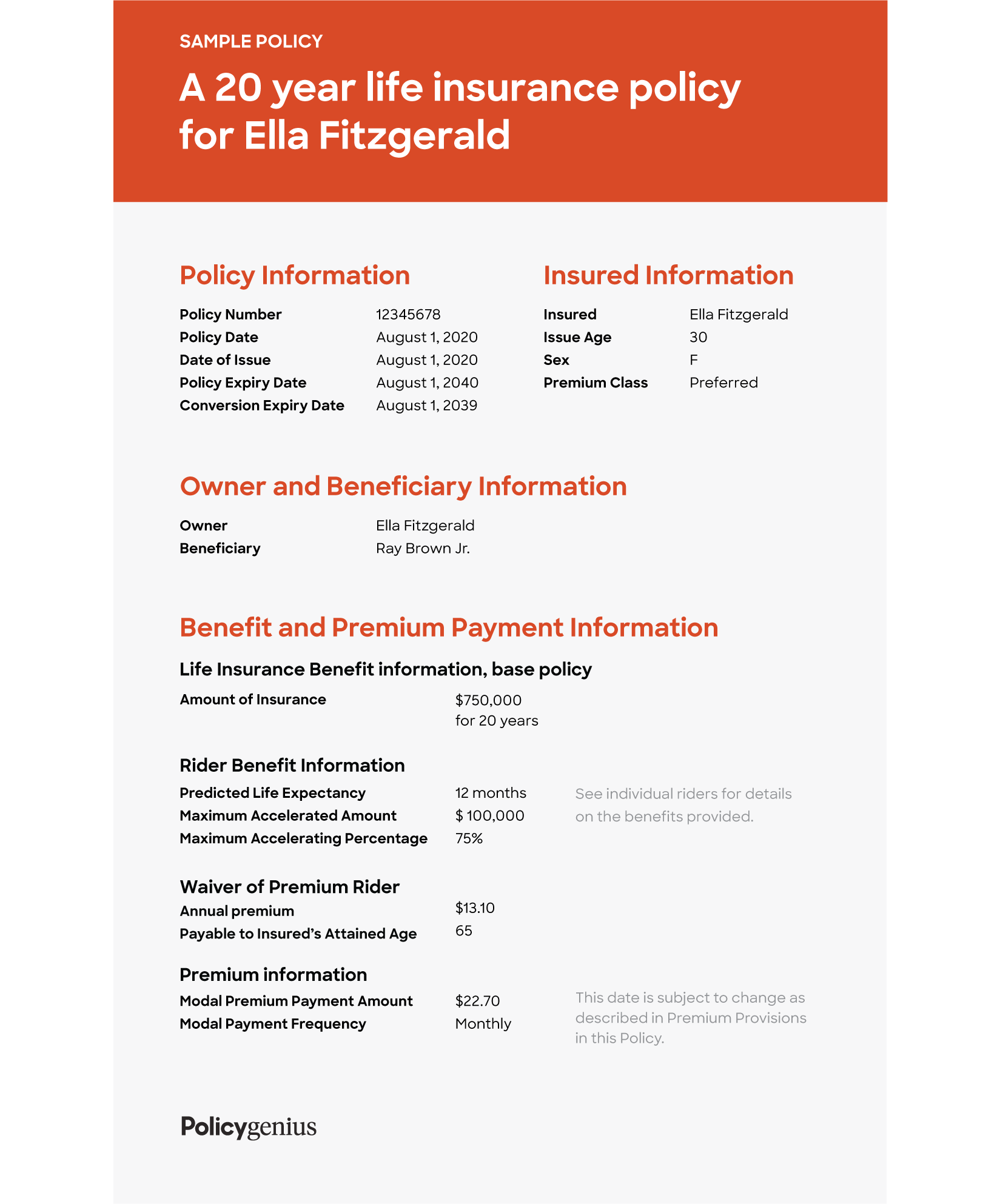
If you hold a $200,000 convertible term policy, your first action should be to locate your Policy Schedule page. Verify the "Last Date to Convert." If you are approaching that date or have recently experienced a change in your health, contact a financial advisor to run a comparison between your current term rates and the projected permanent rates. Even if you don't need the full $200,000 in perpetuity, converting a smaller portion (such as $50,000) can provide a "guaranteed" death benefit that will be there for your family regardless of how long you live or what health challenges you face in the future.