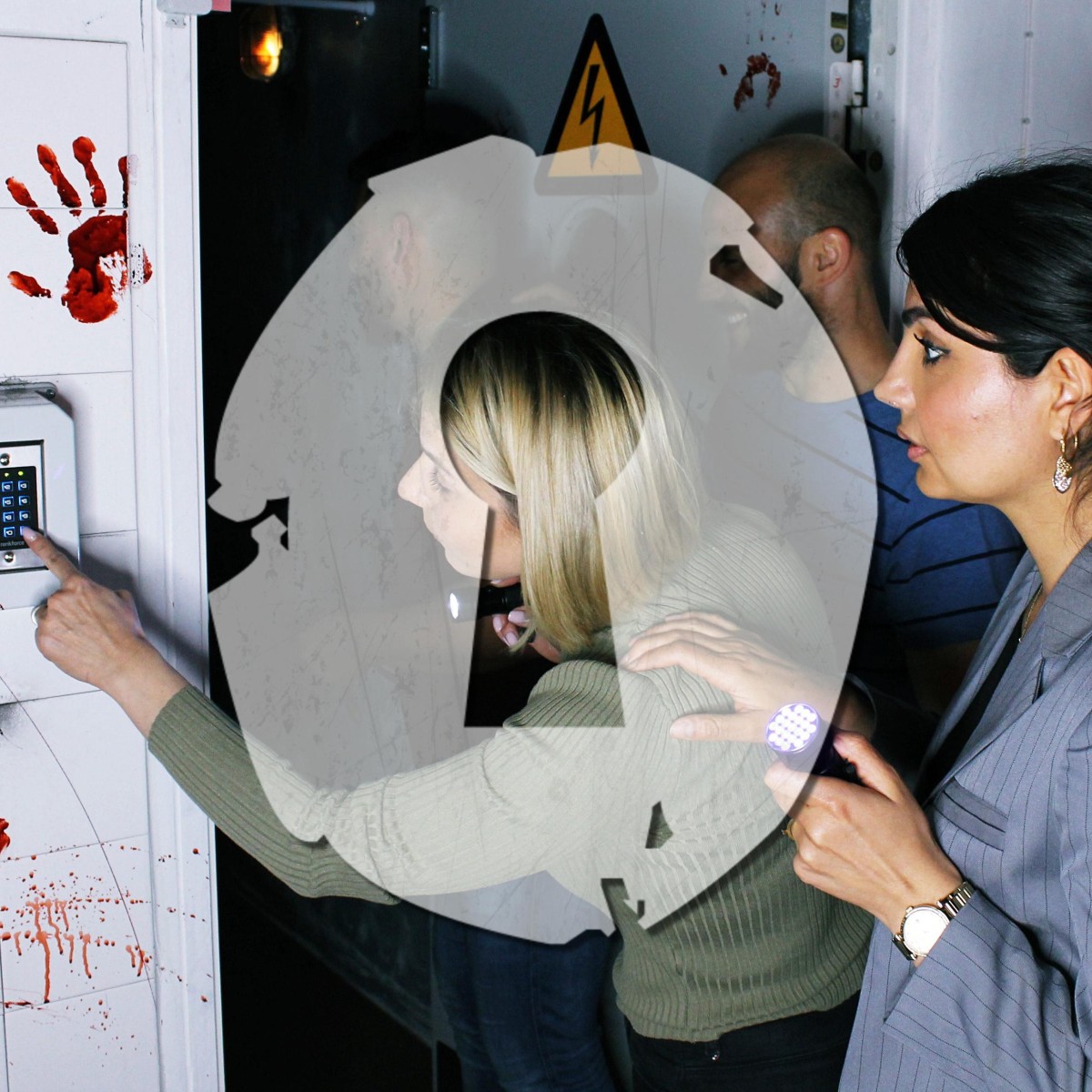
The "girl in a locked room" scenario is the cornerstone of the locked-room mystery, a subgenre of detective fiction where a crime—usually a disappearance or murder—occurs under seemingly impossible circumstances. These narratives focus on the "how" rather than just the "who," challenging the reader to solve a logical puzzle involving a room sealed from the inside.
The Anatomy of the Impossible Crime
The locked-room mystery, often referred to as an "impossible crime," is a narrative structure that prioritizes the intellectual duel between the author and the reader. In its most classic form, a victim (traditionally a young woman in early 20th-century literature) is found in a space where all doors, windows, and potential exits are bolted from the inside. There appears to be no way for a culprit to have entered or exited the premises.
This trope relies on the "Closed Circle" mystery format, but it tightens the physical constraints. While a standard Closed Circle might take place on a secluded island or a snowed-in manor, the locked-room mystery reduces the field of play to a single, impenetrable box. To understand the "girl in a locked room" motif, one must look at the mechanics of how these stories are constructed and the historical evolution of the damsel-in-distress versus the modern protagonist.
The Historical Significance of the Locked Room
The concept dates back to ancient literature, but it was formalized in the 19th century. Edgar Allan Poe is widely credited with inventing the modern version in 1841 with The Murders in the Rue Morgue. In Poe’s tale, two women are found dead in a room locked from the inside on the fourth floor. The solution—involving an animal and a lightning rod—set the stage for a century of increasingly complex mechanical and psychological puzzles.
By the "Golden Age of Detective Fiction" (the 1920s and 30s), authors like John Dickson Carr and Gaston Leroux turned the "girl in a locked room" into a high art form. Carr’s 1935 novel, The Hollow Man (published in the US as The Three Coffins), is often cited as the definitive text on the subject. It famously includes a "locked-room lecture" where the detective, Dr. Gideon Fell, breaks down every possible way a crime can be committed in a sealed environment.
Common Mechanics: How the "Impossible" Is Achieved
When analyzing a story involving a girl trapped or discovered in a locked room, the solution generally falls into one of several technical categories. Writers use these blueprints to create the illusion of impossibility while maintaining "fair play" with the reader.
Mechanical and Architectural Solutions
These solutions involve the physical manipulation of the room’s hardware. They were particularly popular in the early 20th century when intricate door bolts and window latches were more common.
- The Tampered Bolt: The culprit uses a tool—such as a pair of pliers, a piece of string, or a long needle—to slide a bolt or turn a key from the outside. A common method involves threading a string through the handle of a key, passing it under the door, and pulling it once the door is shut to turn the lock.
- The Weight and Pulley: In some older mysteries, the weight of the victim or a piece of furniture is used to trigger a locking mechanism as the door closes.
- The Secret Passage: While often considered a "cheat" in modern writing, classic mysteries frequently utilized hidden panels, revolving fireplaces, or hollow walls. Modern "fair play" rules usually require that the existence of such a passage be hinted at earlier in the story.
- The Window Trick: Windows may appear locked, but the culprit may have used a "glazier’s trick," removing a pane of glass and replacing it with fresh putty after exiting, or using a shim to flip a latch from the outside.
Psychological and Chronological Solutions
These are often more satisfying to modern audiences because they rely on human error and perception rather than mechanical gadgets.
- The Time of Death Illusion: The victim is not actually killed or kidnapped when the witness thinks they are. The culprit creates a noise or a "scream" using a recording or a delayed-action device, making people believe the crime is happening while the room is guarded, when in fact it happened hours earlier.
- The Accidental Death: The "crime" wasn't a crime at all. The victim died of natural causes or an accident, and the circumstances just happened to look like a murder.
- The "Suicide as Murder" Reverse: A victim may commit suicide but arrange the room to look like an impossible murder to frame someone else.
- The Interior Culprit: The person who "breaks down the door" to "save" the girl is actually the one who committed the crime. They use the confusion of the entry to hide the weapon or plant evidence.
The Evolution of the "Girl" in the Room
The role of the female character in these mysteries has shifted significantly over the decades. In the 2026 literary landscape, the "girl in a locked room" is rarely a passive victim.
From Victim to Survivor
In early iterations, the "girl" was often a Gothic trope—a fragile heiress or a terrified maid whose plight served as the catalyst for a male detective’s brilliance. However, contemporary thrillers have subverted this. Modern stories often focus on the perspective of the woman inside the room. Emma Donoghue’s Room (while not a traditional "whodunnit" mystery) changed the cultural conversation by focusing on the endurance and agency of the mother and child trapped within a shed.
The Final Girl and Horror Infusions
In the horror and "escape room" thriller genres, the locked room becomes a test of wit. The protagonist must use the "locked-room" logic against her captors. Instead of waiting to be found, she analyzes the mechanical weaknesses of the room—the very things a detective would look for—to facilitate her own escape.
Comparison of Iconic Locked-Room Mystery Models
The following table compares different approaches to the "locked room" problem across famous literary and cinematic examples.
| Work | Author/Director | The "Impossibility" | Type of Solution |
|---|---|---|---|
| The Murders in the Rue Morgue | Edgar Allan Poe | Fourth-floor room, door and windows bolted from inside. | Mechanical/Animal (External Entry) |
| The Mystery of the Yellow Room | Gaston Leroux | A woman is attacked in a room with no exits; her screams are heard. | Psychological (The "Attack" happened earlier) |
| The Hollow Man | John Dickson Carr | A man is shot in a room watched by witnesses in the snow; no tracks. | Architectural/Mechanical (The "Invisible" culprit) |
| The Decagon House Murders | Yukito Ayatsuji | A group on an island; killings occur in locked rooms. | Psychological/Interpersonnel (The "Dead" Suspect) |
| Room | Emma Donoghue | A mother and son held in a secure garden shed. | Physical Endurance/Social Engineering |
| 10 Cloverfield Lane | Dan Trachtenberg | A woman held in an underground bunker "for her safety." | Suspense/Technological (Escape-focused) |
How to Write a Modern Locked-Room Mystery in 2026
If you are a writer attempting to tackle this trope in the current year, the expectations for technical accuracy and psychological depth are higher than ever. Readers are familiar with the classic "string and key" tricks; they want something that reflects modern technology or deep-seated psychological trauma.
Step 1: Establish the "Axiom of Impossibility"
You must prove to the reader that the room is truly sealed. In 2026, this means accounting for digital locks, smart home cameras, and motion sensors. If a girl is in a "locked room," why didn't her smartwatch alert the police? Why didn't the cloud-based security system record the intruder? Addressing these technical hurdles early builds trust with the audience.
Step 2: Choose Your Mechanism
Decide if your solution is mechanical, psychological, or accidental.
- Modern Mechanical: Could the culprit have used a high-end drone to drop a key through a vent? Could they have hacked the smart-lock firmware to display "Locked" when it was actually "Open"?
- Modern Psychological: Does the protagonist have a dissociative disorder? Is the "room" actually a simulation or a deepfake hallucination?
Step 3: The "Fair Play" Rule
A locked-room mystery is a contract. You must give the reader all the clues necessary to solve the puzzle. If the solution involves a specific chemical property of a 2026-era battery, you must mention that battery earlier in the narrative. Never introduce a secret passage in the final chapter if it hasn't been alluded to in the architecture of the house.
Step 4: The Emotional Stakes
Why is she in the room? The "why" is often more important than the "how" in modern fiction. Is it a kidnapping (thriller), a ritual (horror), or a self-imposed isolation (psychological drama)? The emotional weight of the confinement should drive the plot forward as much as the mechanical puzzle.
The Psychological Appeal of the Closed Circle
Why are we still fascinated by the "girl in a locked room" in 2026? Psychologically, these stories represent the ultimate fear of loss of control and the ultimate triumph of human reason.
The locked room is a metaphor for the human mind. We are all, in a sense, trapped within our own perceptions. When a detective (or the protagonist herself) "unlocks" the impossible room, it serves as a cathartic moment where the chaotic, terrifying world is brought back into a state of logical order. For the reader, solving the puzzle provides a sense of intellectual mastery over a world that often feels random and unexplainable.
Common Pitfalls to Avoid
When consuming or creating these stories, be wary of "cheats" that can ruin the immersion:
- The Unreliable Narrator Overuse: Having the narrator simply "forget" they left the door open is often seen as a weak resolution.
- Supernatural Cop-outs: Unless the story is established as a fantasy, resolving a locked-room mystery with ghosts or magic violates the "fair play" rule of the genre.
- Over-Complex Gadgetry: If the solution requires the reader to have a PhD in quantum physics or specialized knowledge of 19th-century clockmaking that wasn't explained, the "aha!" moment will fall flat.
Frequently Asked Questions
What is the first-ever locked-room mystery?
The earliest recognized example in Western literature is Edgar Allan Poe's "The Murders in the Rue Morgue" (1841). However, some point to the biblical story of "Bel and the Dragon" in the Book of Daniel as an early example of an impossible crime solved through logic, where Daniel proves that priests are entering a sealed temple through a secret trapdoor.
Why is John Dickson Carr considered the master of the locked room?
Carr, also writing as Carter Dickson, specialized almost exclusively in "impossible crimes." He wrote over 70 novels, most featuring intricate, mechanical puzzles. His contribution was so significant because he codified the "rules" of the genre and provided a systematic breakdown of every known way to "lock" a room from the outside.
Is the "girl in a locked room" always a kidnapping story?
No. In classic detective fiction, it is usually a murder mystery where the victim is found in a sealed room. In modern thrillers, it is frequently a kidnapping or survival story (like Room or Cloverfield Lane). The term "locked room" refers more to the physical impossibility of the setting than the specific crime committed.
Can a locked-room mystery happen in an open space?
Yes. This is a variation known as the "Invisible Footprints" or "Snow Mystery." A victim is found in the middle of a pristine snow-covered field or a sandy beach with no tracks leading to or from the body. The logic used to solve these is identical to the locked-room mystery—it is about the impossibility of entry and exit.
Are escape rooms considered locked-room mysteries?
In a practical sense, yes. Escape rooms are interactive, live-action versions of the locked-room trope. They require participants to find "solutions" to mechanical and logical puzzles to "unlock" the environment, mirroring the steps a detective takes in a novel.
Practical Recommendation: Where to Start
For those looking to dive deeper into the "girl in a locked room" trope, the best next action is to read "The Hollow Man" by John Dickson Carr. Pay close attention to Chapter 17, the "Locked-Room Lecture." It remains the most comprehensive guide to the genre ever written. For a modern take that subverts the victim trope, watch or read "The Decagon House Murders", which provides a 21st-century perspective on Golden Age logic.
If you are a writer, your next step should be to diagram your "room" physically. Draw the floor plan, identify every point of entry (including vents and drains), and then systematically "seal" them. Only when you have a truly impenetrable room can you begin to craft the "cheat" that allows your culprit to commit the impossible.