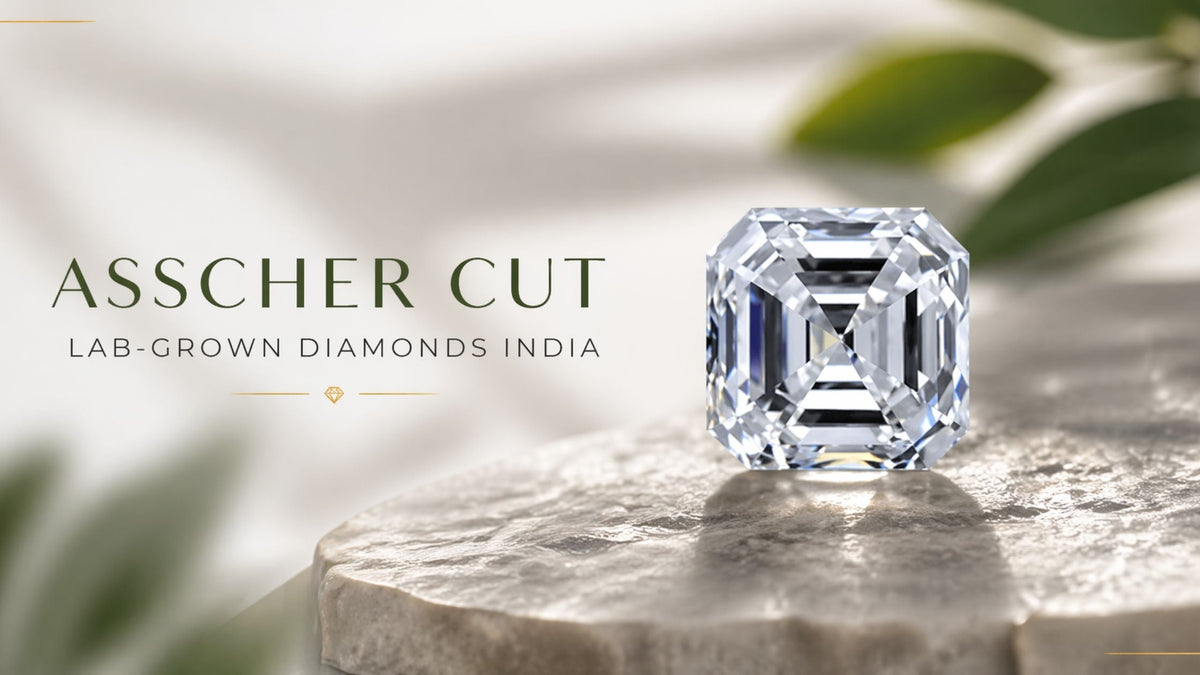
Purchasing a diamond in India is generally 10% to 30% cheaper than in the United States or Europe, primarily because India processes approximately 90% of the world’s diamond supply. By 2026, India has solidified its position as the global leader in both natural diamond polishing and lab-grown diamond manufacturing, offering significant savings through reduced supply chain layers and lower labor costs.
The global diamond trade has undergone significant shifts over the last decade, but one constant remains: India is the heart of the industry. Whether you are looking for a natural solitaire for an engagement ring or exploring the increasingly popular lab-grown market, understanding the nuances of the Indian market is essential for any savvy buyer. The price advantage in India is not merely a result of lower retail markups, but a systemic structural advantage that begins at the polishing wheel in Surat and ends in the high-end boutiques of Mumbai.
The Surat Factor: Why India Dominates Diamond Pricing
To understand why diamonds are cheaper in India, one must look at the city of Surat in Gujarat. As of 2026, Surat remains the world’s largest diamond manufacturing hub. Nearly nine out of every ten diamonds set in jewelry globally—regardless of where they are eventually sold—were cut and polished in this city.
Economies of Scale and Skilled Labor
The sheer volume of stones processed in India allows for unparalleled economies of scale. Indian cutting centers employ hundreds of thousands of highly skilled artisans. While automation has advanced significantly by 2026, the human touch required for intricate "fancy cuts" remains more cost-effective in India than in Antwerp or Tel Aviv. Because the labor costs associated with the "cut" (one of the crucial 4Cs) are lower, the final price of the loose stone is lower.
Vertical Integration and Supply Chain Efficiency
In most Western countries, a diamond passes through several hands: the miner, the rough trader, the polisher, the wholesaler, the regional distributor, and finally the retailer. In India, many large jewelry houses are "sightsholders" (authorized bulk buyers from De Beers and other miners) who also own their own polishing facilities. By eliminating multiple middlemen, these companies can offer stones to the public at prices that are often close to wholesale levels seen in the West.
Natural vs. Lab-Grown Diamonds in the 2026 Market
The diamond landscape in 2026 is divided into two distinct categories: natural (earth-mined) and lab-grown (LGDs). India’s influence on the pricing of both is profound, though the "cheaper" aspect manifests differently for each.
The Natural Diamond Market
Natural diamonds retain their value as rare commodities. In India, the price of a natural diamond is governed by the Rapaport Price List, which sets global benchmarks. However, Indian retailers often offer higher discounts on the "Rap price" compared to Western retailers. You can expect to save significantly on the setting and craftsmanship (making charges) as well, which are often 40-60% lower in India due to lower overheads for jewelry workshops.
The Lab-Grown Diamond Revolution
By 2026, India has become a global powerhouse for Lab-Grown Diamonds. The Indian government’s early-decade initiatives to subsidize LGD machinery and research have resulted in a massive domestic production capacity. If you are looking for LGDs, India is arguably the cheapest place in the world to buy them. These stones are chemically, physically, and optically identical to mined diamonds but can be purchased in India for a fraction of the cost of natural stones, often 80-90% less.
Price Comparison: India vs. Global Markets
When comparing prices, it is essential to look at the "all-in" cost, which includes the stone, the setting, and the applicable taxes. Below is a comparative look at the estimated costs for a 1-Carat, Round Brilliant, G Color, VS1 Clarity, Excellent Cut natural diamond in 2026.
| Region | Estimated Price (USD) | Local Taxes/VAT | Total Estimated Cost |
|---|---|---|---|
| India | $5,500 - $6,200 | 3% GST | $5,665 - $6,386 |
| United States | $7,000 - $8,500 | 0% - 9% (Sales Tax) | $7,000 - $9,265 |
| United Kingdom | $7,500 - $9,000 | 20% VAT | $9,000 - $10,800 |
| UAE (Dubai) | $6,200 - $7,000 | 5% VAT | $6,510 - $7,350 |
| Hong Kong | $6,300 - $7,200 | 0% | $6,300 - $7,200 |
Note: Prices are estimates based on 2026 market trends for GIA-certified stones. Market volatility can affect these figures.
Understanding the Tax and Duty Structure
One of the reasons India remains competitive is its specific tax treatment of diamonds. As of 2026, the Goods and Services Tax (GST) on loose polished diamonds and diamond-studded jewelry remains relatively low compared to general luxury goods.
- GST on Diamonds: The GST on the sale of diamonds is currently 3%. This is significantly lower than the Value Added Tax (VAT) in European countries, which often exceeds 15-20%.
- Import Duties: While India imposes import duties on rough diamonds to encourage domestic processing, the government often adjusts these to ensure the export market remains competitive.
- Customs for International Buyers: If you are a tourist or an NRI (Non-Resident Indian) buying diamonds in India to take abroad, you must consider the customs regulations of your home country. While you save on the purchase price in India, you may be required to pay import duty upon arrival in your home country if the value exceeds your personal allowance.
The Importance of Certification: GIA and IGI
A diamond is only "cheaper" if its quality is verified. In the Indian market, as in the rest of the world, certification is the gold standard for price transparency.
- GIA (Gemological Institute of America): This is the most respected certification globally. Most high-end Indian retailers stock GIA-certified natural diamonds. If a diamond is significantly cheaper than the market rate but lacks a GIA certificate, the "savings" are likely an illusion caused by over-grading the stone’s quality.
- IGI (International Gemological Institute): IGI is the leader in certifying lab-grown diamonds. Given India’s massive LGD market in 2026, IGI certificates are extremely common and reliable for synthetic stones.
- SGL and Solitaire: These are reputable Indian labs often used for jewelry pieces rather than loose stones. While reliable for domestic use, they may have less "resale weight" internationally than GIA.
Where to Buy: Navigating the Indian Market
Location matters when seeking the best price. India offers different buying experiences depending on your technical knowledge and budget.
Mumbai: The Trading Hub
The Bharat Diamond Bourse (BDB) in Bandra-Kurla Complex (BKC) is one of the largest diamond exchanges in the world. While the Bourse itself is primarily for B2B trade, the surrounding areas host numerous wholesalers and boutique offices. Buying in Mumbai gives you access to the highest concentration of inventory, allowing for better price negotiations.
Surat: The Manufacturing Source
Buying in Surat can be cheaper, but it is often less "retail-friendly" than Mumbai or Delhi. It is ideal for those looking for loose stones directly from manufacturers. However, ensure you are dealing with a reputable firm that offers international certification.
High-End Retail vs. Local Jewelers
India has world-renowned retail chains like Tanishq, Malabar Gold & Diamonds, and Orra. These stores offer transparency, buy-back guarantees, and standardized pricing. While you might pay a slight premium compared to a small wholesaler, the security and after-sales service are often worth the 5-10% difference for non-experts.
Practical Tips for International Buyers in 2026
If you are traveling to India specifically to buy diamonds, keep these practical considerations in mind:
- Payment Methods: Many wholesalers offer discounts for bank transfers or wire payments over credit cards, which carry high processing fees (often 2-3%) that the merchant may pass on to you.
- Insist on a Tax Invoice: Always get a formal GST invoice. This is necessary for insurance purposes and to prove the legality of the purchase at customs.
- Verify the Laser Inscription: Most GIA/IGI diamonds have a microscopic serial number laser-inscribed on the girdle. Use a jeweler’s loupe to verify that the number on the stone matches the number on the certificate.
- Check the Fluorescence: India’s market sometimes has a higher volume of stones with "Strong Blue" fluorescence. While these stones are cheaper, they can sometimes appear cloudy in natural sunlight. Ensure you are aware of the fluorescence grade before agreeing to a price.
Common Pitfalls and How to Avoid Them
The lure of "cheap" diamonds can sometimes lead to mistakes. In 2026, the primary concern for buyers is the undisclosed mixing of lab-grown diamonds with natural diamonds in "melee" (the small diamonds used in pavé settings).
- The "Synthetic Mixing" Trap: Ensure the jeweler uses advanced screening technology (like the De Beers DiamondView or similar devices) to guarantee that all small stones in a piece of jewelry are natural, if that is what you are paying for.
- The "Lighting" Illusion: Jewelry stores use specialized LED lighting that makes every diamond sparkle intensely. Always ask to see the stone in neutral, natural light or under a standard daylight lamp to see its true color and brilliance.
- Ambiguous "Making Charges": Indian jewelers often separate the cost of the gold, the diamonds, and the "making charges" (labor). Ensure you negotiate the making charges, as these are highly flexible, unlike the price of the gold or the diamond itself.
FAQs about Buying Diamonds in India
1. Are diamonds in India of lower quality because they are cheaper?
No, the quality is not lower. Because India polishes nearly all the world's diamonds, the same stones sold at luxury retailers in New York or London originated in Indian factories. Quality is determined by the 4Cs (Carat, Color, Clarity, Cut), not the country of purchase.
2. Can I get a VAT/GST refund as a tourist?
As of 2026, India has streamlined the Tourist Tax Refund (TTR) scheme for certain luxury goods. However, the rules regarding jewelry can be complex. Always check with the retailer if they are registered for GST refunds for international tourists at the airport.
3. Is it safe to carry diamonds out of India?
Yes, it is legal to carry jewelry for personal use, provided you declare it according to the laws of the country you are entering. For high-value loose stones, it is recommended to have them shipped via secured couriers like Malca-Amit or Brinks, which handle customs clearance and insurance.
4. Why are "making charges" so important in India?
In Western countries, jewelry is often sold as a finished product with a single price tag. In India, the price is transparently broken down. Making charges cover the craftsmanship and design. Because skilled labor is more affordable in India, these charges are significantly lower than in the West, contributing to the overall lower cost of diamond jewelry.
5. How has the 2026 market changed for diamond buyers?
The biggest change is the total transparency and availability of lab-grown diamonds. Indian retailers now clearly distinguish between LGDs and natural diamonds, and the price gap between the two has widened, making luxury diamond jewelry accessible at much lower price points than in previous decades.
Final Recommendation
If you are planning a significant diamond purchase, India offers an undeniable price advantage, particularly for loose stones and custom-designed jewelry. To maximize your savings and security, prioritize GIA-certified natural diamonds or IGI-certified lab-grown diamonds and purchase from established retailers in Mumbai or Surat. By leveraging India's manufacturing dominance and lower labor costs, you can realistically save 20% or more compared to Western retail prices, even after accounting for travel costs and potential import duties.
For more information on diamond grading and standards, you can visit the Gemological Institute of America (GIA) or the International Gemological Institute (IGI). To understand the current trade regulations and export data, the Gems and Jewellery Export Promotion Council (GJEPC) of India provides comprehensive industry reports and verified member directories.