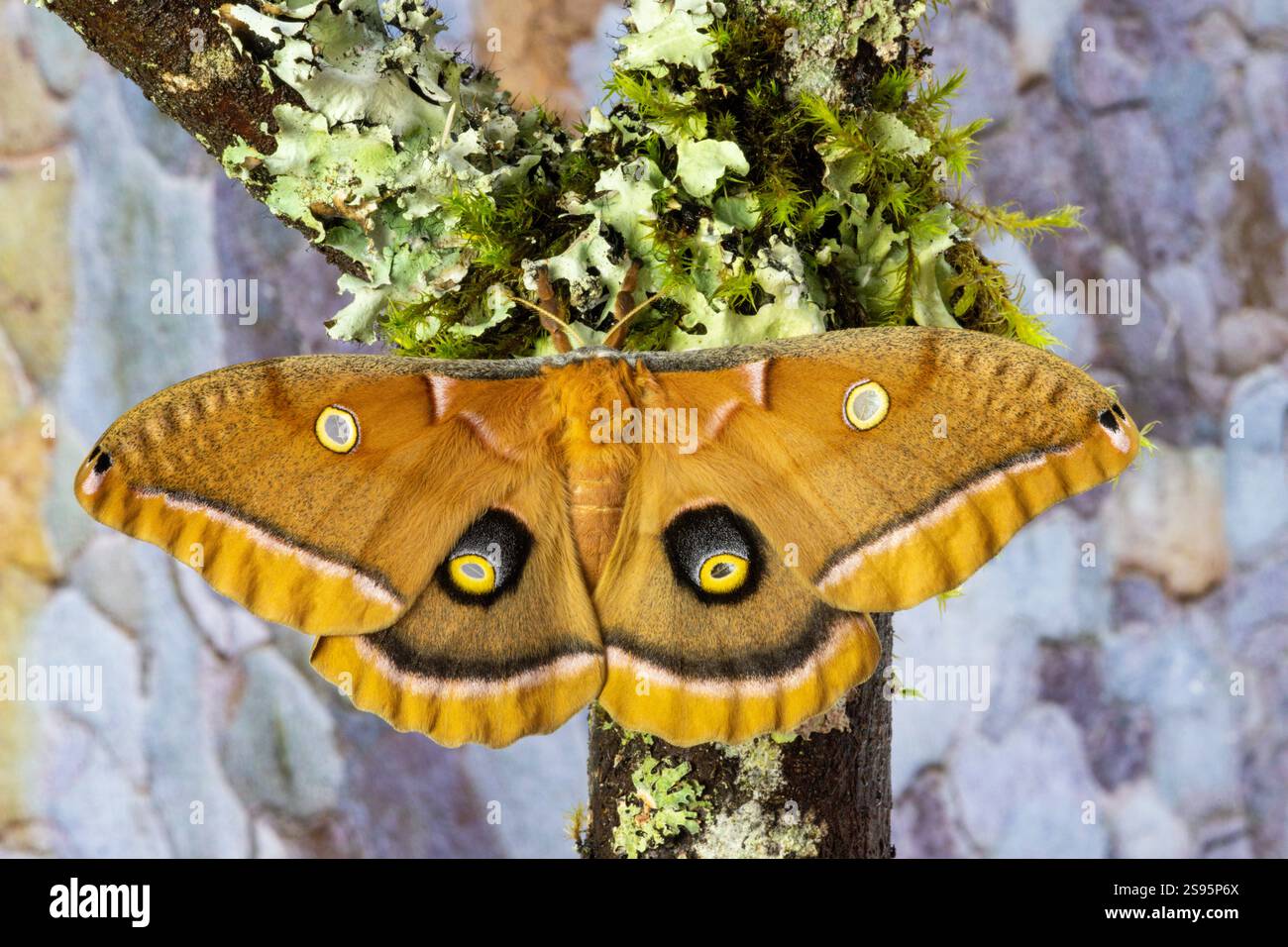
The first confirmed sighting of a live Atlas moth (Attacus atlas) in the United States occurred in Bellevue, Washington, in July 2022. While there have been no confirmed reports of an established population as of 2026, the Washington State Department of Agriculture (WSDA) continues to monitor for this invasive species due to its potential impact on the state’s agricultural industry and native ecosystems.
The Atlas moth is one of the largest lepidopterans in the world, boasting a wingspan that can reach up to 10 inches. Native to the tropical forests of Southeast Asia, its presence in the Pacific Northwest is considered an anomaly, likely linked to the illegal pet trade or the unauthorized release of captive-bred specimens. Because the larvae of the Atlas moth feed on a wide variety of host plants—including those vital to Washington's economy, such as apple and cherry trees—it is classified as a federally regulated quarantine pest.
The 2022 Bellevue Sighting and State Response
In the summer of 2022, a homeowner in Bellevue, Washington, discovered a massive moth resting on their garage door. Recognizing that the insect was far larger than any native species, the resident reported the sighting to the WSDA via an online reporting tool. State entomologists quickly identified the specimen as an Atlas moth, a finding later confirmed by the United States Department of Agriculture (USDA) Animal and Plant Health Inspection Service (APHIS).
This discovery prompted an immediate investigation. The WSDA conducted surveys in the surrounding neighborhood to look for additional adults, larvae, or cocoons. While no other specimens were found at that time, the incident highlighted the ease with which non-native species can be introduced into local environments. Since that initial event, the state has maintained a high level of vigilance. As of 2026, the WSDA Pest Program remains the primary agency responsible for tracking potential sightings and ensuring that this giant moth does not gain a foothold in the temperate climate of Washington.
The legal implications of the Atlas moth are significant. Under the Plant Protection Act, it is illegal to import, possess, or transport live Atlas moths—in any life stage—without a specific permit from the USDA. These permits are typically reserved for research or highly controlled educational displays. The general public is prohibited from keeping them as pets, and the discovery of any specimen should be reported immediately to authorities.
Identifying the Atlas Moth: Key Features
Distinguishing an Atlas moth from native Washington species is relatively straightforward due to its sheer size and unique wing patterns. However, several native "giant" silkmoths inhabit the region and are frequently mistaken for their tropical cousin.
Wingspan and Surface Area
The most striking feature of the Atlas moth is its size. While native moths like the Ceanothus silkmoth may reach a wingspan of 4 to 5 inches, the Atlas moth can reach nearly double that size. It is often cited as having the largest wing surface area of any moth in the world. The wings are broad and heavy, giving the insect a distinctively "bat-like" appearance when seen at a distance in flight.
The "Cobra Head" Mimicry
A defining characteristic of Attacus atlas is the pattern on the tips of its forewings. The wingtips are curved and colored in a way that closely resembles the head of a cobra, complete with an "eye" spot. This is a form of defensive mimicry intended to frighten off avian predators. If you see a moth that appears to have two snakes protruding from its wings, it is almost certainly an Atlas moth.
Wing Markings and Windows
The base color of the wings is typically a rich reddish-brown or ochre. The wings feature prominent, triangular "fenestrae" or translucent windows. These spots are devoid of scales, appearing like clear glass framed by black and white borders. While some native moths have eyespots, they rarely possess the clear, unscaled windows found on the Atlas moth.
Comparing the Atlas Moth to Native Washington Species
In Washington, the most common species mistaken for the Atlas moth is the Ceanothus silkmoth (Hyalophora euryalus). While large and beautiful, it lacks the invasive potential and the massive scale of the Atlas moth.
| Feature | Atlas Moth (Attacus atlas) | Ceanothus Silkmoth (H. euryalus) | Polyphemus Moth (Antheraea polyphemus) |
|---|---|---|---|
| Wingspan | 8–10+ inches | 4–5 inches | 4–6 inches |
| Origin | Southeast Asia (Invasive) | Native to Western North America | Native to North America |
| Wing Shape | Falcate (hooked) wingtips | Rounded wingtips | Rounded wingtips |
| Unique Marks | Cobra-head mimicry on tips | Crescent-shaped white marks | Large yellow "eyespots" |
| Translucent Windows | Large, triangular, clear | None (mostly opaque) | Small, circular, clear |
| Legal Status | Federally Regulated Pest | Protected/Native | Protected/Native |
The Lifecycle and Host Plants
Understanding the lifecycle of the Atlas moth is crucial for identifying potential infestations. Because the moth is a generalist feeder in its larval stage, it poses a threat to a broad spectrum of vegetation.
Larval Stage (Caterpillars)
The caterpillars are as remarkable as the adults. They can grow up to 4.5 inches in length and are lime green with blue-tinged dorsal processes (fleshy spines). They are covered in a white, waxy powder that protects them from certain predators and dehydration. In Washington, these larvae could potentially survive on a variety of host plants, including:
- Fruit Trees: Apple (Malus), Cherry (Prunus), and Citrus.
- Ornamentals: Privet, Lilac, and various willow species.
- Native Flora: Evergreen huckleberry and other Ericaceous plants.
Pupation and Adult Life
Atlas moths spin large, papery cocoons out of silk. These cocoons are often interwoven with leaves and hang from the branches of host plants. Interestingly, in some parts of Asia, this silk is harvested for commercial use (known as fagara silk), though it is not as durable as the silk from the domesticated silkworm.
Once the adult emerges, it has a very short window of existence. Adult Atlas moths do not have functioning mouthparts. They cannot eat and rely entirely on the fat reserves stored during their caterpillar stage. Their sole purpose is to find a mate and lay eggs. They typically live for only one to two weeks, which makes the discovery of a live adult particularly significant—it suggests a recent emergence or release.
Potential Impact on Washington's Agriculture
The primary concern for the WSDA and USDA regarding the Atlas moth is its appetite. As a generalist, the larvae are not picky. Washington is a leading producer of apples, pears, and sweet cherries. An established population of Atlas moths could lead to significant defoliation in commercial orchards.
In their native tropical habitats, Atlas moths are kept in check by a variety of specialized predators and parasites that do not exist in the Pacific Northwest. Without these natural "checks and balances," an invasive population could grow rapidly during the warm summer months. While the cold winters of Washington might prevent the moth from becoming permanently established in the wild, the possibility of "hitchhiking" in greenhouses or survival during unusually mild winters remains a topic of study for entomologists in 2026.
How to Report a Sighting in Washington State
If you believe you have seen an Atlas moth or its caterpillar, the most important action is to document it without harming the insect if possible. Public cooperation is the most effective tool the state has for early detection.
Steps for Reporting
- Take High-Quality Photos: Capture images of the insect from multiple angles. Focus on the wingspan and the patterns on the wingtips. If possible, place an object (like a coin or a ruler) near the moth for scale.
- Note the Exact Location: Record the address or GPS coordinates where the moth was spotted.
- Observe the Host Plant: If you find a caterpillar, note what plant it is feeding on.
- Submit a Report: Use the WSDA Pest Program online reporting form. You can also email photos and location data to PestProgram@agr.wa.gov.
- Do Not Move the Insect: Unless instructed by a state official, do not transport the moth. Moving a regulated pest can inadvertently spread an infestation to new areas.
Common Misconceptions and FAQs
Are Atlas moths dangerous to humans?
No. Atlas moths do not bite or sting. They do not possess a stinger, and as adults, they do not even have mouthparts to bite. They are completely harmless to humans and pets. The only "danger" they pose is to the plants they consume during their larval stage.
Why was the Atlas moth found in Washington if it's tropical?
The most likely explanation for sightings in Washington is the illegal pet trade. Despite federal bans, cocoons are sometimes sold online to hobbyists who wish to see the giant moths emerge. If these moths escape or are intentionally released, they can be spotted by the public. There is no evidence that the moths migrated to Washington naturally.
Can Atlas moths survive the Washington winter?
This is a subject of ongoing research. While Attacus atlas is a tropical species, related species have shown surprising resilience to cooler temperatures. However, it is generally believed that the sustained freezing temperatures of a typical Washington winter would be fatal to the moths in any life stage. The risk lies in their ability to cause damage during the spring and summer or to survive in sheltered, human-made environments.
Is it legal to buy Atlas moth cocoons online?
In the United States, it is illegal to receive or possess live Atlas moth cocoons, larvae, or adults without a USDA Plant Protection and Quarantine (PPQ) permit. Purchasing them from international or domestic sellers without this permit is a violation of federal law.
Expert Recommendations for Residents
As we move through 2026, the WSDA emphasizes that public awareness is the first line of defense. If you are a gardener or an orchardist, familiarize yourself with the appearance of both the adult moth and the caterpillar.
Avoid purchasing "giant moth" kits from unverified sources online. Many of these kits source species that are not native to the U.S. and can lead to accidental introductions of invasive pests. Instead, support native pollinators by planting host species for the Ceanothus silkmoth or the Western Tiger Swallowtail.
If you encounter a large moth that you cannot identify, assume it is a native species first, but do not hesitate to send a photo to the WSDA. Most "giant moth" reports turn out to be the native Ceanothus or Polyphemus moths, but state entomologists prefer to sort through a thousand native sightings than to miss a single invasive one. Protecting Washington’s agricultural health requires collective vigilance.