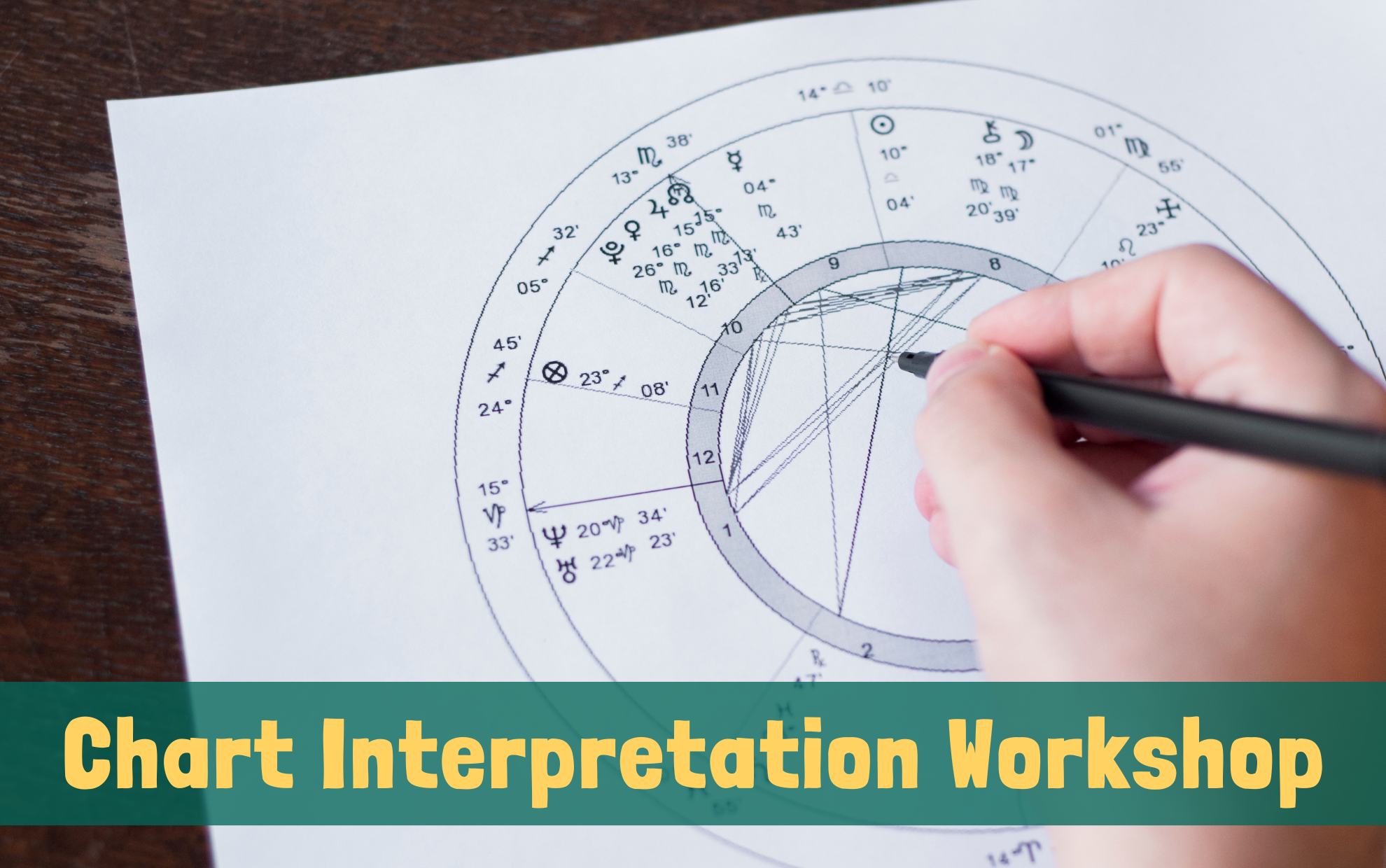
Astrology chart interpretation is the practice of analyzing the positions of celestial bodies at the exact moment of birth to decode an individual’s character, potential, and life path. By synthesizing the "Big Three" (Sun, Moon, and Ascendant) with planetary placements in the twelve houses and their geometric aspects, you can uncover a detailed psychological and navigational map of the self.
The Foundation of Astrology Chart Interpretation
To reveal the meaning within an astrology chart—often called a natal or radix chart—you must first understand that it is a two-dimensional map of the sky as seen from a specific point on Earth. In 2026, while high-powered software and AI-driven calculations have made generating these charts instantaneous, the art of interpretation still requires a human touch to weave disparate symbols into a cohesive narrative.
Interpretation is not about isolated definitions. A common mistake is reading a "Mars in Scorpio" description and assuming it applies universally. In reality, that Mars placement is modified by the house it occupies and the aspects it makes to other planets. The goal of interpretation is synthesis: bringing the "What" (Planets), the "How" (Signs), and the "Where" (Houses) together.
Essential Data for Precision
A reliable interpretation is impossible without three critical pieces of data. Even in 2026, with global databases of birth records, small errors in these inputs can shift the entire chart:
- Date of Birth: Determines the planetary positions.
- Location of Birth: Determines the orientation of the horizon, which dictates the house placements.
- Exact Time of Birth: This is the most crucial variable. A difference of four minutes can move the Ascendant by one degree, potentially changing house cusps and the entire orientation of the life "map."
The Core Trinity: Sun, Moon, and Rising Sign
The most efficient way to begin an interpretation is by looking at the "Big Three." These components represent the engine, the fuel, and the chassis of the personality.
The Sun: The Core Identity
The Sun represents your fundamental identity, your ego, and your primary "will to be." It is the conscious self. When interpreting the Sun, look for the sign to see the "style" of the person’s vitality. For example, a Sun in Leo seeks expression through creativity and recognition, while a Sun in Capricorn seeks expression through structure and achievement.
The Moon: The Emotional Landscape
The Moon governs the subconscious, the emotional needs, and how a person seeks security. While the Sun is what you see in the light, the Moon is who you are in the dark or when you are alone. If the Sun is the "King," the Moon is the "Queen" or the internal world. A Moon in Gemini might find security through information and talking, whereas a Moon in Taurus finds it through physical comfort and stability.
The Ascendant (Rising Sign): The Mask and Perspective
The Ascendant is the sign that was rising on the eastern horizon at the moment of birth. It represents the physical body, the first impression others have of you, and the "lens" through which you view the world. It also determines the layout of the rest of the houses. If someone has a Scorpio Ascendant, they may approach the world with caution and intensity, regardless of whether their Sun is in a "lighter" sign like Libra.
Understanding the Planets as Psychological Functions
In chart interpretation, planets are the actors in a play. Each planet represents a different psychological function or "drive."
- Mercury: The drive to communicate, perceive, and process information. It shows how you think and speak.
- Venus: The drive to relate, value, and attract. It governs your aesthetic tastes, your approach to romance, and your relationship with finances.
- Mars: The drive to act, compete, and assert. It represents your physical energy and how you handle conflict.
- Jupiter: The drive for expansion, growth, and meaning. It shows where you find luck and how you seek a broader perspective.
- Saturn: The drive for structure, discipline, and boundaries. It represents your challenges, your responsibilities, and where you must work hard for mastery.
- Uranus, Neptune, and Pluto: Known as the "outer" or "transpersonal" planets, these represent collective energies and deep-seated evolutionary changes. Uranus is innovation/rebellion, Neptune is spirituality/illusion, and Pluto is transformation/power.
The Twelve Houses: The Stages of Life Experience
If planets are the actors and signs are the roles they play, the houses are the "stages" or specific areas of life where these energies manifest.
| House | Primary Focus | Key Themes |
|---|---|---|
| 1st House | Self | Identity, physical appearance, beginnings. |
| 2nd House | Values | Money, possessions, self-worth, personal resources. |
| 3rd House | Communication | Siblings, local travel, early education, intellect. |
| 4th House | Home/Roots | Family, ancestry, the private life, the mother/nurturing parent. |
| 5th House | Creativity | Romance, children, hobbies, pleasure, self-expression. |
| 6th House | Wellness | Daily routines, health, service, work environment, pets. |
| 7th House | Partnership | Marriage, business partners, open enemies, contracts. |
| 8th House | Transformation | Shared resources, intimacy, death, rebirth, taxes, psychology. |
| 9th House | Philosophy | Long-distance travel, higher education, religion, law. |
| 10th House | Career | Public image, reputation, status, the father/authoritative parent. |
| 11th House | Community | Friends, groups, hopes, wishes, social causes. |
| 12th House | Subconscious | Isolation, secrets, spirituality, hidden enemies, endings. |
The Language of the Zodiac: Elements and Modalities
To reveal the nuance of a sign placement, you must break it down into its element and modality. This tells you the "temperature" and "movement" of the energy.
The Four Elements
- Fire (Aries, Leo, Sagittarius): High energy, intuitive, impulsive, and passionate.
- Earth (Taurus, Virgo, Capricorn): Practical, grounded, sensual, and focused on material reality.
- Air (Gemini, Libra, Aquarius): Intellectual, social, objective, and focused on ideas.
- Water (Cancer, Scorpio, Pisces): Emotional, sensitive, psychic, and focused on feelings.
The Three Modalities
- Cardinal (Aries, Cancer, Libra, Capricorn): The initiators. They start things and provide the "spark."
- Fixed (Taurus, Leo, Scorpio, Aquarius): The stabilizers. They sustain and build upon what has been started.
- Mutable (Gemini, Virgo, Sagittarius, Pisces): The adaptors. They finish cycles and prepare for the next change.
An interpretation of a planet in a sign—for example, Mars in Cancer—becomes clearer when you realize Mars (Action) is in a Water (Emotional) and Cardinal (Initiating) sign. This person might take action based on their feelings or to protect their home.
Aspects: The Geometry of the Soul
Aspects are the angles formed between planets in the chart. They reveal how different parts of your personality talk to each other. Are they in a heated argument, or are they working in harmony?
- Conjunction (0°): Two planets are sitting together. Their energies are fused. This is high intensity and can be either a strength or a blind spot.
- Sextile (60°): A harmonious aspect representing opportunity. These planets work well together, but you have to put in a little effort to reap the benefits.
- Square (90°): An aspect of tension and friction. Squares create challenges that force growth. They are the "engines" of the chart because they demand action.
- Trine (120°): The most harmonious aspect. Energy flows effortlessly between these planets. While "lucky," trines can sometimes lead to laziness because the talent comes so naturally.
- Opposition (180°): Two planets are facing off from opposite sides of the chart. This represents a "tug-of-war" that usually manifests in relationships or the need to balance two opposing life areas.
Synthesizing the Data: The "Revealed" Method
To interpret a chart comprehensively, follow this step-by-step workflow:
- Analyze the Chart Balance: Count how many planets are in Fire, Earth, Air, and Water. A lack of Earth might suggest difficulty with grounding; a surplus of Air might suggest an overactive mind.
- Interpret the Big Three: Synthesize the Sun, Moon, and Ascendant. If someone has a Leo Sun and a Virgo Moon, they may have a flashy public persona but a very critical, organized internal world.
- Identify the Chart Ruler: This is the planet that rules the sign on the Ascendant. If you are a Taurus Rising, your Chart Ruler is Venus. Where Venus is placed will be a major theme in your life.
- Examine the Personal Planets: Look at Mercury, Venus, and Mars by sign and house. This describes your daily human experience.
- Look for "Stelliums": A stellium is a cluster of three or more planets in one sign or house. This indicates a massive concentration of energy and a primary life focus.
- Synthesize Aspects to the Personal Planets: A Venus square Saturn placement will significantly alter how someone experiences Venusian themes (love/money), regardless of the sign Venus is in.
Technical Considerations and Common Pitfalls
In 2026, many students of astrology rely on "cookbook" interpretations—reading paragraphs for each placement individually. The pitfall of this approach is contradiction. You might read that you are "extroverted" (Sun in Aries) and "introverted" (Moon in Scorpio).
The revelation comes in the synthesis. You are an extroverted person who requires deep, private emotional recharging. Modern professional organizations, such as the International Society for Astrological Research (ISAR), emphasize the importance of looking at the chart as a holistic system rather than a collection of parts.
Another common mistake is ignoring the House Cusps. In systems like Placidus, houses can be different sizes. A planet near the end of the 5th house (within 3-5 degrees of the 6th) is often interpreted as being active in the 6th house. This is known as the "5-degree rule" in many traditional and modern practices.
Frequently Asked Questions
Can my astrology chart change over time?
Your natal chart is a fixed "snapshot" of your birth moment and never changes. However, as of 2026, astrologers use techniques like Transits (where planets are now) and Progressions (a symbolic moving of your chart) to see how your innate potential is unfolding at any given time.
What is the most important part of the chart?
While the Sun sign is the most famous, the Ascendant is often considered the most important for interpretation because it sets the structure for the entire house system. Without the Ascendant, you have planetary positions, but no "grounded" context for where they manifest in your life.
Why do some sites give me different house placements?
This is usually due to the House System being used. Placidus is the most common in the West, but Whole Sign Houses have seen a massive resurgence in the 2020s due to their clarity and historical roots. Neither is "wrong," but they offer different perspectives on where life events occur.
Is a "Square" aspect always bad?
No. While squares represent tension, they are the primary source of motivation and achievement. Many highly successful individuals have charts full of squares because the internal friction drove them to overcome obstacles and build something significant.
What does it mean if a planet is in "Retrograde" in my birth chart?
A natal retrograde (commonly Mercury, Venus, or Mars) suggests that the planet's energy is turned inward. For example, Mercury retrograde at birth may indicate a person who processes information internally or has a very non-traditional way of communicating.
Practical Recommendation: Starting Your Interpretation
To effectively reveal the secrets of an astrology chart, start by mastering the Lunar Phase at birth. Knowing whether you were born under a New Moon (subjective, impulsive) or a Full Moon (objective, relationship-oriented) provides an immediate "vibe" for the whole chart.
Once you have the phase, focus on the Angular Planets—any planet sitting near the 1st, 4th, 7th, or 10th house cusps. These planets are "loud" and will dominate the personality. In 2026, the best way to practice is to use a "blank" chart (circles and lines only) and try to describe the person using only the elements and modalities before reading the specific sign descriptions. This builds the "astrological muscle" needed for true synthesis and sophisticated interpretation.