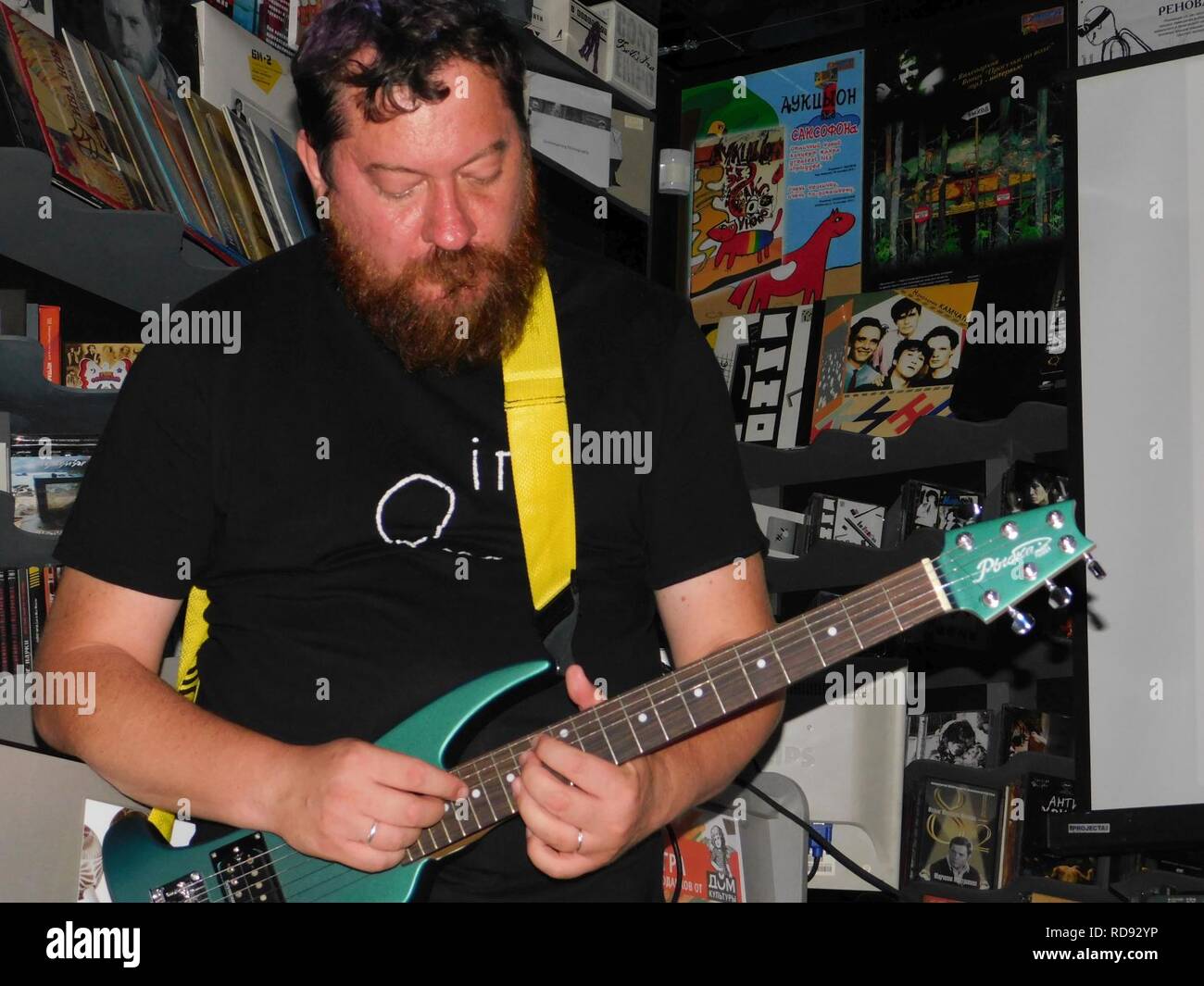
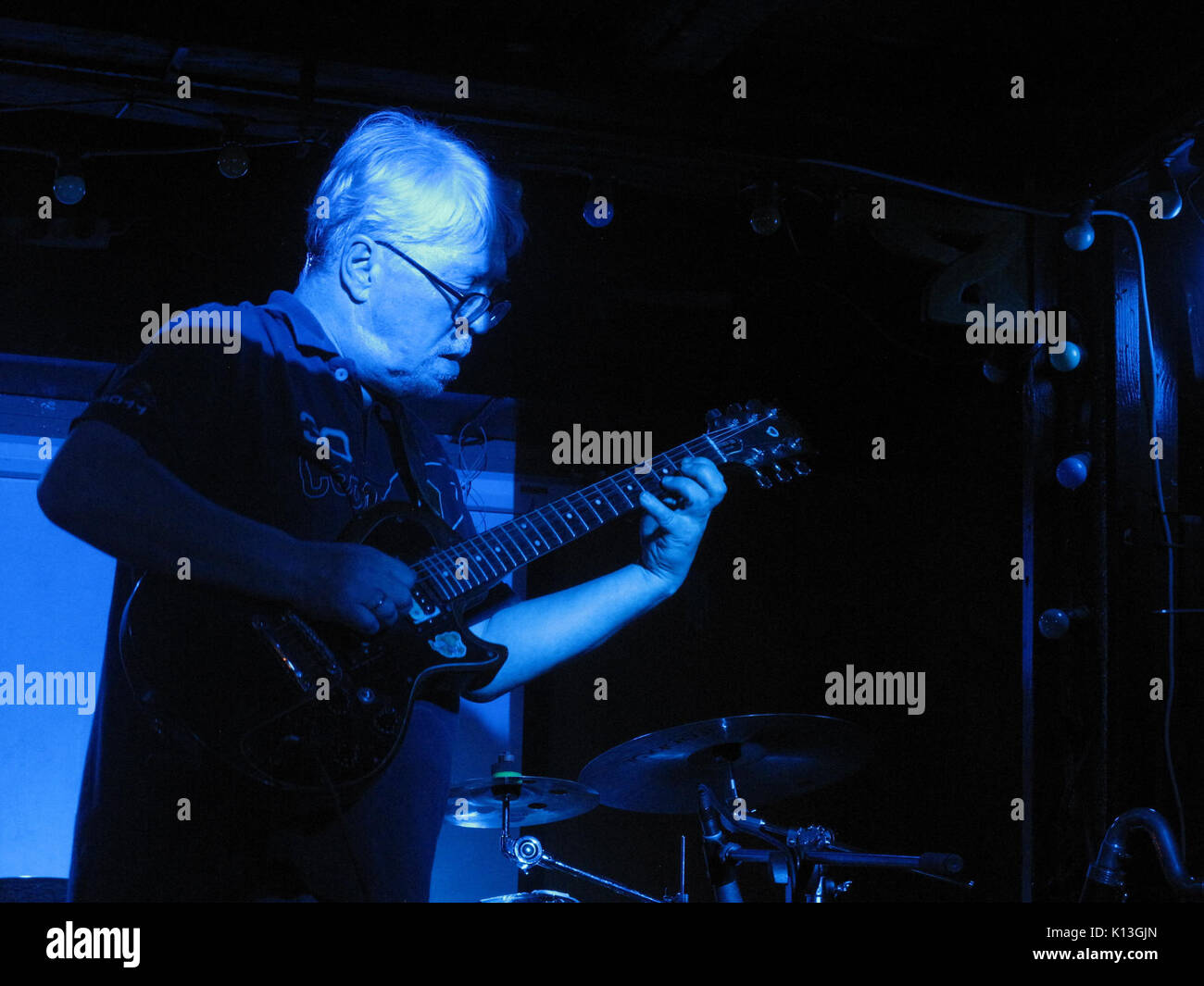
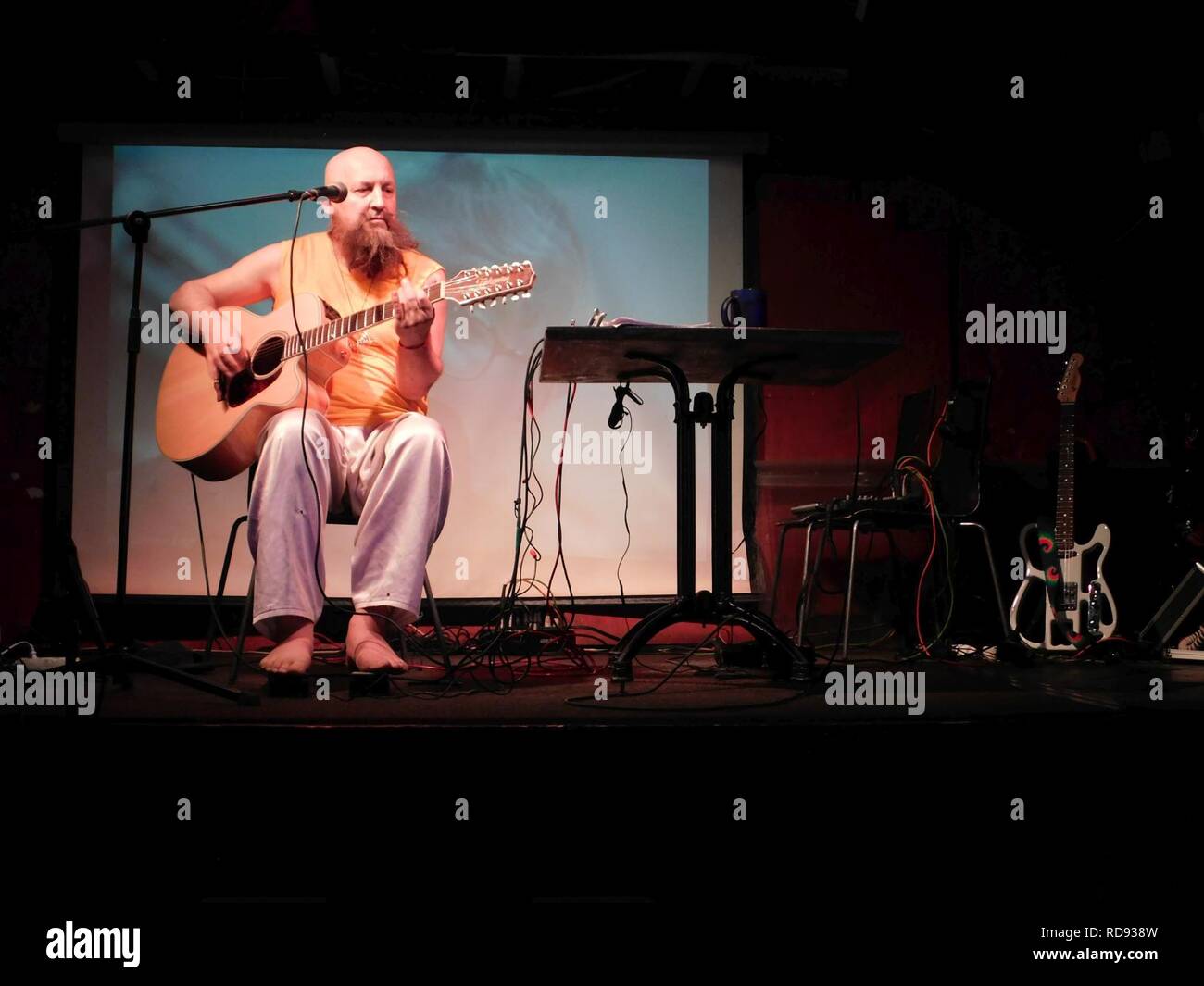
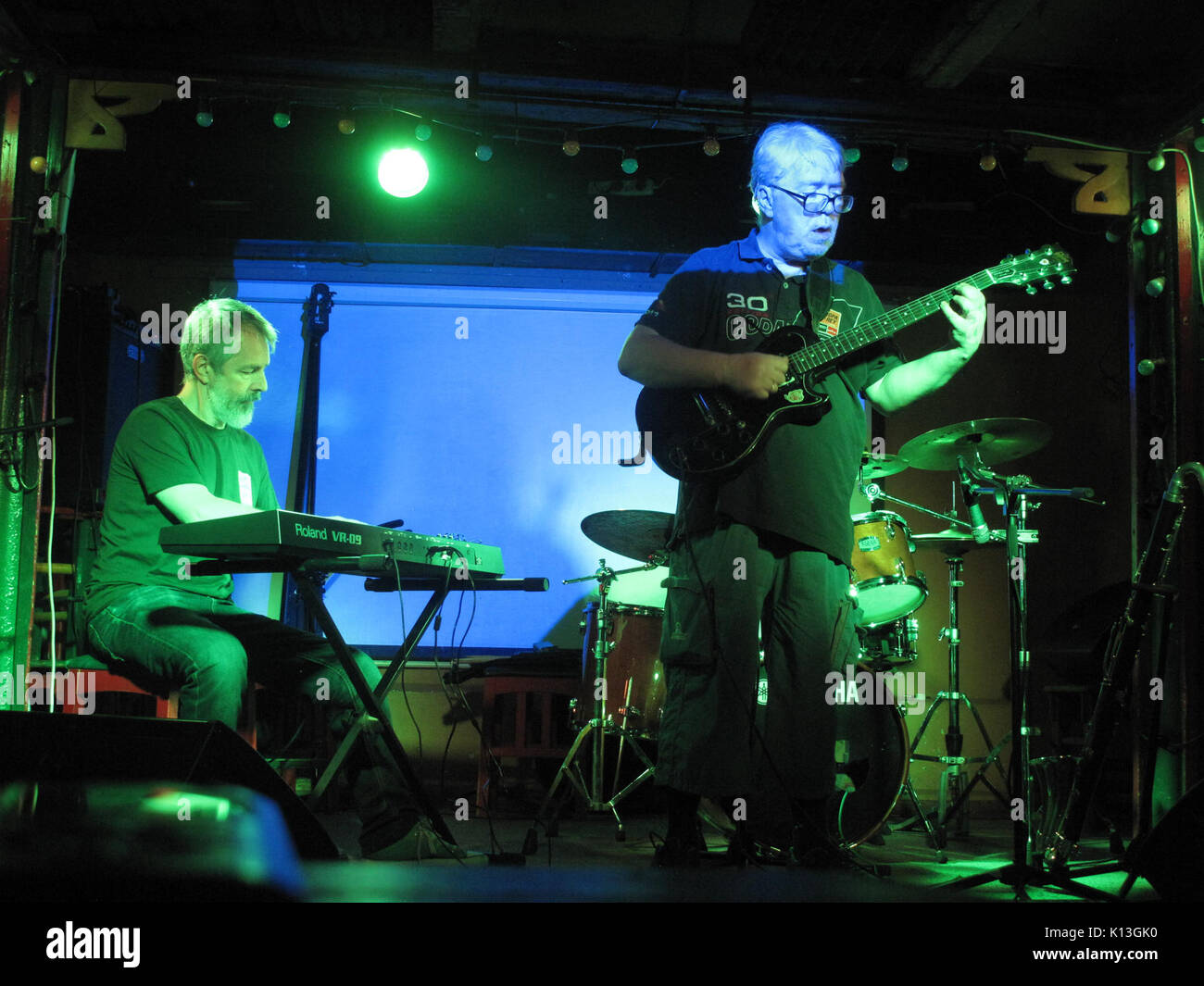
Andrey Suchilin (1959–2018) was a seminal figure in the Soviet and Russian independent music scenes, recognized as a virtuoso guitarist, composer, and a pioneer of progressive and experimental rock. As the founder of the band Do-Major and a dedicated student of Robert Fripp’s Guitar Craft philosophy, Suchilin’s work bridged the gap between avant-garde intellectualism and the raw energy of the Moscow underground. While his later life was tragically marked by a highly publicized medical emergency, his enduring contribution remains his complex, multi-layered discography and his role in introducing sophisticated guitar techniques to Eastern Europe.
The Early Years and the Formation of Do-Major
Andrey Suchilin emerged during a transformative era for Russian music. In the late 1970s and early 1980s, the Soviet Union's musical landscape was strictly regulated by state-run institutions. However, an "underground" or "magnetizdat" culture began to flourish, where musicians exchanged bootleg tapes and performed in "kvartirniks" (apartment concerts).
In 1980, Suchilin founded Do-Major (C-Major), a project that would become a cornerstone of the Moscow Rock Laboratory. Unlike many of his contemporaries who leaned toward punk or social protest lyrics, Suchilin was deeply invested in the technical and structural possibilities of music. Do-Major was characterized by its fluid lineup and its embrace of "chamber rock" and psychedelic influences.
The Moscow Rock Laboratory, established in 1985, provided a semi-official framework for bands like Do-Major to perform. Within this ecosystem, Suchilin was viewed as a "musician’s musician." He wasn't chasing pop stardom; he was interested in the architecture of sound. His early compositions already showed a penchant for odd time signatures and unconventional harmonic shifts that set him apart from the burgeoning Russian rock mainstream.
The Guitar Craft Connection and Robert Fripp
One of the most significant turning points in Suchilin’s career was his involvement with Guitar Craft, a school of guitar playing and personal discipline founded by King Crimson leader Robert Fripp. In the late 1980s and early 1990s, Suchilin became one of the few Russian guitarists to study directly under Fripp, an experience that fundamentally altered his approach to the instrument.
Understanding New Standard Tuning (NST)
Through Guitar Craft, Suchilin adopted New Standard Tuning (NST), which replaces the traditional E-A-D-G-B-E tuning with a series of fifths: C-G-D-A-E-G. This tuning provides a wider sonic range and forces the player to break away from traditional muscle memory and "cliché" blues-based finger patterns.
Suchilin did not merely use this tuning for academic exercise; he integrated it into the Russian musical context. The influence of "Frippertronics"—a tape-loop feedback system—is also evident in Suchilin's solo work and later Do-Major recordings. He utilized these techniques to create dense, atmospheric textures that felt both ancient and futuristic.
The Philosophy of Practice
For Suchilin, Guitar Craft was as much about the "craft" of living as it was about music. The discipline required to master the New Standard Tuning mirrored the discipline required to navigate the chaotic transition of the Soviet Union into modern Russia. He became a primary link between Western progressive rock methodology and the Russian avant-garde, often hosting workshops and sharing these specialized techniques with a new generation of Russian experimentalists.
"No-Man's-Land" and the Zenith of Do-Major
In 1990, Do-Major released their most celebrated work, the album No-Man's-Land. Originally released on the state label Melodiya during the waning days of the USSR, the album is a masterpiece of progressive rock. It features a blend of jazz-fusion, progressive rock, and what critics called "intellectual psychedelia."
The tracks on No-Man's-Land demonstrate Suchilin’s ability to lead an ensemble through complex improvisational sections while maintaining a cohesive thematic core. The album received international attention, including positive reviews in Western music journals, which was a rare feat for a Russian independent artist at the time. It remains a "holy grail" for collectors of Soviet-era vinyl, representing the peak of Russian progressive musical ambition.
The 1990s and Beyond: Multimedia and Collaboration
Following the success of Do-Major, Suchilin transitioned into various roles, reflecting his polymathic nature. He was not only a musician but also a journalist, a music critic, and an early adopter of digital technology in music production.
The "No-Man's-Land" Project
In the late 1990s, Suchilin expanded his creative output into the digital realm. He established one of the first comprehensive online portals for independent music in Russia, also named "No-Man's-Land." This platform served as an archive for the Moscow underground, ensuring that the history of the Rock Laboratory and other independent movements was preserved for future generations.
Collaborative Ventures
Suchilin’s later years were defined by collaboration. He worked with numerous icons of the Russian scene, including:
- Alexander F. Sklyar: Collaborating on experimental projects that pushed the boundaries of traditional rock.
- Sergey Kuryokhin: Though their styles differed, they shared a common goal of deconstructing Soviet musical norms.
- The "C-Moll" Project: A later iteration of his musical exploration that focused on ambient and electronic textures.
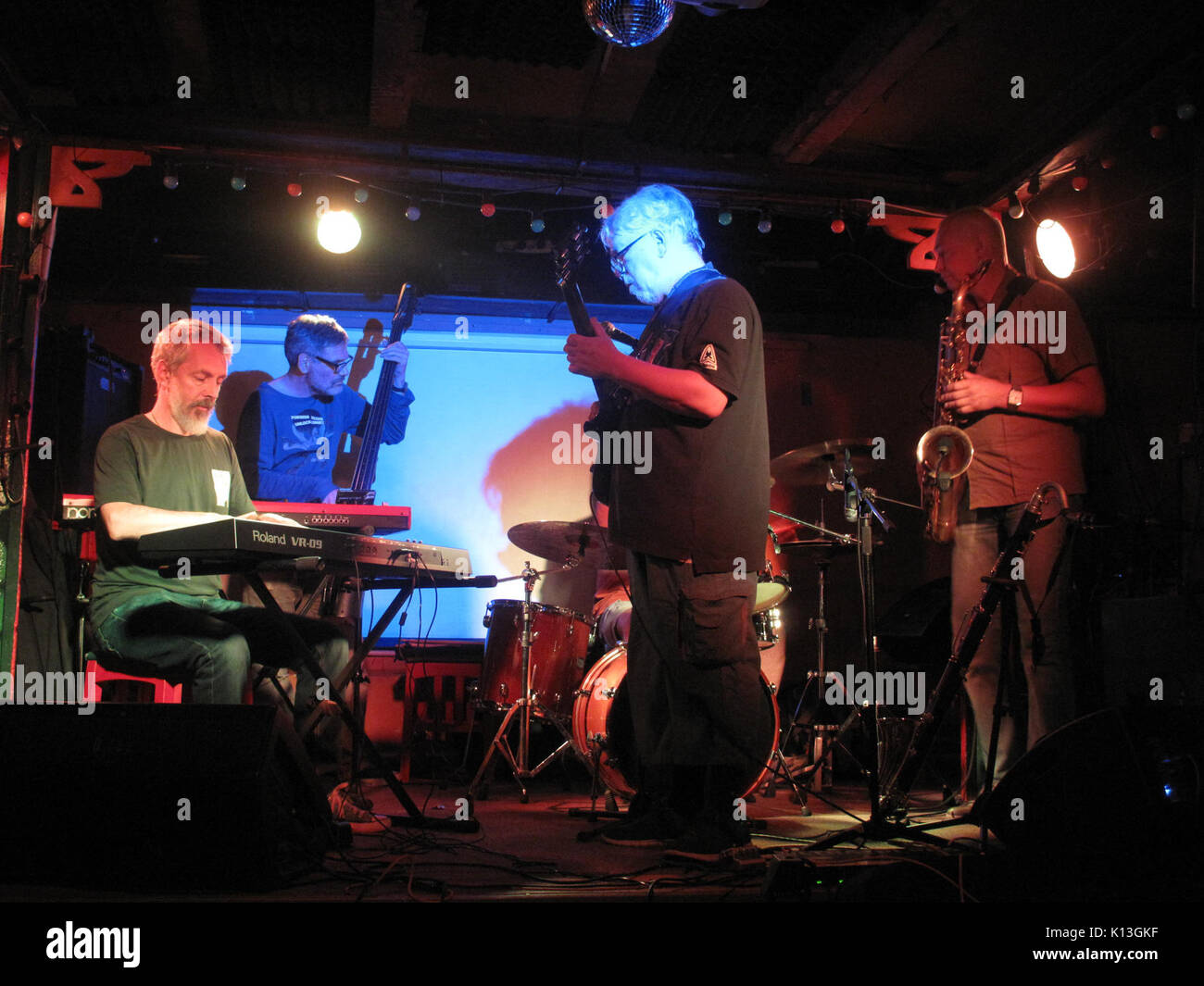
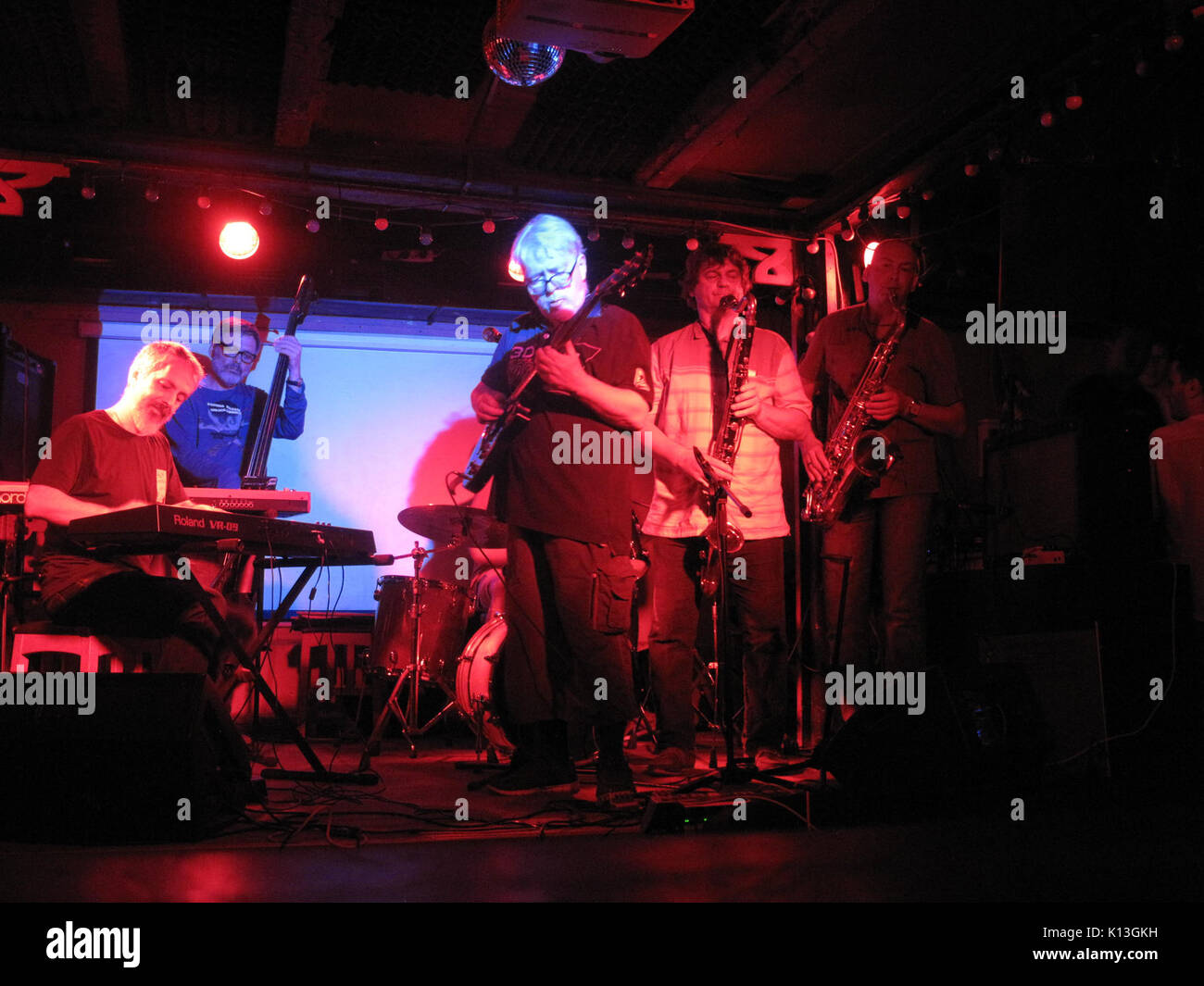
His work in the 2000s often moved toward the "Post-Rock" genre before the term was even widely used in Russia. He continued to perform live, often in small, intimate settings where he could demonstrate his mastery of the guitar and his intricate loop-based compositions.
The Tragic Events of 2018
The name Andrey Suchilin became known to a wider, non-musical audience in 2018 due to a tragic and unusual medical emergency. While returning from a vacation in Spain, Suchilin fell ill on a Transavia flight from Alicante to Amsterdam.
The Flight Incident
Passengers on the flight reported a disturbing odor emanating from Suchilin, which led to a significant disturbance on board. At the time, the situation was widely misreported or trivialized by international media as a "hygiene issue." However, the reality was a severe medical crisis. Suchilin was suffering from necrosis (tissue death) caused by a rapid infection, likely contracted during his time in Spain.
The flight made an emergency landing in Faro, Portugal, where Suchilin was removed and taken to a hospital. Despite multiple surgeries and the efforts of medical staff, the infection had already entered his bloodstream (sepsis).
Diagnosis and Passing
It was later confirmed that Suchilin had contracted a form of "flesh-eating" bacteria that led to gas gangrene. This condition causes tissue to die and release gases, which explained the odor reported on the aircraft. Suchilin was placed in a medically induced coma but passed away on June 25, 2018, in Faro.
The incident sparked significant debate regarding the protocols for medical emergencies on commercial flights and the responsibility of airlines to recognize the signs of critical illness versus social disruption. For the music community, however, the loss was felt as the premature silencing of one of Russia’s most innovative thinkers.
Artistic Style and Technical Equipment
To understand Suchilin’s sound, one must look at his technical setup. He was an advocate for high-quality signal chains and precise instrumentation.
| Component | Preference/Equipment | Significance |
|---|---|---|
| Guitars | Custom-built electrics, often equipped for New Standard Tuning. | Allowed for the wide intervals required by the Frippertronics style. |
| Amplification | Clean, high-headroom tube amps. | Essential for maintaining clarity during complex, multi-layered looping sessions. |
| Effects | Digital delays (TC Electronic), Wah-wah, and specialized looping pedals. | Used to create "soundscapes" that functioned as an orchestral backing for his soloing. |
| Tuning | C-G-D-A-E-G (New Standard Tuning). | The core of his melodic and harmonic identity since the late 1980s. |
| Philosophy | Guitar Craft / Minimalism. | A focus on efficiency of movement and the "rightness" of each note. |
Suchilin’s playing was characterized by a lack of vibrato (a hallmark of the Guitar Craft school) and a very precise, picked attack. He often avoided the "blues scale," preferring modal explorations and chromatic passages that gave his music an intellectual, almost mathematical quality.
The Enduring Influence of Andrey Suchilin
As of 2026, the legacy of Andrey Suchilin continues to influence the Russian experimental scene. His work is frequently cited by younger generations of math-rock and post-rock musicians in Moscow and St. Petersburg.
Archive and Preservation
Efforts have been made to digitize and re-release his entire catalog. The "No-Man's-Land" archive remains a vital resource for researchers of the late-Soviet underground. Posthumous releases and compilations have helped clarify his evolution from a rock guitarist to a sophisticated composer of electronic and ambient music.
The "Bridge" Between Cultures
Suchilin is perhaps best remembered as a cultural bridge. He brought the rigorous discipline of Western progressive rock (via Fripp) to a Russia that was just beginning to find its post-Soviet voice. He proved that Russian rock could be more than just three chords and a political message—it could be a vehicle for profound technical and philosophical exploration.
FAQs About Andrey Suchilin
What was Andrey Suchilin’s most famous band?
His most famous and influential band was Do-Major (До Мажор), founded in 1980. They were a key part of the Moscow Rock Laboratory and are best known for the 1990 album No-Man's-Land.
Why is he associated with Robert Fripp?
Suchilin was a student of Robert Fripp’s Guitar Craft courses. He was one of the primary proponents of New Standard Tuning (NST) in Russia and incorporated Fripp’s "Frippertronics" looping techniques into his own music.
What actually happened during the 2018 flight incident?
Suchilin was suffering from a severe infection that caused tissue necrosis (gas gangrene). The odor that caused the flight to make an emergency landing was a symptom of this life-threatening medical condition, not a lack of hygiene. He died in a hospital in Portugal shortly after the incident.
Where can I listen to Andrey Suchilin’s music?
Much of his work, including albums by Do-Major and his solo projects, is available on major streaming platforms and through specialized archives dedicated to the Moscow Rock Laboratory. The album No-Man's-Land is considered the essential starting point for new listeners.
Was Andrey Suchilin involved in other arts?
Yes, he was a prolific writer and critic. He was deeply involved in the early Russian internet community, using his "No-Man's-Land" portal to document the history of independent music and provide a platform for other experimental artists.
Practical Recommendations for Exploring His Work
For those looking to understand the depth of Suchilin’s contribution to music, the following steps are recommended:
- Listen to No-Man's-Land (1990): This is his definitive statement. Pay close attention to the track "The Great Game," which showcases his ability to blend progressive structures with atmosphere.
- Study New Standard Tuning: If you are a guitarist, exploring the C-G-D-A-E-G tuning can provide insight into the mechanical and harmonic logic behind Suchilin’s compositions.
- Research the Moscow Rock Laboratory: To understand the context of his work, look into the history of the Moscow Rock Lab (1985–1991). It provides the cultural backdrop for how Suchilin and his peers navigated the end of the Soviet era.
- Explore the "No-Man's-Land" Archive: Seek out his writings and reviews. His perspective as a critic offers a rare, intellectual look at the evolution of the Russian music scene from an insider’s point of view.
Andrey Suchilin’s life was a testament to the pursuit of musical excellence regardless of political or social barriers. While his death was a tragedy that briefly captured the world's attention for the wrong reasons, his music remains a profound and sophisticated legacy that continues to resonate with listeners seeking something beyond the ordinary.