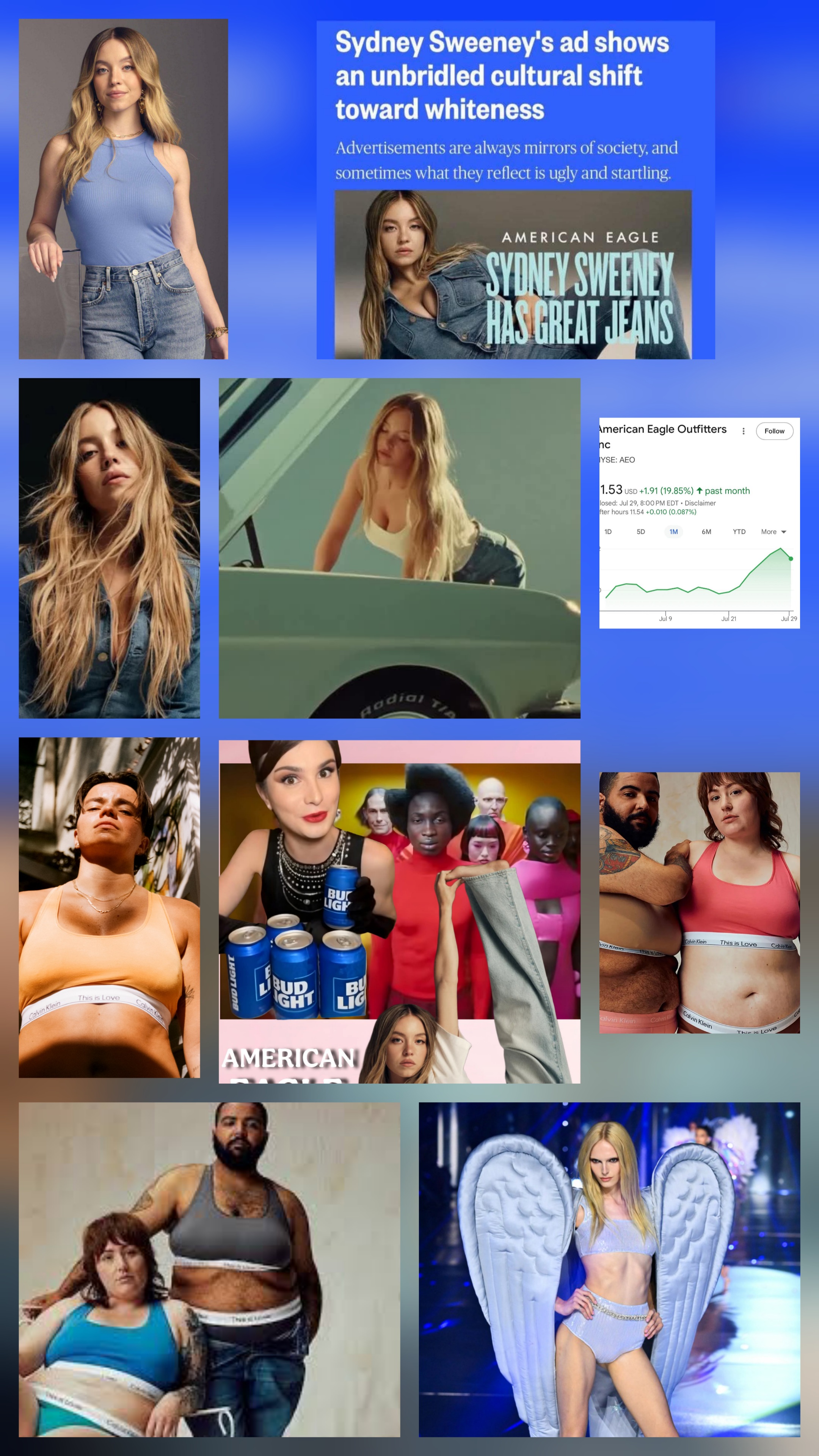
The backlash following the American Eagle advertisement featuring Sydney Sweeney centered on a marketing tagline that used a pun between the homophones "jeans" and "genes." While intended to be a playful nod to both the durability of the denim and Sweeney’s high-profile aesthetic, many critics on social media platforms like TikTok and X (formerly Twitter) found the wordplay to be uninspired, reductive, or inadvertently focused on the actress’s physical appearance rather than the product’s quality.
The Context of the Sydney Sweeney and American Eagle Partnership
By the time 2023 and 2024 rolled around, Sydney Sweeney had established herself as one of the most prominent "it-girls" of her generation. Following her breakout roles in HBO’s Euphoria and The White Lotus, she became a highly sought-after brand ambassador. American Eagle (AE), a brand historically rooted in youth culture and accessible fashion, sought to capitalize on her massive Gen Z following by making her the face of their seasonal denim campaigns.
The partnership was initially viewed as a strategic masterstroke. American Eagle has long positioned itself as a "real" and "approachable" brand, particularly through its sub-brand Aerie. However, the mainline American Eagle campaigns often lean more into aspirational, high-energy imagery. When Sweeney joined the fold, the campaign visual language shifted toward a polished, vintage-americana aesthetic that emphasized both her stardom and the "classic" nature of AE denim.
As we look back from 2026, this partnership remains a textbook example of how celebrity-driven marketing can collide with a more discerning, irony-poisoned digital audience. The "genes" wordplay wasn't just a caption; it was the focal point of a multi-channel digital rollout that hit a wall of cultural skepticism.
Breaking Down the "Genes" Wordplay: Linguistics and Marketing
The core of the controversy was a linguistic trope that has existed in the fashion industry for decades. The pun on "jeans" (the garment) and "genes" (the biological units of heredity) is a staple of denim marketing. The intended message is usually twofold:
- Inherent Quality: The idea that the quality is "built-in" or part of the brand’s DNA.
- Aesthetic Appeal: The suggestion that wearing the clothes will make the consumer look as "genetically blessed" as the model in the advertisement.
In the case of the Sydney Sweeney ad, the tagline often appeared as "It's in the genes" or "Good genes run in the family," accompanied by imagery of Sweeney in various styles of AE denim.
Why the Pun Failed in the 2020s
The failure of the pun can be attributed to a shift in consumer psychology. By 2024, Gen Z and Millennial audiences had become increasingly weary of "millennial pink" marketing tactics and overused puns. What might have been considered clever in a 1995 print magazine felt "cringe" in a high-speed digital environment.
Furthermore, the wordplay was criticized for being "lazy." In an era where brands are expected to demonstrate deep values or technical innovation, relying on a homophone that has been used by dozens of other brands—from Levi’s to boutique labels—made American Eagle appear out of touch with the creative standards of modern social media.
The Root of the Backlash: Objectification and Brand Misalignment
The backlash wasn't merely about a bad joke; it touched on deeper issues of how female celebrities are marketed. Sydney Sweeney has been the subject of intense public discourse regarding her body and the way the media portrays her. Critics of the American Eagle ad argued that by using "genes" wordplay, the brand was leaning into the "genetically gifted" narrative, effectively selling Sweeney’s body rather than the denim.
The "Body-Focus" Critique
In many of the promotional shots, the focus was on the fit of the jeans, which is standard for the industry. However, when paired with a caption about "genes," the subtext changed for many viewers. Instead of the message being "These jeans are well-made," it was interpreted as "Look at Sydney Sweeney's genetics."
This created a friction point with American Eagle's broader corporate identity. Because the company owns Aerie—a brand famous for its "Aerie Real" campaign and its refusal to retouch models—the mainline AE brand is often held to a higher standard of "authenticity." Critics pointed out the hypocrisy of a company that promotes body positivity through one door while using "genetic perfection" as a marketing hook through another.
Social Media Amplification
The backlash was largely decentralized. It didn't start with a formal protest but with viral "de-influencing" videos and commentary threads. TikTok creators dissected the ad, pointing out that the pun was both dated and subtly reductive. Once the "cringe" label was applied, it became difficult for the campaign to maintain its original aspirational tone.
Comparative Analysis of Denim Marketing Tropes
To understand why this specific ad sparked such a reaction, it is helpful to compare it to other historical and contemporary denim campaigns.
| Brand | Slogan/Theme | Era | Outcome | Primary Sentiment |
|---|---|---|---|---|
| American Eagle | "Built into the Jeans/Genes" | 2023-2024 | Backlash | Viewed as cliché and reductive |
| Calvin Klein | "Nothing comes between me and my Calvins" | 1980s | Massive Controversy | Provocative but iconic |
| Aerie | "Aerie Real" (No retouching) | 2014-Present | Success | Authentic and inclusive |
| Levi’s | "Quality never goes out of style" | Long-term | Success | Stable and heritage-focused |
| Diesel | "For Successful Living" | 1990s/2000s | Cult Success | Satirical and edgy |
| Gap | "Individuals of Style" | 1990s | Success | Minimalist and celebrity-focused |
As the table illustrates, the most successful campaigns tend to lean either toward extreme authenticity (Aerie) or high-concept provocation (Calvin Klein). The American Eagle "genes" campaign fell into an awkward middle ground: it wasn't edgy enough to be provocative, nor was it authentic enough to resonate with the brand's purported values.
The Role of "Cringe" as a Cultural Regulator
In the mid-2020s, "cringe" became a powerful tool for consumer feedback. Unlike the boycotts of previous decades, which were often based on political or ethical stances, "cringe" backlash is based on an aesthetic and intellectual rejection of a brand's messaging.
When the Sydney Sweeney ad was labeled "cringe," it signaled that the audience felt the brand was trying too hard to be clever without putting in the creative effort. This type of backlash is particularly damaging because it erodes the "cool factor" of a brand. For American Eagle, which competes directly with fast-fashion giants and trendy thrift-cycles, losing the "cool" vote from Gen Z is a significant business risk.
The "genes" wordplay felt like "corporate-speak" trying to masquerade as "youth-speak." This disconnect is where the majority of the negative sentiment brewed. The audience felt that the brand was talking at them with an old script, rather than engaging with them in a modern way.
American Eagle’s Response and Strategy Shift
Following the initial wave of social media commentary, American Eagle did not issue a formal apology—doing so would have likely amplified the issue. Instead, the brand’s digital strategy shifted. Later phases of the 2024 campaign began to focus more on the "technical specs" of the denim—stretch, recycled materials, and fit names—rather than the pun-heavy captions.
This pivot was a tacit admission that the "genes" angle had missed the mark. By 2026, we see that AE has moved toward more "lifestyle-integrated" marketing, where celebrities like Sweeney are shown in more naturalistic, less staged environments, often using user-generated content (UGC) styles to bridge the gap between the brand and the consumer.
The Impact on Sydney Sweeney’s Brand
For Sweeney herself, the backlash was a minor blip in a series of massive successes. However, it served as a lesson for her management team regarding "pun-based" marketing. In subsequent years, her endorsements (such as those for luxury beauty brands and high-fashion houses) have leaned into more sophisticated, less linguistically "punny" territory. It reinforced the idea that for a star of her caliber, the "less is more" approach in copywriting often yields better results than trying to be overtly clever.
Technical Analysis: The Psychology of the Pun in Advertising
From a psychological perspective, puns are intended to create a "moment of closure." When a consumer "gets" the joke, there is a small release of dopamine. This is supposed to create a positive association with the brand.
However, for this to work, the pun must satisfy three criteria:
- Novelty: The consumer shouldn't have heard it a thousand times before.
- Relevance: The pun should actually tell you something about the product.
- Tone: The pun must match the brand’s perceived personality.
The "genes/jeans" pun failed the novelty test immediately. It had been the "dad joke" of the denim industry for forty years. It also struggled with relevance; saying a pair of jeans is "in the genes" doesn't actually explain the fabric weight, the wash, or the durability. Finally, the tone was mismatched with Sydney Sweeney’s persona, which is often seen as either high-drama (via her characters) or high-fashion, making the "corny" pun feel out of place.
Lessons for Future Marketing Campaigns
The American Eagle controversy provides several key takeaways for brands operating in the 2026 landscape:
- Avoid the "Low-Hanging Fruit": If a pun is the first thing that comes to mind in a brainstorming session, it has probably been used before. Brands should strive for more original copy that reflects the current cultural zeitgeist.
- Audit for Subtext: Before launching a campaign with a high-profile female lead, brands must audit their taglines for unintended meanings. In a post-objectification era, anything that conflates a woman’s "genes" with a product she is wearing will be scrutinized.
- Consistency Across Sub-Brands: If one arm of a company (like Aerie) builds its entire reputation on a specific set of values, the other arms (like AE Mainline) must be careful not to inadvertently undermine those values through lazy creative choices.
- Platform-Specific Sensitivity: What works on a billboard in Times Square might not work on a TikTok feed. The "genes" pun was far more likely to be mocked in the comment sections of social media than it was on a traditional print ad.
Frequently Asked Questions
Why did the American Eagle ad with Sydney Sweeney cause a backlash?
The backlash was primarily due to a "genes/jeans" pun that many consumers found cliché and reductive. Critics felt the wordplay was "lazy" marketing and argued that it focused more on Sweeney’s physical appearance (her "genes") than the actual clothing being sold.
Was the ad pulled by American Eagle?
No, the ad was not officially pulled, but the brand did shift its marketing focus. As the campaign progressed, the pun-heavy captions were gradually replaced by more straightforward descriptions of the denim's features and "lifestyle" imagery that didn't rely on the "genes" wordplay.
Is Sydney Sweeney still a brand ambassador for American Eagle?
As of 2026, Sydney Sweeney has moved on to other high-fashion partnerships, which is a standard progression for actresses of her status. While her contract with American Eagle was a major part of her 2023-2024 portfolio, she has since pivoted toward more luxury-oriented brand alignments.
What is "genes" wordplay in denim marketing?
It refers to the pun between "jeans" (denim pants) and "genes" (DNA/genetics). It is a very common trope used to suggest that a brand’s quality is inherent or that the wearer will inherit the attractive qualities of the model in the ad.
How did American Eagle change its marketing after the controversy?
Following the mixed reception of the Sweeney campaign, American Eagle began to emphasize "technical authenticity." This included more focus on sustainable manufacturing processes and "fit-first" marketing, moving away from celebrity-based puns in favor of more community-driven and utility-focused content.
Practical Recommendation for Brand Managers
When working with high-profile celebrities in 2026, it is essential to prioritize collaborative creative. Rather than fitting a celebrity into a pre-existing, trope-heavy template (like the "genes" pun), brands should develop copy that feels specific to the individual’s voice and the modern audience's expectations. Conduct "sentiment audits" on your taglines to ensure they don't lean into outdated tropes or inadvertently objectify the talent. In the current market, authenticity and originality are the only ways to avoid the "cringe" label and maintain a premium brand image.