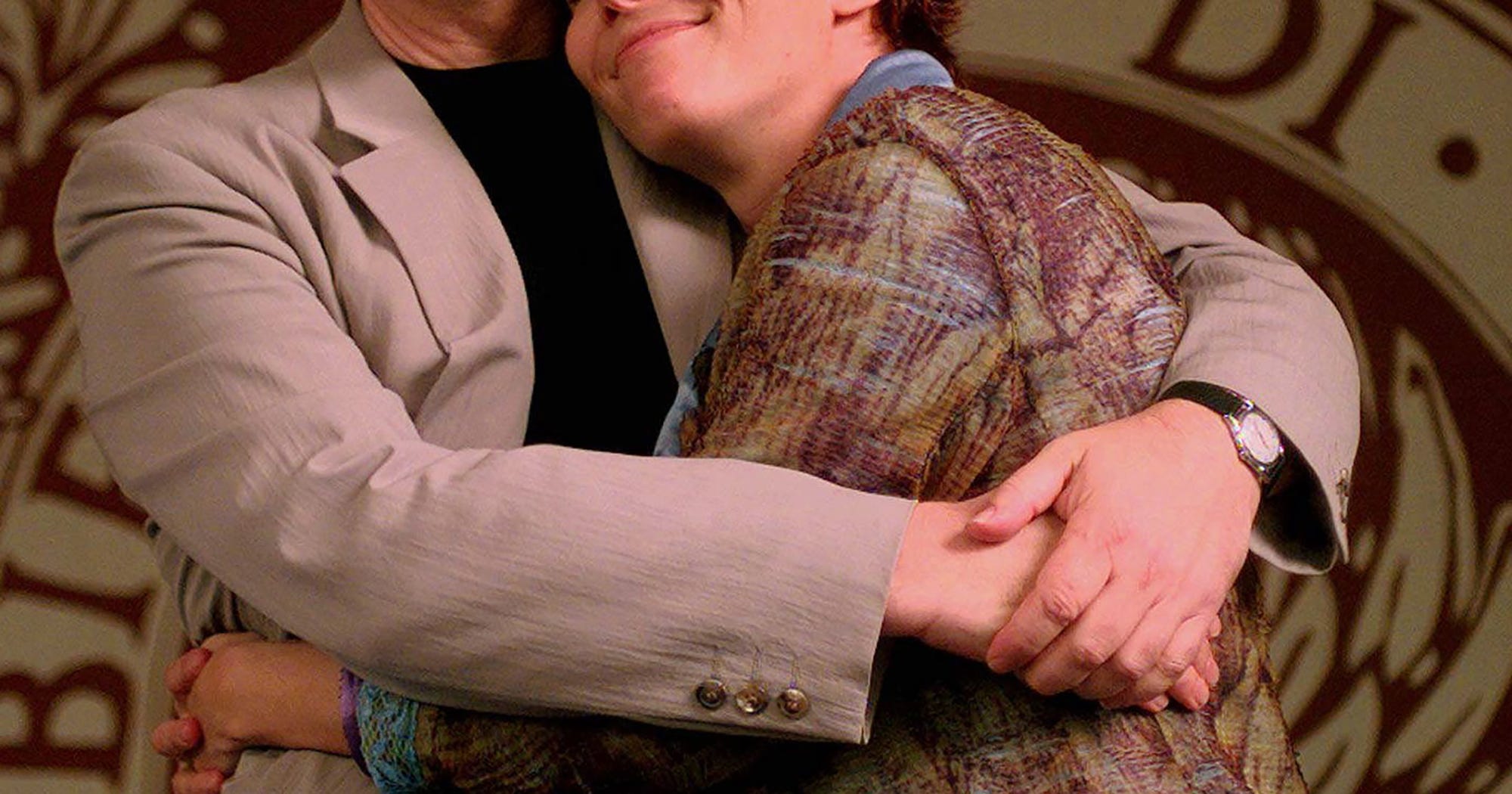
The cinematic partnership between Alan Rickman and Emma Thompson remains one of the most cherished in British film history. Across three decades, these two titans of the industry appeared together in seven different projects, ranging from period dramas and modern holiday classics to the sprawling wizarding world of Harry Potter. Their professional synergy was underpinned by a deep, lifelong friendship that translated into a unique on-screen chemistry, often characterized by a blend of intellectual wit and profound emotional resonance.
The Foundation of a Legendary Partnership
To understand the impact of Alan Rickman and Emma Thompson's work together, one must first look at the caliber of the individuals involved. By the mid-1990s, Alan Rickman had already established himself as a versatile powerhouse, moving from the stage to iconic villainous roles like Hans Gruber in Die Hard. Emma Thompson, meanwhile, was a dual-threat as both a highly decorated actress and an Academy Award-winning screenwriter.
Their collaborations were rarely superficial. Even when sharing limited screen time, as seen in the Harry Potter series, the gravity they brought to their respective roles added a layer of prestige to the production. In 2026, looking back at their collective filmography, it is clear that they represented a specific era of "acting royalty"—performers who could elevate even the simplest dialogue through nuance and presence.
1. Sense and Sensibility (1995)
The first and arguably most significant collaboration between the two occurred in the 1995 adaptation of Jane Austen's Sense and Sensibility. Directed by Ang Lee, the film featured a screenplay written by Emma Thompson herself. Thompson played Elinor Dashwood, the sensible and restrained eldest sister, while Alan Rickman was cast as Colonel Brandon, the stoic and honorable suitor to Elinor’s younger sister, Marianne.
The Role of Colonel Brandon
Emma Thompson famously fought for Rickman to be cast as Brandon. At the time, Rickman was largely known to international audiences for his "villain" roles. Thompson, however, recognized the deep well of gentleness and melancholy that Rickman could tap into. His portrayal of Brandon is often cited by Austen scholars as the definitive version of the character—a man who loves deeply but quietly, providing a perfect foil to the more erratic characters in the story.
On-Screen Dynamics
While the characters of Elinor and Brandon do not share a romantic arc, they are the "adults in the room" throughout the narrative. Their scenes together are marked by a mutual respect and a shared understanding of the burdens of responsibility. This dynamic allowed audiences to see the natural rhythm between the two actors: a sophisticated, rhythmic exchange of dialogue that felt lived-in and authentic.
2. Judas Kiss (1998)
Moving away from the rolling hills of the English countryside, the pair reunited three years later for Judas Kiss, a neo-noir crime thriller. This film stands in stark contrast to their other work, offering a grittier, more contemporary look at their acting range.
In Judas Kiss, Rickman and Thompson play Detectives David Friedman and Sadie Hawkins. The plot centers on a botched kidnapping and the subsequent investigation. Playing seasoned, somewhat cynical law enforcement officers, they displayed a "buddy cop" energy that was entirely different from their period-piece personas.
Why It Matters
Although Judas Kiss did not achieve the same level of commercial success as Sense and Sensibility or Love Actually, it is a vital piece of their shared history. It proved that their chemistry was not dependent on a specific genre or time period. They could pivot from Austenian elegance to the hard-boiled dialogue of a 90s thriller without losing their step. For fans of their partnership, this film is often the "hidden gem" of the collection.
3. Love Actually (2003)
If Sense and Sensibility established them as a duo, Love Actually cemented their place in the cultural zeitgeist. In Richard Curtis’s holiday ensemble, they play Harry and Karen, a middle-aged married couple facing the devastating reality of infidelity.
The Heartbreak of the Necklace Scene
The most discussed moment in their shared filmography occurs when Karen discovers that the expensive necklace Harry bought was not for her, but for his secretary. The scene where she listens to Joni Mitchell’s "Both Sides Now" in her bedroom, stoically composed before returning to her family, is widely considered one of the finest moments in modern British cinema.
Rickman’s performance as Harry is equally nuanced. He doesn't play a mustache-twirling villain; instead, he portrays a man who has drifted into a selfish lapse in judgment. The tragedy of their arc in Love Actually is the lack of a tidy resolution. They are left to navigate the "sadder and wiser" reality of a damaged marriage, a realistic departure from the film's other more whimsical romantic threads.
4. The Harry Potter Series (2004–2011)
While the Harry Potter films are an ensemble effort, the presence of both Rickman and Thompson within the Hogwarts faculty is a significant chapter of their joint career.
- Alan Rickman played Severus Snape across all eight films.
- Emma Thompson played Sybill Trelawney in The Prisoner of Azkaban, The Order of the Phoenix, and The Deathly Hallows – Part 2.
Interactions at Hogwarts
Their characters were polar opposites. Snape was the embodiment of rigorous, dark discipline, while Trelawney was the eccentric, often unreliable Divination professor. While they shared the screen during Great Hall sequences and faculty gatherings, their most notable interaction is a brief but memorable moment of Snape’s utter disdain for Trelawney’s "theatrics."
Despite the lack of a central shared plotline, their presence helped define the "British Actor" pedigree that the franchise became known for. Rickman’s Snape eventually became the emotional core of the entire series, while Thompson’s Trelawney provided a masterclass in character acting and physical comedy.
5. The Song of Lunch (2010)
One of their final and most intimate collaborations was The Song of Lunch, a BBC television film based on the narrative poem by Christopher Reid. The entire production is essentially a two-hander, featuring almost no other actors.
Plot and Atmosphere
Rickman plays an unnamed editor ("He") who meets his former lover ("She"), played by Thompson, for lunch at a Soho restaurant they used to frequent. The film is a poetic, stream-of-consciousness exploration of aging, regret, and the failure of memory.
Technical Mastery
The Song of Lunch is a demanding piece of work. Because much of the dialogue is internal monologue or rhythmic poetry, the actors had to rely heavily on facial expressions and body language to convey the shifting power dynamics of the meal. It serves as a beautiful bookend to their career—two masters of their craft, older and more reflective, holding the screen with nothing but their voices and their presence.
Comparative Overview of Collaborations
The following table summarizes the primary projects where Alan Rickman and Emma Thompson shared the screen or the production credits.
| Year | Title | Rickman's Role | Thompson's Role | Genre |
|---|---|---|---|---|
| 1995 | Sense and Sensibility | Colonel Brandon | Elinor Dashwood | Period Drama |
| 1997 | The Winter Guest | Director (Uncredited Voice) | Frances | Drama |
| 1998 | Judas Kiss | Detective David Friedman | Detective Sadie Hawkins | Neo-Noir/Crime |
| 2003 | Love Actually | Harry | Karen | Romantic Comedy |
| 2004 | HP: Prisoner of Azkaban | Severus Snape | Sybill Trelawney | Fantasy |
| 2007 | HP: Order of the Phoenix | Severus Snape | Sybill Trelawney | Fantasy |
| 2010 | The Song of Lunch | He | She | Poetic Drama |
| 2011 | HP: Deathly Hallows Pt. 2 | Severus Snape | Sybill Trelawney | Fantasy |
The Directorial Connection: The Winter Guest (1997)
It is important to note that their collaboration extended beyond acting. In 1997, Alan Rickman made his directorial debut with The Winter Guest. While Rickman stayed behind the camera (appearing only in a very brief uncredited voice capacity), Emma Thompson took the lead role.
The film stars Thompson as Frances, a woman grieving the death of her husband, alongside her real-life mother, Phyllida Law. Rickman’s direction of Thompson was deeply sensitive, showcasing a different side of their professional relationship. He knew exactly how to capture her vulnerability, and Thompson, in turn, delivered a performance that remains one of the most raw and poignant of her career. This project reinforced the idea that they weren't just co-stars; they were creative partners who trusted each other implicitly.
The Nature of Their Professional Chemistry
What made Rickman and Thompson so effective together was the balance of their energies. Alan Rickman possessed a legendary, resonant voice—often described as "honey over gravel"—and a penchant for stillness. He was an actor who could do a great deal with very little movement.
Emma Thompson, conversely, is an incredibly expressive actress, often using her entire body to convey the internal state of her characters. Whether it was the sharp wit of Elinor Dashwood or the frantic energy of Sybill Trelawney, she brought a vibrant "spark" to every scene.
When placed together, Rickman provided the anchor, and Thompson provided the electricity. This is most evident in Love Actually, where Rickman’s quiet guilt and Thompson’s vocalized (or pointedly silent) pain create a vacuum of tension that the rest of the film struggles to match.
Real-Life Friendship and Legacy
Beyond the sets and the scripts, Rickman and Thompson were incredibly close friends. Following Rickman’s death in early 2016, Thompson wrote a moving tribute to him, noting that he was "the ultimate ally" and a man of "extraordinary kindness."
She often recounted how he would support her through various personal and professional challenges. This bond was the "secret ingredient" in their movies. When you see them on screen in The Song of Lunch or Sense and Sensibility, you aren't just seeing two actors—you are seeing two people who deeply respect and understand one another.
In the year 2026, ten years after Rickman's passing, their body of work continues to be studied in film schools for its display of naturalistic chemistry. They represent a standard of professional excellence that many younger actors strive to emulate.
Frequently Asked Questions
Did Alan Rickman and Emma Thompson ever play a couple in a movie?
Yes, they played a married couple in the 2003 film Love Actually. Their characters, Harry and Karen, are one of the central couples in the ensemble cast. They also played former lovers who reunite for a meal in the 2010 TV movie The Song of Lunch.
How many movies did Alan Rickman and Emma Thompson do together?
They appeared together in seven distinct projects: Sense and Sensibility, Judas Kiss, Love Actually, The Song of Lunch, and three films within the Harry Potter franchise (Prisoner of Azkaban, Order of the Phoenix, and Deathly Hallows Part 2). Additionally, Rickman directed Thompson in The Winter Guest.
Are there any movies where Alan Rickman directed Emma Thompson?
Yes. Alan Rickman directed Emma Thompson in the 1997 drama The Winter Guest. In this film, Thompson stars as a widow living in a cold Scottish seaside town, appearing alongside her mother, Phyllida Law.
What was the last movie Alan Rickman and Emma Thompson made together?
Their last shared appearance on screen was in Harry Potter and the Deathly Hallows – Part 2, released in 2011. However, their last significant collaboration as lead co-stars was The Song of Lunch in 2010.
Did they ever win awards together for their collaborations?
While they did not share a "duo" award, the films they starred in together were highly decorated. Sense and Sensibility won Thompson an Oscar for Best Adapted Screenplay and earned Rickman a BAFTA nomination for Best Supporting Actor. Love Actually remains one of the most commercially successful British films of all time.
Summary of Next Actions for Fans
For those looking to explore the Rickman-Thompson filmography in depth, it is recommended to watch their collaborations in chronological order to witness the evolution of their chemistry:
- Start with Sense and Sensibility to see them at the height of their classical powers.
- Move to Love Actually for a more modern, emotionally complex experience.
- Seek out The Song of Lunch for a pure, unfiltered look at their acting talent in a minimalist setting.
- Watch The Winter Guest to appreciate the directorial trust between the two.
Their legacy is not just in the films themselves, but in the masterclass of partnership they provided for audiences worldwide.