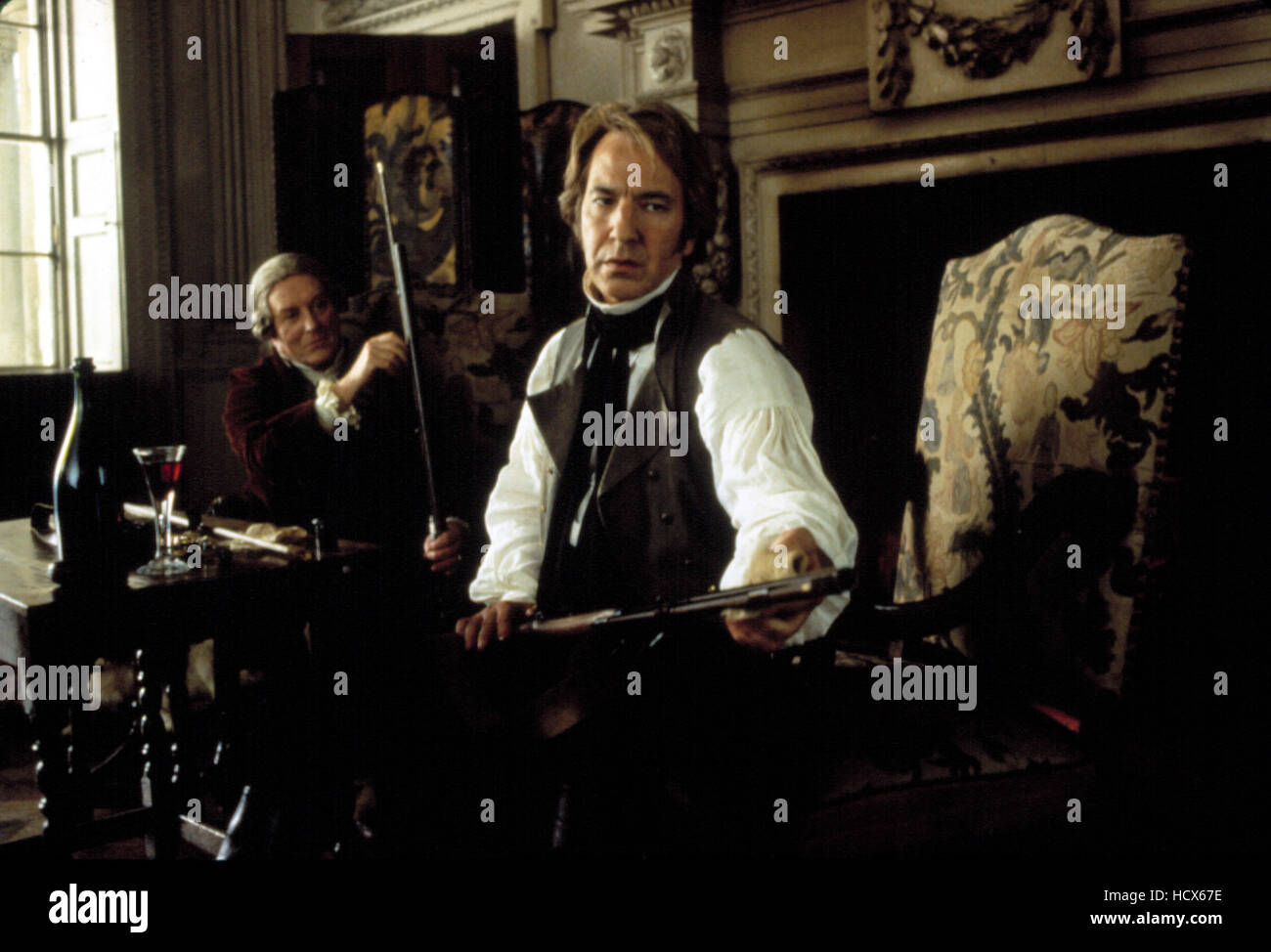
During the filming of the 1995 adaptation of Sense and Sensibility, Alan Rickman was 49 years old. He portrayed Colonel Brandon, a character who is 35 years old in Jane Austen’s original novel. This 14-year age gap was part of a broader production strategy to age up the cast to suit the screenplay’s emotional weight.
As we look back on this cinematic classic in 2026, the performance of the late Alan Rickman remains a definitive interpretation of Jane Austen’s complex hero. While modern audiences often question the age discrepancy between Rickman and his co-star Kate Winslet, the casting was a deliberate choice by screenwriter Emma Thompson and director Ang Lee. To fully understand why Rickman’s age was both a point of contention and a stroke of genius, one must examine the Regency context of the novel, the production's casting philosophy, and the practicalities of the 1995 film industry.
The Production Timeline: Alan Rickman in 1995
To calculate Alan Rickman’s exact age during the production, we must look at the biographical and filming milestones. Alan Rickman was born on February 21, 1946. The principal photography for Sense and Sensibility took place between April 19, 1995, and July 19, 1995.
When cameras began rolling in the spring of 1995, Rickman had recently celebrated his 49th birthday. By the time the film was released in United States theaters on December 13, 1995, he was still 49, approaching his 50th.
At this stage in his career, Rickman was already an established star, though he was frequently associated with "villainous" roles following his iconic turns in Die Hard (1988) and Robin Hood: Prince of Thieves (1991). Sense and Sensibility served as a critical pivot point, allowing him to demonstrate a soulful, romantic restraint that would later inform his portrayal of Severus Snape.
Colonel Brandon’s Age in Jane Austen’s Novel
In Jane Austen’s source text, Colonel Brandon is introduced as a man of 35. To a modern reader in 2026, 35 seems relatively young—the prime of one's professional and social life. However, in the Regency era (the early 19th century), age was perceived through a different lens, particularly regarding marriageability and physical "decay."
Austen describes Brandon through the eyes of the teenage Marianne Dashwood, who views him as an "absolute old bachelor." To a girl of 16 or 17, a man of 35 who wears "flannel waistcoats" (a sign of seeking warmth for perceived ailments like rheumatism) might as well be ancient.
The narrative purpose of Brandon's age in the book is to provide a stark contrast to Willoughby’s youthful vitality. Brandon represents stability, past trauma, and "settled" character, whereas Willoughby represents the fleeting, dangerous excitement of youth. By casting Rickman at 49, the 1995 film amplified this contrast, making the "gravity" of Brandon’s character visible on screen.
The Systematic "Aging Up" of the 1995 Cast
Alan Rickman was not the only actor in the production who was significantly older than their literary counterpart. In fact, Emma Thompson’s screenplay necessitated a shift in the entire age demographic of the Dashwood sisters and their suitors.
Emma Thompson as Elinor Dashwood
In the novel, Elinor is 19 years old. When Emma Thompson wrote the screenplay and took the role, she was 36. This 17-year difference was the largest in the film. Thompson initially felt she was too old for the part and suggested younger actresses, but director Ang Lee and the producers insisted that her understanding of the material made her indispensable.
Hugh Grant as Edward Ferrars
Edward Ferrars is roughly 23 or 24 in the novel. Hugh Grant, born in 1960, was 35 during filming. This aligned him more closely with the maturity level of Thompson’s Elinor, ensuring the romantic chemistry felt balanced rather than predatory or immature.
Kate Winslet as Marianne Dashwood
Marianne is 16 turning 17 in the book. Kate Winslet was 19 during filming. This was the closest age match among the leads, which actually served to widen the perceived gap between her and Rickman.
The decision to age up the characters allowed the film to focus on the "last chance" nature of the Dashwood sisters' prospects. In the 1790s/1810s, a 19-year-old Elinor had plenty of time; in the film, a 36-year-old Elinor faces a much more dire social and financial "cliff," which heightened the dramatic stakes for 1990s audiences.
Analyzing the Rickman-Winslet Age Gap
The real-life age difference between Alan Rickman (49) and Kate Winslet (19) was 30 years. In the context of the story, the gap between Colonel Brandon (35) and Marianne (16/17) is approximately 18-19 years.
While a 30-year gap might draw scrutiny in 2026, it was framed within the film as a testament to Brandon’s patience and Marianne’s eventual growth. The film does not shy away from the fact that Marianne initially finds him unappealing due to his age. Rickman’s performance was specifically designed to be "heavy" and "still." He used his deep, resonant voice and slow movements to emphasize a man who had already lived a full, tragic life before meeting Marianne.
Critics at the time, and many Jane Austen scholars since, have argued that Rickman’s actual age helped bridge the gap between "Regency old" and "Modern old." If a 35-year-old actor had played the role in 1995, he might have looked too similar to Willoughby in terms of vitality, muddling the thematic distinction between the two men.
Comparative Age Table: Book vs. 1995 Film
The following table highlights the differences between the characters' ages in Jane Austen’s 1811 novel and the actors' ages during the 1995 production.
| Character | Actor | Book Age | Actor Age (1995) | Age Difference |
|---|---|---|---|---|
| Colonel Brandon | Alan Rickman | 35 | 49 | +14 Years |
| Elinor Dashwood | Emma Thompson | 19 | 36 | +17 Years |
| Marianne Dashwood | Kate Winslet | 16-17 | 19-20 | +3 Years |
| Edward Ferrars | Hugh Grant | 23-24 | 35 | +11 Years |
| John Willoughby | Greg Wise | 25 | 29 | +4 Years |
| Mrs. Dashwood | Gemma Jones | 40 | 52 | +12 Years |
Why Rickman’s Age Worked for the Character
The "stillness" that Alan Rickman brought to Colonel Brandon is often cited as the reason his casting worked despite being nearly 50. In the Regency era, a man of 35 was expected to be a "pillar of the community." Rickman’s 49-year-old stature provided an immediate sense of authority and history.
- The "Snape" Factor: Though Harry Potter was years away, Rickman already possessed the ability to play characters with deep, hidden emotional reservoirs. His age allowed him to portray a man who had seen "the worst of the world" (referring to his backstory with Eliza) without needing excessive dialogue.
- Vulnerability: A younger actor might have played Brandon’s longing for Marianne as mere infatuation. Rickman played it as a slow, painful awakening. His maturity made the moments where Brandon "loses his cool"—such as when he leaves abruptly to attend to Eliza’s daughter—feel more significant.
- The Flannel Waistcoat: The joke about the flannel waistcoat in the book is that Brandon is "falling apart" at 35. By casting a 49-year-old, the film makes his physical constitution more believable to a modern audience who views 35-year-olds as being in their athletic prime.
Historical and Social Context of Regency Ages
To understand the age dynamics, we must acknowledge how the Regency period viewed the "stages of life." In 1811, life expectancy was lower, and the "marriage market" was much more rigid.
- Women: A woman was "out" in society at 17 or 18. If she was not married by 23 or 24, she was often considered a "spinster." This is why Emma Thompson’s portrayal of a 36-year-old Elinor adds a layer of desperation that isn't as prevalent in the book.
- Men: Men were expected to establish their fortune before marrying. It was common for men in their 30s or 40s to marry much younger women because they finally had the financial stability to support a household. Colonel Brandon, with his estate at Delaford, is the epitome of this "eligible" but "older" bachelor.
Rickman’s age, while advanced for the character, actually reinforced the social reality of the era: Brandon was a man of property and "standing," things that usually required years of life experience to accumulate.
FAQs About Alan Rickman's Role in Sense and Sensibility
Was Alan Rickman too old to play Colonel Brandon?
While he was 14 years older than the book character, most critics agree he was not "too old" for the film's internal logic. Since the entire cast was aged up, Rickman fit perfectly into the mature ensemble. His performance is widely considered one of the best interpretations of the character because he captured the "sadness" of Brandon more effectively than younger actors in other versions.
How does Rickman’s age compare to David Morrissey in the 2008 version?
In the 2008 BBC miniseries, David Morrissey played Colonel Brandon. Morrissey was approximately 43-44 during filming, which is closer to the book’s 35 but still older. The 2008 version focused more on Brandon's masculinity and physical presence, whereas Rickman’s 1995 version focused on his romantic soul and weary wisdom.
Did Alan Rickman and Kate Winslet get along despite the age gap?
Yes. By all accounts from the set, the cast was very close. Rickman was known for his generosity toward younger actors. Kate Winslet has often spoken fondly of her time working with him, noting that his presence was grounding. Their real-life friendship helped overcome the potential awkwardness of the 30-year age difference during their romantic scenes.
Why did Emma Thompson choose Alan Rickman for the role?
Emma Thompson specifically wanted Rickman because she knew he could play "extraordinary sweetness" beneath a stern exterior. She famously described him as having a "machicolated" quality—like a fortress with openings to shoot through—but with a heart of gold. She felt a younger actor might lack the gravitas required for the "redemption" of Marianne's heart.
What is the "flannel waistcoat" significance regarding age?
In the story, Marianne mocks Brandon for wearing a flannel waistcoat, which was associated with managing aches and pains (rheumatism). At 49, it was much more plausible for Rickman to be perceived as someone who might need extra warmth, making the character’s "infirmity" a believable point of ridicule for a naive teenager like Marianne.
Final Recommendation for Viewers
When watching Sense and Sensibility in 2026, it is best to view Alan Rickman’s performance not through the lens of a literal age-match, but as a thematic representation of "Seasoned Love" vs. "First Love."
If you are a student of cinema or a Jane Austen enthusiast, pay close attention to the scenes where Rickman says nothing. His ability to convey Brandon’s 35 years of heartbreak while being 49 years old himself is a masterclass in screen acting. To get the most out of the experience, compare the 1995 film with the 2008 BBC adaptation to see how different ages change the chemistry of the "Delaford" ending. Ultimately, Rickman’s age gave Colonel Brandon a dignity that remains the gold standard for the character.