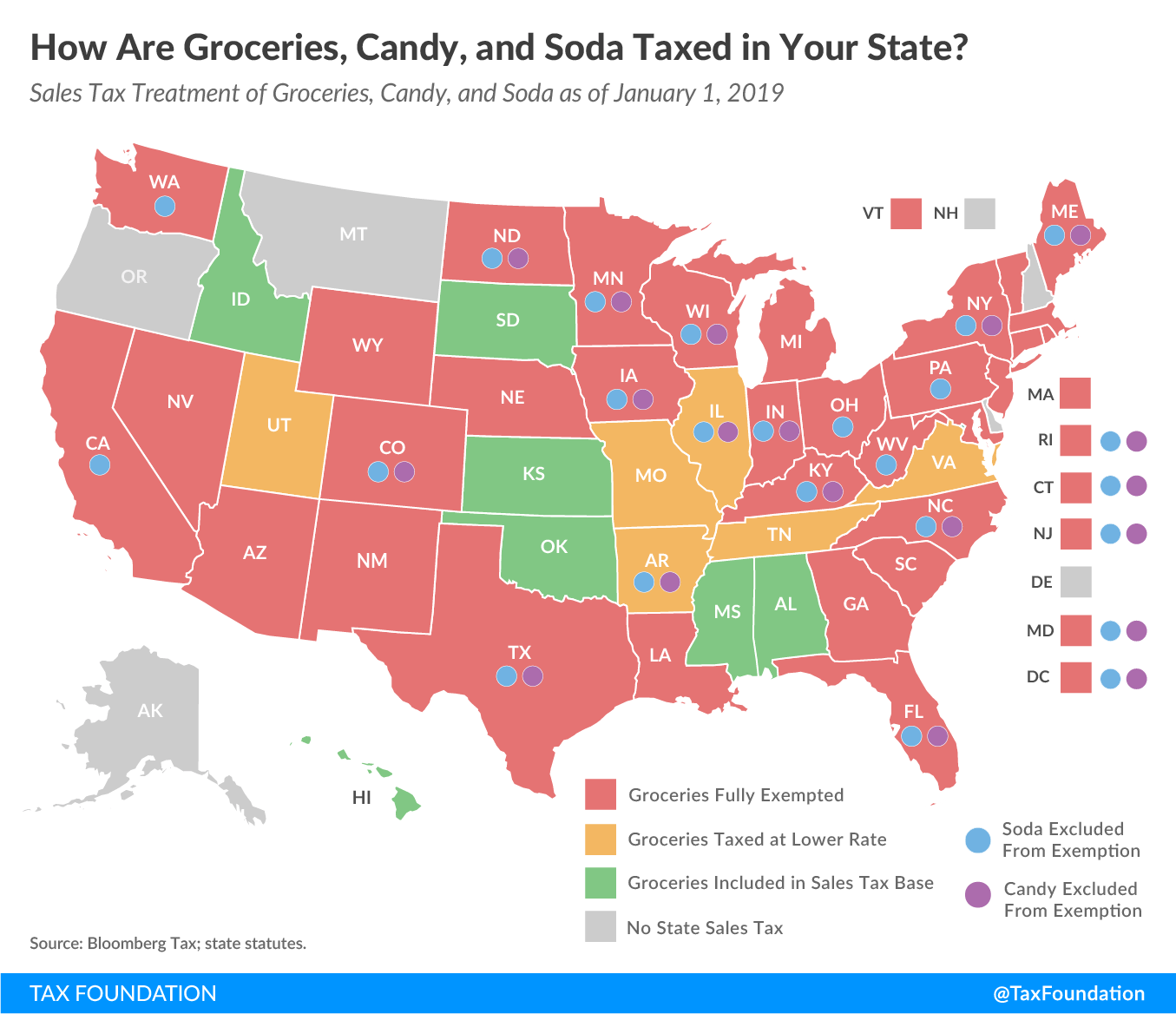
Alabama levies a state sales tax on eligible food items alongside applicable county and municipal sales taxes. Following landmark legislation under Act 2023-554, the state portion of the grocery tax dropped from 4% to 3%, with statutory provisions allowing a future drop to 2% tied to growth thresholds in the state Education Trust Fund.
For decades, Alabama remained one of only a handful of states in the nation that levied the full general state sales tax rate on staple groceries without offering a broad credit or grocery exemption. Because sales taxes on food fall disproportionately on lower- and middle-income households—who spend a significantly larger percentage of their take-home earnings on essential nourishment—the policy faced years of legislative resistance and public criticism.
The passage of House Bill 479 (enacted as Act 2023-554) marked the first permanent structural reduction of Alabama's state grocery tax in modern history. However, understanding what you actually pay at the register involves navigating the split between state and local levies, knowing which items legally count as "food," and tracking the specific economic triggers governing further tax cuts.
The Legislative Framework: Alabama Act 2023-554
On June 1, 2023, the Alabama Legislature unanimously passed HB 479, which Governor Kay Ivey subsequently signed into law. This measure established a formal mechanism to phase down the state's longstanding 4% sales tax on qualifying groceries.
Prior to the passage of Act 2023-554, Alabama funded a substantial portion of its public education system through income and general sales taxes earmarked directly for the state’s Education Trust Fund (ETF). Because general sales taxes applied equally to cars, clothing, hardware, and an ordinary gallon of milk, repealing or cutting the food tax was historically blocked by concerns over school revenue shortfalls.
The 2023 law established a structured schedule designed to balance consumer relief with state education funding stability:
- First Phase Reduction: Effective September 1, 2023, the state sales tax rate applied to qualifying food dropped from 4.0% to 3.0%.
- Conditional Second Phase Reduction: The state rate is scheduled to decrease further from 3.0% to 2.0% once statutory revenue conditions are satisfied.
- The Joint Legislative Study Commission: The statute created a formal study commission tasked with examining paths to phase out the state grocery tax completely, analyzing revenue alternatives to prevent structural deficits in the ETF.
The Education Trust Fund (ETF) Revenue Triggers
The reduction from 3% to 2% is not automatic on a fixed calendar date; it is legally contingent upon economic performance. Under the statute, the second percentage-point cut will take effect only if total net revenues received by the Education Trust Fund grow by at least 2% over the preceding fiscal year.
If this growth condition is not met in a given fiscal evaluation cycle, the reduction is deferred until the growth threshold is satisfied. This statutory safeguard ensures that grocery tax reductions do not trigger mandatory proration or automatic across-the-board cuts to Alabama public school classrooms, teachers' salaries, and university budgets.
State vs. Local Taxes: The Total Rate at the Cash Register
A common source of confusion for Alabama shoppers is why their grocery receipts still show sales tax rates of 8%, 9%, or even 10% despite the reduction in state grocery tax.
Sales tax in Alabama is layered. The total rate paid at retail checkout is the sum of three distinct jurisdictions:
- The State of Alabama sales tax rate.
- The County sales tax rate.
- The Municipal (City or Town) sales tax rate.
Total Sales Tax = State Tax (3%) + County Tax + Municipal Tax
While the state reduced its own rate from 4% to 3%, Act 2023-554 did not force counties and cities to lower their local sales taxes on food. Local governments across Alabama rely heavily on local sales taxes to fund essential municipal services, including municipal police, fire departments, county sheriff offices, road paving, and local emergency medical services.
Local Taxing Authority and Limitations
To prevent cities and counties from simply raising their local food taxes to capture the revenue abandoned by the state, Act 2023-554 established explicit boundaries on municipal and county taxing powers:
- Rate Freezes on Groceries: Local governments are prohibited from increasing their local sales tax rates specifically on qualifying food items above the rates in effect on the date the act took effect.
- Permitted Local Reductions: Municipalities and county commissions were granted express statutory authority to reduce their own local sales tax rates on food in increments of 25% (or eliminate them entirely) by adopting a formal local resolution or ordinance.
- General Sales Tax Rate Changes: If a city or county adopts an across-the-board increase on all general sales taxes, that increase can only apply to groceries under very strict procedural parameters that avoid target-taxing nutrition.
Because relatively few local governments have voluntarily eliminated their grocery taxes due to municipal budget constraints, most residents still pay local taxes between 4% and 7% on top of the state’s 3% rate. In some high-tax municipalities, the combined tax on groceries remains among the highest in the country.
What Qualifies as "Food" Under Alabama Tax Law?
Alabama did not create a new, state-specific definition of groceries. Instead, Act 2023-554 explicitly adopted the federal definition established under the Supplemental Nutrition Assistance Program (SNAP), governed by 7 U.S.C. § 2012.
Adopting the federal SNAP standard streamlines point-of-sale checkout systems for grocery retailers, who already maintain software configured to recognize SNAP-eligible stock keeping units (SKUs).
Eligible Food Items (Qualifying for Reduced State Tax)
Any food item intended for home human consumption that qualifies for purchase using SNAP benefits receives the reduced state tax rate, regardless of whether the customer pays with SNAP (EBT), cash, a debit card, or a credit card. These items include:
- Staple Produce and Dairy: Fresh, frozen, or canned vegetables and fruits; cow's milk, plant-based milk alternatives, butter, cheese, and yogurt.
- Meat, Poultry, and Seafood: Fresh cuts, frozen packages, ground meats, poultry, and fish.
- Bakery and Grain Products: Bread, tortillas, flour, oats, pasta, rice, and breakfast cereals.
- Pantry Essentials: Spices, cooking oils, sugar, baking ingredients, sauces, condiments, and gravies.
- Snack Foods and Non-Alcoholic Beverages: Pre-packaged chips, crackers, cookies, soft drinks, juices, bottled water, coffee grounds, and tea bags.
- Food-Producing Seeds and Plants: Seeds and plants intended to produce food for personal home consumption (such as tomato plants or vegetable seed packets).
Non-Qualifying Items (Taxed at General Sales Tax Rates)
Items that fail to meet the federal SNAP definition remain subject to the full general state sales tax rate of 4%, in addition to standard local rates:
- Prepared Hot Foods: Rotisserie chickens, hot deli sandwiches, soup bars, and hot pizza slices intended for immediate consumption.
- Heated Beverages: Hot coffee, hot teas, or fountain drinks served hot at convenience stores and bakeries.
- Dine-In and Takeout Restaurant Meals: All food prepared, cooked, and sold by restaurants, catering businesses, and food trucks.
- Alcoholic Beverages: Beer, wine, distilled spirits, and ready-to-drink canned cocktails.
- Tobacco and Nicotine: Cigarettes, smokeless tobacco, cigars, and vaping products.
- Dietary Supplements and Medications: Vitamins, protein powders with "Supplement Facts" labels, minerals, and over-the-counter medications.
- Household Essentials and Pet Food: Paper towels, dish soap, cleaning supplies, toiletries, dog food, and cat food.
The table below contrasts how everyday retail items are categorized under current Alabama sales tax rules.
| Item Description | State Tax Rate | Qualifies for Food Rate? | Legal Classification Basis |
|---|---|---|---|
| Fresh Milk (Gallon) | 3% | Yes | SNAP definition (Home food consumption) |
| Fresh Apples / Oranges | 3% | Yes | SNAP definition (Home food consumption) |
| Raw Chicken Breast | 3% | Yes | SNAP definition (Home food consumption) |
| Canned Soup | 3% | Yes | SNAP definition (Home food consumption) |
| Soft Drinks (12-pack) | 3% | Yes | SNAP definition (Qualifying non-alcoholic beverage) |
| Vegetable Garden Seeds | 3% | Yes | SNAP definition (Produces food for human consumption) |
| Hot Rotisserie Chicken | 4% | No | Excluded: Sold heated for immediate consumption |
| Restaurant Meal (Takeout or Dine-in) | 4% | No | Excluded: Prepared commercial meal |
| Beer / Table Wine | 4% | No | Excluded: Alcoholic beverage |
| Multivitamins / Protein Powder | 4% | No | Excluded: Dietary supplement ("Supplement Facts" panel) |
| Paper Towels / Laundry Detergent | 4% | No | Excluded: Non-food general consumer good |
| Pet Food (Cat / Dog) | 4% | No | Excluded: Not intended for human consumption |
How Retailers Apply the Tax at Point of Sale
Under guidelines administered by the Alabama Department of Revenue, retailers operating within the state are required to program their point-of-sale (POS) systems to differentiate inventory at the barcode level.
When a cashier scans an item:
- The POS database checks whether the item's UPC maps to the federal SNAP product database.
- If verified, the system applies the 3% state tax plus the applicable local food tax rate.
- If the item does not qualify (e.g., paper plates or a heated sandwich), the POS applies the 4% general state sales tax plus the general local rate.
- Receipts typically display these distinctions using tax item codes (such as
T1for standard sales tax andT2orFfor reduced food tax).
Calculating the Difference on an Everyday Purchase
To see how the tax affects an average household, consider a consumer purchasing $150 worth of qualifying groceries in a city with a 3% municipal tax and a 2% county tax.
Under the old 4% state rate:
- Combined Tax Rate: $4% \text{ (State)} + 2% \text{ (County)} + 3% \text{ (City)} = 9%$
- Total Tax Paid: $$150 \times 0.09 = $13.50$
- Total Register Cost: $163.50
Under the 3% reduced state rate:
- Combined Tax Rate: $3% \text{ (State)} + 2% \text{ (County)} + 3% \text{ (City)} = 8%$
- Total Tax Paid: $$150 \times 0.08 = $12.00$
- Total Register Cost: $162.00
- Immediate Savings: $1.50 per trip.
Under a future 2% reduced state rate:
- Combined Tax Rate: $2% \text{ (State)} + 2% \text{ (County)} + 3% \text{ (City)} = 7%$
- Total Tax Paid: $$150 \times 0.07 = $10.50$
- Total Register Cost: $160.50
- Cumulative Savings: $3.00 per trip compared to pre-2023 law.
While modest on single shopping trips, a family spending $800 per month on groceries saves $96 annually under the 1% cut, and $192 annually if the rate drops to 2%.
Economic and Fiscal Arguments Surrounding the Law
The debate over grocery taxation in Alabama involves competing priorities in state fiscal policy, revenue volatility, and socioeconomic equity.
The Regressive Nature of Grocery Taxes
Public policy analysts and food security advocates have consistently characterized the grocery tax as one of the most regressive components of state tax policy. Lower-income households must allocate a substantial share of their disposable income to core survival purchases, particularly food.
When groceries carry an 8% to 10% combined sales tax, low-wage families experience an effective tax penalty on essential nutrition. Eliminating or reducing this tax provides direct, non-bureaucratic financial relief that requires no complex application or agency approval.
Protection of the Education Trust Fund
The primary counterargument against eliminating the grocery tax in one stroke has historically centered on school funding solvency. Alabama maintains two separate state funds:
- The General Fund: Financed primarily by ad valorem (property) taxes, interest, and miscellaneous fees; pays for general state agency operations, prisons, and public safety.
- The Education Trust Fund (ETF): Financed primarily by individual and corporate income taxes and the state sales tax; funds public K-12 schools, community colleges, and state universities.
State budget officials estimated that completely eliminating the state grocery tax would remove roughly $600 million annually from the ETF. Educational organizations, teacher associations, and school administrators argued that removing this revenue without replacing it through an alternative revenue mechanism—such as raising corporate tax rates or removing state deductions for federal income taxes—would leave public classrooms vulnerable during economic downturns.
Act 2023-554 emerged as a political compromise: it delivered immediate consumer tax cuts while keeping safety triggers tied to ETF revenue health.
Cross-Border Shopping Competition
Another practical driver of the legislation was competition with neighboring states. Alabama borders Tennessee, Georgia, Florida, and Mississippi:
- Florida: Does not tax groceries.
- Georgia: Exempts qualifying food from its 4% state sales tax (though local taxes may apply).
- Tennessee: Taxes groceries at a reduced state rate of 4% (down from general 7%).
- Mississippi: Levies its full 7% sales tax on groceries.
Counties bordering Florida and Georgia frequently lost significant retail spending, as residents living near state borders crossed lines to do bulk grocery shopping in jurisdictions with lower or non-existent grocery taxes. Lowering Alabama's state rate helps border grocers and retailers retain local commerce.
Consumer Rights, Compliance, and Troubleshooting
Consumers and business owners occasionally run into tax collection disputes, unexpected charges, or miscategorized items at checkout. Navigating these situations requires familiarity with enforcement rules and local administrative resources.
Verifying Your Receipt
Every retail register receipt in Alabama is required to show the total tax collected and specify the rate tier applied. Consumers should check:
- Tax Code Designations: Locate the single-letter code next to each line item (e.g.,
ForT). - Subtotal Segregation: Look at the bottom of the receipt to verify that qualifying food purchases were separated from taxable household supplies before sales tax was calculated.
- Combined Tax Rate: Calculate whether the percentage charged on the food subtotal aligns with the 3% state rate plus your specific city and county rates.
What to Do if an Item is Wrongly Taxed
If a retail store improperly applies the 4% general rate to an item that clearly meets federal SNAP criteria (such as unopened cold milk, raw poultry, or canned goods):
- Speak with Store Management: Most discrepancies result from inaccurate local store SKU programming. Alerting a manager can correct internal POS mapping errors.
- Request an Immediate Refund: Retailers have the capability at customer service desks to recalculate sales tax and refund point-of-sale overcharges.
- Contact the Alabama Department of Revenue: If a store systematically refuses to recognize the statutory reduction on eligible items, consumers can submit a complaint to the Sales and Use Tax Division of the Alabama Department of Revenue.
Frequently Asked Questions
Did Alabama completely eliminate its grocery tax?
No. Alabama did not fully eliminate its grocery tax. The state reduced its portion of the sales tax on qualifying groceries from 4% to 3% on September 1, 2023. A further reduction to 2% is authorized under state law once the Education Trust Fund meets a 2% net growth threshold, but full elimination would require additional legislative action.
Why am I still paying 8% or more on food at my local supermarket?
You are still paying high combined rates because local cities and counties levy their own sales taxes on top of the state’s 3% rate. Act 2023-554 reduced only the state government's portion of the tax. Unless your local county commission and city council voluntarily pass local ordinances reducing municipal and county grocery taxes, their rates remain fully applicable.
Does the reduced grocery tax apply to restaurant meals?
No. The reduced food tax rate applies strictly to food intended for home consumption under federal SNAP guidelines. Meals served in sit-down restaurants, takeout orders, hot deli counters, and food trucks remain subject to the full 4% state sales tax, along with all applicable local general sales taxes.
Are pet food and paper goods included in the food tax reduction?
No. Pet food, cleaning chemicals, paper towels, toiletries, and over-the-counter medications are not considered human food under SNAP definitions. These items are classified as general tangible personal property and are taxed at the full 4% state rate plus standard local sales tax rates.
How do store registers know which items qualify?
Retailers use federal SNAP eligibility databases to automate tax classification. When a product's barcode is scanned, the register's inventory management system references whether the product is classified as SNAP-eligible food. Eligible items automatically receive the 3% state rate, while non-qualifying products are charged the 4% general rate.
Practical Steps for Alabama Shoppers
To maximize household savings under Alabama's current sales tax structure:
- Audit Your Grocery Receipts: Make a habit of checking your itemized receipts to confirm that fresh, frozen, and pantry foods are separated from household items like paper plates, plastic wrap, and cleaning agents.
- Distinguish Deli Choices: Avoid buying hot prepared meals at grocery delis if you are trying to minimize sales tax. Purchasing cold, unheated cuts or family packs to cook at home saves you both retail preparation markups and the higher 4% state tax rate.
- Track Local Municipal Tax Policies: Pay attention to city council and county commission agendas in your jurisdiction. Because local governments now hold statutory authority under Act 2023-554 to reduce their own food taxes, local civic participation can directly impact the rates you pay at checkout.