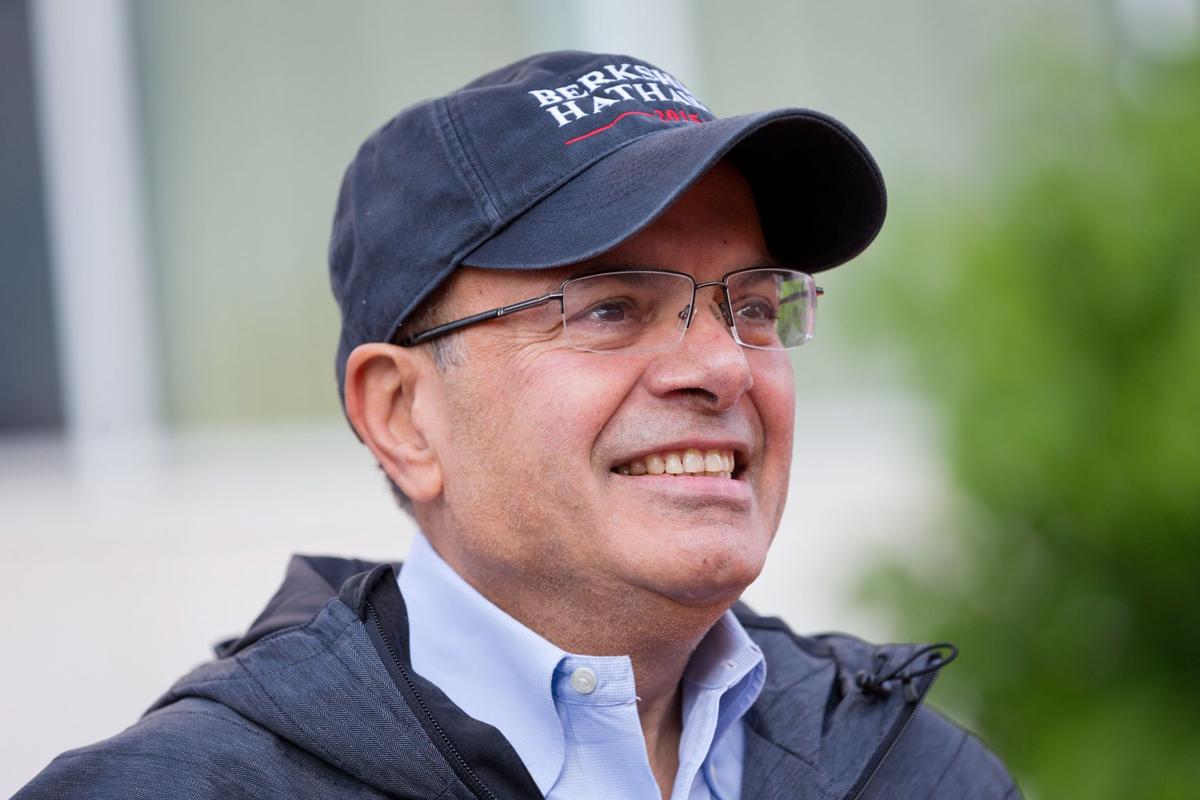
Ajit Jain is the Vice Chairman of Insurance Operations for Berkshire Hathaway and is widely considered one of the most successful insurance executives in history. As of 2026, Jain is 74 years old and continues to oversee the conglomerate’s massive reinsurance and primary insurance divisions, maintaining his reputation as Warren Buffett’s most trusted advisor on risk.
The story of Ajit Jain is not merely a corporate biography; it is a case study in intellectual rigor and the application of disciplined capital allocation. Since joining Berkshire Hathaway in 1986, Jain has transformed a relatively small insurance operation into a global powerhouse that generates billions in "float"—the low-cost capital that Buffett uses to fund the company’s diverse investments. This overview examines his life, his unique approach to underwriting, and his ongoing role within the Berkshire hierarchy.
Early Life and Academic Foundation
Ajit Jain was born on July 23, 1951, in Orissa, India. His early years were marked by the academic excellence typical of top-tier Indian engineering students of that era. He attended the prestigious Indian Institute of Technology (IIT) Kharagpur, where he earned a degree in Mechanical Engineering in 1972. The analytical mindset fostered during his engineering studies would later become his greatest asset in the world of high-stakes insurance.
After a brief stint working for IBM in India, Jain moved to the United States to pursue higher education at Harvard Business School, where he earned his MBA in 1978. This combination of a technical engineering background and an elite business education provided him with a dual-lens perspective: the ability to understand the mechanics of complex systems and the financial acumen to price them.
Professional Beginnings: From IBM to McKinsey
Before his legendary tenure at Berkshire Hathaway, Jain spent several years at McKinsey & Co., the global management consulting firm. Working at McKinsey allowed him to interact with diverse industries and sharpen his strategic thinking. However, it was his departure from the consulting world that led to the most significant meeting of his life.
In 1986, Jain walked into the offices of Berkshire Hathaway. At the time, Warren Buffett was looking for someone to run a fledgling reinsurance business. Despite Jain’s lack of direct experience in the insurance industry at the time, Buffett was immediately impressed by his intellect and character. Buffett famously remarked that Jain’s mind was a "perfect machine" for assessing risk.
The Berkshire Hathaway Era: Joining Warren Buffett
Ajit Jain officially joined Berkshire Hathaway on a Saturday morning in 1986. Unlike many executives who enter the insurance field through traditional actuarial paths, Jain’s approach was grounded in a deep understanding of probability and a willingness to walk away from bad deals.
Mastering Catastrophic Risk
The hallmark of Jain’s career has been his mastery of "super-cat" (super-catastrophe) insurance. This involves insuring against events that occur rarely but result in massive payouts—such as hurricanes, earthquakes, or even satellite launches.
Under Jain’s leadership, Berkshire Hathaway’s National Indemnity Company became the go-to insurer for risks that other companies were too small or too frightened to touch. Jain’s ability to price these risks accurately allowed Berkshire to collect massive premiums. If no disaster occurred, Berkshire kept the profit. If a disaster did occur, Berkshire’s massive balance sheet ensured it could pay out claims without flinching.
The Power of "Float"
In the insurance world, "float" refers to the money an insurer collects in premiums before it has to pay out claims. This money does not belong to the company, but the company is allowed to invest it for its own benefit.
Ajit Jain is credited with growing Berkshire’s float from nearly nothing to over $160 billion over four decades. This "free" capital has been the engine behind Warren Buffett’s most famous acquisitions and stock market maneuvers. Without Jain’s disciplined underwriting, Berkshire would not have had the ammunition to buy companies like GEICO, BNSF Railway, or large stakes in Apple.
Ajit Jain’s Role as Vice Chairman and the Succession Plan
In 2018, Ajit Jain was promoted to Vice Chairman of Insurance Operations, while Greg Abel was named Vice Chairman of Non-Insurance Operations. This move signaled a new era of leadership as Warren Buffett and the late Charlie Munger prepared the company for their eventual departure.
The Relationship with Warren Buffett
Buffett has often stated that if he, Charlie Munger, and Ajit Jain were on a sinking boat and only one person could be saved, the shareholders should save Ajit. This hyperbolic praise underscores Jain’s singular importance to the firm. Jain’s primary responsibility is ensuring that Berkshire’s insurance units remain disciplined. While many insurers chase volume (writing as many policies as possible), Jain prioritizes profitability. If the price isn't right, Jain is perfectly comfortable writing no business at all for months at a time.
The 2024 Stock Sale and 2026 Status
In late 2024, Ajit Jain made headlines by selling more than half of his personal stake in Berkshire Hathaway, totaling roughly $139 million. While some analysts speculated this might signal an impending retirement, others viewed it as simple estate planning for an executive in his 70s.
As of 2026, Jain remains a pivotal figure on the Berkshire Board of Directors. While Greg Abel has been designated as the successor to Buffett for the CEO role, Jain’s expertise in insurance is seen as irreplaceable. The current corporate structure ensures that the insurance operations remain under a specialized umbrella, protecting the "crown jewel" of the Berkshire empire.
| Feature | Details |
|---|---|
| Full Name | Ajit Jain |
| Current Age (2026) | 74 (Born July 23, 1951) |
| Position | Vice Chairman, Insurance Operations, Berkshire Hathaway |
| Education | IIT Kharagpur (B.S.), Harvard Business School (MBA) |
| Key Companies | IBM, McKinsey & Co, Berkshire Hathaway |
| Specialization | Reinsurance, Catastrophic Risk, Capital Allocation |
| Estimated Net Worth | Significant (Primarily Berkshire Hathaway Class A & B shares) |
| Key Philanthropy | The Jain Foundation (Mitochondrial Myopathy Research) |
Leadership Style and Philanthropy
Ajit Jain is known for a low-profile, "no-nonsense" leadership style. He rarely gives media interviews and prefers to let the annual reports and financial results speak for themselves. His colleague, the late Charlie Munger, often praised Jain for his "unflinching honesty" and his ability to see reality as it is, rather than how he wishes it to be.
The Jain Foundation
Beyond his corporate achievements, Jain is deeply involved in philanthropy. He and his family established the Jain Foundation, a non-profit organization dedicated to finding a cure for a rare form of muscular dystrophy known as LGMD2B (Limb-Girdle Muscular Dystrophy type 2B).
The foundation is unique because it operates with the same analytical rigor Jain applies to insurance. It funds specific, targeted research projects and facilitates collaboration between scientists who might otherwise work in silos. This focus on "outcome-oriented" giving reflects Jain's life-long commitment to efficiency and problem-solving.
Critical Achievements in Reinsurance
To understand Jain’s career, one must look at the massive deals he has orchestrated. He pioneered the use of "retroactive reinsurance" contracts, where Berkshire takes over the liabilities of another insurance company’s old policies in exchange for a large upfront payment.
- The Equitas Deal (2006): Jain oversaw a landmark agreement with Lloyd’s of London’s Equitas, where Berkshire took on billions in potential asbestos and environmental liabilities.
- AIG Agreement (2017): In one of the largest deals of its kind, Jain led Berkshire to take on $20 billion in long-term risk from AIG in exchange for approximately $10 billion in upfront premiums.
- Pricing Discipline: During periods of "soft" markets—where competitors drop prices to attract customers—Jain has been known to shrink Berkshire’s insurance volume by 50% or more, refusing to take on risk that does not offer a mathematical advantage.
Frequently Asked Questions
Is Ajit Jain the next CEO of Berkshire Hathaway?
No. Warren Buffett officially named Greg Abel as the CEO-designate. Abel oversees the non-insurance businesses (energy, railroads, retail). However, Ajit Jain remains the ultimate authority on Berkshire's insurance operations and is expected to continue leading that sector for as long as he is able.
Why is Ajit Jain considered so important to Berkshire?
His importance lies in his ability to manage the float. Insurance float is the lifeblood of Berkshire's investment strategy. By underwriting profitably, Jain ensures that Berkshire is paid to hold billions of dollars that can then be invested by Warren Buffett and the investment team.
What is Ajit Jain’s educational background?
Jain holds a degree in Mechanical Engineering from the Indian Institute of Technology (IIT) Kharagpur and an MBA from Harvard Business School. This combination of technical engineering logic and business strategy is often cited as the foundation for his success in risk assessment.
What was the significance of Jain selling his stock in 2024?
While the sale of over $130 million in stock was significant, it represented a personal financial decision. Most analysts believe it was related to tax planning or diversifying his personal estate as he entered his mid-70s. It did not result in a change in his operational role at the company.
How does Ajit Jain approach risk?
Jain uses a mathematical and probabilistic approach. He focuses on the "worst-case scenario" and asks whether Berkshire can survive that outcome. He only accepts risks where the premium significantly outweighs the statistical likelihood of a loss, often ignoring market trends to stick to his internal valuation models.
Strategic Guidance for Investors and Professionals
For those looking to emulate Ajit Jain’s career or understand the mechanics of Berkshire Hathaway, the following actions are recommended:
- Study the "Float": Read the Berkshire Hathaway annual letters from 1986 to 2025. Pay close attention to the sections on insurance underwriting to understand how Jain generates capital.
- Focus on Probability: Jain’s success is built on the mastery of statistics over emotion. Whether in investing or insurance, prioritizing the mathematical "expected value" is key.
- Maintain Intellectual Honesty: A cornerstone of the Jain/Buffett/Munger philosophy is the ability to admit when a risk is too complex to understand. Do not invest in or insure what you cannot accurately price.
As we look at Ajit Jain’s status in 2026, he remains a titan of the industry. His transition from an engineering student in India to the architect of the world's most successful insurance machine is a testament to the power of disciplined thinking and unwavering integrity.