The Philippine aviation landscape in 2026 is defined by a massive shift toward privatization, the operational maturity of regional hubs, and the rapid construction of "aerotropolises." Navigating this environment requires understanding the distinct roles of the newly rehabilitated Ninoy Aquino International Airport (NAIA), the tech-forward Clark International Airport (CRK), and the expanding Mactan-Cebu International Airport (MCIA) as the country transitions its primary international gateway functions.
The Transformation of Ninoy Aquino International Airport (NAIA)
As of 2026, the landscape of Manila’s primary gateway has changed significantly under the management of the New NAIA Infrastructure Corp (NNIC). The privatization, which began in earnest in 2024, has moved past the initial transition phase into visible structural and operational improvements. For travelers and industry stakeholders, navigating NAIA now involves a more streamlined terminal logic designed to reduce the historical congestion that once plagued the facility.
Terminal Reassignments and Optimization
One of the most critical changes in 2026 is the finalized terminal reassignment strategy. To improve efficiency, the NNIC has grouped airlines not just by domestic or international status, but by alliance and operational synergy. Terminal 1 remains the primary home for various foreign flag carriers, but it has undergone extensive "soft" renovations, including upgraded cooling systems and digitized check-in counters. Terminal 2, formerly exclusive to Philippine Airlines, has been converted into a high-capacity domestic hub to handle the surge in local tourism. Terminal 3 continues to serve as the primary international terminal for Cebu Pacific and other major international players, while Terminal 4 remains dedicated to turboprop operations and smaller domestic boutique airlines.
Infrastructure and Passenger Flow
Navigating the physical space of NAIA in 2026 is aided by the integration of biometric scanning at security and immigration points. This "contactless" journey was a core requirement of the concession agreement. Furthermore, the landside congestion has been partially mitigated by the completion of dedicated access ramps and the improvement of the NAIA Expressway (NAIAX) connectivity. Internally, the "bottleneck" areas—specifically the immigration queues and baggage reclaim—have been expanded, utilizing AI-driven queue management systems to deploy personnel based on real-time passenger loads.
Clark International Airport: The Northern Powerhouse
While NAIA undergoes rehabilitation, Clark International Airport (CRK) in Pampanga has solidified its position as the premier alternative gateway. In 2026, CRK is no longer just a "secondary" airport; it is a vital component of the Philippine aviation strategy, serving the growing population of Central and Northern Luzon.
Connectivity and the North-South Commuter Railway (NSCR)
The most significant development for navigating the Clark landscape is the partial operations of the North-South Commuter Railway (NSCR). This rail link allows passengers from Manila to reach Clark in less than an hour, effectively making CRK a viable option even for those residing in the National Capital Region. The airport's Terminal 2, a state-of-the-art facility, remains the benchmark for Philippine aviation design, featuring silent airport technology and fully automated bag-drop systems.
A Hub for Low-Cost Carriers and Logistics
Clark has successfully attracted a high density of Low-Cost Carriers (LCCs) and international cargo giants. For the traveler, this means more competitive pricing for flights to North Asia (Japan, South Korea, and China) and the Middle East. For the aviation industry, Clark serves as a primary maintenance, repair, and overhaul (MRO) hub, housing facilities that service the growing fleets of regional airlines.
Mactan-Cebu International Airport: The Central Gateway
In the Visayas, Mactan-Cebu International Airport (MCIA) continues to lead as a "resort-airport," focusing on passenger experience and aesthetic integration. In 2026, MCIA has expanded its role as a transfer hub, allowing international passengers to bypass Manila entirely when traveling to southern destinations like Siargao, Palawan, or Davao.
Terminal 2 and International Expansion
The award-winning Terminal 2 (International) has seen a steady increase in direct long-haul flights. Navigation here is intuitive, with a layout that minimizes walking distances between gates. The airport management, led by Aboitiz InfraCapital, has emphasized "placemaking," ensuring that the terminal reflects Cebuano culture through its architecture and retail offerings.
Digital Integration and "Smart" Travel
MCIA has been a pioneer in integrating the "e-Travel" system directly into its local kiosks. In 2026, the airport uses advanced data analytics to predict peak hours, allowing for smoother transit for the millions of tourists who use Cebu as their primary entry point into the Philippines.
The Horizon of Megaprojects: Bulacan and Sangley
The 2026 Philippine aviation landscape is also characterized by what is currently under construction. Two massive projects are set to redefine the "Airport PH" search intent for the next decade: the New Manila International Airport (NMIA) and the Sangley Point International Airport (SPIA).
New Manila International Airport (Bulacan)
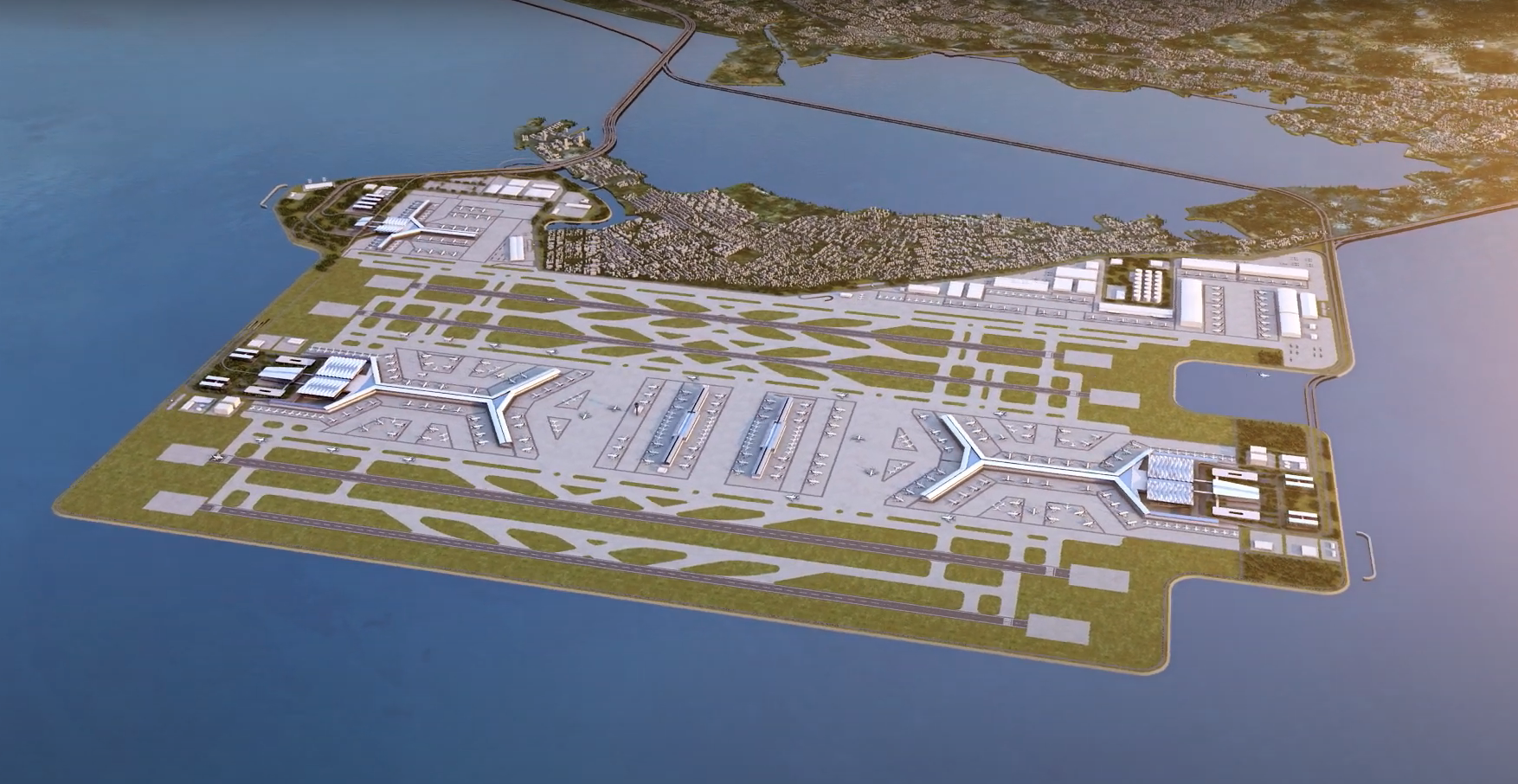
Owned and developed by San Miguel Corporation, the NMIA in Bulacan is the most ambitious infrastructure project in the country’s history. By 2026, the land development phase is largely complete, and the outlines of the four-runway system are visible. This project aims to eventually replace or supplement NAIA, with a capacity of 100 million passengers annually. Navigating the aviation landscape currently involves monitoring the progress of the "Aerocity" surrounding this airport, which is expected to become a new economic center.
Sangley Point International Airport (Cavite)
In the south, the Sangley Point International Airport is being developed by a consortium to serve as another alternative to NAIA. In 2026, its role is increasingly seen as a specialized hub for business aviation and specific international routes, providing a multi-airport system for the Greater Manila Area similar to London or New York.
Comparing the Primary Philippine Gateways (2026 Status)
| Feature | NAIA (Manila) | Clark (CRK) | Mactan-Cebu (MCIA) |
|---|---|---|---|
| Operator | New NAIA Infra Corp (Private) | Luzon Int'l Premiere Airport Dev't | Aboitiz InfraCapital |
| Primary Role | Main International Gateway | Northern Hub / LCC Base | Central Hub / Tourism Gateway |
| Capacity (Annual) | 62 Million (Projected 2026) | 12 Million | 12.5 Million |
| Key Tech | Biometric Gates, AI Queueing | Silent Terminal, Automated Bag Drop | Smart Retail, e-Travel Integration |
| Rail Link | Metro Manila Subway (Under Const.) | North-South Commuter Rail (Active) | Bus Rapid Transit (Integrated) |
| Passenger Experience | Modernized / High-Efficiency | Tech-Forward / Spacious | Resort-Style / Cultural |
Regulatory Framework and Passenger Rights
Navigating the Philippine aviation landscape is not just about physical airports; it is also about the legal and regulatory environment managed by the Department of Transportation (DOTr), the Civil Aviation Authority of the Philippines (CAAP), and the Civil Aeronautics Board (CAB).
The Air Passenger Bill of Rights (APBR)
In 2026, the Air Passenger Bill of Rights remains the primary protection for travelers. It covers issues such as overbooking, flight cancellations, and delays. Under current regulations, airlines are mandated to provide compensation, meals, and hotel accommodation depending on the length of the delay. Navigating a dispute requires passengers to approach the CAB complaints desk, which is now present in all major terminals, or use the centralized digital "CAB Connect" portal.
Security and Safety Standards
The CAAP is responsible for ensuring that all Philippine airports meet ICAO (International Civil Aviation Organization) standards. In 2026, there is a heightened focus on cybersecurity within airport operations, as more systems—from air traffic control to baggage handling—rely on integrated digital networks.
Regional Airport Modernization
Beyond the "Big Three" (Manila, Clark, Cebu), the 2026 landscape features several modernized regional airports that have moved from simple airstrips to "International" status.
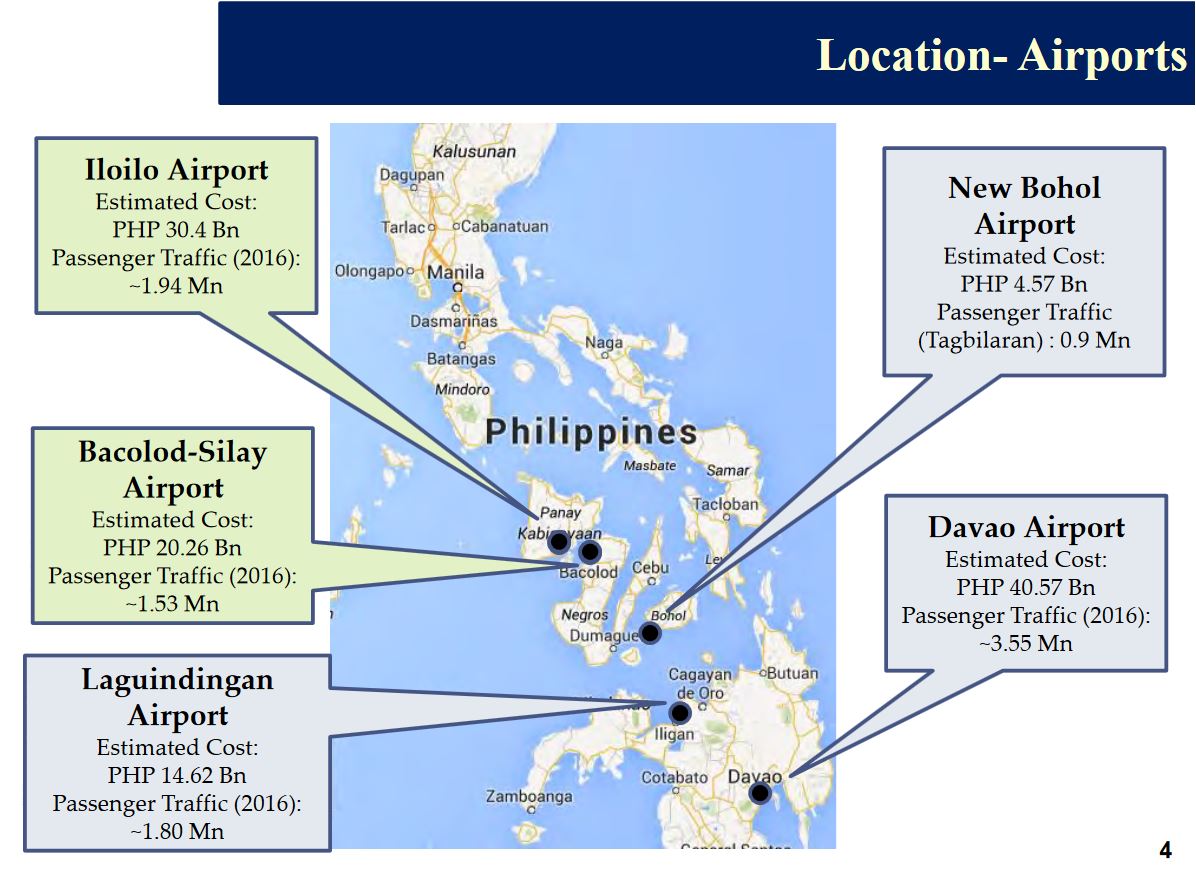
- Bohol-Panglao International Airport: The country's first "Green Airport," utilizing solar power and natural ventilation. It is the primary entry point for eco-tourism in the Visayas.
- Bicol International Airport (Daraga): Serving the Albay region, this airport provides a scenic gateway with views of Mt. Mayon and has significantly boosted tourism in Southern Luzon.
- Laguindingan Airport (Misamis Oriental): Serving Cagayan de Oro and Iligan, this airport is currently undergoing expansion to handle direct international flights from Southeast Asian neighbors.
- Davao International Airport (Francisco Bangoy): As the gateway to Mindanao, it remains a critical hub for trade and is slated for its own privatization and expansion to handle increased wide-body aircraft traffic.
Technical Logistics: Travel Taxes and Fees
A recurring aspect of navigating Philippine airports is the management of various fees. While many international airlines now include the Terminal Fee (Passenger Service Charge) in the ticket price, some regional airports still require manual payment.
- Philippine Travel Tax: This is a fee imposed by the government on individuals leaving the country. In 2026, most passengers pay this online via the TIEZA (Tourism Infrastructure and Enterprise Zone Authority) portal before arriving at the airport to avoid long queues.
- e-Travel Declaration: The e-Travel system is a mandatory digital arrival and departure card. Travelers must complete this within 72 hours of their flight. It integrates health declarations and customs forms into a single QR code.
Troubleshooting Common Navigation Issues
Even with modernization, travelers may encounter hurdles. Here is how to navigate common issues in the 2026 Philippine aviation environment:
- Inter-Terminal Transfers at NAIA: While the NNIC has improved shuttle services, the most reliable way to move between Terminal 1/2 and Terminal 3 remains the NAIA Expressway via taxi or ride-sharing apps like Grab. Always allow at least three hours for transfers during peak times.
- Connectivity and SIM Cards: All major airports now provide high-speed 5G Wi-Fi for at least 30-60 minutes. For longer stays, "e-SIM" kiosks are available in the arrival halls, allowing tourists to activate local data plans instantly.
- Currency and Payments: While the Philippines has moved toward a "cash-lite" society with GCash and Maya, having some Philippine Pesos (PHP) is still recommended for small transport fees outside the main hubs.
FAQ: Navigating the Landscape
What is the best way to travel between Manila and Clark in 2026? The North-South Commuter Railway (NSCR) is the most efficient method, offering a predictable travel time of under 60 minutes. Alternatively, "Point-to-Point" (P2P) buses continue to operate from various hubs in Metro Manila (like Trinoma and Makati) directly to the Clark terminal.
Are terminal fees included in my ticket? For almost all international flights departing from NAIA, MCIA, and CRK, the terminal fee is integrated into the ticket cost. However, for domestic flights at smaller regional airports, you may still need to pay a nominal fee (typically PHP 100-300) at a dedicated counter.
How early should I arrive at the airport for an international flight? Despite technological improvements, the standard recommendation remains 3 to 4 hours before departure. This accounts for potential traffic congestion leading to the airport and the time required for immigration and security screening during peak travel seasons.
Can I use biometrics at all Philippine airports? As of 2026, biometric systems (facial recognition) are fully operational for international departures at NAIA Terminal 3 and Clark Terminal 2. Other airports and terminals are still in the process of rolling out this technology.
Is there a direct train to NAIA? The Metro Manila Subway, which includes a station at NAIA Terminal 3, is in its partial operational phase in 2026. Until it is fully completed, the airport is primarily served by the NAIA Expressway, shuttle buses, and private transport.
Practical Recommendation for Travelers
To navigate the Philippine aviation landscape effectively in 2026, travelers should adopt a "digital-first" approach. Ensure that your e-Travel QR code is generated 48 hours before your flight, pay your TIEZA travel tax online, and download the specific app of the airport you are using (such as the "iNAIA" or "Clark Airport" apps) for real-time gate updates and indoor navigation. If you are flying into the Greater Manila Area, check if your destination is closer to Clark than Manila; with the new rail links, Clark is often the faster and less stressful entry point for destinations in Quezon City or Northern Metro Manila.