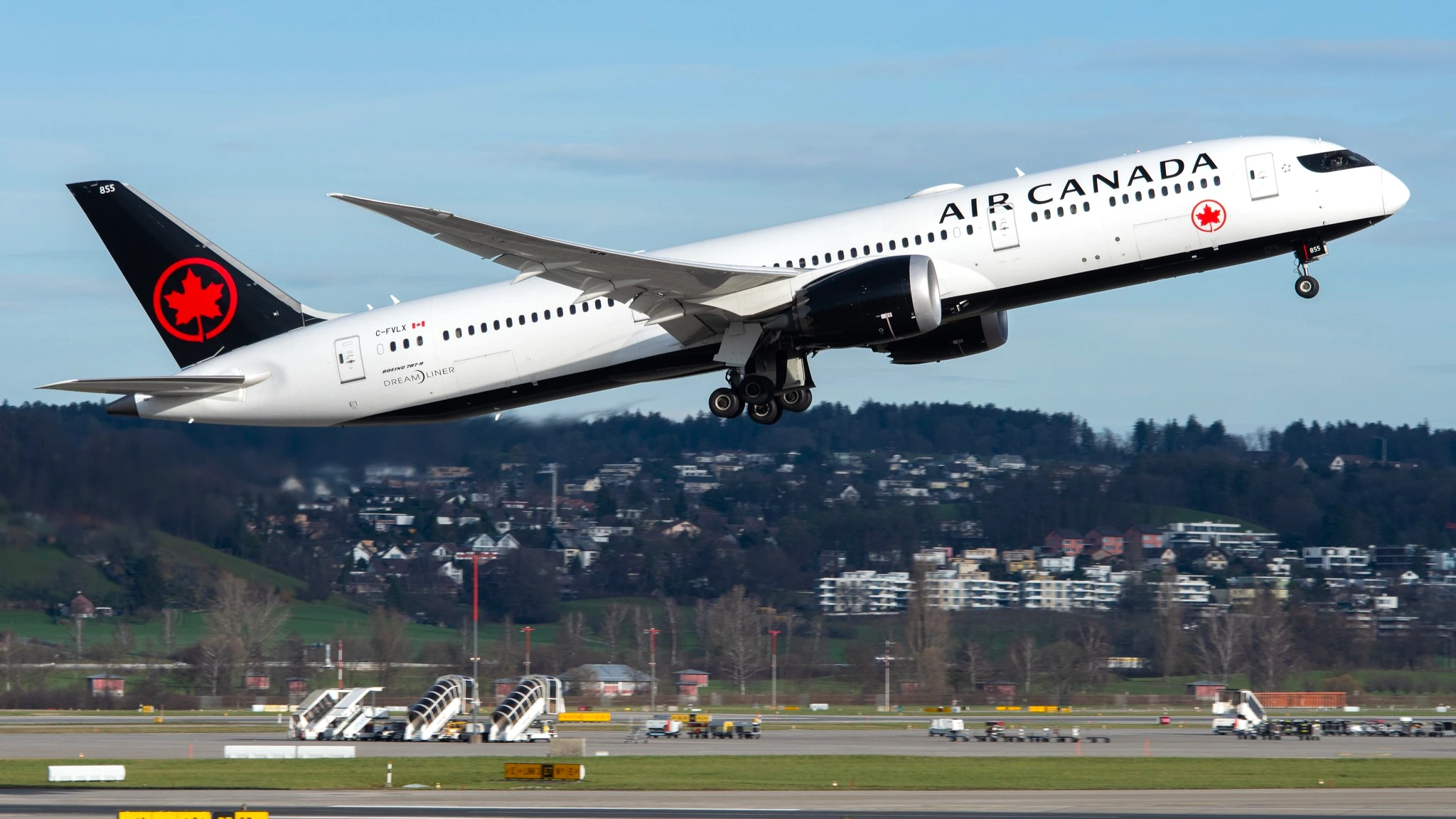
Air Canada’s Premium Economy on the Boeing 787-9 Dreamliner provides a mid-tier travel experience featuring a dedicated cabin, 38 inches of legroom, and enhanced meal services. It bridges the gap between standard Economy and Signature Class, offering priority airport handling and a significantly wider seat for long-haul international routes.
As of 2026, the Boeing 787-9 remains the workhorse of Air Canada’s long-haul fleet. While many travelers find standard economy increasingly cramped for trans-oceanic flights, the Premium Economy cabin offers a strategic alternative for those seeking physical comfort and time-saving airport benefits without the price tag of a lie-flat pod. This overview examines the technical specifications, service standards, and value proposition of the 787-9 Premium Economy product.
The Cabin Layout and Seat Ergonomics
The Boeing 787-9 Dreamliner is engineered for efficiency and passenger comfort, but the internal configuration is where the passenger experience is defined. In the Premium Economy cabin, Air Canada typically utilizes a 2-3-2 configuration. This is a significant improvement over the 3-3-3 layout found in the Economy cabin.
By removing two seats from every row, the airline provides much wider aisles and, more importantly, wider seats. While a standard Economy seat on the 787-9 is approximately 17 to 17.5 inches wide, the Premium Economy seat measures approximately 19 to 20 inches. This extra width reduces "shoulder overlap" with neighbors, a common grievance on long-haul flights.
Seat Pitch and Recline
The most vital metric for long-haul comfort is seat pitch—the distance from one point on a seat to the same point on the seat in front of it. Air Canada’s Premium Economy offers a 38-inch pitch, which is roughly 5 to 7 inches more than Economy. This space allows passengers to stretch their legs and makes it considerably easier to exit the row without requiring the person in the aisle seat to fully stand up.
The recline is also deeper, often cited at 7 to 8 inches. Rather than just the seatback tilting, the mechanism often incorporates a "cradle" motion where the seat pan tilts slightly upward, providing better ergonomic support for sleep. To complement this, seats are equipped with:
- An adjustable headrest with "wings" for neck support.
- A fold-down footrest or a leg rest (depending on the specific row and aircraft sub-variant).
- A larger, sturdy tray table housed in the armrest, which provides a more stable surface for working or dining.
Technical Specifications and Onboard Amenities
The 787-9 Dreamliner itself contributes to the "Premium" feel through its advanced atmospheric controls. Unlike older aluminum aircraft, the Dreamliner’s composite hull allows for higher cabin humidity and a lower effective cabin altitude (6,000 feet instead of the standard 8,000 feet). For Premium Economy passengers, this means arriving at a destination feeling less dehydrated and less fatigued.
| Feature | Premium Economy (787-9) | Economy Class (787-9) |
|---|---|---|
| Seat Configuration | 2-3-2 | 3-3-3 |
| Seat Width | 19–20 inches | 17–17.5 inches |
| Seat Pitch | 38 inches | 31 inches |
| Power Outlets | Universal AC & USB (Dedicated) | Shared AC & USB |
| IFE Screen Size | 11 inches (Touchscreen) | 9 inches (Touchscreen) |
| Checked Baggage | 2 bags (up to 23kg/50lb each) | Usually 0 or 1 (Fare dependent) |
| Meals | Premium plated service | Standard tray service |
In-Flight Entertainment and Connectivity
Each seat is equipped with a high-definition touchscreen, typically 11 inches in size. The system, Air Canada’s "Award-winning Entertainment," includes hundreds of hours of movies, TV shows, and music. In Premium Economy, passengers are often provided with better-quality headphones than those in the back of the bus, though many travelers still prefer to use their own noise-canceling sets via the standard jack.
Power is a critical requirement for modern business and leisure travelers. Every Premium Economy seat features a dedicated universal AC power outlet and a USB-A or USB-C charging port. Unlike Economy, where outlets might be shared between two passengers, you are guaranteed your own power source here.
The Ground Experience: Priority Services
One of the most overlooked benefits of booking Premium Economy is the time saved at the airport. Air Canada bundles several "Priority" features with this fare class that mimic the Business Class experience.
- Priority Check-in: Passengers have access to dedicated check-in counters, significantly reducing wait times at major hubs like Toronto Pearson (YYZ), Vancouver (YVR), or Montreal (YUL).
- Priority Baggage Handling: Your checked luggage is tagged with "Priority" stickers, ensuring it is among the first to arrive on the carousel at your destination.
- Priority Boarding: Premium Economy is typically designated as Zone 2. This allows you to board after Signature Class but before the bulk of the Economy cabin, ensuring ample space in the overhead bins for your carry-on luggage.
It is important to note that Premium Economy does not include complimentary Maple Leaf Lounge access. However, passengers in this class may sometimes purchase access at a discounted rate during the booking process or if they hold specific Aeroplan elite status levels.
Culinary Standards and Dining
Dining in Premium Economy is a distinct step up from the "foil-container" meals served in the main cabin. On international flights, the service is designed to feel more like a restaurant experience.
- Welcome Beverage: Shortly after boarding, passengers are often offered a non-alcoholic welcome drink or water.
- The Menu: Meals are typically inspired by Air Canada’s culinary partners and are served on real chinaware with stainless steel cutlery and glassware.
- Entrée Selection: There are usually two choices for the main course. The quality of the protein and the complexity of the sides are higher than in Economy.
- Beverages: A full selection of wines, spirits, beers, and non-alcoholic beverages is included. Many travelers appreciate that the wine is served in a glass rather than a plastic cup, which enhances the "premium" feel.
The 2026 Value Proposition: When to Upgrade?
Deciding whether the cost of Premium Economy is justified depends largely on the duration of the flight and the passenger’s physical needs. On an 8-hour flight from Toronto to London, the extra 7 inches of legroom can be the difference between getting 4 hours of sleep or none at all.
Cost and Aeroplan Points
In 2026, the price differential between Economy (Flex or Comfort) and Premium Economy typically ranges from $400 to $900 per segment, depending on the route and demand. For those using Aeroplan points, Premium Economy often represents a "sweet spot" in value. It requires fewer points than Signature Class but offers a massive leap in comfort over Economy.
eUpgrades for Elite Members
For Air Canada Elite Status members, the Boeing 787-9 Premium Economy cabin is a primary target for eUpgrades. If you are booked in a high-fare Economy class (like Latitude), you can often "instant-upgrade" into Premium Economy if space is available. This remains one of the most efficient ways to utilize upgrade credits.
Strategic Seat Selection on the 787-9
Not all seats in the Premium Economy cabin are created equal. When viewing the seat map for an Air Canada 787-9, consider the following:
- The Bulkhead (First Row): These seats offer infinite knee room because there is no seat in front. However, the tray tables and entertainment screens are stored in the armrest, making the armrests fixed and slightly reducing seat width. Furthermore, you cannot store bags at your feet during takeoff and landing.
- The Last Row: Some passengers avoid the last row of the cabin because they fear the recline might be limited by the bulkhead wall behind them. On the 787-9, Air Canada has designed the cabin so that last-row seats generally have full recline, though you may experience more noise from the Economy cabin immediately behind you.
- Aisles vs. Windows: Because of the 2-3-2 layout, the side sections (A-C and H-K) are ideal for couples. If you are a solo traveler, the "D" or "G" aisle seats in the center section of three offer the most freedom of movement.
FAQs
Does Air Canada Premium Economy include lounge access?
No, a Premium Economy ticket does not automatically grant access to Air Canada Maple Leaf Lounges or Star Alliance lounges. Access is reserved for Signature Class passengers, certain Aeroplan credit card holders, or those with Aeroplan 50K status and above. Premium Economy passengers may be able to purchase a lounge pass during the check-in process depending on availability.
How much more baggage can I bring in Premium Economy?
Passengers in Premium Economy on the 787-9 are typically allowed two checked bags free of charge, each weighing up to 23kg (50lbs). This is a significant benefit compared to Economy "Basic" or "Standard" fares, which often charge for the first or second bag. Your bags will also be tagged for priority delivery.
Is the food different from Economy?
Yes. While the ingredients may share some similarities, Premium Economy meals are larger, more varied, and served on porcelain dishes rather than plastic trays. You also receive a "premium" snack service on longer flights and a better selection of complimentary alcoholic beverages.
Are there amenity kits provided?
On international long-haul flights, Air Canada provides Premium Economy passengers with a basic amenity kit. This usually includes essentials like a sleep mask, earplugs, a toothbrush, and socks. While not as elaborate as the kits in Signature Class, they provide the necessary items for a more comfortable overnight flight.
Is the Boeing 787-9 better than the 777 for Premium Economy?
Generally, yes. While the seats are similar, the 787-9’s lower cabin altitude and higher humidity levels significantly reduce the physical toll of flying. The 787 also features larger, dimmable windows, allowing you to control the light levels without needing to pull down a plastic shade.
Recommendation for Travelers
If you are flying a route longer than six hours—such as Vancouver to Tokyo or Toronto to Frankfurt—the Air Canada Boeing 787-9 Premium Economy product is a highly recommended investment. The combination of Zone 2 priority boarding, wider seats, and dedicated cabin service alleviates the primary stresses of long-haul travel.
For the best experience, aim for the side pairs (Rows 12-14, depending on the specific aircraft configuration) to ensure maximum privacy. If you are traveling for business and need to work, the increased width and dedicated power outlets make this cabin a functional mobile office in a way that Economy simply cannot match.