AIG—specifically through its subsidiary American General Life Insurance Company—provides a diverse portfolio of life insurance products, including term, whole, and universal life policies. These offerings are designed to provide financial protection for beneficiaries through death benefits while offering potential cash-value accumulation or estate planning utility, depending on the specific policy structure and underwriting requirements of the 2026 market.
Understanding the Structure of AIG Life Insurance
The life insurance operations of AIG in the United States are primarily conducted through American General Life Insurance Company (AGL) and, in New York, through The United States Life Insurance Company in the City of New York (US Life). These entities operate under the broader umbrella of Corebridge Financial, the life and retirement business that was separated from AIG. When researching AIG life insurance, it is essential to recognize this corporate transition, as policy administration and customer service are managed through the Corebridge Financial infrastructure.
The core intent of these products is to provide a death benefit that is generally income-tax-free to beneficiaries. However, the mechanism of how these policies function varies significantly based on whether the policy is designed for temporary income replacement or permanent wealth transfer.
Primary Product Categories
AIG’s US life insurance suite is segmented by the length of coverage and the presence of investment components. Understanding these categories is the first step in determining which policy aligns with your financial objectives.
Term Life Insurance
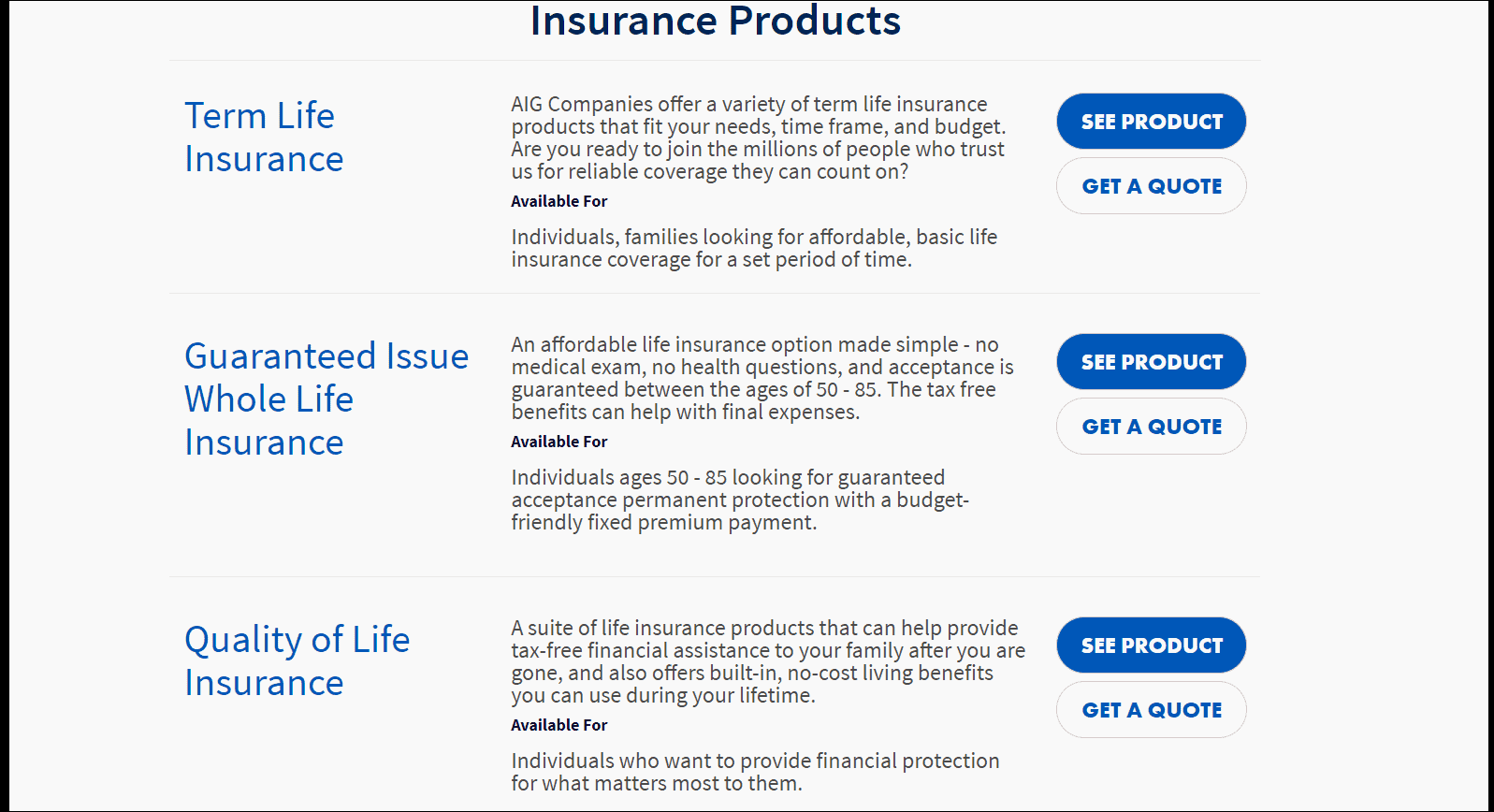
Term life insurance is the most straightforward product offered. It provides coverage for a specific period—typically 10, 15, 20, 25, or 30 years. If the insured passes away during the term, the beneficiaries receive the death benefit.
- Predictability: Premiums are fixed for the duration of the term.
- Conversion Options: Many term policies include a conversion privilege, allowing the policyholder to convert the term coverage into a permanent policy without requiring additional medical underwriting, provided the conversion is requested within a specific timeframe stipulated in the contract.
- Ideal Use Case: This is primarily used for income replacement during high-obligation years, such as covering a mortgage, child-rearing expenses, or college tuition.
Universal Life (UL) Insurance
Universal life is a type of permanent insurance that offers more flexibility than whole life. It combines a death benefit with a cash-value component that earns interest based on current market conditions or specified indexes.
- Flexibility: Policyholders may have the ability to adjust their premium payments and death benefit amounts as their financial circumstances change, subject to policy limits and potential impact on the cash value.
- Interest Crediting: Universal life often tracks against various indexes, offering potential growth tied to market performance while typically including a floor to prevent losses from negative market returns.
- Ideal Use Case: Individuals seeking permanent coverage with the flexibility to adapt to changing financial goals or those interested in potential cash-value growth over a long-term horizon.
Whole Life Insurance
Whole life insurance provides coverage for the entire life of the insured, provided premiums are paid. It is a more rigid structure compared to universal life but offers high levels of certainty.
- Guarantees: The death benefit, premium payments, and cash-value growth are typically guaranteed.
- Stability: Because the values are guaranteed, it is often utilized by those who want to avoid the volatility associated with market-linked products.
- Ideal Use Case: Estate planning and providing for final expenses or legacy transfers where long-term guarantees are prioritized over market growth potential.
Comparative Overview of Coverage Types
The following table summarizes the key distinctions between the primary life insurance structures provided through the AIG/Corebridge ecosystem.
| Feature | Term Life | Universal Life | Whole Life |
|---|---|---|---|
| Duration | Specific term (e.g., 20 years) | Permanent (Life of insured) | Permanent (Life of insured) |
| Premiums | Fixed | Flexible/Adjustable | Fixed |
| Cash Value | None | Yes (Market-linked) | Yes (Guaranteed) |
| Primary Goal | Income protection | Flexibility/Growth | Legacy/Guarantees |
| Complexity | Low | High | Moderate |
Prerequisites for Application and Underwriting
Securing a policy involves a formal underwriting process. As of 2026, the complexity of this process depends on the type of policy and the death benefit amount requested.
The Medical Underwriting Process
Most applications require a health assessment to determine the risk class of the applicant. This typically involves:
- Application Submission: Providing personal, financial, and medical history.
- Paramedical Exam: A third-party examiner may visit your home or office to collect blood and urine samples and measure height, weight, and blood pressure.
- Attending Physician Statement (APS): AIG may request medical records from your primary care physician to confirm disclosed history.
- Prescription History Check: Accessing databases to review recently filled prescriptions, which serves as a secondary verification of medical status.
Financial Underwriting
For high-death-benefit policies, AIG requires proof of insurability regarding financial stability. This is to ensure that the amount of life insurance being requested is commensurate with the applicant's income and net worth. This prevents over-insuring, which is a key requirement set by state insurance regulators.
Managing Your Policy
Once a policy is issued, ongoing management is necessary to keep the coverage in force.
- Premium Payments: For term and whole life, missing a premium payment can lead to a grace period and eventual lapse. For universal life, you must ensure the cash value is sufficient to cover cost-of-insurance charges; if the cash value drops too low, the policy may lapse even if premiums are technically paid.
- Beneficiary Updates: It is critical to review your beneficiary designations at least every 2–3 years or following significant life events such as marriage, divorce, or the birth of a child.
- Annual Statements: Policyholders receive annual statements detailing cash value performance, death benefit amounts, and any loans taken against the policy. These should be reviewed annually for accuracy.
Common Considerations and Potential Limitations
Before selecting a policy, consider the following limitations and factors that influence the efficacy of the insurance coverage.
Cost of Insurance (COI)
In universal life products, the cost of insurance increases as the insured individual ages. While the premium may seem affordable in the early years, it is vital to understand the projected costs over the next 20 to 30 years to avoid surprises.
Market Volatility
For indexed universal life policies, while the floor prevents negative interest from direct market downturns, the performance of the cash value is still subject to the participation rates and caps set by the insurance company. It is not an equity investment, and the primary purpose remains death benefit protection rather than wealth accumulation.
Jurisdictional Variations
Insurance regulations are handled at the state level. A policy issued in California may have different contract provisions or premium structures than an identical policy issued in Florida. Always review the specimen policy provided for your state of residence, as this is the only document that defines your legal rights and benefits.
Frequently Asked Questions
Is AIG still the provider for these life insurance policies?
AIG transitioned its life and retirement business to Corebridge Financial. While the policies remain underwritten by American General Life Insurance Company or US Life, customer service and administrative support are now handled by the Corebridge infrastructure.
Can I change my beneficiaries after the policy is issued?
Yes, you can typically change your beneficiary designation at any time, provided the policy ownership structure allows it. This is usually done by submitting a formal change-of-beneficiary form to the administrative office.
What happens if I miss a premium payment?
Most policies include a grace period (typically 30–31 days) during which you can pay the overdue premium without losing coverage. If the premium is not paid by the end of the grace period, the policy may lapse. Reinstating a lapsed policy usually requires evidence of insurability and the payment of all back premiums plus interest.
Does my life insurance policy have a cash surrender value?
Term life insurance generally does not have a cash value. Universal and whole life policies do accumulate cash value over time, which can be accessed through withdrawals or loans, though doing so may reduce the death benefit and potentially trigger tax consequences.
How do my beneficiaries file a claim?
Beneficiaries should contact the claims department as soon as possible after the insured's passing. This involves submitting a certified death certificate along with the completed claim forms. The process is designed to be straightforward, but the time required for payment can vary depending on the verification of the policy's status.
Next Steps for Prospective Policyholders
If you are evaluating AIG (Corebridge) life insurance, begin by defining the primary purpose of the coverage. If you need coverage for a fixed period to protect family members or debt obligations, focus your research on term life products. If you are exploring permanent insurance for estate planning or cash-value accumulation, consult with a licensed financial professional who can run specific illustrations based on your age, health status, and financial objectives. Always request a sample policy contract to review the specific exclusions and riders before finalizing your application.