The presence of AI singers on Spotify refers to tracks where vocal performances are generated, augmented, or synthesized using artificial intelligence, rather than being recorded in real-time by a human vocalist. As of 2026, these tracks exist within the platform’s library, often distributed through standard digital music aggregators, and must adhere to Spotify’s evolving policies regarding synthetic media, content labeling, and copyright compliance.
The Evolution of Synthetic Vocals in Streaming
The integration of artificial intelligence into the music production process has fundamentally altered how listeners engage with streaming platforms. While early forms of synthetic vocals were confined to experimental genres or specialized software like VOCALOID, the rise of advanced generative models has brought AI-powered vocal synthesis into the mainstream.
On platforms like Spotify, AI singers appear in various capacities. Some tracks feature fully synthetic voices that do not correspond to any living human, created by neural networks trained on vast datasets of vocal timbre and pitch. Others use "voice conversion" technology, where a human singer records a vocal line, and an AI model is applied to replace the performer's vocal characteristics with those of another person—sometimes mimicking famous artists or creating an entirely new, consistent persona.
For listeners, the sonic quality of these AI performances has reached a level of realism that often makes them indistinguishable from human recordings without critical listening. This shift creates a unique landscape for curators and users alike, as the lines between "authentic" and "synthetic" performances continue to blur.
How AI Singers Are Distributed
AI singers reach Spotify through the same supply chain as traditional human artists. Most tracks are uploaded via third-party digital music aggregators—services that act as the interface between independent creators and streaming platforms.
The technical requirements for these uploads remain largely identical to human-produced music. Creators must provide audio files (typically high-quality WAV or FLAC), metadata, and cover art. From the platform’s perspective, the primary concern is not the source of the vocal, but the legitimacy of the rights to that vocal. If an AI model is trained on a specific human's voice, the rights holder of that voice (the original artist) may hold legal claim over the resulting output. Consequently, aggregators and platforms have implemented stricter verification processes to ensure that AI-generated content does not violate intellectual property laws or the publicity rights of performers.
Spotify’s Policies on Synthetic Media
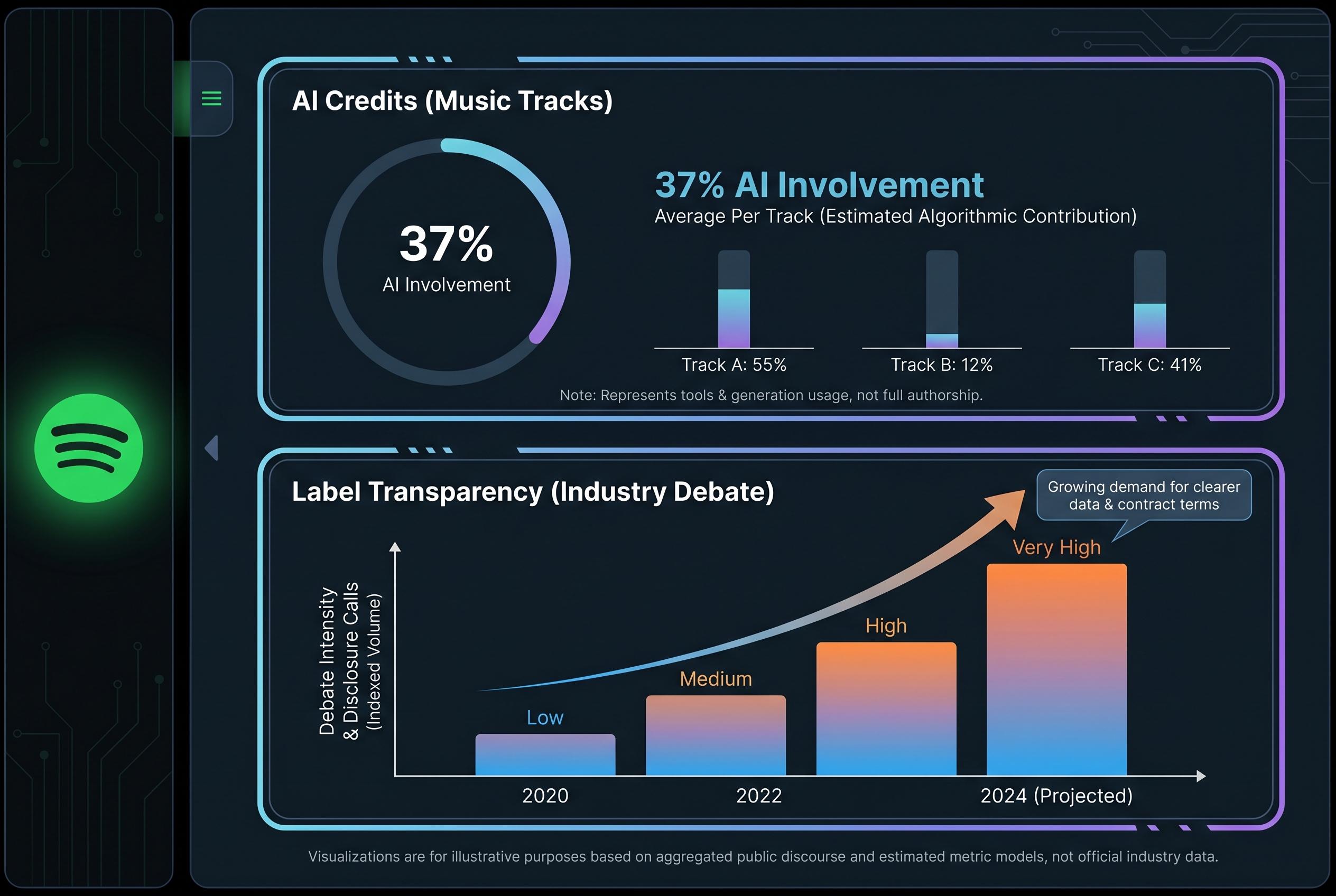
As of 2026, Spotify maintains specific guidelines regarding the influx of synthetic content. The platform has focused on transparency rather than prohibition. Spotify requires that content creators disclose if their music was created using artificial intelligence, particularly if it involves synthetic likenesses or voice cloning.
This transparency mandate serves two purposes. First, it protects the platform from copyright infringement claims by forcing accountability onto the uploader. Second, it maintains the integrity of the streaming ecosystem by allowing algorithmic tools and human curators to manage content that might otherwise confuse listeners or dilute the value of traditional performances. Tracks that fail to disclose synthetic usage risk removal, and in some cases, the withholding of royalties until the verification process is completed.
Identifying AI-Generated Vocals
Distinguishing an AI-generated vocal from a human recording requires a nuanced ear. While generative models have become highly sophisticated, they often exhibit specific artifacts that can indicate their non-human origin.
- Breath and Phrasing: Human singers exhibit natural variation in breathing patterns and consonant articulation. AI models sometimes produce phrases that are perfectly timed, lacking the micro-hesitations characteristic of human lung capacity and emotional inflection.
- Sustained Notes: AI vocals often demonstrate perfect pitch consistency. While digital correction (Autotune) does this as well, AI voices often lack the subtle "micro-wobble" or vibrato inconsistencies that occur naturally in a human performance.
- Linguistic Anomalies: Occasionally, AI models will "slip" on difficult phonetic transitions, resulting in sounds that are technically musical but linguistically strange.
- Repetitive Artifacts: If a song uses a vocal model trained on a small dataset, listeners might notice repeating graininess in certain pitch ranges or vowel sounds, which is a symptom of the neural network’s limitations.
Comparison of Production Methods
| Feature | Human Studio Recording | AI Synthetic Vocal | Hybrid/Voice Conversion |
|---|---|---|---|
| Effort | High (Recording sessions) | Low (Prompt-based) | Medium (Needs human track) |
| Uniqueness | High (Human identity) | Variable (Model dependent) | High (Artist style) |
| Legal Risk | Minimal | High (Requires permission) | High (Requires permission) |
| Flexibility | Limited to singer's range | Infinite tonal possibilities | Limited to source vocal |
Practical Considerations for Creators
If you are an artist or producer looking to utilize AI-generated vocals for tracks intended for Spotify, you must approach the workflow with legal and technical caution.
1. Licensing and Ownership: Using an AI model to mimic a specific, recognizable human voice without express permission is a significant legal risk. Even if the platform allows the upload, you may be liable for "Right of Publicity" violations. Always use models trained on public domain or licensed voice data.
2. Metadata Transparency: When submitting through your aggregator, ensure you check the "contains synthetic media" or "AI-generated" boxes. Failure to do so can result in your account being flagged or terminated.
3. Quality Assurance: The temptation to use raw output is high, but professional polish is still necessary. AI-generated vocals often require additional compression, EQ, and human-added reverb to sit properly in a professional mix. Treat the AI vocal as a raw instrument that requires post-production.
Potential Impacts on the Music Industry
The widespread availability of AI singers on Spotify affects the economic model of the music industry in 2026. For independent artists, these tools lower the barrier to entry, allowing someone without access to a world-class vocalist to create high-production-value music. However, this also contributes to an unprecedented saturation of the platform, where the volume of new daily tracks makes it increasingly difficult for original performances to achieve algorithmic discovery.
Furthermore, the music industry is witnessing a shift in the value of the "human element." As synthetic perfection becomes commoditized, many listeners are finding increased value in raw, imperfect, or live-recorded music, as it offers a level of emotional resonance that current AI models struggle to replicate consistently.
Troubleshooting and FAQ
How do I report an AI song that mimics an artist without permission? You should use Spotify’s formal reporting tools, usually found under the "three-dot" menu on the track page. Select the option related to "Infringement" or "Content Rights." Provide evidence that the voice was used without consent.
Can AI singers win awards or be featured on Editorial playlists? As of 2026, editorial guidelines vary by territory. Most major playlists on Spotify still prioritize human-led music, but some specialized genre playlists are open to synthetic content if it meets high production standards and complies with all disclosure requirements.
Will my AI-generated song be taken down? If your track is properly disclosed and you own the rights to the voice model used, it is unlikely to be removed. However, if you are using unauthorized clones of famous voices, the track will likely be removed following a copyright takedown request from the original artist’s label.
Is it cheaper to use AI than a session singer? In terms of initial costs, yes. AI tools can cost a fraction of a professional session singer's fee. However, the cost of licensing reputable models and potential legal fees for improper use can make AI production more expensive in the long run.
Do AI singers have a "soul"? The perception of "soul" in music is subjective. While AI can replicate the frequency and dynamic range of a human, it currently lacks the lived experience that informs the subtext of a human performance.
Next Steps for Listeners and Creators
If you are a listener, stay informed by checking the song credits in the Spotify interface, as more labels are now explicitly labeling AI involvement in the "credits" section of the track info. If you are a creator, focus on original, transformative use of AI technology rather than mimicking established stars. The future of music on Spotify will likely favor artists who use AI to augment their unique creative vision rather than using it as a shortcut to replace human identity.