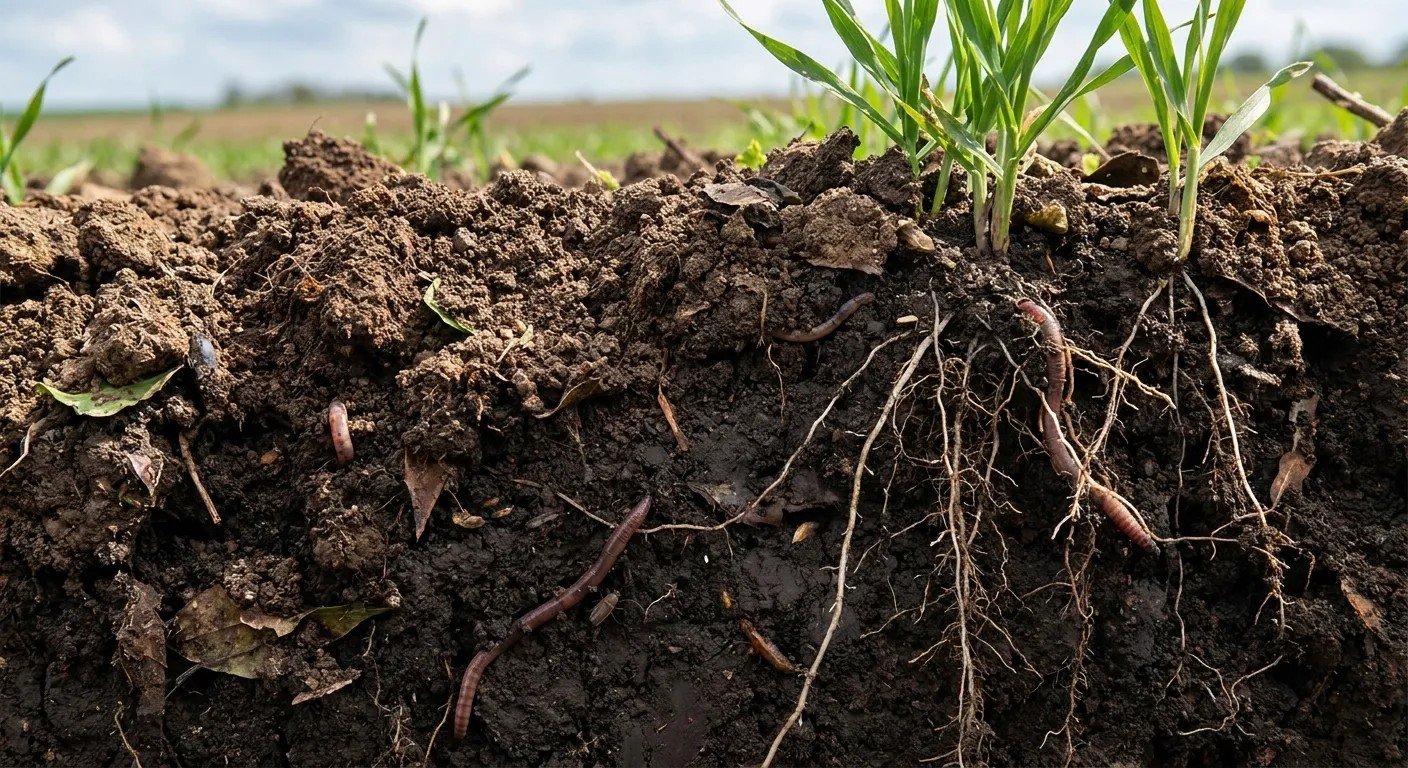
Agriculture soil is the dynamic biological, chemical, and physical medium that serves as the foundation for global crop production and food security. It consists of a precise balance of mineral particles, organic matter, water, and air, providing the structural support and essential nutrients necessary for plant growth. Effective management of this resource is critical for optimizing yields and ensuring long-term environmental sustainability.
The Fundamental Composition of Agriculture Soil
To understand how agriculture soil functions, one must examine its four primary constituents: minerals, organic matter, water, and air. In an ideal "loam" soil suitable for most agricultural purposes, these components are typically distributed as 45% minerals, 5% organic matter, 25% air, and 25% water. However, these ratios fluctuate significantly based on local geography, climate, and management practices.
The Mineral Fraction: Sand, Silt, and Clay
The mineral portion of the soil is derived from the weathering of parent rock material. These particles are categorized by size, which dictates the soil's texture and its ability to hold water and nutrients.
- Sand (2.0 to 0.05 mm): Large particles that create large pore spaces. While sand provides excellent aeration and drainage, it has a very low surface area and minimal ability to retain nutrients or moisture.
- Silt (0.05 to 0.002 mm): Medium-sized particles that feel like flour when dry. Silt provides a better balance of drainage and nutrient retention than sand but is highly susceptible to erosion.
- Clay (less than 0.002 mm): The smallest particles with a massive surface area. Clay is chemically active and holds onto nutrients (cations) and water tightly. However, too much clay can lead to poor drainage and soil compaction.
The Role of Soil Organic Matter (SOM)
Though it usually makes up only a small percentage of the soil volume, organic matter is often considered the "engine" of agriculture soil. It consists of plant and animal residues in various stages of decomposition, as well as the living microbial biomass.
- Humus: This is the stable, fully decomposed portion of organic matter. It acts like a sponge, holding many times its weight in water, and provides the dark color associated with fertile land.
- Nutrient Cycling: As microorganisms break down organic materials, they release nitrogen, phosphorus, and sulfur into forms that plant roots can absorb.
- Soil Structure: Organic matter acts as a biological glue, binding mineral particles into "aggregates." These aggregates create a crumb-like structure that allows roots to penetrate easily and air to circulate.
Soil Chemistry and Nutrient Bioavailability
The productivity of agriculture soil is largely governed by its chemical properties, particularly its pH level and Cation Exchange Capacity (CEC). In 2026, precision soil chemistry management has become the standard for reducing input costs and preventing environmental runoff.
Understanding Soil pH
Soil pH measures the acidity or alkalinity of the soil on a scale from 0 to 14. Most agricultural crops thrive in a slightly acidic to neutral range (pH 6.0 to 7.0). pH is a critical limiting factor because it determines the "bioavailability" of nutrients. For example, if the soil is too acidic (below pH 5.5), phosphorus becomes "locked" and unavailable to plants, even if it is present in the soil. Conversely, highly alkaline soils can lead to deficiencies in micronutrients like iron and manganese.
Cation Exchange Capacity (CEC)
CEC is a measure of the soil's ability to hold onto positively charged nutrients such as calcium, magnesium, and potassium. Clay particles and organic matter have negative charges on their surfaces, which attract and hold these essential cations, preventing them from leaching away during heavy rains. Soils with high CEC are generally more fertile and require less frequent fertilizer applications than low-CEC sandy soils.
Classifying Agriculture Soil Types
Farmers must adapt their strategies to the specific soil types present on their land. While there are thousands of individual soil series, they generally fall into several broad categories that impact agricultural utility.
| Soil Type | Key Characteristics | Agricultural Advantages | Management Challenges |
|---|---|---|---|
| Loam | Balanced mix of sand, silt, and clay. | Ideal for most crops; excellent drainage and fertility. | Must be managed to prevent compaction. |
| Clay Soil | Heavy, dense, and nutrient-rich. | Holds moisture well; high CEC. | Slow to warm in spring; prone to waterlogging. |
| Sandy Soil | Light, gritty, and fast-draining. | Easy to cultivate; warms up quickly. | Requires frequent irrigation and fertilization. |
| Silty Soil | Smooth texture; holds moisture well. | Highly fertile and easy to work. | Very prone to crusting and water erosion. |
| Peat Soil | Very high organic matter; dark and damp. | Excellent for specialized crops like vegetables. | Often requires drainage and pH adjustment. |
Modern Soil Testing and Analysis in 2026
Effective agriculture starts with knowing exactly what is in the ground. Traditional "grab samples" sent to a laboratory remain the gold standard, but 2026 has seen the widespread adoption of real-time sensing technologies.
Laboratory Analysis
A standard professional soil test should be conducted every 2–3 years. This analysis typically includes:
- Macronutrients: Levels of Nitrogen (N), Phosphorus (P), and Potassium (K).
- Secondary Nutrients: Calcium, Magnesium, and Sulfur.
- Organic Matter Percentage: A key indicator of long-term soil health.
- Buffer pH: A specific measurement used to determine exactly how much lime is needed to raise the soil's pH.
Precision In-Field Sensing
Advanced farmers now utilize electromagnetic induction (EMI) sensors and gamma-ray spectroscopy to map soil variability across large fields. These tools allow for Variable Rate Application (VRA) of fertilizers, meaning a farmer only applies nutrients to the specific square meters of a field that actually need them. This maximizes efficiency and protects local water sources from nitrogen leaching. Information on these technologies can be found through resources like the International Society of Precision Agriculture.
Sustainable Management and Soil Health Restoration
Years of intensive tillage and monocropping have historically depleted many agriculture soils. The current paradigm shifts toward "Regenerative Agriculture," which focuses on building soil biology and sequestering carbon.
Conservation Tillage and No-Till
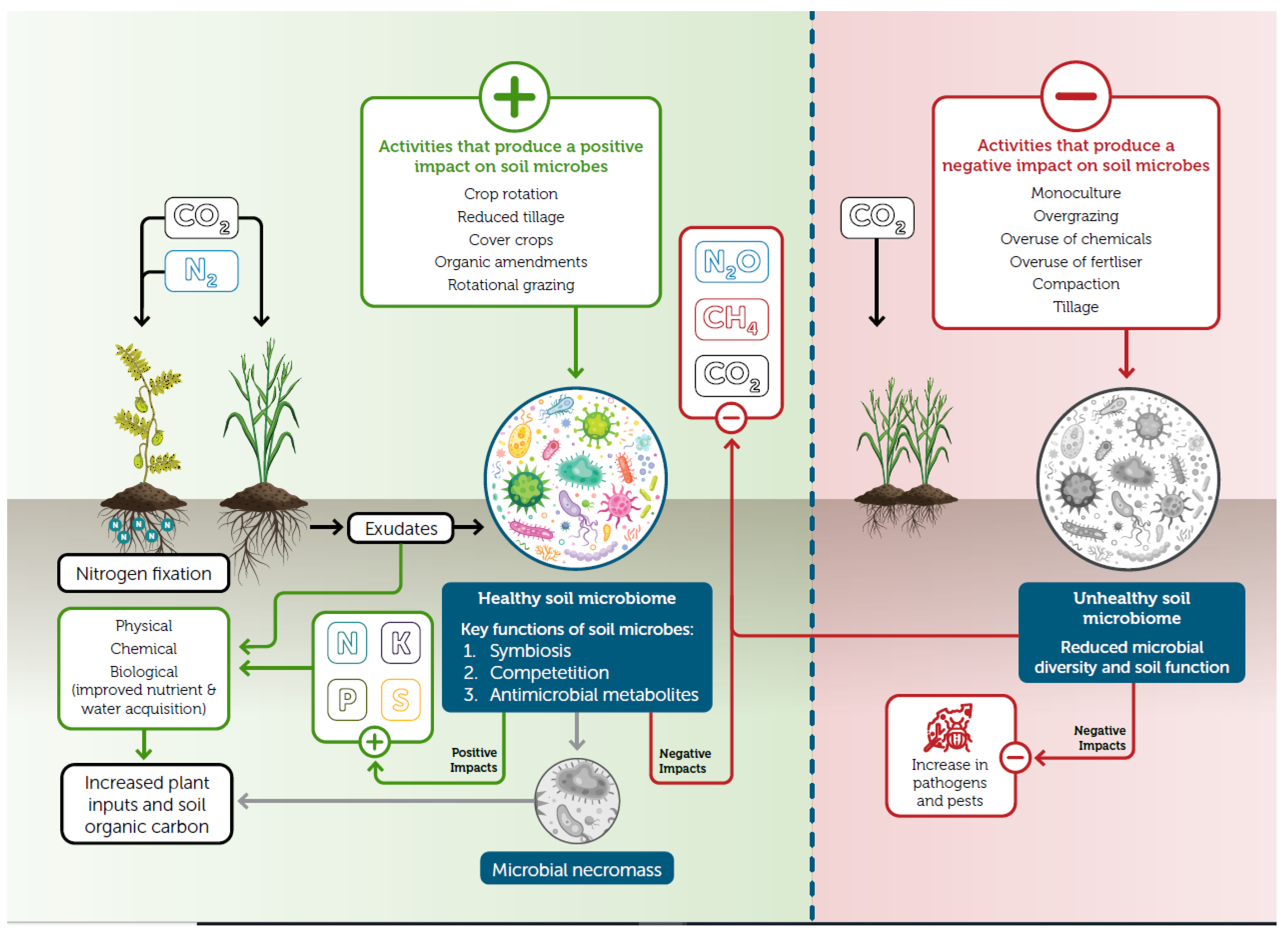
Traditional plowing disrupts soil structure and exposes organic matter to rapid oxidation, releasing CO2 into the atmosphere. No-till or minimum-till systems leave the previous year's crop residue on the surface. This residue acts as a protective mulch, reducing erosion, conserving moisture, and allowing fungal networks (mycorrhizae) to flourish. These fungi form symbiotic relationships with plant roots, significantly increasing their ability to find water and phosphorus.
The Use of Cover Crops
Cover crops are plants grown primarily to protect and enrich the soil rather than for harvest. Species like cereal rye, clover, and tillage radishes are planted during the off-season.
- Erosion Control: Roots hold the soil in place during winter months.
- Nitrogen Fixation: Leguminous cover crops like clover can "fix" atmospheric nitrogen into the soil, reducing the need for synthetic fertilizers.
- Compaction Relief: Deep-rooted species like radishes can break through hardpans (compacted layers), improving drainage and air flow.
Crop Rotation
Growing the same crop year after year (monocropping) leads to the buildup of specific pests and diseases and depletes specific nutrient profiles. Rotating between different plant families—such as alternating corn (a heavy nitrogen user) with soybeans (a nitrogen fixer)—breaks pest cycles and ensures a more balanced use of soil nutrients.
Common Soil Problems and Troubleshooting
Even with diligent management, agriculture soil can face degradation. Identifying these issues early is essential for preventing long-term yield loss.
Soil Compaction
Compaction occurs when heavy machinery or livestock exert pressure on wet soil, collapsing the pore spaces. This restricts root growth and prevents water infiltration.
- Verification: Use a soil penetrometer or simply dig a hole to look for "plow pans" or horizontal layering.
- Solution: Avoid field operations when the soil is wet. Use controlled traffic lanes and integrate deep-rooted cover crops.
Salinization
In arid regions where irrigation is common, salts can build up in the root zone as water evaporates. This is known as salinization and can become toxic to plants.
- Verification: Look for white crusting on the soil surface or stunted, "burned" leaf edges.
- Solution: Improve drainage and use "leaching fractions" (applying extra water to wash salts below the root zone).
Erosion
The loss of topsoil to wind or water is the most significant threat to agricultural productivity globally. According to the Food and Agriculture Organization (FAO), it takes centuries to form just a few centimeters of topsoil.
- Verification: Observe rills (small channels) after rain or dust clouds during wind events.
- Solution: Maintain continuous soil cover through residues or cover crops and install physical barriers like windbreaks or terraces on sloped land.
The Future of Soil: Carbon Sequestration and Policy
In 2026, agriculture soil is no longer viewed only as a medium for food, but also as a critical tool for climate mitigation. Through "Soil Carbon Markets," farmers are increasingly compensated for practices that increase the amount of carbon stored in their land. By increasing soil organic matter, farmers are effectively removing carbon dioxide from the atmosphere and storing it in a stable form. This has led to the development of rigorous verification protocols to measure soil carbon stocks accurately over time.
Frequently Asked Questions
How often should I test my agriculture soil?
For most commercial operations, testing every 2 to 3 years is recommended. However, if you are transitioning to new crops or experiencing significant yield fluctuations, annual testing can provide better insights into nutrient trends. Always sample at the same time of year to ensure results are comparable.
Can I change my soil's texture from clay to loam?
Technically, you cannot change the underlying mineral texture (the ratio of sand, silt, and clay) on a large scale because it would require moving impossible volumes of material. However, you can significantly improve the "structure" of clay soil by adding organic matter. This makes the clay behave more like loam by improving drainage and aeration.
What is the fastest way to increase soil organic matter?
The most effective way to build organic matter is through a multi-pronged approach: eliminate tillage, use perennial grasses in rotation, and apply compost or well-rotted manure. While it is a slow process, consistent application of these practices can show measurable increases in organic carbon within 3 to 5 years.
Why is soil aeration important?
Plant roots and beneficial soil microbes require oxygen for respiration. In waterlogged or severely compacted soils, oxygen is depleted, leading to anaerobic conditions. This can result in the production of toxic compounds (like hydrogen sulfide) and the loss of nitrogen through denitrification.
How does soil pH affect fertilizer efficiency?
If your soil pH is significantly outside the ideal range, a large portion of the fertilizer you apply may go to waste. For example, in very acidic soils, applied phosphorus reacts with aluminum and iron to form insoluble compounds that plants cannot use. Correcting the pH with lime is often more cost-effective than simply adding more fertilizer.
What is the difference between soil health and soil fertility?
Soil fertility refers specifically to the soil's ability to supply nutrients for plant growth. Soil health is a broader concept that includes biological diversity, physical structure, and the overall capacity of the soil to function as a living ecosystem. A soil can be "fertile" (full of nutrients) but "unhealthy" (compacted and devoid of microbial life).
Strategic Recommendation for Farmers and Land Managers
To ensure the long-term viability of your agriculture soil, prioritize the continuous presence of living roots. Whether through perennial pastures or the strategic use of cover crops between cash crops, living roots provide the exudates (sugars and proteins) that feed the soil microbiome. This biological activity is the primary driver of nutrient cycling and structural stability. Before investing in expensive specialized fertilizers or chemical additives, focus on the "Big Three" of soil management: maintaining a neutral pH, minimizing physical disturbance (tillage), and maximizing organic inputs. This holistic approach reduces dependency on synthetic inputs and builds a resilient foundation that can withstand the extreme weather patterns increasingly seen in 2026.