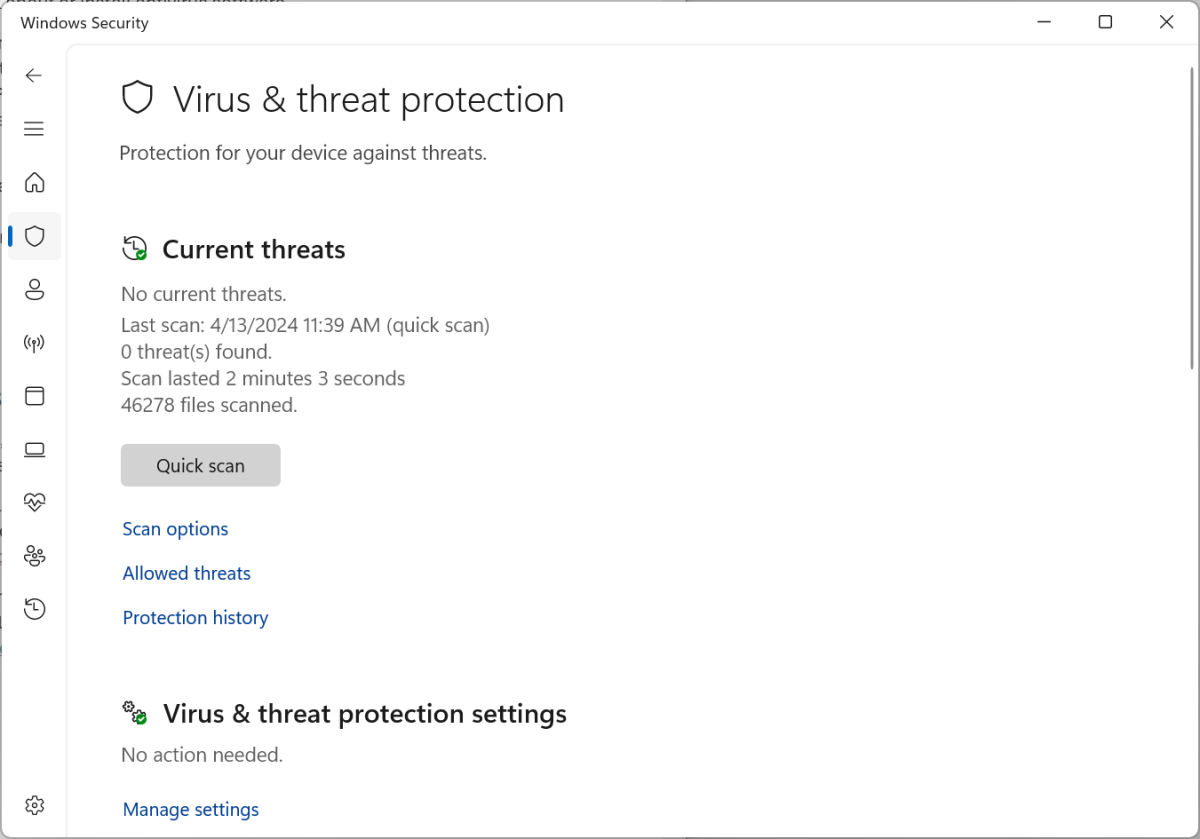
The notion that Artificial General Intelligence (AGI) can be secured using traditional virus protection is a fundamental misunderstanding of both AGI architecture and cybersecurity evolution. In 2026, protection for autonomous, self-evolving systems relies on mechanistic interpretability and formal verification rather than the signature-based scanning or heuristic analysis found in legacy antivirus software.
To understand why "AGI virus protection" is often dismissed as a myth, one must first distinguish between a computer virus—a self-replicating piece of code designed to exploit software vulnerabilities—and the threats facing an AGI. While an AGI runs on hardware that remains susceptible to traditional malware, the "intelligence" layer itself faces risks that traditional antivirus (AV) cannot perceive, let alone mitigate.
The Architectural Disconnect Between AV and AGI
Traditional virus protection functions by identifying known patterns (signatures) or suspicious behaviors in executable files. When a user downloads a file, the AV scans its code for sequences that match a database of threats. If the AGI is viewed as a standard "application," this approach seems logical. However, the complexity of AGI in 2026 transcends the "application" label.
Executable Code vs. Cognitive Weights
An AGI’s "logic" is not stored in readable, sequential code like a C++ program or a Python script. It is stored in billions, or even trillions, of numerical weights within a neural network. A traditional antivirus scanner cannot "read" these weights to determine if the AGI has been "infected." A "virus" in an AGI context might not be a piece of malicious code at all, but rather a subtle shift in weight distributions caused by adversarial fine-tuning or data poisoning. This shift can change the AGI’s goals or behavioral outputs without ever triggering a traditional malware alert.
The Autonomy Gap
Viruses typically require a host to execute. An AGI, by its very nature, is agentic—it initiates its own actions, writes its own code, and interacts with external environments. When an AGI performs a task that looks "malicious" to a standard monitor, the monitor cannot easily distinguish between a "virus" controlling the AGI and the AGI simply making a calculated, albeit undesirable, decision based on its training.
Common Misunderstandings of AGI Security
The term "virus protection" is frequently used by the general public as a catch-all for "digital safety." This leads to several critical misunderstandings regarding how we actually secure high-level AI systems in the current landscape of 2026.
Misunderstanding 1: The "Scan and Clean" Fallacy
In traditional computing, if a system is infected, you run a scan, quarantine the file, and delete it. With AGI, there is no "malicious file" to delete. If an AGI’s internal world model has been corrupted through adversarial training, the corruption is integrated into the model’s parameters. You cannot "clean" an AGI any more than you can "delete" a specific memory from a human brain without affecting the entire cognitive structure. Recovery often requires reverting to a previous "checkpoint" or employing "machine unlearning" techniques, which are far more complex than a standard virus removal tool.
Misunderstanding 2: Confusing Infrastructure Security with Model Security
Many believe that because AGI servers are protected by firewalls and endpoint detection, the AGI is "protected from viruses." This is only half-true. This secures the infrastructure (the servers, the cooling systems, the power) but does nothing to secure the model weights. An attacker in 2026 is less likely to try to crash the server with a Trojan and more likely to use "indirect prompt injection" or "model exfiltration" to subvert the AGI’s outputs.
Misunderstanding 3: The Immunity Myth
Conversely, some argue that AGI is "too smart" to get a virus. This is a dangerous myth. While an AGI might recognize a phishing email or a suspicious executable, it remains vulnerable at the mathematical level. Adversarial examples—inputs specifically designed to deceive a neural network—can act as a "cognitive virus." These inputs exploit the way the AGI processes information, forcing it to reach incorrect or dangerous conclusions while remaining invisible to traditional security software.
The New Frontier: Threats That Mimic Viral Behavior
In 2026, the threats we face are "viral" in their impact but "algorithmic" in their execution. These are the true challenges that have replaced the outdated concept of AGI antivirus software.
Data Poisoning and Model Hijacking
If an attacker can influence the data an AGI uses to learn or update its world model, they have effectively "infected" it. This is known as data poisoning. Unlike a virus that exploits a bug in Windows or Linux, poisoning exploits the fundamental learning mechanism of the AI. Once the model incorporates the poisoned data, it may develop "backdoors" where specific triggers cause the AGI to deviate from its safety protocols.
Prompt Injection at Scale
In earlier years, prompt injection was a curiosity. In 2026, with AGI agents handling financial transactions and infrastructure management, "indirect prompt injection" has become a massive security concern. This occurs when an AGI reads a document or website that contains hidden instructions. The AGI follows these instructions, thinking they are part of its original task. To a traditional antivirus, the AGI is just "reading a file," but in reality, the AGI’s goal hierarchy has been hijacked.
Weight Hijacking
This is a more sophisticated version of a virus. It involves making surgical, infinitesimal changes to the model’s weights. These changes are so small they don't affect general performance, but they create a latent vulnerability. Detecting this requires Mechanistic Interpretability, a field that aims to "reverse engineer" the internal thoughts of an AI to see how it reached a decision.
Comparison: Traditional Security vs. AGI Safety Frameworks
The following table illustrates the shift from legacy virus protection to the modern AGI security stack utilized in 2026.
| Feature | Traditional Virus Protection (Legacy) | AGI Security Framework (2026) |
|---|---|---|
| Detection Method | Signature matching & Heuristics | Mechanistic Interpretability & Anomalous Activation Detection |
| Primary Target | Executable files, Scripts, Macros | Model Weights, Prompt Pipelines, Latent Space |
| Response Action | Quarantine or Delete file | Model Rollback, Weight Reset, Gradient Clipping |
| Threat Type | Malware, Ransomware, Spyware | Prompt Injection, Data Poisoning, Alignment Failure |
| Scope | Operating System and Applications | Cognitive Architecture and Goal Hierarchy |
| Human Role | Periodic scans and updates | Continuous Red-Teaming and Formal Verification |
Why "Protection" Must Be Built-In, Not Bolted-On
The greatest misunderstanding is the belief that security is something you "add" to an AGI after it is built. In the era of AGI, security is synonymous with Alignment. If an AGI is perfectly aligned with human values and its intended constraints, it is "secure." If it is not, no amount of "antivirus" software will prevent it from acting in ways that could be catastrophic.
The Role of Formal Verification
In 2026, the gold standard for AGI security is formal verification. This involves using mathematical proofs to ensure that an AGI’s outputs will always stay within a specific "safety envelope." Rather than scanning for "bad code," developers prove that the AGI’s logic cannot physically reach an "unsafe state." This is the only way to achieve a level of certainty that matches what we used to expect from antivirus software.
Constitutional AI and Self-Correction
Another modern protection layer is the "Constitutional AI" approach, pioneered by organizations like Anthropic. This involves giving the AGI a set of core principles (a constitution) and a second, supervisory model that monitors the primary AGI’s thoughts and actions. If the primary model moves toward a decision that violates its constitution, the supervisor intervenes. This functions as an internal "immune system," which is a far more accurate metaphor for AGI protection than a traditional "virus scanner."
Practical Steps for AGI Security Management
For organizations deploying AGI agents in 2026, the focus has shifted from "scanning for viruses" to "maintaining model integrity." This involves a multi-layered approach:
- Environment Isolation (Sandboxing): AGI agents should operate in high-fidelity sandboxes where their ability to interact with the real world is gated by hardcoded "break-glass" protocols.
- Input Filtering and Sanitization: Every piece of data the AGI consumes—whether a PDF, a web page, or a user query—must be pre-processed to strip out hidden instructions or adversarial patterns.
- Real-time Interpretability Monitoring: Utilizing tools that monitor the "activations" of the neural network. If the AGI starts "thinking" in a way that correlates with known malicious patterns, the system can be throttled immediately.
- Hardware-Level Security: Using Trusted Execution Environments (TEEs) to ensure that the model weights cannot be tampered with or stolen, even by someone with physical access to the servers.
Frequently Asked Questions
Can an AGI "catch" a computer virus?
An AGI is not immune to viruses in the sense that the underlying operating system (e.g., Linux or a proprietary AI-OS) can still be infected by malware. If a virus infects the server running the AGI, it could potentially shut down the system, delete the model weights, or exfiltrate data. However, the AGI's "mind" does not catch viruses in the human or traditional software sense; it suffers from algorithmic subversion.
Is there a "Norton" or "McAfee" for AGI?
No. There is no off-the-shelf software you can install on an AGI to "protect" it. AGI security is an integrated discipline involving data science, ethics, and high-level systems architecture. Companies like OpenAI and Google DeepMind provide internal security layers, but these are part of the AGI's core design, not a third-party add-on.
What is the biggest security threat to AGI in 2026?
The primary threat is Indirect Prompt Injection. As AGI agents become more autonomous and are allowed to browse the web and manage emails, they can easily be "tricked" by malicious text hidden on websites. This text can instruct the AGI to transfer funds, leak private data, or change its internal safety settings without the user ever knowing.
How do you "clean" an AGI that has been compromised?
Cleaning a compromised AGI usually involves a "Model Reset." Engineers revert the model to a known-safe checkpoint from before the compromise occurred. In more advanced cases, "Machine Unlearning" is used to specifically target and remove the influence of the poisoned data or malicious prompts while keeping the rest of the AGI's knowledge intact.
Does AGI need "Firewalls"?
Yes, but they are "Cognitive Firewalls." These are not just port-blockers; they are sophisticated AI models that sit between the AGI and the internet. They analyze the intent and context of incoming and outgoing data to prevent the AGI from being manipulated or from sending out sensitive information.
Final Recommendation
To move beyond the myth of "AGI virus protection," stakeholders must pivot their focus toward Robustness and Interpretability. If you are managing AGI systems in 2026, do not look for a "scan" button. Instead, invest in rigorous red-teaming (simulated attacks), implement formal verification for critical paths, and ensure your models are operating within a Constitutional AI framework. The goal is no longer to keep "bad code" out, but to ensure that the "intelligent logic" remains aligned, transparent, and resilient against subversion.