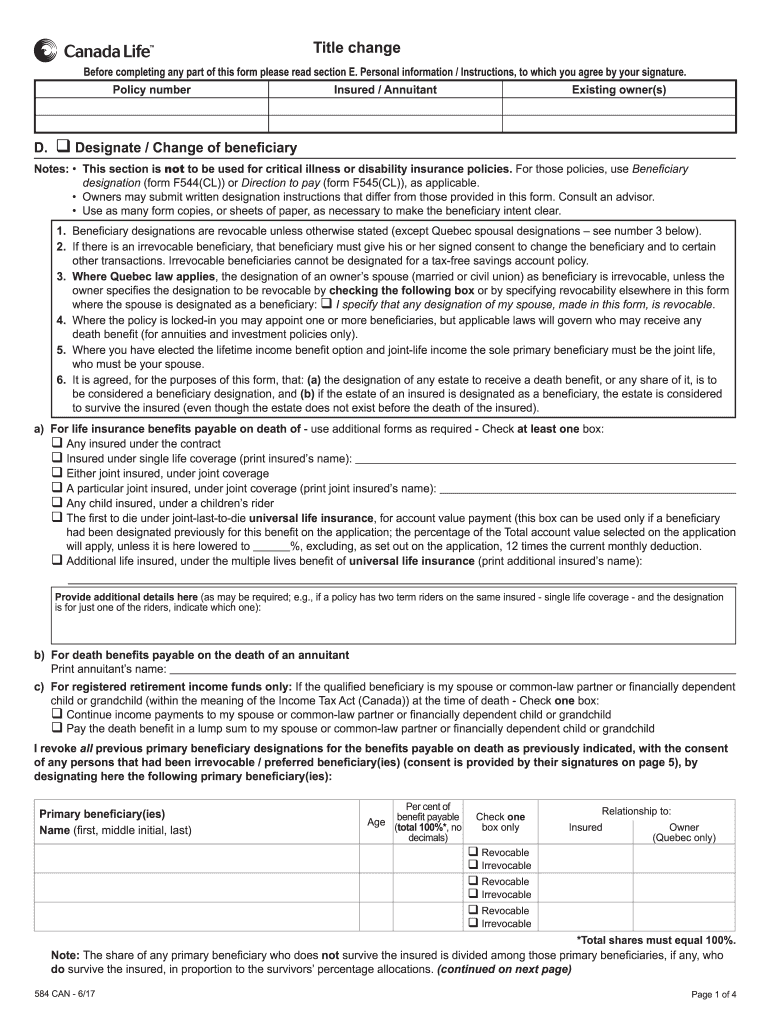
An agent of record change form is a legal document that authorizes a life insurance company to transfer the management of your policy from one licensed agent or agency to another. This process reassigns the right to receive commissions and provides the new agent with the authority to access your policy data and service your account.
Navigating the administrative requirements of life insurance often involves managing the professional relationship between the policyholder and the intermediary. As of 2026, the process of changing your Agent of Record (AOR) has become increasingly digital, yet it remains governed by strict regulatory standards to protect consumer privacy and ensure the continuity of coverage. Whether you are seeking better service, specialized expertise, or have followed a trusted advisor to a new firm, understanding the mechanics of the AOR change form is essential for maintaining your financial security.
Understanding the Agent of Record (AOR) Relationship
In the life insurance industry, the Agent of Record is the individual or entity officially recognized by the insurance carrier as the representative for a specific policy. This relationship is more than just a customer service link; it is a legal and financial designation. The AOR is typically the person who sold the policy, but they are also responsible for ongoing maintenance, such as helping with beneficiary changes, addressing premium payment issues, and conducting annual policy reviews.
The insurance carrier compensates the AOR through commissions. When you sign an AOR change form, you are effectively redirecting future service commissions to a new representative. It is important to note that the policyholder—the person who owns the insurance contract—is the only one who can initiate this change. The insurance company will not move a policy to a new agent simply because the agent requests it; a formal, signed authorization from the policy owner is mandatory.
Why You Might Need to Change Your Life Insurance Agent
The decision to change an agent is rarely about the insurance product itself and more about the quality of the professional relationship or the depth of expertise required. In 2026, policyholders are increasingly looking for advisors who offer comprehensive financial integration rather than just transactional sales.
Lack of Communication and Service
The most common reason for an AOR change is "orphan policyholder" status. This occurs when an agent retires, leaves the industry, or simply stops communicating with the client. If you haven't heard from your agent in years and your inquiries go unanswered, your policy may be at risk of becoming outdated or failing to meet your current financial goals.
Specialized Expertise
Life insurance needs evolve. A policy purchased for simple mortgage protection twenty years ago may now need to be integrated into a complex estate plan involving trusts and tax-advantaged wealth transfer. If your current agent does not have the technical expertise to handle advanced planning, moving the record to a more specialized advisor is a strategic move.
Advisor Relocation or Firm Changes
If your trusted advisor moves to a different brokerage or agency, they do not automatically "take" your policy with them. Because the AOR is often tied to the agency contract with the carrier, you must sign an AOR change form to ensure your advisor can continue to manage your policy from their new professional home.
Key Components of an Agent of Record Change Form
While every insurance carrier (such as Prudential, MetLife, or New York Life) has its own proprietary form, the essential data points required for a successful transfer remain consistent across the industry. Accuracy in these fields is vital; any discrepancy can lead to a rejection of the request.
- Policyowner Information: This includes the full legal name, current address, and Social Security Number (or Tax ID) of the owner. If the policy is owned by a trust or a business, the form must be signed by the authorized trustee or officer.
- Policy Numbers: You must list every policy you wish to transfer. If you have a term life policy and a whole life policy with the same carrier, both must be explicitly listed to ensure they both move to the new agent.
- Current Agent Information: You generally need to provide the name of the outgoing agent or agency. If you do not know who the current agent is, you can usually leave this blank or write "Unknown/Direct."
- New Agent Information: This section requires the new agent’s full name, their National Producer Number (NPN), and their agency's name. The carrier uses this to verify that the new agent is properly licensed and appointed to sell their products in your state.
- The Authorization Statement: This is the legal "meat" of the form. It states that you are appointing the new agent as your sole representative and that this request supersedes all previous appointments.
- Signature and Date: The form must be signed by the policy owner. In 2026, most carriers accept legally binding electronic signatures through platforms like DocuSign or Adobe Sign, though some still require "wet" signatures for older, high-value policies.
Step-by-Step Guide to Submitting an AOR Change in 2026
The process of changing your agent is structured to prevent "churning" or unauthorized transfers. Following these steps ensures a smooth transition without a lapse in service.
Step 1: Secure the Correct Form
Contact the insurance company’s customer service department or your new agent to obtain the specific AOR change form used by that carrier. Using a generic "Letter of Authorization" is sometimes acceptable, but using the carrier's specific form significantly speeds up the processing time.
Step 2: Verify the New Agent’s Appointment
Before submitting the form, ensure your new agent is "appointed" with the insurance company. An appointment is a legal agreement between the agent and the carrier allowing the agent to represent the carrier’s products. If the agent is not appointed, the carrier will reject the AOR change until the appointment paperwork is finalized.
Step 3: Complete and Review the Data
Fill out the form meticulously. Ensure that the policy owner’s signature matches the signature the insurance company has on file. If your name has changed due to marriage or divorce since you bought the policy, you may need to provide supporting documentation (like a marriage certificate) along with the AOR form.
Step 4: Submission and Receipt
The new agent usually submits the form on your behalf via the carrier's agent portal. However, you can also mail or email it directly to the carrier's policyholder services department. Always request a confirmation of receipt.
The "Rescission Period": What Happens After You Submit
One of the most misunderstood aspects of the AOR change process is the rescission or "waiting" period. When an insurance carrier receives a change of agent request, they typically notify the outgoing agent.
In 2026, most major carriers implement a 5-to-10 business day rescission period. During this time, the original agent is given the opportunity to contact the policyholder to resolve any issues or misunderstandings. The original agent might attempt to "save" the business. If you are firm in your decision, you can simply ignore these overtures. Once the rescission period expires without the policyholder withdrawing the request, the carrier officially updates their systems to reflect the new Agent of Record.
Technical Nuances: AOR vs. BOR
In the broader insurance world, the terms "Agent of Record" and "Broker of Record" are often used interchangeably, but there are technical differences depending on the type of insurance.
| Feature | Agent of Record (AOR) | Broker of Record (BOR) |
|---|---|---|
| Primary Context | Individual Life, Health, and Annuities | Group Benefits and Commercial Insurance |
| Representation | Represents the insurer to the client | Represents the client to multiple insurers |
| Form Complexity | Usually a single-page carrier form | Often a formal letter on client letterhead |
| Commission Impact | Directs renewal and service commissions | Directs total policy commissions and fees |
| Notification | 5-10 day rescission is standard | Often involves a 10-day "wait and see" |
Impact on Commissions and Policy Ownership
A critical point of clarity for policyholders is that changing your agent does not change your policy. The terms of your life insurance contract—the death benefit, the premium amount, the cash value accumulation, and the riders—remain exactly the same.
The change only affects the backend administrative and compensation structure.
- Vested Commissions: In some older life insurance contracts, the original agent may have "vested" commissions, meaning they continue to get paid even if they are removed as the AOR. In these cases, the new agent may agree to service the policy for free or for a small fee, often as part of a larger financial planning relationship.
- Service Fees: If you are moving a policy that no longer pays commissions (common with very old whole life policies), the new agent is essentially taking on the work as a courtesy. It is important to discuss this with your new advisor to ensure they are committed to providing the level of service you expect.
Common Pitfalls and How to Avoid Them
The AOR process can be delayed by simple administrative errors. To ensure a fast transition:
- Incorrect Signatures: If the policy is owned by a trust, the trustee must sign and often include the word "Trustee" after their name. If the policy is corporate-owned, an officer must sign with their title.
- Missing Policy Numbers: Listing "All Policies" is often insufficient. Carriers require the specific numeric strings associated with your accounts.
- Incomplete Agent Data: If you don't provide the new agent’s NPN or tax ID, the carrier’s system may not be able to locate the correct profile in their database, leading to a "pended" status.
- Conflicting Requests: If you sign AOR forms for two different agents at the same time, the carrier will freeze the record and require a notarized statement to clarify who your chosen representative is.
Legal and Regulatory Considerations
Life insurance is a heavily regulated industry. The Agent of Record change form is subject to state-specific laws and the privacy protections of the Health Insurance Portability and Accountability Act (HIPAA) and various state data privacy acts.
By signing the AOR form, you are also authorizing the carrier to share your personal health information (PHI) and financial data with the new agent. This is necessary because the agent cannot advise you on your policy without seeing the underlying data. However, you should ensure that your new agent has a robust privacy policy and secure data handling practices in place. In 2026, regulatory bodies like the National Association of Insurance Commissioners (NAIC) have heightened requirements for "Cyber-security and Data Integrity" for all agents receiving transferred policy records.
Frequently Asked Questions
Does it cost money to change my Agent of Record?
No, insurance carriers do not charge a fee to process an Agent of Record change form. The transition is an administrative update. Your premiums will not increase because of the change, as the commission structure is already baked into the policy's original pricing.
Can I have more than one Agent of Record for the same policy?
Generally, no. Most insurance carrier systems only allow for one Agent of Record or one Agency of Record per policy number. This prevents confusion regarding commission payments and service responsibilities. If you want two different advisors to have access, you may need to file additional "Information Release" authorizations.
How long does the entire process take?
Typically, the process takes between two and four weeks. This includes the time for the carrier to receive the form, the standard 10-day rescission period for the old agent, and the administrative time required to update the internal database and notify the new agent.
Will my old agent be mad if I change agents?
The relationship is professional, not personal. While some agents may reach out to ask why you are leaving, you are not obligated to provide a detailed explanation. If you feel uncomfortable, you can instruct the insurance company to process the change without the rescission period contact, though carriers aren't always able to prevent an agent from calling.
Can I change my agent to someone in a different state?
Yes, as long as the new agent is licensed to sell insurance in the state where you currently reside. Insurance licensing is state-based, so if you move from New York to Florida, your new agent must have a Florida non-resident or resident license to be the AOR on your policy.
Practical Recommendation
Before signing an agent of record change form, schedule a formal consultation with your prospective new agent. Ask them specifically how they plan to manage your policy differently than your current representative. Verify their credentials and ensure they have a clear understanding of your long-term financial objectives. Once you are satisfied, request the carrier-specific form, fill it out completely, and keep a digital copy for your records. This simple administrative step can significantly improve the quality of your financial oversight and ensure that your life insurance remains a cornerstone of your estate plan.