Finding affordable commercial auto insurance in Oklahoma County, Oklahoma, requires navigating state-mandated liability minimums, local traffic risks in the Oklahoma City metropolitan area, and unique fleet configurations. Business owners can secure competitive rates by understanding local underwriting factors, maintaining clean driving records, implementing strict safety protocols, and comparing quotes across multiple licensed carriers to balance cost savings with adequate protection.
Understanding Commercial Auto Insurance in Oklahoma
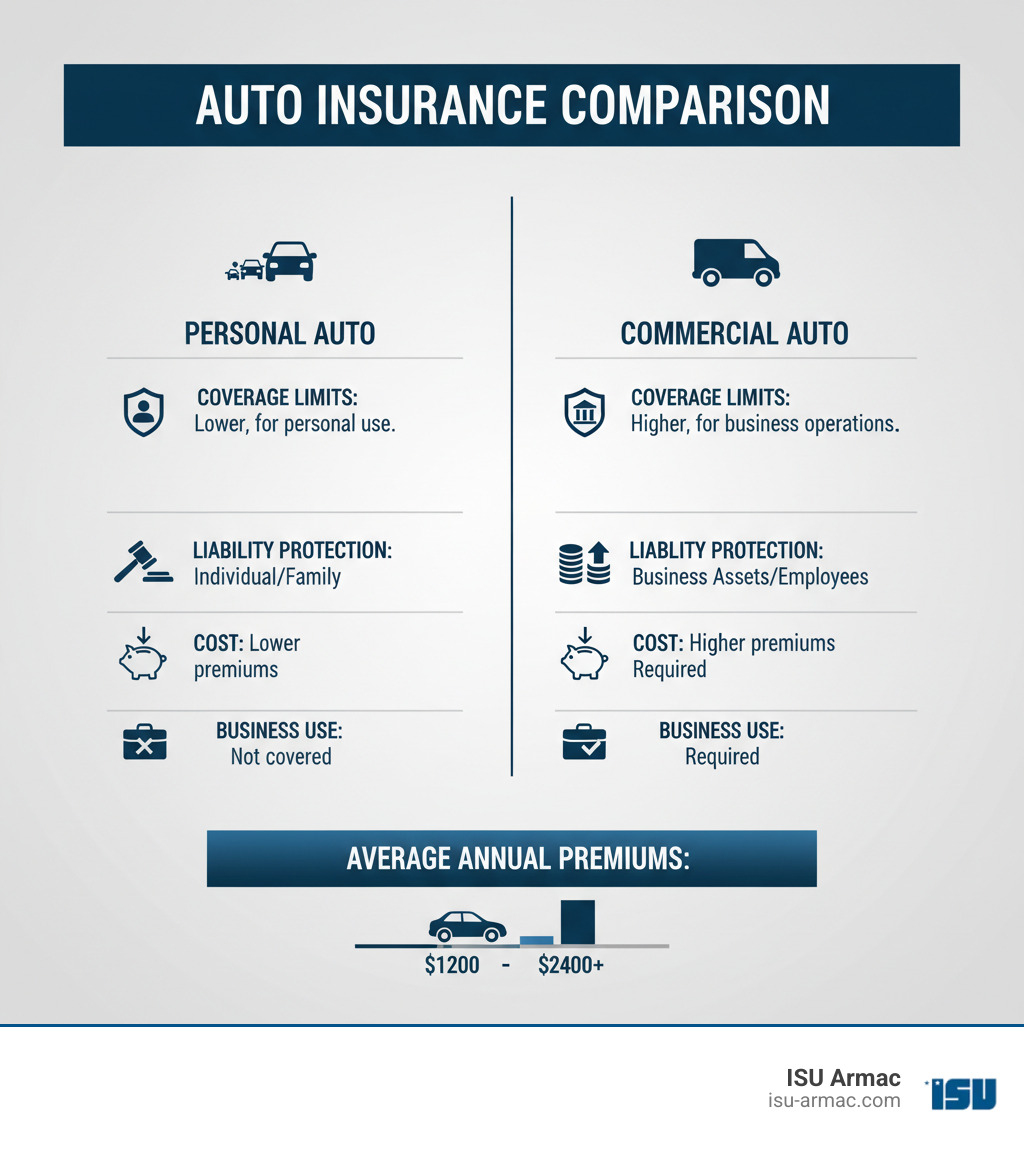
Commercial auto insurance is a specialized policy designed to protect vehicles used for business purposes—ranging from single work trucks to entire delivery fleets. Personal auto insurance policies typically exclude coverage for business-related activities, making commercial coverage a legal and financial necessity for business owners in Oklahoma County.
Operating a business vehicle without appropriate commercial protection leaves corporate and personal assets exposed to catastrophic liability. Whether a company operates out of Oklahoma City, Edmond, Moore, or Midwest City, the fundamental purpose of this coverage is to shield the enterprise from financial loss resulting from traffic collisions, property damage, bodily injury lawsuits, and vehicle theft or vandalism.
Insurance carriers evaluate commercial risks differently than personal risks. Underwriters look at the weight and type of vehicles, who drives them, how far they travel, and the nature of the cargo being transported. Because Oklahoma County encompasses a densely populated urban center alongside busy interstate corridors like I-35, I-44, and I-240, insurers factor local congestion and accident rates directly into their rating algorithms.
Minimum State Liability Requirements in Oklahoma
Under Oklahoma law, any motor vehicle operated on public roads must carry minimum liability insurance. For commercial vehicles, these requirements establish the absolute baseline of legal operation, though most businesses require significantly higher limits to protect their bottom line.
The mandatory minimum liability limits in Oklahoma are often referred to as "25/50/25 coverage":
- $25,000 for bodily injury or death of one person in an accident.
- $50,000 for total bodily injury or death liability per accident when multiple people are injured.
- $25,000 for property damage to others per accident.
Relying solely on these state minimums can be financially dangerous for a commercial enterprise. If a company vehicle causes a multi-car pileup on the Kilpatrick Turnpike or damages expensive commercial property, damages frequently exceed $25,000. Once state minimums are exhausted, the business owner remains personally liable for the remaining balance. Consequently, many Oklahoma County businesses opt for combined single limits (CSL) of $500,000 or $1,000,000.
Key Factors That Influence Commercial Auto Insurance Rates in Oklahoma County
Insurance premiums are not one-size-fits-all. Carriers calculate rates based on a complex matrix of risk variables. Understanding these factors allows business owners to manage and reduce their insurance expenditures proactively.
Vehicle Classification and Use Radius
The type of vehicle heavily influences the premium. A light-duty sedan used for real estate sales is significantly cheaper to insure than a heavy-duty dump truck or a refrigerated box truck. Furthermore, insurers examine the operating radius:
- Local operations: Vehicles operating exclusively within Oklahoma County or a 50-mile radius generally enjoy lower rates.
- Intermediate operations: Vehicles traveling throughout the state of Oklahoma.
- Long-haul operations: Commercial trucks crossing state lines, which trigger higher premiums and specialized federal filings like an MCS-90 endorsement.
Driver History and MVRs
The driving records of all employees authorized to operate company vehicles play a massive role in pricing. Insurance companies pull Motor Vehicle Reports (MVRs) to check for speeding tickets, driving under the influence (DUI) convictions, and at-fault accidents over the past three to five years. Employing drivers with clean records is one of the most effective ways to keep premiums down.
Location and Garaging Address
Where the vehicles are parked and primarily driven matters. Oklahoma County features higher traffic density and vehicle theft rates compared to more rural Oklahoma counties. Insurers use ZIP codes within Oklahoma County to assess localized risk, meaning vehicles garaged in downtown Oklahoma City may see different rate structures than those based in suburban areas like Arcadia or Jones.
Industry Risk Profile
The business industry dictates baseline risk. Contractors, couriers, and trucking companies face higher exposure on the road compared to consultants or professional service providers. Insurers classify businesses using standard industry codes to project the frequency and severity of potential claims.
Core Coverages to Consider for Comprehensive Protection
When shopping for affordable commercial auto insurance, business owners must balance upfront premium costs against potential out-of-pocket expenses during a claim. A standard commercial auto policy can be customized with several key coverages:
| Coverage Type | What It Protects |
|---|---|
| Combined Single Limit (CSL) | High-limit protection combining bodily injury and property damage into a single pool of coverage per accident. |
| Physical Damage (Collision) | Repairs or replaces your company vehicle if it collides with another vehicle or object, regardless of fault. |
| Physical Damage (Comprehensive) | Covers theft, fire, vandalism, windstorm, hail (common in Oklahoma), or animal strikes. |
| Uninsured/Underinsured Motorist | Protects your drivers and vehicles if struck by a motorist with little or no insurance. |
| Hired and Non-Owned Auto (HNOA) | Covers liability when employees drive their personal vehicles or rented cars on company business. |
Practical Strategies to Lower Your Commercial Insurance Premiums
Securing truly affordable coverage does not mean cutting vital protections; it means managing risk intelligently to earn favorable underwriting tiers. Business owners in Oklahoma County can implement several proven tactics to reduce overhead.
Maintain Strict Driver Screening Standards
Establish a written company driving policy. Require all applicants to submit to pre-employment MVR checks and periodic reviews. Exclude drivers with major violations from operating company assets, as insurers heavily penalize fleets that employ high-risk drivers.
Increase Deductibles Wisely
Opting for a higher deductible—such as $1,000 instead of $500—on collision and comprehensive coverages immediately lowers monthly or annual premium costs. Ensure the business maintains adequate cash reserves to cover the higher out-of-pocket expense if a claim occurs.
Bundle Policies with a Business Owner’s Policy (BOP)
Many major insurance carriers offer multi-policy discounts. Purchasing commercial auto insurance alongside general liability, commercial property, or workers' compensation through a single insurer often triggers significant percentage discounts.
Install Telematics and Safety Devices
Modern commercial fleets increasingly utilize telematics devices, GPS tracking, and dashcams. Many insurers offer premium credits for businesses that track driver behavior, monitor speed, and encourage safe driving habits through technological oversight.
Pay Annually or Setup Automated Billing
Insurers often charge administrative or installment fees for monthly manual invoicing. Paying the annual premium upfront or enrolling in recurring electronic funds transfer (EFT) payments eliminates these extra fees and sometimes secures a paid-in-full discount.
Common Mistakes to Avoid When Buying Commercial Auto
Navigating the commercial insurance market can be complex, and certain missteps can lead to unexpected claim denials or inflated costs.
- Failing to disclose personal vehicle use for business: Operating a personal vehicle for deliveries or client visits without an endorsed policy or HNOA coverage can result in denied claims after an accident.
- Underinsuring fleet values: Setting physical damage limits too low means the business absorbs the financial gap if a vehicle is totaled. Conversely, insuring an older vehicle for more than its actual cash value wastes premium dollars.
- Ignoring employee turnover: Failing to notify the insurance provider when high-risk drivers leave or when new drivers are added can lead to compliance issues or unexpected audit adjustments.
- Shopping solely on price: Selecting the cheapest carrier without reviewing financial stability ratings, claims handling reputation, or policy exclusions can cause severe operational disruptions when a claim arises.
How to Compare Quotes and Choose the Right Agent
Finding the best value requires gathering multiple quotes. Business owners can work with independent insurance agents who have access to multiple admitted carriers licensed by the Oklahoma Insurance Department, allowing for direct side-by-side comparisons of rates and coverage terms.
When evaluating proposals, verify that the quoting carrier holds an A.M. Best financial strength rating of "A" or higher. A cheap policy is of little value if the insurance company struggles to pay claims promptly. Reviewing customer service accessibility and claims processing efficiency ensures that when an incident occurs on an Oklahoma County roadway, support is available immediately to get the business back on the road.