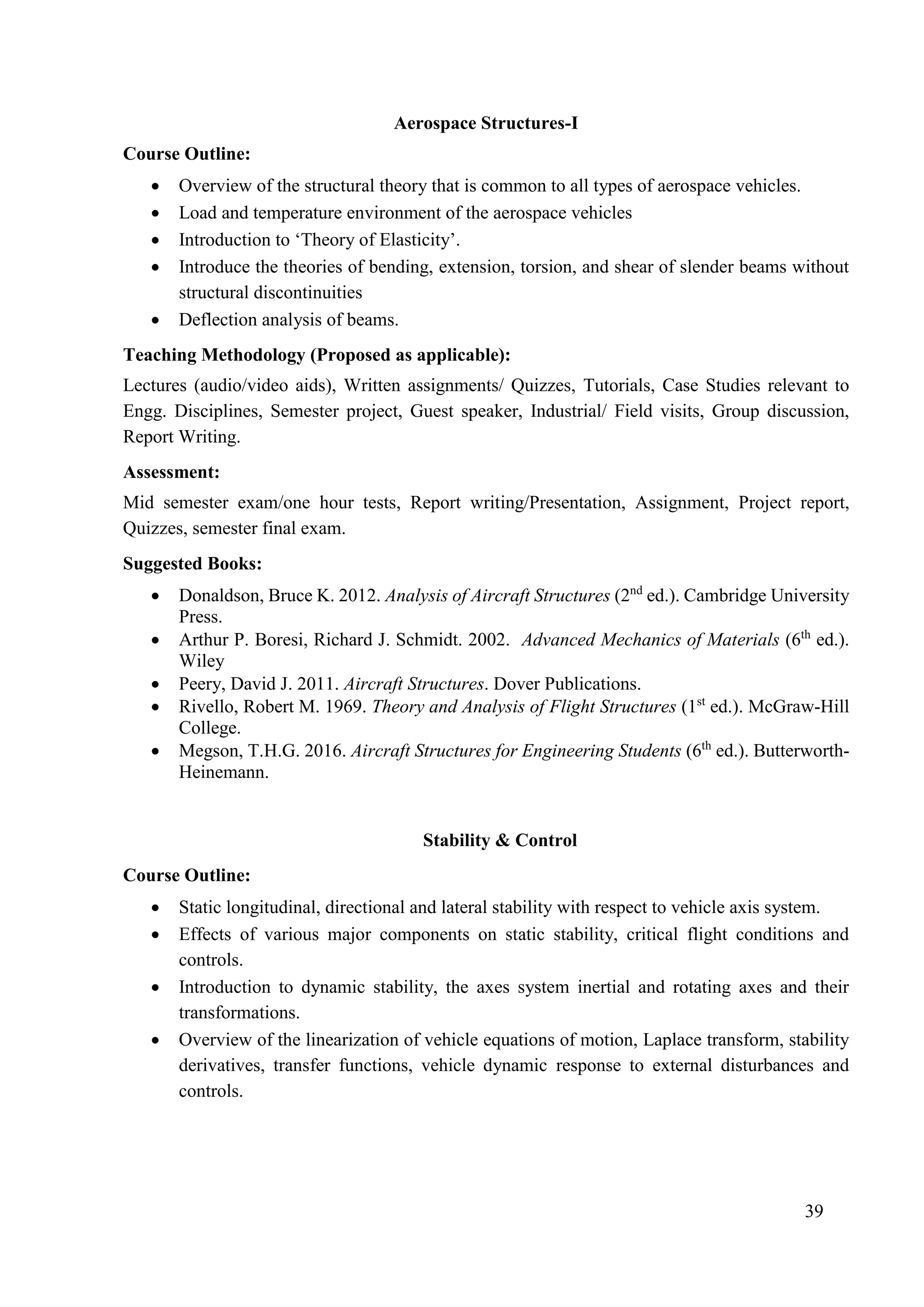
Cornell University's aerospace engineering curriculum provides a rigorous, multidisciplinary foundation in fluid mechanics, thermodynamics, structural analysis, and propulsion, preparing graduates for dynamic technical careers in aviation, space exploration, defense, and emerging high-tech sectors.
Choosing an academic path in aerospace engineering requires a careful evaluation of foundational coursework, specialized electives, hands-on design experiences, and the diverse employment opportunities awaiting graduates upon completion of their studies. Within Cornell University’s academic framework, aerospace engineering is deeply integrated into the Sibley School of Mechanical and Aerospace Engineering (MAE). This structure ensures that students build a robust mechanical engineering core before branching into specialized aerospace applications. Whether designing next-generation supersonic aircraft, programming guidance systems for interplanetary spacecraft, or developing sustainable propulsion systems, navigating this academic landscape demands strategic course selection and active engagement with experiential learning opportunities.
The Academic Foundation: Structure of the Cornell Sibley School
The Sibley School of Mechanical and Aerospace Engineering at Cornell University administers undergraduate and graduate programs designed to cultivate analytical rigor and creative problem-solving. At the undergraduate level, students typically enter the College of Engineering and declare their major preference by the end of their freshman year. The curriculum does not offer a standalone undergraduate "Aerospace Engineering" Bachelor of Science degree; instead, students earn a Bachelor of Science (B.S.) in Mechanical Engineering while heavily tailoring their technical electives, major design experiences, and independent research toward aerospace systems.
This mechanical core is intentional. Aerospace systems rely heavily on mechanical principles, including materials science, structural integrity, dynamics, and thermal-fluids engineering. By grounding aerospace students in mechanical engineering fundamentals, Cornell ensures that graduates possess the versatility required by modern aerospace employers. A systems engineer working on a commercial jetliner or a robotic rover must understand how thermal loads affect structural frames, how mechanical linkages interact with hydraulic actuators, and how manufacturing tolerances dictate component reliability.
Core Engineering Prerequisites and Lower-Division Coursework
Before entering upper-division aerospace-focused courses, undergraduate students must master a demanding sequence of mathematics, physics, and introductory engineering sciences. These prerequisites form the language through which advanced aerospace concepts are expressed and solved.
- Mathematics and Basic Sciences: Students complete multiple semesters of single-variable and multivariable calculus, linear algebra, and ordinary differential equations. Calculus-based physics sequences covering mechanics, electromagnetism, waves, and thermodynamics are mandatory, alongside foundational chemistry courses.
- Introductory Engineering Computing: Modern aerospace engineering relies entirely on computational modeling. Students take foundational programming courses—often utilizing Python, MATLAB, or C++—to solve numerical equations, automate data analysis, and build simulation scripts.
- Engineering Statics and Dynamics: These courses introduce students to the analysis of stationary structures under load and the kinematics and kinetics of particles and rigid bodies. These concepts directly feed into aerospace structural analysis and flight mechanics.
The Aerospace Curriculum: Core Subjects and Technical Electives
Once students transition into the upper-division phase of the Sibley School curriculum, coursework becomes explicitly tailored to the mechanical and thermal realities of flight and space travel. The curriculum balances theoretical derivation with practical laboratory verification, ensuring that students understand both the governing differential equations and the physical behavior of hardware.
Fluid Mechanics and Aerodynamics
Fluid dynamics sits at the absolute center of aerospace engineering. Students examine the behavior of liquids and gases in motion, moving from introductory control-volume analysis to advanced compressible and incompressible flow theory. Coursework covers boundary layer theory, lift and drag generation, shock waves in supersonic and hypersonic regimes, and computational fluid dynamics (CFD). Understanding how air flows over a swept wing or through a rocket nozzle allows engineers to optimize aerodynamic profiles, minimize drag, and predict thermal protection requirements during atmospheric re-entry.
Thermodynamics and Propulsion Systems
Powering aircraft and spacecraft requires a deep mastery of thermodynamics and combustion. Cornell's curriculum explores energy conversion, heat transfer, and the cycles driving propulsion systems. Students study the thermodynamic cycles of gas turbine engines (turbofans, turbojets, and turboprops), as well as the chemical kinetics and thermodynamics governing liquid- and solid-propellant rocket engines. Advanced coursework often touches upon electric propulsion, plasma dynamics, and nuclear thermal propulsion concepts relevant to deep-space missions.
Aerospace Structures and Materials
The extreme environments encountered during atmospheric flight and orbital insertion subject vehicles to massive structural loads, acoustic vibrations, and thermal gradients. Students take specialized courses in solid mechanics, analyzing stress, strain, elasticity, and fatigue in thin-walled aerospace structures. Coursework also emphasizes advanced aerospace materials, including lightweight aluminum-lithium alloys, titanium, carbon-fiber composites, and high-temperature ceramic matrix composites used in turbine blades and heat shields.
| Curriculum Domain | Core Focus Areas | Primary Software & Tools |
|---|---|---|
| Thermal-Fluids | Aerodynamics, compressible flow, heat transfer, propulsion | ANSYS Fluent, MATLAB, OpenFOAM |
| Structural Mechanics | Finite element analysis, elasticity, composite materials | ABAQUS, NASTRAN, SolidWorks |
| Dynamics & Control | Flight mechanics, orbital mechanics, feedback control systems | Simulink, MATLAB, Python |
| Systems & Design | Spacecraft design, systems engineering, multidisciplinary optimization | CAD suites, STK (Systems Tool Kit) |
Experiential Learning: Project Teams and Research
Classroom theory represents only half of the Cornell educational experience. The university is internationally renowned for its robust engineering project teams, which provide students with an extracurricular environment closely mirroring an aerospace company's research and development department. Participation on these teams bridges the gap between theoretical textbook problems and the messy reality of physical manufacturing, tight budgets, and hard deadlines.
Cornell Design Build and Flight Teams
Students interested in atmospheric flight frequently join teams like Cornell Design Build Fly (DBF), where members design, fabricate, and flight-test remote-controlled aircraft optimized for specific mission profiles set by annual national competitions. Team members gain direct experience with wing sizing, structural layup, motor selection, and stability tuning.
Similarly, space-oriented students gravitate toward Cornell Rocket Team and CUInSpace, where undergraduate and graduate students design, build, and launch high-powered sounding rockets. These teams push into complex technical domains, including custom avionics design, telemetry transmission, carbon-fiber airframe fabrication, and hybrid or liquid rocket engine development. Working on these projects teaches students how individual subsystems integrate into a cohesive, flight-ready vehicle.
Undergraduate Research Opportunities
Beyond student-run project teams, the Sibley School maintains active faculty research laboratories. Undergraduates can earn credit or stipends by assisting doctoral candidates and professors with cutting-edge investigations. Current faculty research spans hypersonic flow diagnostics, plasma thruster optimization, unmanned aerial vehicle (UAV) autonomy, aeroacoustics, and advanced additive manufacturing for aerospace components. Engaging in undergraduate research offers a distinct advantage for students intending to pursue graduate studies or specialized research and development careers in industry.
Transitioning to Career Paths
Graduates emerging from Cornell's mechanical and aerospace curriculum find themselves exceptionally well-positioned for diverse career trajectories across the public and private sectors. Because the aerospace industry spans commercial aviation, defense contracting, commercial spaceflight, and regulatory agencies, Cornell alumni pursue varied professional roles depending on their specific technical passions.
Commercial Aerospace and Aviation
The commercial aviation sector employs aerospace engineers to design more fuel-efficient, quieter, and safer passenger and cargo aircraft. Companies such as Boeing, Airbus, Gulfstream, and major regional suppliers hire Cornell graduates to work in aerodynamic testing, structural analysis, avionics integration, and manufacturing quality engineering. With the aviation industry actively transitioning toward sustainable aviation fuels (SAFs), electric propulsion, and hydrogen-powered flight, modern engineers are tasked with reinventing civil aviation for a low-carbon future.
The New Space Economy and Defense Contracting
The rapid commercialization of space—often referred to as "New Space"—has fundamentally transformed employment opportunities. Companies like SpaceX, Blue Origin, Northrop Grumman, Lockheed Martin, and a vast ecosystem of smaller launch providers and satellite manufacturers aggressively recruit top engineering talent.
- Launch Vehicle Development: Engineers in this subsector design first-stage booster structures, turbopumps, guidance systems, and stage-separation mechanisms.
- Satellite Constellations and Spacecraft Operations: With thousands of low-Earth orbit satellites deployed annually for communications, Earth observation, and scientific research, engineers specialize in orbital mechanics, attitude determination and control systems (ADCS), thermal management, and space debris mitigation.
- Defense Systems: Military contractors develop tactical missiles, hypersonic defense systems, and advanced military aircraft, requiring engineers with a solid grasp of systems engineering, secure communications, and high-speed aerodynamics.
Advanced Graduate Studies
A significant percentage of Cornell aerospace graduates choose to continue their education immediately or after a brief stint in industry. Pursuing a Master of Science (M.S.) or a Doctor of Philosophy (Ph.D.) allows engineers to specialize deeply in niches such as computational fluid dynamics, combustion physics, astrodynamics, or robotics. Cornell’s graduate programs provide access to advanced laboratory facilities and direct mentorship from leaders in aerospace research.
Common Challenges and Strategic Advice for Students
Navigating the aerospace curriculum at Cornell is notoriously demanding. The combination of heavy course loads, complex mathematical derivations, demanding project team commitments, and Ithaca's rigorous academic environment can challenge even the most prepared students. Mitigating these hurdles requires proactive planning and a clear understanding of potential pitfalls.
- Balancing Coursework and Extracurriculars: While project teams provide invaluable practical experience, overcommitment can lead to academic burnout. Students must balance hands-on building with the rigorous theoretical requirements of core engineering classes.
- Mastering Computational Tools Early: Relying solely on manual calculations is insufficient in modern engineering. Students should proactively seek mastery of numerical solvers, CAD software, and programming languages during their freshman and sophomore years.
- Networking and Industry Engagement: Attending career fairs, engaging with alumni through university networks, and securing competitive internships during summer breaks are critical steps for translating a Cornell degree into a high-impact professional career.
Summary and Next Actions
Cornell University’s mechanical and aerospace engineering ecosystem delivers a comprehensive education grounded in rigorous thermal-fluids, structural mechanics, and systems design. For prospective students, current undergraduates, and aspiring professionals, success requires mastering foundational mathematics, leveraging hands-on project team opportunities, and targeting industry sectors aligned with personal technical interests. To take the next step, prospective undergraduate applicants should review the specific admissions guidelines through the Cornell College of Engineering, while current students should consult with academic advisors in the Sibley School to strategically map out their technical electives and experiential learning milestones.