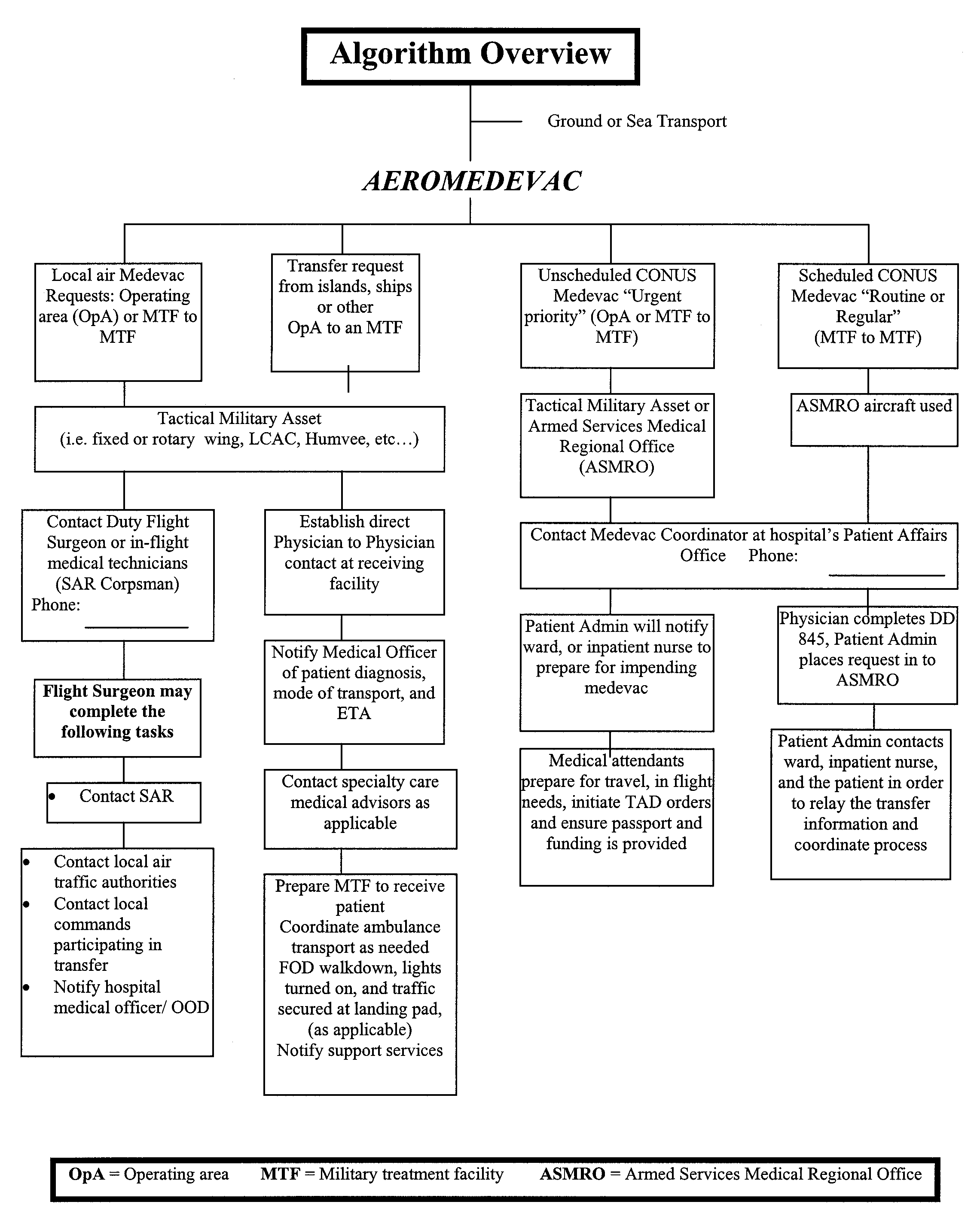
Aeromedical evacuation (aeromed evac or AE) is the standardized medical system that transports wounded, injured, or ill personnel from operational areas or remote clinical facilities to higher-level, definitive healthcare centers using specialized aircraft and trained aircrews. It spans military strategic staging across international theaters and civilian inter-facility critical care air transfers globally.
Disclaimer: This article is for informational and educational purposes only and does not constitute medical advice, legal counsel, or official military doctrine. For specific emergency transport requirements or policy coverages, consult certified medical providers, military Patient Movement Requirement Centers, or licensed insurance representatives.
Disambiguating Aeromedical Evacuation: Military vs. Civilian Transport
Understanding aeromedical evacuation requires distinguishing between three related military acronyms—CASEVAC, MEDEVAC, and Aeromedical Evacuation (AE)—as well as civilian air ambulance operations. Although civilian media frequently uses these terms interchangeably, military doctrine and aviation transport medicine define distinct operational boundaries, medical equipment baselines, and command channels for each.
TYPICAL PATIENT EVACUATION CONTINUUM
- Point of Injury
- Evacuation Type: CASEVAC
- Details: Dedicated/Non-Dedicated, Combat Air/Ground
- Role 1 / Role 2 MTF
- Evacuation Type: MEDEVAC
- Details: Tactical Rotary-Wing, Dedicated Medical Craft
- Role 3 / Theater Hospital
- Evacuation Type: Aeromedical Evac
- Details: Strategic Fixed-Wing, Cargo Transport (C-17, C-130)
- Role 4 / Definitive Care
- Evacuation Type: Strategic AE / Repatriation
- Details: Long-Haul Intercontinental, Strategic Jets / Commercial
Military Tactical vs. Strategic Patient Movement
In military logistics, patient evacuation follows a continuum of care across defined levels or "Roles" of medical treatment facilities (MTFs), established under U.S. Joint Publication 4-02 (Joint Health Services) and NATO standardized agreements (NATO Allied Joint Publication 4.10):
- CASEVAC (Casualty Evacuation): Unregulated movement of casualties directly from the point of injury (POI) to a initial treatment facility using available ground vehicles or tactical aircraft (such as armed transport helicopters). CASEVAC platforms are typically non-dedicated, may lack specialized medical personnel or equipment, and prioritize rapid extraction under combat fire.
- MEDEVAC (Medical Evacuation): Regulated movement using dedicated, protected medical platforms marked under the Geneva Conventions (such as HH-60M Black Hawk or UH-72 Lakota helicopters). MEDEVAC crews provide tactical en-route care from the point of injury or Role 1 aid station to Role 2 (forward surgical team) or Role 3 (field hospital) care facilities within a specific tactical theater.
- Aeromedical Evacuation (AE): The fixed-wing operational and strategic movement of stabilized or stabilizing casualties between theater treatment centers (Role 2/3) and definitive care facilities (Role 4), such as Landstuhl Regional Medical Center in Germany or major military medical centers in the United States. AE relies on converted cargo and tanker aircraft configured with specialized medical support systems.
Civilian Aeromedical Evacuation Systems
Civilian aeromedical evacuation mirrors strategic military AE but operates under commercial aviation frameworks regulated by national civil aviation authorities, such as the Federal Aviation Administration (FAA Civil Aerospace Medical Institute). Civilian operations split into two primary categories:
- Emergency Scene Response (Rotary-Wing HEMS): Helicopter Emergency Medical Services that land directly at motor vehicle crashes or rural trauma scenes to transport patients to regional Level 1 trauma centers.
- Inter-Facility Transport & Repatriation (Fixed-Wing Air Ambulance): Purpose-built jet or turboprop aircraft equipped as flying intensive care units (ICUs) to transport critically ill patients across state lines or international borders, or to repatriate injured travelers to their home countries.
The Operational Phases of an Aeromedical Evacuation Mission
A strategic aeromedical evacuation mission is a multi-stage logistical chain managed by specialized command entities. In the U.S. Armed Forces, patient movement is coordinated through the Global Patient Movement Requirements Center (GPMRC) and regional Theater Patient Movement Requirement Centers (TPMRC), managed by the U.S. Air Force Air Mobility Command.
STAGING AND EXECUTION PHASES OF AEROMEDICAL EVACUATION
- Phase 1: Validation
- PMRC clearance
- PMI tracking
- Fit-to-fly clearance
- Phase 2: Staging
- Aeromedical Staging Facility (ASF)
- Pre-flight triage
- Phase 3: Flight Ops
- In-flight monitoring
- Altitude adjustment
- Critical care (CCATT)
- Phase 4: Transfer
- Ground ambulance
- Role 4 bed handover
Phase 1: Patient Validation and Requirements Clearance
Before a patient is manifest on an AE flight, the attending physician submits a Patient Movement Request (PMR) into the TRICARE Online Patient Movement System (TRAC2ES) or civilian transport dispatch desk. Regulators assess three core criteria:
- Clinical Stability: The patient must be hemodynamically stable enough to withstand altitude variations, acceleration forces, and potential flight delays.
- Specialized Flight Equipment Needs: Standardizing medical equipment requires Patient Movement Items (PMI)—ventilators, suction units, monitors, and infusion pumps certified as airworthy, radiation-emission safe, and insensitive to aircraft electromagnetic interference.
- Classification and Precedence: Patients are categorized by acuity (e.g., Urgent, Priority, Routine) and transport type (Litter vs. Ambulatory).
Phase 2: Pre-Flight Staging and Triage
Once validated, patients enter an Aeromedical Staging Facility (ASF) or Contingency Aeromedical Staging Facility (CASF) located near the air terminal. Medical staff at the staging facility conduct pre-flight reassessments, administer scheduled medications, update wound dressings, and prepare flight-certified litter systems.
Phase 3: En-Route Medical Operations
During flight, the onboard aeromedical crew assumes total responsibility for patient care. The crew transforms cargo bays or jet cabins into clinical environments. Medical aircrews monitor vital signs, administer continuous intravenous therapy, manage mechanical ventilation, perform emergency interventions (such as needle chest decompressions), and maintain strict patient documentation.
Phase 4: Arrival and Ground Transfer
Upon landing at the destination airfield, ground medical transport teams (commercial or military ambulances) meet the aircraft on the ramp. The flight crew completes a formal hand-off report, transferring care, medical records, and specialized equipment to the receiving clinical team.
Aircrews and Specialized Medical Capabilities
Aeromedical evacuation missions rely on modular clinical teams configured according to patient acuity. Unlike fixed hospital wards, medical aircrews operate in high-noise, high-vibration, low-humidity, and spatially restricted environments.
AEROMEDICAL EVACUATION CREW STRUCTURE
- Standard AE Flight Crew (Basic Mission)
- Flight Nurse (FN): Officer IC of medical mission, airway/medication administration
- Aeromedical Evacuation Technician (AET): Enlisted support, litter handling, equipment setup
- Critical Care Air Transport Team (CCATT) (If Critical Care Required)
- Intensivist / Emergency Physician: Specialized medical oversight & invasive procedures
- Critical Care Flight Nurse: Advanced hemodynamic support, ventilator management
- Cardiopulmonary / Respiratory Therapist: Advanced airway management & ventilation safety
Standard Aeromedical Evacuation Crew (AECM)
A basic U.S. Air Force AE crew consists of five primary members:
- Two Flight Nurses (FN): Registered nurses holding specialized military flight nurse credentials. The Senior Flight Nurse serves as the Medical Crew Director (MCD), maintaining overall clinical and operational safety of the medical cabin.
- Three Aeromedical Evacuation Technicians (AET): Enlisted medical technicians qualified in flight physiology, aircraft loading systems, emergency egress, and life support hardware.
Critical Care Air Transport Teams (CCATT)
For unstable or severely injured patients (such as patients with severe traumatic brain injury, massive burn injuries, or multi-organ failure), a specialized Critical Care Air Transport Team (CCATT) integrates into the standard AE crew. A CCATT functions as an operating tailorable ICU team and comprises:
- Intensivist Physician: Board-certified critical care specialist, pulmonologist, or emergency physician.
- Critical Care Flight Nurse: Specialist trained in advanced hemodynamic monitoring, vasopressor administration, and trauma care.
- Respiratory Therapist: Specialist responsible for mechanical ventilation management, blood gas analysis, and airway management.
A single CCATT can manage up to three critically injured intubated patients or up to six high-acuity stabilized patients during long-haul intercontinental flights.
Altitude Physiology and In-Flight Medical Physics
The atmospheric changes associated with aviation create unique physiological stresses on human anatomy. Aeromedical aircrews must constantly mitigate the effects of gas expansion, hypoxia, and environmental factors described by gas laws.
KEY ALTITUDE PHYSIOLOGY PRINCIPLES IN AE
- BOYLE'S LAW: P1 x V1 = P2 x V2
- Principle: As atmospheric pressure drops, gas expands.
- Trapped Gas Expansion:
- Pneumothorax expands to tension
- Endotracheal cuffs over-inflate
- Abdominal surgical wounds rupture
- DALTON'S LAW: P_total = P1 + P2 + ... + Pn
- Principle: As altitude increases, partial pressure of O2 drops.
- Atmospheric Oxygen Drop:
- Decreased alveolar oxygenation
- Requires supplemental FiO2 boost
- Requires cabin altitude restriction
Boyle’s Law and Trapped Gas Expansion
Boyle’s Law states that at a constant temperature, the volume of a gas is inversely proportional to the pressure exerted upon it ($P_1 V_1 = P_2 V_2$).
As an aircraft climbs, ambient cabin pressure decreases, causing trapped gas inside body cavities to expand by 20% to 30% at standard cabin altitudes (6,000 to 8,000 feet above sea level):
- Pneumothorax: Trapped air within the pleural space expands, rapidly transforming a simple pneumothorax into a life-threatening tension pneumothorax. Chest tubes with Heimlich valves or chest drainage units must be placed prior to flight.
- Endotracheal Tube Cuffs: Air-filled ETT cuffs expand at altitude, leading to tracheal mucosal ischemia or necrosis. Aircrews substitute saline for air inside ETT cuffs before takeoff.
- Gastrointestinal Distension: Recent abdominal surgery sites can dehisce, or bowel gas can compromise diaphragm movement, impairing ventilation. Nasogastric (NG) or orogastric (OG) tubes are opened to low suction or left open to air.
- Ocular and Sinus Barotrauma: Air trapped behind the eyes following vitreoretinal surgery or trapped inside blocked sinuses expands, causing severe pain and potential tissue damage.
Dalton’s Law and Hypoxia Management
Dalton’s Law establishes that total atmospheric pressure is equal to the sum of the partial pressures of individual gases. Although oxygen maintains a constant 21% concentration throughout the troposphere, the drop in overall barometric pressure at higher altitudes reduces the partial pressure of inspired oxygen ($PiO_2$), leading to hypobaric hypoxia.
To maintain arterial oxygen saturation ($SpO_2 > 92%$), aircrews administer supplemental oxygen using the following adjustments:
$$\text{Required Altitude } FiO_2 = \frac{\text{Sea Level } FiO_2 \times \text{Sea Level Barometric Pressure}}{\text{Cabin Altitude Barometric Pressure}}$$
If supplemental oxygen is insufficient, the flight crew requests a Restriction of Cabin Altitude (also called a "Sea-Level Cabin"), requiring the aircraft to fly at lower cruising altitudes or adjust cabin pressurization settings to maintain a cabin pressure equivalent to sea level or 2,000 feet.
Additional Environmental Factors
- Vibration and Noise: Low-frequency aircraft vibrations induce physical fatigue, increase metabolic rates, and interfere with manual blood pressure auscultation, requiring electronic arterial lines or automated non-invasive blood pressure monitors.
- Humidity Deficit: Jet cabins exhibit extremely low relative humidity (often $< 10%$). Dehydration accelerates in ventilated patients, requiring continuous active inline airway humidification.
Primary Aircraft Platforms Used in Aeromedical Evacuation
Strategic aeromedical evacuation uses multi-role transport aircraft fitted with specialized electrical power converters, litter stanchions, and central liquid oxygen (LOX) delivery systems.
| Aircraft Model | Platform Class | Typical Patient Capacity | Primary Operational Role | Standard Flight Range |
|---|---|---|---|---|
| C-17 Globemaster III | Heavy Strategic Fixed-Wing | 36 Litters / 54 Ambulatory | Intercontinental strategic evacuation & CCATT ICU transports | ~2,400 to 5,200 nautical miles |
| C-130H / C-130J Hercules | Tactical Fixed-Wing | 74 Litters / 92 Ambulatory | Intra-theater transport from forward & unimproved airfields | ~2,000 nautical miles |
| KC-135 Stratotanker | Strategic Tanker / Transport | 6 Litters / 31 Ambulatory | Aeromedical evacuation of opportunity & routine long-haul transport | ~1,500 to 4,000 nautical miles |
| Civilian Fixed-Wing Jet (e.g., Learjet 45/75, Citation) | Civilian Air Ambulance | 1 to 2 Litters | Long-distance private inter-facility critical transport | ~1,500 to 2,800 nautical miles |
| HH-60M Black Hawk | Tactical Rotary-Wing | 4 Litters / 6 Ambulatory | Point-of-injury MEDEVAC and urgent short-range transfers | ~300 nautical miles |
Strategic Fixed-Wing Platforms
C-17 Globemaster III
The C-17 is the primary platform for intercontinental aeromedical transport. It features onboard liquid oxygen systems, integrated 115V/60Hz electrical outlets matching hospital standards, and built-in litter stanchion attachments. The cabin layout can accommodate complex critical care setups, including Extracorporeal Membrane Oxygenation (ECMO) teams.
C-130 Hercules
The C-130 serves as the primary tactical intra-theater lift platform. Its capability to land on short, dirt, or unimproved runways allows it to extract patients from forward operational areas and deliver them to major regional air bases.
KC-135 Stratotanker and KC-46 Pegasus
Aerial refueling tankers can be configured with Patient Support Pallets (PSP) to provide secondary aeromedical evacuation capacity, maximizing airlift efficiency across long ocean crossings.
Technical Comparison: Evacuation Paradigms
| Feature / Metric | CASEVAC | Tactical MEDEVAC | Strategic Aeromedical Evacuation (AE) | Civilian Air Ambulance |
|---|---|---|---|---|
| Primary Objective | Rapid extraction from combat point of injury | Tactical stabilization & field hospital transport | Inter-facility transfer to definitive/Role 4 medical centers | Critical inter-hospital transfer or travel repatriation |
| Primary Platform | Armored ground vehicles, combat utility helicopters | Dedicated medical helicopters (HH-60, UH-72) | Fixed-wing heavy transport (C-17, C-130, KC-135) | Light/Mid-size business jets (Learjet, King Air) |
| Geneva Marking | No direct Red Cross / Red Crystal protection | Protected under Geneva Conventions | Protected under Geneva Conventions | Civilian registration / non-combatant status |
| Standard Medical Staffing | Combat Medics or basic riflemen | Flight Paramedics (FP-C) / Critical Care Nurses | Flight Nurses, AE Technicians, CCATT teams | Flight Nurse (CFRN) & Flight Paramedic (FP-C) |
| Cabin Environment | Unpressurized, exposed, combat conditions | Unpressurized, low-altitude tactical flight | Pressurized, controlled environment | Pressurized, climate-controlled executive cabin |
| Monitoring Capability | Vital sign checks, tourniquets, pressure dressings | Advanced life support (ALS), field monitors | Full ICU level, mechanical ventilation, arterial lines | Advanced cardiac life support (ACLS), invasive monitoring |
Civilian Aeromedical Evacuation, Insurance, and Repatriation
While military AE is fully integrated into defence logistics, civilian aeromedical transport involves complex financial, legal, and operational arrangements. Understanding these distinctions is critical for international travelers, remote industrial operators, and family members arranging long-distance medical transfers.
Air Ambulance Services vs. Travel Insurance vs. Medical Subscriptions
Civilian patients typically access aeromedical evacuation through one of three mechanisms:
CIVILIAN ACCESS MECHANISMS
Comprehensive Travel Protection Policies
- Pays to nearest "acceptable" facility
- Strict medical necessity rules
Medical Evacuation Subscription Services
- Pays to hospital of choice
- No pre-existing exclusions (varies)
Out-of-Pocket Direct Commercial Booking
- Extreme cost risk ($25k - $200k+)
- Requires upfront wire payment
Standard Travel Insurance Policies: Standard travel insurance often includes emergency medical evacuation coverage. However, most policy language dictates that the insurer will only pay to transport the patient to the nearest medically adequate facility, not back to the patient’s home country or preferred hospital.
Dedicated Medical Evacuation Subscriptions (e.g., Medjet, Global Rescue): These membership programs provide hospital-of-choice transport. If a member is hospitalized as an inpatient abroad or beyond a specified distance threshold (typically 150 miles from home), the service covers air transport to their home hospital regardless of local medical adequacy, provided the patient is fit to fly.
Private Air Ambulance Brokers / Operators: Direct chartering of a civilian air ambulance jet. This option requires upfront payment or verified insurance guarantees.
Financial Realities and Cost Structure
Without proper insurance or subscription protection, long-distance civilian aeromedical evacuation can lead to significant out-of-pocket costs:
- Domestic Fixed-Wing Transfer (US): $15,000 – $45,000
- Transatlantic / Transpacific Jet Transfer: $75,000 – $220,000+
- Commercial Stretcher Escort: $10,000 – $30,000 (utilizes removable seating blocks on commercial airliners behind a privacy curtain, accompanied by a flight nurse).
Operational cost drivers include aviation fuel, specialized medical crew fees, landing and ramp handling permits, international overflight permits, ground ambulance transfers at both ends, and repositioning flights.
Practical Checklist for Arranging Civilian Aeromedical Evacuation
When arranging an inter-facility fixed-wing aeromedical transport for a patient, complete the following steps to ensure safety and regulatory compliance:
CIVILIAN AEROMEDICAL EVACUATION STEP-BY-STEP CHECKLIST
STEP 1: Medical Verification & Receiving Facility Acceptance
- Confirm target hospital bed availability and obtaining physician acceptance.
- Obtain copy of current medical records, lab results, and imaging scans.
STEP 2: Evaluation of "Fit-to-Fly" Status
- Attending physician clears patient for altitude changes.
- Check for un-drained pneumothorax, severe anemia (Hb < 7-8 g/dL), or recent surgeries.
STEP 3: Financial & Insurance Authorization
- Obtain written pre-authorization from travel insurer or medical transport service.
- Verify direct-billing arrangements to avoid personal guarantee liabilities.
STEP 4: Logistics & Bed-to-Bed Coordination
- Ensure provider supplies complete "bed-to-bed" service (ground ambulance on both ends).
- Confirm passport, visa, and customs clearances for international repatriation flights.
Confirm Bed Acceptance at Destination: Air ambulance operators cannot legally launch a medical repatriation mission without a confirmed receiving physician and an assigned bed at the target hospital.
Verify "Fit-to-Fly" Clearance: Ensure the sending physician completes a formal medical summary. Patients with recent bowel surgeries, untreated pneumothorax, acute stroke within 72 hours, or extreme anemia ($Hb < 7.0 \text{ g/dL}$) require stabilization before flight clearance.
Require Bed-to-Bed Transfer Guarantees: Ensure the transport contract explicitly specifies "bed-to-bed" care. This means the flight medical crew personally takes handoff of the patient at the sending bedside, manages ground ambulance transfer to the aircraft, handles the flight, manages ground transfer on arrival, and hands off directly to the receiving hospital team.
Secure International Customs Clearance: For cross-border flights, verify that the air ambulance company arranges customs, immigration, and border protection clearances for both the patient and accompanying family members prior to departure.
Frequently Asked Questions
What is the primary difference between MEDEVAC and Aeromedical Evacuation (AE)?
MEDEVAC refers to tactical, short-range transport (primarily using rotary-wing aircraft like helicopters) moving wounded personnel directly from the point of injury or aid stations to forward field hospitals. Aeromedical Evacuation (AE) refers to strategic, longer-range transport using fixed-wing aircraft (such as the C-17 or commercial jet air ambulances) moving stabilized patients between regional hospitals and definitive medical centers.
Can a patient with a collapsed lung (pneumothorax) fly on an aeromedical evac flight?
Yes, but only after proper medical treatment. Under Boyle’s Law, trapped air within a collapsed lung expands rapidly at cabin altitude, creating a life-threatening tension pneumothorax. Before flight, clinicians must place a chest tube connected to a one-way Heimlich valve or chest drainage system to allow expanding air to escape. Alternatively, the pilot must maintain a low-altitude flight profile or a sea-level cabin pressurization setting.
How does a Critical Care Air Transport Team (CCATT) differ from a regular flight nurse crew?
A standard military AE crew consists of flight nurses and aeromedical technicians trained to manage stable or stabilizing patients. A CCATT is an specialized intensive care team comprising a critical care physician, a critical care nurse, and a respiratory therapist. A CCATT joins the standard crew specifically to care for critically ill, intubated, or hemodynamically unstable patients who require continuous advanced life support.
Will regular health insurance cover civilian international air ambulance costs?
Standard health insurance policies and Medicare rarely cover international air ambulance repatriations. Most health insurance policies only cover domestic ground or air transport to the nearest qualified medical center if local care is unavailable. International medical repatriation back to a patient's home country generally requires dedicated travel insurance with evacuation coverage or a specialized medical transport subscription.
What is a "Sea-Level Cabin" restriction in flight medicine?
A sea-level cabin restriction is an aviation directive issued by the medical crew requiring the flight team to maintain cabin pressurization near 1 atmosphere (760 mmHg, or equivalent to sea level up to 2,000 feet). This operational adjustment prevents hypobaric hypoxia and gas expansion in patients with severe lung disease, cerebral edema, traumatic brain injuries, or un-drained intra-abdominal air.
Operational Summary & Next Actions
Aeromedical evacuation combines aviation logistics, altitude pathophysiology, and specialized critical care medicine. Whether operating under military strategic doctrine or civilian inter-facility transport protocols, success depends on patient stabilization, equipment airworthiness, and aircrew coordination.
- For Travelers and International Personnel: Review existing travel insurance policy definitions regarding "nearest appropriate facility" versus "hospital of choice." Consider supplemental medical evacuation memberships if traveling to remote or low-resource regions.
- For Clinical Teams Preparing Patients for Air Transport: Ensure all trapped gas risks are mitigated (chest tubes placed, saline substituted in ETT cuffs, NG tubes installed) and secure a formal accepting physician and bed confirmation before initiating dispatch.