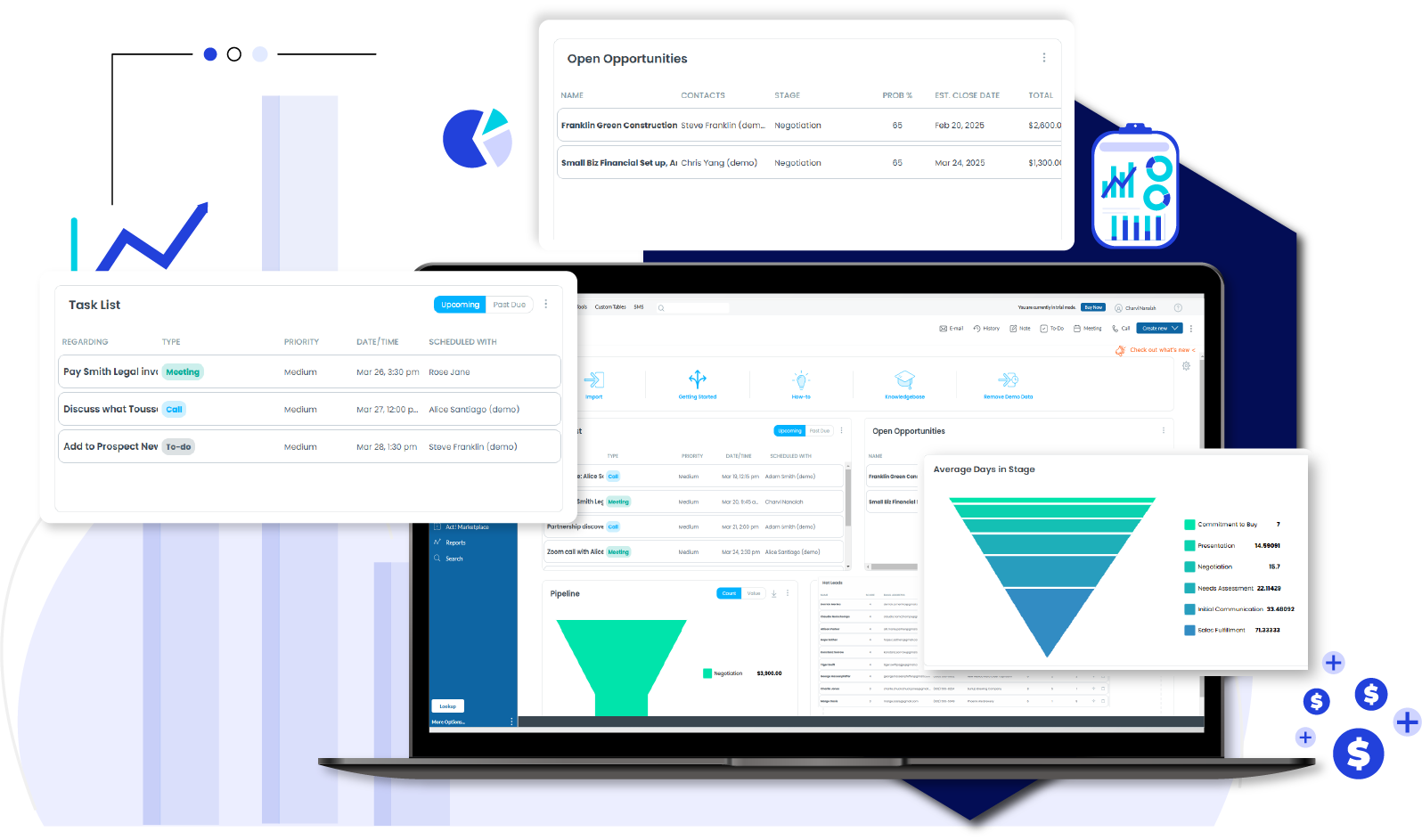
Act! CRM provides native reporting and dashboard capabilities that allow users to generate insights into sales performance, contact management, and marketing effectiveness without needing separate, dedicated "free report software." While some users search for external free report generators, the most effective path involves mastering the built-in reporting engine, custom report templates, and integration capabilities already present within the Act! platform to visualize and export critical business data.
The Architecture of Act! Reporting
Act! is designed as a relational database management system for customer relationship management. Unlike entry-level contact managers, it possesses a sophisticated back-end structure that tracks thousands of data points. Understanding that "free report software" is often a misnomer for "untapped native functionality" is the first step toward effective data management.
The reporting engine within Act! is based on Crystal Reports technology in many versions, allowing for complex data manipulation. Users who look for external "free" tools often overlook that the software they already own is capable of producing:
- Sales Pipeline Analysis: Monitoring the progress of opportunities through various stages.
- Activity Reports: Tracking the frequency and type of interactions with prospects.
- Contact Detail Reports: Aggregating specific field data for mailing lists or account reviews.
- Custom Dashboards: Real-time visual representations of key performance indicators (KPIs).
Accessing and Customizing Built-in Reports
For most businesses, the search for free report software ends by navigating to the "Reports" menu in the standard Act! interface. The software includes a library of pre-configured templates that can be customized to filter by date ranges, sales reps, or specific record managers.
To utilize these reports effectively, you must understand the distinction between standard and custom reports. Standard reports provide a quick snapshot of the database state. Custom reports, however, require the Report Designer tool. This is where users often seek external software, assuming the built-in designer is too complex. However, learning to adjust the query parameters within the native Report Designer eliminates the need for expensive third-party BI (Business Intelligence) connectors.
Prerequisites for Efficient Reporting
Before attempting to generate complex reports, ensure the following database maintenance tasks are performed:
- Data Hygiene: Verify that field entries are consistent (e.g., using dropdown lists for "Status" rather than open text).
- User Security Settings: Ensure that report access permissions are configured correctly so that users can only see the data they are authorized to view.
- Regular Backups: Always run a full backup of your
.pador database file before executing complex custom queries, as poorly constructed queries can occasionally lock database resources.
Moving Beyond Native Features: When External Tools Become Necessary
There are scenarios where users require more granular, visual-heavy reporting that the native Act! interface may not provide efficiently. In these cases, users look for "free" alternatives. It is vital to distinguish between truly free, open-source software and "freemium" models that require paid subscriptions to connect to live SQL databases.
Common third-party tools that integrate with Act! databases include:
- Excel Power Query: By connecting to the underlying SQL database (if using the SQL-based version of Act!), you can pull data directly into Excel. This is effectively free if you already have a Microsoft 365 license.
- Google Looker Studio (formerly Data Studio): If the data is exported periodically to a CSV or synced via a connector, this tool provides powerful, free visualization capabilities.
- Open-Source BI Platforms: Tools like Metabase can connect to SQL servers to create interactive charts, though this requires technical knowledge of database architecture and IT infrastructure.
Comparison of Reporting Methods for Act! Users
| Method | Cost | Technical Difficulty | Data Freshness |
|---|---|---|---|
| Native Act! Reports | Included | Low to Medium | Real-time |
| Excel Power Query | Included (with M365) | Medium | Refreshable |
| Third-Party Add-ons | Varies (Paid) | Low | Real-time |
| Open Source SQL BI | Free (Software) | High | Real-time |
Addressing the "Free" Misconception
When searching for "Act CRM free report software," many users encounter websites offering "free" connectors or reporting add-ons. It is essential to exercise caution. Many of these are lead-generation tools or "freemium" products that restrict the number of rows or the frequency of updates.
True, cost-free reporting is best achieved through:
- Native Customization: Dedicating time to learning the built-in Report Designer.
- Exporting to CSV: For static, one-time reports, exporting to Excel or CSV and using free visualization tools is the most stable, zero-cost method.
- SQL Direct Access: If you have an internal IT resource, querying the SQL database directly is the ultimate "free" solution, provided you follow data integrity guidelines to avoid corrupting the database.
Frequently Asked Questions
Can I connect Act! CRM to Power BI for free?
You can connect Power BI to the SQL database underlying Act! using the SQL Server connector. This is technically free, but it requires the credentials for your SQL server instance and a strong understanding of your database schema.
Why is my custom report not showing the latest data?
This is usually caused by database caching or failure to refresh the data source before running the report. Ensure you have saved all pending changes in the CRM and that your report query is set to "Live" rather than "Snapshot" mode.
Is the Act! Report Designer difficult to use?
It follows a standard banded-report architecture common in older Windows software. It is not intuitive for modern users accustomed to drag-and-drop web interfaces, but it is highly powerful. Expect a learning curve of several hours to build a professional-grade custom template.
Does the free version of Act! offer reporting?
Act! is a commercial product. If you are using a trial or an legacy version, ensure your licensing supports the reporting module, as some entry-level tiers historically limited advanced report design capabilities.
Can I share my reports with non-Act! users?
Yes, most reports can be exported to PDF, Excel, or RTF formats. This is the most secure way to share data with team members who do not have a seat in the CRM, ensuring data security while maintaining information flow.
Next Steps for Improving Your CRM Reporting
To optimize your reporting capabilities, start by auditing your current reporting needs. Identify the top three questions you ask your data every week—for example, "Which leads were contacted?" or "What is our current conversion rate?" Once identified, focus exclusively on building templates for these three items using the native Report Designer.
If you find that the native tool cannot provide the visualization or depth required, shift your focus to setting up an automated CSV export from Act! that feeds into a free visualization tool like Google Looker Studio. This bypasses the need for complex, paid database connectors and keeps your reporting infrastructure agile and cost-effective throughout 2026.