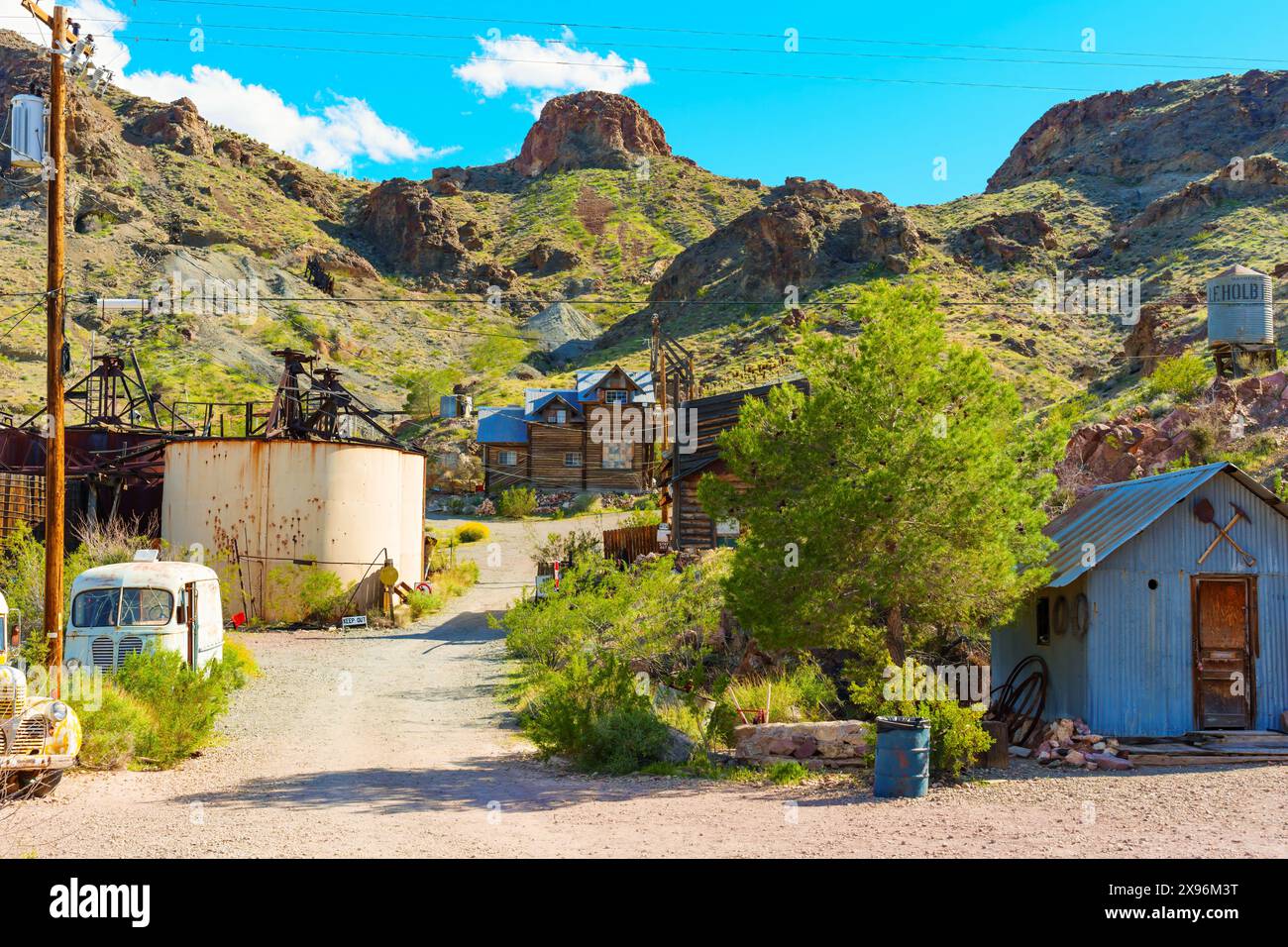
Abandoned settlements in the United States, often referred to as ghost towns, are communities that have lost their entire population due to economic shifts, environmental disasters, or infrastructure changes. These sites offer a tangible link to American history, ranging from the boom-and-bust mining camps of the Old West to industrial centers in the Rust Belt and coastal towns reclaimed by the sea.
The phenomenon of abandonment is not a relic of the distant past; it is a recurring cycle driven by the exhaustion of natural resources, the rerouting of major highways, or the permanent relocation of residents due to safety hazards. As of 2026, many of these sites are managed by the National Park Service or state agencies, while others remain on private land, subject to natural decay and the legal complexities of trespassing laws. Understanding these settlements requires a multi-faceted look at their origins, the reasons for their decline, and the ethical considerations involved in visiting them today.
The Drivers of Abandonment: Why Communities Vanish
The abandonment of a settlement is rarely an overnight event. It is typically the result of a protracted decline where the primary reason for the town's existence ceases to be viable. In the United States, these drivers generally fall into four categories: economic, environmental, infrastructural, and governmental.
Economic Exhaustion and the Boom-Bust Cycle
The most common cause of abandonment in the American West was the depletion of mineral veins. During the 19th and early 20th centuries, towns like Bodie, California, and Rhyolite, Nevada, sprouted almost instantly following the discovery of gold or silver. These "boomtowns" were built with high-density populations and sophisticated infrastructure, including opera houses and stock exchanges. However, once the ore was exhausted or the market price of the metal plummeted, the economic foundation crumbled. Without a secondary industry to sustain the population, residents moved to the next strike, leaving behind fully furnished buildings.
Environmental Disasters and Hazards
In some cases, the environment itself becomes hostile to human habitation. Centralia, Pennsylvania, serves as the most prominent example of an environmental settlement exit. A coal mine fire that began in 1962 continues to burn beneath the town in 2026, venting toxic gases and creating sinkholes. Similarly, towns in the Mississippi River Valley have been abandoned following repeated, catastrophic flooding that made rebuilding economically unfeasible. In the modern era, "managed retreat" programs are increasingly used to relocate coastal communities facing rising sea levels, creating a new generation of abandoned settlements.
Infrastructural Bypassing
The development of the Interstate Highway System in the mid-20th century led to the slow death of hundreds of small settlements along older routes like U.S. Route 66. When a new highway bypassed a town, the local economy—reliant on travelers, gas stations, and diners—vanished. Places like Glenrio, situated on the Texas-New Mexico border, became ghost towns not because of a lack of resources, but because the flow of commerce was physically redirected several miles away.
Notable Abandoned Settlements by Region
The character of an abandoned settlement varies significantly depending on its geographic location and the era in which it was built.
The Mining Ghost Towns of the West
The Western United States contains the highest density of traditional ghost towns. These are often preserved by the arid climate, which slows the rot of timber structures.
- Bodie, California: Maintained in a state of "arrested decay" by California State Parks, Bodie is perhaps the most famous abandoned settlement in the country. It was once a thriving gold mining center with 10,000 residents. Today, the interiors of the buildings remain visible, with 19th-century goods still on the shelves.
- St. Elmo, Colorado: One of the best-preserved ghost towns in the Rockies, St. Elmo was a hub for silver and gold mining. Unlike Bodie, it is not a state park but is largely privately owned, requiring visitors to respect specific property boundaries.
Industrial and Institutional Ruins of the East
In the Eastern United States, abandoned settlements are often more industrial or institutional in nature.
- North Brother Island, New York: Located in the East River, this island once housed a quarantine hospital (notably housing "Typhoid Mary"). It was abandoned in the 1960s and has since been reclaimed by dense forest. Access is strictly regulated by the NYC Department of Parks and Recreation to protect both the ruins and bird sanctuaries.
- Eastern State Penitentiary, Pennsylvania: While technically a single complex, its scale and the surrounding administrative buildings functioned as a micro-settlement. It now serves as a museum, showcasing the philosophy of "solitary confinement" through its crumbling radial corridors.
The Alaskan Frontier: Kennecott
The Kennecott Mines in Alaska represent one of the most remote abandoned settlements. Between 1911 and 1938, Kennecott was the center of a massive copper mining operation. When the copper ran out, the Kennecott Copper Corporation abruptly ceased operations, leaving behind a massive 14-story wooden mill building and a self-contained company town. Its remote location in what is now Wrangell-St. Elias National Park has protected it from the vandalism common in more accessible areas.
Comparative Overview of Major Abandoned Settlements
The following table compares several prominent abandoned settlements based on their peak population, primary industry, and current accessibility as of 2026.
| Settlement Name | State | Peak Era | Primary Industry | Current Status/Access |
|---|---|---|---|---|
| Bodie | California | 1870s-1880s | Gold Mining | State Historic Park; Public access (fee) |
| Centralia | Pennsylvania | 19th Century-1962 | Anthracite Coal | Extreme hazard; Residents relocated; Minimal access |
| Kennecott | Alaska | 1911-1938 | Copper Mining | National Historic Landmark; Seasonal access |
| Rhyolite | Nevada | 1905-1910 | Gold Mining | Bureau of Land Management (BLM) land; Public access |
| Cahaba | Alabama | 1820-1825 | State Capital/Cotton | State Historic Site; Public access |
| Thurmond | West Virginia | early 1900s | Coal/Railroad | National River site; Limited residents/Visitor center |
| Garnet | Montana | 1890s | Gold Mining | BLM-managed; Public access (seasonal) |
Legal and Safety Considerations for Exploration
Exploring abandoned settlements involves significant legal and physical risks. As of 2026, local and federal authorities have increased surveillance at many sites to prevent vandalism and "urban exploration" (urbex) accidents.
Trespassing and Ownership
It is a common misconception that "abandoned" means "unowned." Every piece of land in the United States has an owner, whether it is a private individual, a corporation, or a government entity. Entering a building or property without permission constitutes criminal trespass.
- Public Lands: Many ghost towns in the West sit on land managed by the Bureau of Land Management (BLM). These are generally open to the public for day use, but removing any artifacts—even a rusted nail or a piece of glass—is a federal offense under the Archaeological Resources Protection Act.
- Private Property: Sites like St. Elmo or certain parts of Centralia are privately owned. Owners may be liable for injuries sustained on their property, leading many to prosecute trespassers aggressively to discourage entry.
Physical and Environmental Hazards
Abandoned structures are inherently unstable. Over decades, moisture, ice, and wind weaken structural supports.
- Structural Collapse: Floors, staircases, and roofs can fail without warning. In mining towns, there is the added danger of unmarked mine shafts, which may be hidden by overgrowth or thin layers of debris.
- Contaminants: Older buildings frequently contain asbestos (used in insulation) and lead paint. Disturbing these materials can lead to toxic inhalation. In industrial sites, soil may be contaminated with heavy metals or chemicals.
- Wildlife: Abandoned buildings often serve as habitats for wildlife, including rattlesnakes, hantavirus-carrying rodents, and apex predators like cougars or bears, depending on the region.
The Ethics of "Arrested Decay" vs. Restoration
There is an ongoing debate among historians and preservationists regarding how to handle abandoned settlements. Two primary philosophies exist:
Restoration involves rebuilding structures to their original state. This is often seen in "living history" museums. While this makes the history accessible and safe, it can sometimes feel sanitized, stripping away the "ghostly" atmosphere that draws people to these sites.
Arrested Decay is the philosophy practiced at Bodie, California. In this model, the state does not return the buildings to "new" condition, but rather stabilizes them to prevent further collapse. If a roof leaks, it is repaired with period-appropriate materials, but the peeling paint and weathered wood remain. This approach preserves the feeling of abandonment while ensuring the site remains standing for future generations.
In 2026, funding for these projects is increasingly tied to tourism revenue. Settlements that are easily accessible tend to receive more preservation funding, while remote or "ugly" industrial sites are often left to the elements.
Documentation and Photography: A Modern Record
With the rise of high-resolution digital photography and drone technology, documenting abandoned settlements has become a significant subculture. This documentation serves a vital historical purpose: it creates a visual record of structures that may not exist in another decade.
For those interested in documenting these sites, the "Leave No Trace" principle is paramount. Professional photographers and historians emphasize that moving objects to create a "better shot" destroys the archaeological context of the site. As a rule, explorers should never enter a building that is clearly marked or structurally unsound, and they should never disclose the exact coordinates of fragile, "un-managed" sites to prevent an influx of destructive foot traffic.
Frequently Asked Questions
Is it legal to visit ghost towns in the United States?
It depends entirely on the ownership of the land. Many ghost towns are part of the National Park System or State Parks and are perfectly legal to visit during operating hours. However, many others sit on private property or active mining claims. Always check local maps and look for "No Trespassing" signs. When in doubt, contact the local County Clerk or the Bureau of Land Management office for that district.
Can I buy a ghost town?
Occasionally, entire abandoned settlements or large portions of them come up for sale. This most often happens with small mining or railroad towns in the West. However, purchasing a ghost town involves immense responsibility, including the costs of environmental remediation, historical preservation requirements, and liability insurance. Furthermore, many such "towns" lack basic utilities like modern plumbing, electricity, or potable water.
What is the best time of year to visit abandoned settlements?
For settlements in the Western U.S. and Alaska, the window for visiting is narrow. High-altitude towns in Colorado and Montana are often inaccessible due to snow from October through June. Desert sites in Nevada and California are dangerously hot in the summer. Generally, late spring and early autumn provide the safest and most comfortable conditions for exploration.
Why are some abandoned towns still shown on maps?
Maps often retain "place names" even after the population has left. These locations serve as geographical markers for emergency services, surveyors, and hikers. In some cases, a town may have a "census-designated place" status even if the permanent population is zero.
Are there abandoned towns that are dangerous to visit due to pollution?
Yes. Centralia, Pennsylvania, is the most famous, where the underground mine fire creates a constant risk of carbon monoxide poisoning and ground collapse. Other sites, such as "Picher, Oklahoma," were abandoned due to lead and zinc contamination from mining chat piles, making the dust in the area a significant health hazard even decades after the mines closed.
Practical Recommendations for Planning a Visit
If you plan to visit an abandoned settlement in 2026, your first step should be to verify the current access status through official government websites, such as the National Park Service (NPS.gov) or specific State Park portals.
- Prioritize Managed Sites: For the safest and most educational experience, visit sites like Bodie (CA), Kennecott (AK), or Bannack (MT). These locations offer guided tours and interpretive signs that provide historical context you won't find at unmanaged sites.
- Prepare for No Services: Abandoned settlements are, by definition, empty. Expect no cell service, no gas stations, and no water. Ensure your vehicle is in good working order and carry a physical map of the area.
- Respect the Integrity of the Site: Never enter boarded-up buildings or climb on ruins. Not only is this for your safety, but these structures are often fragile historical artifacts. By staying on designated paths, you help ensure that these windows into the American past remain available for others to study and appreciate.