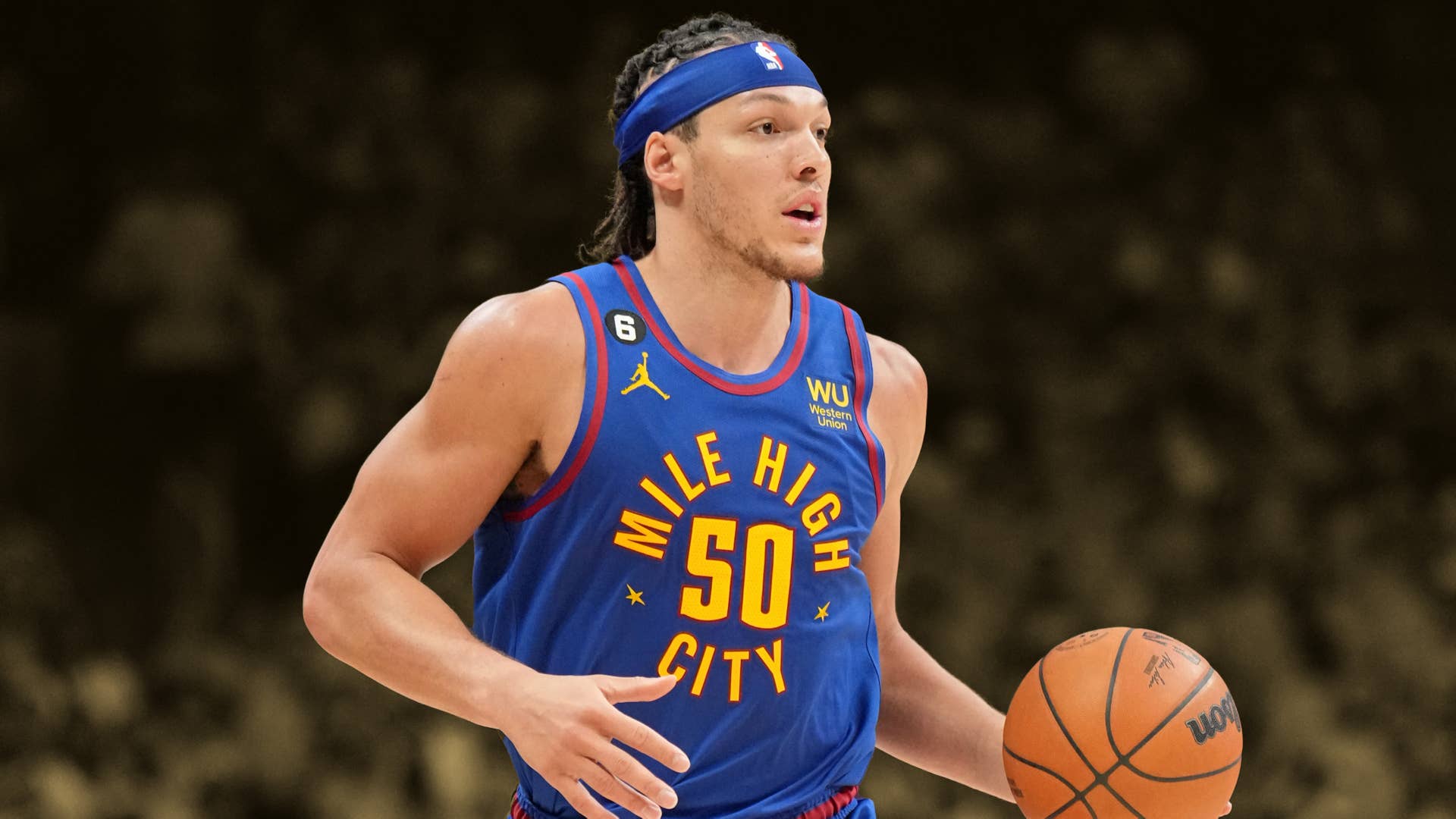
Aaron Gordon’s NBA salary structure reflects his transition from a high-draft lottery pick to an elite, highly compensated role player and crucial championship contributor for the Denver Nuggets. His career earnings are tied directly to maximum rookie-scale extensions, trade incentives, and a major multi-year contract extension that locks him into the upper tier of professional basketball earners.
To understand how professional basketball compensation works at this level, one must look beyond the basic annual figures. Player compensation is governed by the National Basketball Association Collective Bargaining Agreement (CBA), which dictates maximum salary caps based on years of service, All-Star appearances, and team bird rights. For Gordon, these mechanisms have shaped a lucrative career spanning stints with the Orlando Magic and the Denver Nuggets, culminating in a lucrative multi-year extension signed in Denver.
The Evolution of Aaron Gordon’s NBA Earnings
Aaron Gordon entered the NBA as the fourth overall pick in the 2014 NBA Draft, selected by the Orlando Magic. His entry into the league immediately placed him on a structured rookie-scale contract dictated by the collective bargaining agreement of that era. Understanding his financial trajectory requires examining the chronological progression of the contracts he has signed throughout his professional career.
Rookie Scale Contract with the Orlando Magic (2014–2018)
As a top-five draft pick, Gordon signed a standard four-year rookie scale contract with the Orlando Magic. Rookie scale contracts feature team options for the third and fourth years, ensuring cost-controlled team control for the drafting franchise.
- Season 2014-15: ~$4.0 million
- Season 2015-16: ~$4.2 million
- Season 2016-17: ~$4.4 million
- Season 2017-18: ~$5.5 million
During this initial four-year window, Gordon developed from an athletic project into a high-flying forward capable of averaging double-digit scoring figures. This growth set the stage for his first major financial payday in restricted free agency.
The First Major Extension: The 4-Year, $80 Million Deal (2018–2022)
In the summer of 2018, as a restricted free agent, Gordon signed a four-year, $80 million contract extension to remain with the Orlando Magic. This deal averaged $20 million annually, representing a massive financial step up from his rookie scale earnings.
The structure of this contract was front-loaded in terms of cap hit relative to the salary cap scale of that period, though it declined slightly as a percentage of the total cap over its four-year lifespan. This agreement provided Gordon with generational wealth while giving the Magic a foundational piece on a long-term commitment. However, as Orlando entered a rebuilding phase, Gordon's tenure with the franchise drew to a close via a mid-season trade in 2021.
The Denver Nuggets Trade and Subsequent Extension (2021–Present)
In March 2021, the Orlando Magic traded Gordon to the Denver Nuggets in exchange for Gary Harris, R.J. Hampton, and a future first-round draft pick. At the time of the trade, Gordon was playing out the final year of his $80 million contract, earning roughly $18.1 million for the 2020-21 season.
Upon arriving in Denver, Gordon seamlessly integrated into a roster centered around Nikola Jokić. Recognizing his value as an elite cutter, secondary playmaker, and versatile perimeter defender, the Nuggets signed Gordon to a four-year, $86.4 million contract extension in the fall of 2021. This extension began with the 2022-23 NBA season and runs through the completion of the 2025-26 campaign, with a player option for the final year or subsequent adjustments depending on restructuring.
Breakdown of Aaron Gordon's Current Contract Structure
Examining Gordon's financial portfolio requires breaking down the mechanics of his current deal with the Denver Nuggets. The agreement guarantees financial stability while incorporating standard NBA contract mechanisms like salary cap percentages, tax considerations, and potential future extensions under the current CBA rules.
| Contract Phase | Team | Total Value | Average Annual Salary | Key Mechanism |
|---|---|---|---|---|
| Rookie Scale | Orlando Magic | ~$18.1 Million | ~$4.5 Million | Standard 1st Round Scale |
| First Extension | Orlando Magic | $80.0 Million | $20.0 Million | Restricted Free Agency |
| Second Extension | Denver Nuggets | $86.4 Million | $21.6 Million | Veteran Extension |
The transition from Orlando to Denver marked a philosophical shift in how Gordon's value was assessed. In Orlando, he was asked to be a primary offensive option, which strained his efficiency at times. In Denver, his role shifted to a complementary powerhouse. Despite taking fewer forced isolation shots, his impact on winning basketball justified the front office's decision to commit over $20 million annually to his services, a decision validated by Denver's 2023 NBA Championship run.
Understanding NBA Salary Mechanics and Tax Implications
An explanation of any professional athlete's salary remains incomplete without examining how gross earnings translate into actual take-home pay. While media reports frequently highlight headline figures like "$86 million over four years," multiple deductions significantly reduce the net amount received by the player.
Escrow and League Dues
Under the NBA Collective Bargaining Agreement, a portion of all players' salaries (typically 10%) is withheld in an escrow account each season. This mechanism ensures a 50-50 split of basketball-related income (BRI) between the league's owners and the players. If league revenues fall short of projections, a portion of the escrow is retained by the league. If revenues exceed projections, the funds are returned to the players.
Agent Fees and Representation
Professional sports agents typically command between 3% and 5% of a player's gross contract earnings under standard representation agreements. For a player earning over $20 million annually, agent fees account for a substantial absolute dollar amount, which goes toward legal representation, financial planning, marketing, and personal management teams.
Federal, State, and Jock Taxes
Professional athletes are subject to unique tax burdens known as "jock taxes." Unlike traditional employees who pay taxes based on their primary state of residence, NBA players pay income tax in every state and municipality where they play a game.
- Colorado State Income Tax: Denver residents pay a flat state income tax rate (historically hovering around 4.4% to 4.55%).
- Away Games: Gordon must file tax returns across multiple jurisdictions, including California, New York, Texas, and Florida, depending on the travel schedule of the NBA regular season and playoffs. High-tax states take a sizable bite out of game checks earned on the road.
Federal Income Tax and FICA
At the federal level, top-earning professional athletes fall into the highest marginal income tax bracket, which sits at 37% under current federal guidelines. Additionally, Medicare taxes apply, though Social Security caps limit FICA exposure on multi-million dollar salaries.
Endorsements and Off-Court Earnings
Beyond his guaranteed NBA contract salary, Aaron Gordon generates substantial revenue through corporate partnerships, footwear endorsement deals, and off-court investments.
Historically, Gordon has maintained a high-profile sneaker endorsement contract. Early in his career, he signed with Nike, before switching to Chinese sportswear brand 361° in 2020. The multi-year partnership with 361° included several signature shoe releases, growing his footprint in international markets, particularly in China where the brand maintains a massive retail presence.
Additional commercial partnerships with athletic recovery brands, nutritional supplement companies, and regional automotive or lifestyle brands supplement his basketball income. While endorsement earnings vary year-to-year based on contract renewals and performance bonuses, they add a lucrative secondary revenue stream to his overall financial portfolio.
Frequently Asked Questions
What is Aaron Gordon's current annual salary?
Aaron Gordon's annual salary under his extension with the Denver Nuggets averages approximately $21.6 million per year. The exact figure varies slightly depending on the specific year's cap adjustments and structural bonuses built into the agreement.
How much has Aaron Gordon made in total career earnings?
Across his rookie contract, his first extension with Orlando, and his current contract with Denver, Aaron Gordon's cumulative gross NBA salary earnings exceed $100 million before factoring in taxes, agent commissions, and lifestyle expenses.
Is Aaron Gordon eligible for a supermax contract?
No. To qualify for a designated veteran player extension (the "supermax"), a player must meet strict criteria such as winning an MVP award, Defensive Player of the Year, or being named to an All-NBA team. While Gordon is an elite starter and champion, he has not achieved the specific All-NBA or major individual accolades required to trigger supermax eligibility under the CBA.
How does the NBA luxury tax affect Aaron Gordon's contract?
Gordon's contract is paid directly by the Denver Nuggets franchise, not the league. However, because the Nuggets' total payroll frequently exceeds the NBA luxury tax threshold, ownership incurs substantial tax penalties for carrying a roster that includes Gordon alongside max-contract players like Nikola Jokić and Jamal Murray.
What happens to Aaron Gordon's salary if he is traded?
NBA contracts are fully guaranteed. If a player is traded, the receiving team assumes the exact financial terms remaining on the contract. Gordon's salary would remain entirely unaffected by a trade, though state tax burdens could shift depending on the destination city.
Conclusion and Financial Outlook
Aaron Gordon's salary history illustrates the financial reward system of the modern NBA. From his early days as a high lottery pick in Orlando to becoming an indispensable, high-IQ forward for a championship contender in Denver, his earnings reflect both his athletic gifts and his ability to adapt his game to maximize team success. As he navigates the prime years of his career, his market value remains firmly anchored in the upper echelon of NBA rotation players.