8 Billion Trees is a legitimate for-profit social enterprise that conducts large-scale reforestation and land conservation projects globally. While it is not a traditional 501(c)(3) non-profit, it maintains a non-profit arm and utilizes third-party audits to verify its tree-planting claims, ensuring transparency for its donors and corporate partners.
The question of whether 8 Billion Trees is a legitimate organization often arises due to its aggressive digital marketing strategies and its unique corporate structure. Unlike traditional charities, 8 Billion Trees operates as a social enterprise, a model that allows it to reinvest profits into environmental projects while maintaining the flexibility of a private company. As of 2026, the organization remains a prominent player in the global reforestation space, though understanding how it operates is essential for anyone considering a donation or partnership.
Understanding the Social Enterprise Model
To evaluate the legitimacy of 8 Billion Trees, one must first understand the distinction between a standard non-profit and a social enterprise. Most well-known environmental groups, such as the Arbor Day Foundation, are registered 501(c)(3) organizations in the United States, meaning they are tax-exempt and primarily funded by donations and grants.
8 Billion Trees operates differently. It was founded by Michael Powell and Jon Chambers with the specific goal of using a business-oriented approach to tackle the climate crisis. By selling products—such as bracelets, clothing, and carbon offset subscriptions—the organization generates revenue that is then channeled into planting operations. This model allows them to scale quickly without being entirely dependent on the fluctuating cycles of charitable giving.
However, this structure also means they are not subject to the same public financial disclosure requirements as non-profits (such as the filing of Form 990). To bridge this transparency gap, 8 Billion Trees has established a separate non-profit entity, the 8 Billion Trees Foundation, which handles specific charitable initiatives and allows for tax-deductible donations in certain jurisdictions.
Verification and Third-Party Audits
The hallmark of a legitimate environmental organization is its willingness to be audited by independent third parties. For many years, the "tree-planting" industry was criticized for "greenwashing," where companies would claim to plant millions of trees without providing evidence of survival rates or geographical locations.
8 Billion Trees has taken several steps to provide evidence of its impact:
- Bureau Veritas Certification: One of the most significant markers of legitimacy for the organization is its engagement with Bureau Veritas, a world leader in testing, inspection, and certification. This audit process verifies that the trees claimed to be planted have indeed been put into the ground and are being monitored for long-term health.
- Internal Tracking Systems: The organization uses GPS tagging and drone photography to document its planting sites. In 2026, these technological tools have become standard for verifying large-scale restoration in remote areas like the Amazon Basin and Madagascar.
- Partnerships with Local NGOs: Rather than attempting to manage every site themselves, 8 Billion Trees often partners with local experts and established non-governmental organizations (NGOs) on the ground. This ensures that the species planted are native to the region and that the local community is involved in the long-term stewardship of the forest.
Geographic Focus and Ecological Strategy
A common criticism of mass tree-planting projects is the risk of "monoculture"—planting only one species of tree in a large area, which can damage local ecosystems. 8 Billion Trees emphasizes a "biodiversity-first" approach. They focus on the following key regions:
- The Amazon Rainforest (Brazil): This is the organization's primary focus. Given the Amazon's role as the "lungs of the planet," 8 Billion Trees concentrates on restoring deforested land and creating "wildlife corridors" that allow animals to move safely between fragmented sections of the forest.
- Madagascar: Known for its high rate of endemic species (plants and animals found nowhere else on Earth), Madagascar has lost a staggering amount of its original forest cover. 8 Billion Trees works here to plant mangroves, which are highly efficient at sequestering carbon and protecting coastlines.
- The Democratic Republic of the Congo: Here, the focus is often on protecting existing old-growth forests while simultaneously planting new trees to provide sustainable resources for local populations, reducing the pressure to engage in illegal logging.
The organization employs ecologists to ensure that "the right tree is planted in the right place." This means avoiding the introduction of invasive species and focusing on high-survival-rate saplings rather than simply scattering seeds.
Analyzing the "Scam" Accusations and Marketing Tactics
When users search for "8 billion trees legitimate," they are often reacting to the organization's heavy presence in social media advertising. In the early 2020s, some of their advertisements were criticized for looking like news articles or for using high-pressure emotional appeals.
It is important to distinguish between aggressive marketing and fraud. While their marketing tactics may be polarizing, they do not inherently make the organization a scam. 8 Billion Trees spends a significant portion of its revenue on advertising to attract new donors, a practice common in the "direct response" world of online business. Critics argue that this money would be better spent directly on trees, while the organization's leadership argues that the marketing budget is what allows them to reach the scale necessary to plant billions of trees in the first place.
Comparison with Other Reforestation Organizations
When deciding where to direct environmental contributions, it is helpful to compare 8 Billion Trees with other major players in the industry.
| Feature | 8 Billion Trees | One Tree Planted | Arbor Day Foundation |
|---|---|---|---|
| Legal Status | Social Enterprise / For-Profit | 501(c)(3) Non-Profit | 501(c)(3) Non-Profit |
| Primary Revenue Source | Product sales & offsets | Individual & corporate donations | Memberships & corporate partners |
| Audit Status | Bureau Veritas audited | Annual financial reports | Charity Navigator rated |
| Focus Area | Amazon, Madagascar, Global | North America, Global | North America, Urban Forestry |
| Transparency | High (via 3rd party audits) | High (Financial transparency) | Very High (Long-term history) |
| Cost per Tree | Varies by subscription | Typically $1.00 | Varies by membership level |
Carbon Offsetting: Methodology and Realism
A core service offered by 8 Billion Trees is the "Carbon Offset Subscription." This allows individuals or businesses to calculate their carbon footprint and pay a monthly fee to plant enough trees to "neutralize" their emissions.
From a technical standpoint, carbon offsetting is complex. A single tree does not immediately offset a ton of carbon the moment it is planted. It takes decades for a tree to reach a size where its carbon sequestration is significant. 8 Billion Trees addresses this by using a "portfolio" approach, combining tree planting with the protection of existing forests (avoided deforestation). Protecting an existing forest prevents the immediate release of stored carbon, which provides a more immediate climate benefit than planting a sapling.
As of 2026, the scientific consensus remains that while tree planting is a vital tool, it must be paired with actual emissions reductions. 8 Billion Trees is generally transparent about the fact that their offsets are based on the lifetime sequestration potential of the trees planted.
Operational Costs and Where the Money Goes
Because 8 Billion Trees is a social enterprise, they have different operational costs than a small volunteer-run charity. Their expenses include:
- Nursery Management: Growing saplings until they are hardy enough to survive in the wild.
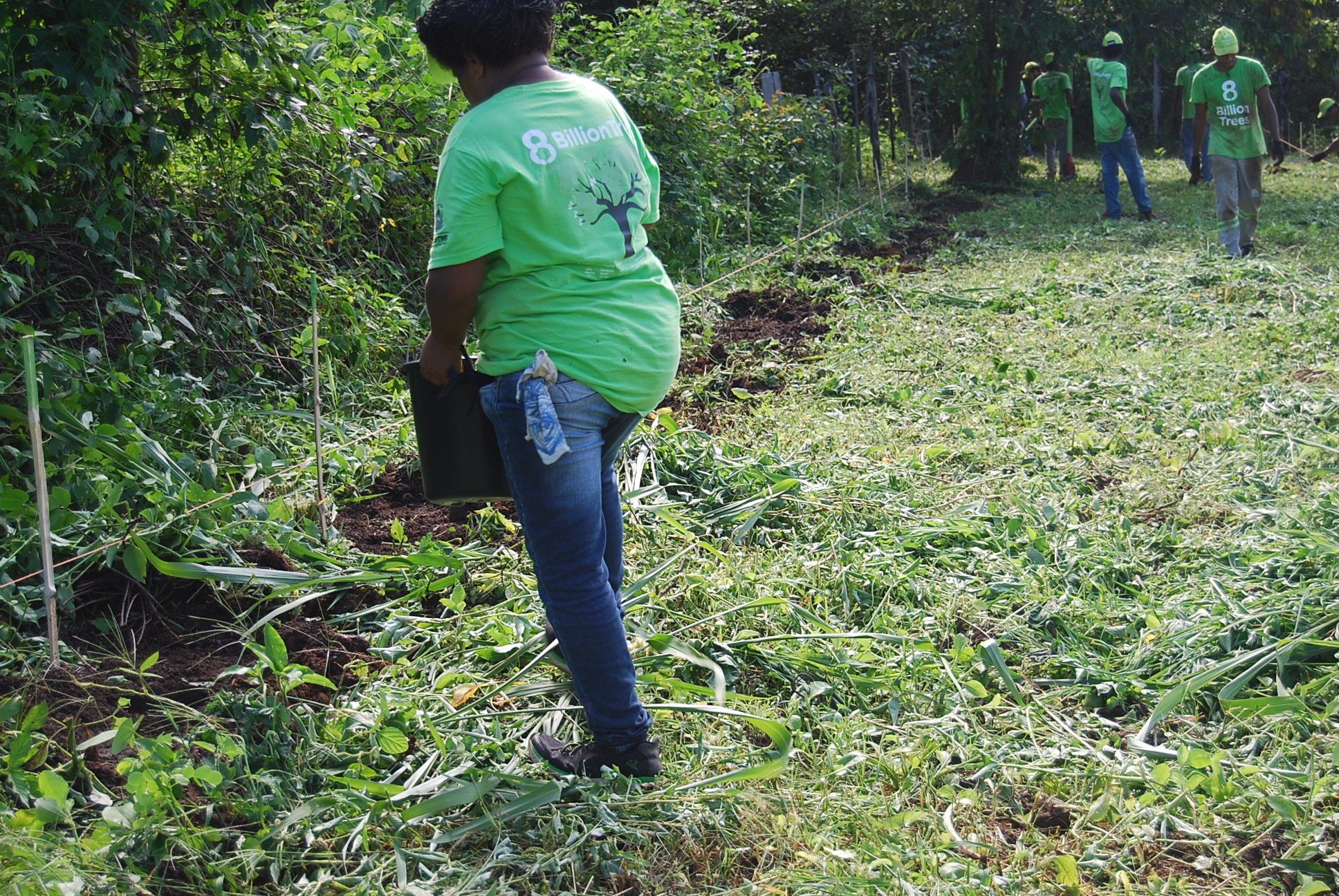
- Labor: Paying fair wages to local workers in Brazil, Madagascar, and other regions to plant and maintain the trees.
- Satellite and Drone Monitoring: The technology required to prove the trees are still alive and growing.
- Research and Development: Testing new planting techniques and soil restoration methods.
- Marketing: Reaching a global audience to fund the operations.
While they do not publish a public 990 for their primary entity, their Bureau Veritas audits serve as the primary verification that the funds are resulting in the promised environmental output.
Common Mistakes When Donating to Tree Charities
When people question the legitimacy of 8 Billion Trees, they are often concerned about common pitfalls in the reforestation industry. To avoid these, donors should look for:
- Lack of Monitoring: A charity that "plants and walks away" is often ineffective. 8 Billion Trees emphasizes long-term monitoring, which is a sign of a legitimate operation.
- Invasive Species: Legitimate groups never plant invasive species for the sake of speed.
- Social Displacement: In the past, some "green" projects displaced indigenous people. 8 Billion Trees states that they work with local communities to ensure land rights are respected.
- Overclaiming Impact: Carbon sequestration is a slow process. Any organization claiming a tree offsets a car's emissions in one year is being dishonest. 8 Billion Trees generally frames its impact over the 25-to-50-year lifespan of the forest.
Frequently Asked Questions
Are donations to 8 Billion Trees tax-deductible?
Only donations made specifically to the 8 Billion Trees Foundation (the non-profit arm) are typically tax-deductible for U.S. taxpayers. Purchases of products or standard carbon offset subscriptions from the social enterprise arm are generally not considered charitable donations for tax purposes.
Can I see exactly where my trees are planted?
The organization provides updates and reports that include the general regions and specific projects where planting is occurring. While you may not get a specific GPS coordinate for "your" individual tree, they provide photos and drone footage of the project sites to verify the work.
How do I know the trees won't just be cut down?
8 Billion Trees focuses on land conservation and working with local governments to secure protected status for their planting sites. By hiring local community members as "forest guards," they create an economic incentive for the trees to remain standing.
Why is 8 Billion Trees not a 501(c)(3)?
The founders chose the social enterprise model to avoid the limitations of traditional non-profit fundraising. This allows them to use modern digital marketing and business strategies to scale their operations much faster than a traditional charity might be able to.
Is 8 Billion Trees better than other charities?
"Better" is subjective. If you prefer a business-like approach with high-tech monitoring and a focus on the Amazon, 8 Billion Trees is a strong choice. If you prefer a traditional non-profit with full financial disclosure of executive salaries and overhead via Form 990, you might prefer the Arbor Day Foundation or One Tree Planted.
Has 8 Billion Trees actually planted 8 billion trees?
The name "8 Billion Trees" represents the organization's ultimate mission—to plant a tree for every person on Earth. As of 2026, they have planted and protected tens of millions of trees, but they have not yet reached the 8 billion mark. The name is a goal, not a statement of past completion.
Final Recommendation
8 Billion Trees is a legitimate organization that provides a valuable service for those looking to contribute to global reforestation. Their use of independent third-party audits from reputable firms like Bureau Veritas sets them apart from less transparent "green" startups.
If you are looking for a way to offset your carbon footprint and appreciate a tech-forward, results-oriented approach, 8 Billion Trees is a viable option. However, if your primary concern is receiving a tax deduction or seeing a detailed breakdown of administrative versus program spending, you may want to direct your funds toward their 501(c)(3) Foundation or a different traditional non-profit. Always remember that reforestation is most effective when combined with personal efforts to reduce your own carbon emissions.