Choosing the best smoker grill requires evaluating fuel type, cooking capacity, temperature control, build quality, ease of use, budget, and versatility to match your specific outdoor cooking style, space limitations, and desired flavor profile.
Selecting the right smoker grill is a significant decision for any outdoor cooking enthusiast. Whether you are aiming for competition-level brisket with a deep, wood-smoked bark or simply want the versatility to sear steaks and smoke ribs on the same afternoon, the market offers a dizzying array of options. Modern smoker grills bridge the gap between traditional offset smokers and high-heat gas or charcoal grills, introducing advanced technology like digital controllers alongside classic wood-fired designs.
Navigating this equipment requires more than just picking a reputable brand or the unit with the highest price tag. To make an informed investment, you must balance mechanical performance, fuel availability, and your personal cooking habits. The following seven factors break down everything you need to consider before purchasing your next smoker grill.
1. Fuel Type and Flavor Profile
The type of fuel your smoker grill consumes dictates not only the operational workflow and maintenance requirements of the machine, but also the fundamental flavor profile infused into your food. There are four primary fuel categories commonly found in modern smoker grills, each presenting distinct characteristics.
Wood Pellets
Pellet smoker grills utilize compressed hardwood sawdust fed automatically from a hopper into a fire pot via an auger. They are celebrated for their set-it-and-forget-all convenience, precise digital temperature management, and clean-burning properties. They impart a mild, consistent wood smoke flavor that appeals to a wide audience without risking the bitterness that can come from a poorly managed stick burner.
Charcoal and Lump Wood
Charcoal-based cookers, including classic kettle designs, kamado grills, and vertical water smokers, deliver an authentic, earthy smoke flavor. Lump charcoal burns hotter and cleaner than briquettes, while adding chunks of fruitwood or hickory creates genuine barbecue smoke. These units require manual fire tending, making them ideal for traditionalists who enjoy the craft of manipulating airflow and coals.
Propane and Natural Gas
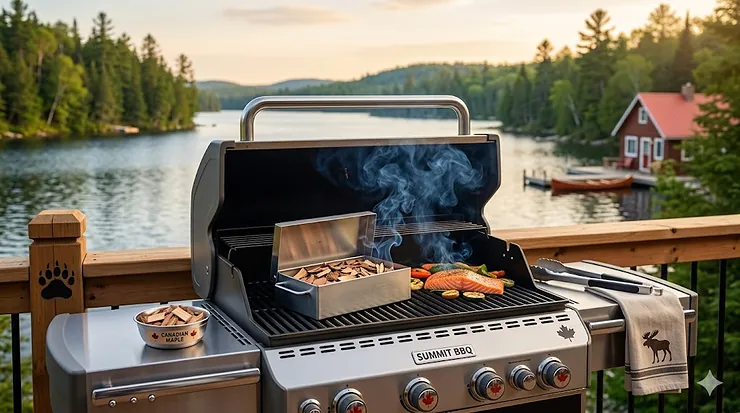
Gas smokers offer unmatched ignition speed and ease of use. While they lack the wood-smoke profile of pellet or charcoal units on their own, they feature dedicated wood chip boxes that allow users to introduce smoke flavor. They are exceptionally reliable for low-and-slow cooking without the need to monitor complex electrical components or manage heavy fuel bags.
Electric
Electric smokers represent the ultimate in hands-off smoking. Powered by a standard household outlet, an internal heating element warms a wood chip tray to generate smoke. While they excel at smoking fish, jerky, and pork shoulders at low temperatures, they cannot sear meats or reach the high temperatures required for traditional grilling.
2. Cooking Capacity and Grating Surface Area
Before committing to a specific model, assess the scale of your typical cooking sessions. Buying a smoker grill that is too small forces you to cook in frustrating batches, while purchasing a massive unit for cooking two chicken breasts wastes fuel and takes up unnecessary patio space.
Manufacturers generally measure cooking space in square inches across primary and secondary grates. To contextualize these numbers:
- Compact Units (Under 400 square inches): Ideal for couples, small families, or tailgating. These can typically accommodate a single brisket, two racks of ribs, or a small turkey.
- Mid-Size Units (400 to 700 square inches): The sweet spot for most households. These versatile cookers easily handle Thanksgiving turkeys, multiple pork butts, and enough burgers or steaks for a gathering of eight to ten people.
- Large-Capacity Units (Over 700 square inches): Designed for serious backyard pitmasters, large families, or entertaining crowds of fifteen or more. These often feature multiple tiers of removable grates to maximize vertical space.
Pay close attention to the shape of the cooking chamber as well. A wide, rectangular grate accommodates long racks of ribs or whole briskets much better than a narrow, circular grate of equivalent square-inch measurement.
3. Temperature Control and Precision
Temperature stability is the lifeblood of successful smoking. A smoker grill that experiences wild temperature fluctuations will dry out meat, ruin bark development, or prolong cooking times unpredictably.
Traditional offset and charcoal smokers rely on manual intake and exhaust dampers to control oxygen flow and heat. Mastering these requires patience and practice. Conversely, modern pellet and electric grills feature digital PID (Proportional-Integral-Derivative) controllers. These computerized systems monitor internal ambient temperatures via probes and automatically adjust fuel delivery or fan speed to hold the cooking chamber within a few degrees of your target set point.
If you prefer a traditional charcoal or kamado grill but desire modern convenience, look for units compatible with third-party automated draft controllers. These battery-powered blowers attach to lower vents and regulate airflow dynamically based on meat and pit probe readings, effectively turning a manual charcoal cooker into a smart appliance.
4. Build Quality, Materials, and Heat Retention
A smoker grill faces harsh environmental elements, ranging from freezing winter snows to blazing summer suns, alongside intense internal heat cycles. The materials used in its construction directly dictate its longevity and efficiency.
Sheet Metal vs. Cast Aluminum vs. Ceramic
- Rolled Steel and Powder-Coated Sheet Metal: Common in entry-level to mid-tier units. Thicker steel (measured in lower gauge numbers, such as 10-gauge or 14-gauge) retains heat much better and resists warping than thin, flimsy metal.
- Cast Aluminum: Frequently found in portable and premium capsule-style grills. Aluminum is rust-proof and conducts heat efficiently, though it requires specialized manufacturing to maintain tight seals.
- Ceramic: The standard for kamado-style cookers. Thick ceramic walls absorb immense amounts of heat and radiate it evenly back onto the food, making them extraordinarily fuel-efficient even in sub-zero weather.
Gaskets and Seals
Inspect the lid closures and door seals. A tight seal prevents smoke and heat from escaping uncontrollably, ensuring that fuel is burned efficiently and temperature management remains predictable. Look for high-temperature fiberglass or felt gaskets around the cooking chamber openings.
5. Versatility: Smoking versus Grilling
Not all smoker grills excel at both smoking and grilling. True low-and-slow smoking requires gentle, indirect heat ranging from 200°F to 275°F. Conversely, searing a steak demands direct, radiant heat upwards of 500°F to 700°F close to the fire source.
Consider how you plan to use the appliance:
- Dedicated Smokers: Vertical cabinet smokers and traditional offset barrels are masters of smoking large quantities of meat but often struggle to achieve a high-heat sear without significant modifications.
- Dual-Purpose Grills: Kamado cookers, high-end pellet grills with direct-flame sear plates, and gas grills with smoker boxes offer a hybrid experience. They allow you to smoke a brisket for ten hours and then open a baffle to sear burgers over an open flame.
If you enjoy both searing steaks and smoking ribs, prioritize models that feature adjustable fire grates, slide-away heat shields, or multi-zone cooking configurations.
6. Ease of Use and Maintenance
An overly complex cleaning or operating routine quickly turns a beloved hobby into a neglected patio ornament. Evaluate the daily user experience and post-cook maintenance requirements before making your selection.
- Ash and Grease Management: Charcoal and pellet grills generate ash, while all grills accumulate rendered animal fats. Look for removable ash pans, grease catch buckets, and sloped grease trays that channel runoff away from the fire pot to prevent dangerous grease fires.
- Hopper Cleanouts: On pellet grills, a quick-drain hopper chute makes swapping wood pellet flavors (such as switching from mesquite to applewood) a breeze rather than a tedious chore.
- Wi-Fi and Bluetooth Integration: Many modern digital smoker grills feature companion smartphone apps. These apps allow you to monitor internal meat probes, adjust pit temperatures, and receive alerts when your food reaches its target temperature from inside your house.
7. Budget and Total Cost of Ownership
Smoker grills span a vast price spectrum, from budget-friendly entry models under $300 to custom competition rigs costing several thousand dollars. Set a realistic budget, but factor in the total cost of ownership rather than just the upfront retail price.
| Smoker Type | Upfront Cost Range | Consumable Fuel Costs | Maintenance & Accessories |
|---|---|---|---|
| Offset Smokers | $200 – $2,000+ | Moderate to High (Hardwood logs/charcoal) | High (Paint touch-ups, rust prevention) |
| Pellet Grills | $400 – $2,500+ | Moderate (Bagged wood pellets) | Medium (Pellet storage, occasional auger cleaning) |
| Kamado Grills | $500 – $2,000+ | Low (Lump charcoal is efficient) | Low (Gasket replacements every few years) |
| Electric Smokers | $150 – $600 | Low (Electricity + wood chips) | Low (Water pan cleaning, chip tray replacement) |
Remember to budget for essential accessories that rarely come included in the box, such as heavy-duty grill covers, meat injectors, heat-resistant welding gloves, and reliable digital instant-read thermometers.
Summary of Considerations
To synthesize these seven factors into a single purchasing decision, rank them according to your personal lifestyle. If you work long hours and want hassle-free barbecue on a weeknight, a Wi-Fi-enabled pellet grill with mid-range capacity will serve you best. If you find peace in tending a live wood fire every weekend and prize a deep charcoal crust, a heavy-gauge ceramic kamado or offset smoker is the superior choice. Assess your space, calculate your typical guest count, and choose the machine that balances flavor fidelity with practical convenience.
Frequently Asked Questions
What is the easiest smoker grill for beginners to use?
Pellet smoker grills are widely considered the easiest for beginners because they feature automated digital thermostats and electric augers. They function similarly to an oven, feeding fuel automatically to maintain a steady temperature without requiring manual fire tending or damper adjustments.
Can a smoker grill also be used as a regular grill?
Yes, many modern smoker grills are designed as dual-purpose units. Kamado-style cookers and advanced pellet grills with direct-flame slide plates allow you to transition easily from low-and-slow smoking to high-heat searing, though traditional offset smokers are primarily engineered exclusively for smoking.
Do I need a Wi-Fi-enabled smoker?
A Wi-Fi or Bluetooth-enabled smoker is not strictly necessary, but it provides immense convenience. It allows you to monitor meat internal temperatures and pit heat remotely via a smartphone app, freeing you from standing next to the grill for hours during overnight or long-duration cooks.
How much space do I need for a mid-size smoker grill?
A mid-size smoker grill with 500 to 700 square inches of cooking surface typically requires a patio footprint of roughly 4 to 5 feet in width and 2 to 3 feet in depth. Always maintain a safe clearance of at least three feet from exterior house walls, railings, and flammable materials during operation.
Which fuel gives food the best smoke flavor?
Natural lump charcoal paired with chunks of hard fruitwoods, such as hickory, oak, apple, or pecan, provides the most authentic and robust smoke flavor. While wood pellets offer a clean and consistent smoke, traditional wood and charcoal combustion generally produces a heavier smoke ring and deeper flavor profile.