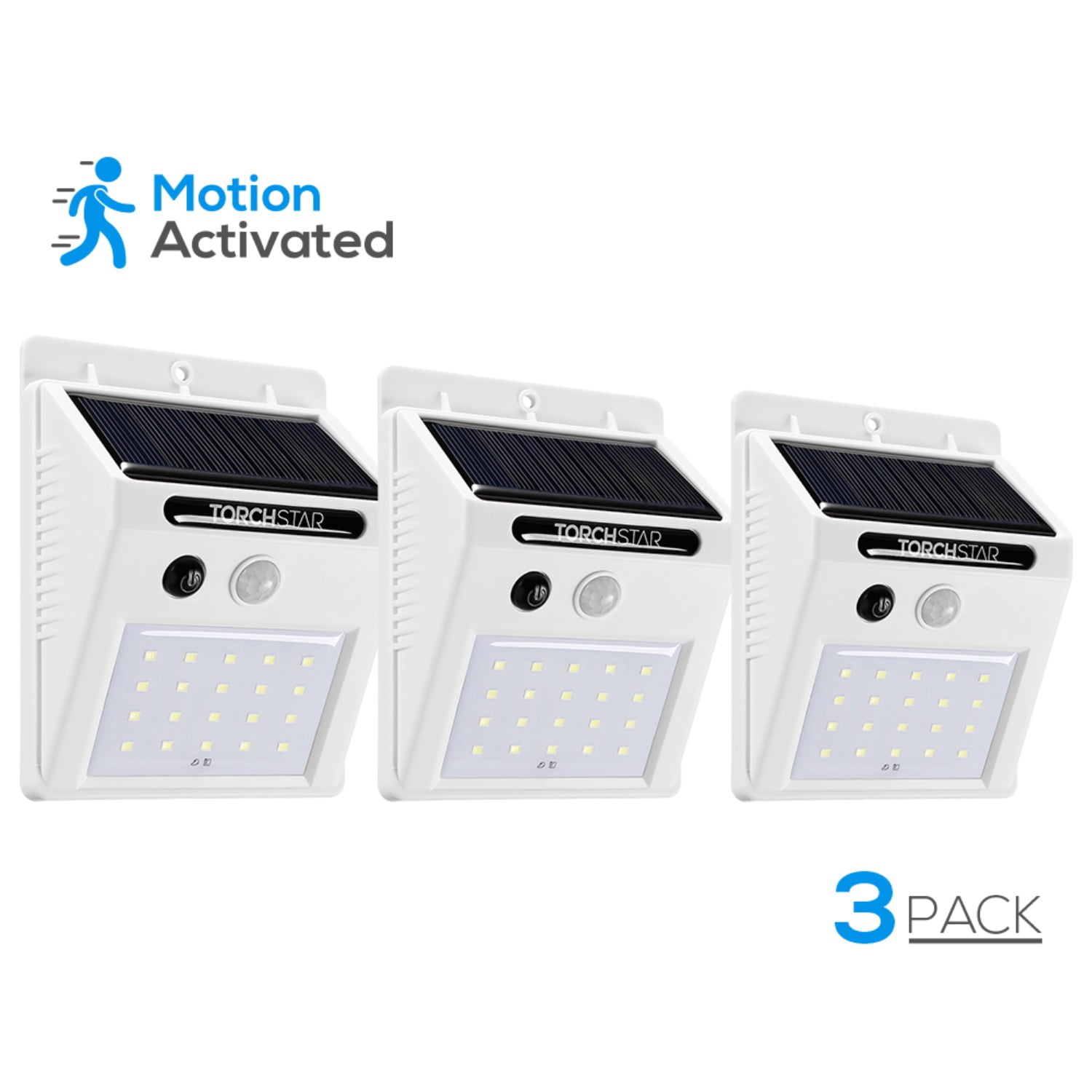
Solar powered motion sensor lights provide a reliable, energy-efficient way to secure pathways, yards, and entryways without increasing electricity bills or requiring complex wiring. Selecting the ideal model depends on evaluating lumen output, battery capacity, sensor range, and durability to match your home's specific security and lighting requirements.
Securing a residential property no longer requires digging trenches for electrical conduits or running up monthly utility bills. Modern outdoor solar lighting has advanced significantly, offering high-output illumination that rivals traditional wired fixtures. Whether you need to deter intruders along a dark side yard, illuminate a treacherous set of steps, or simply find your keys at the front door, the right fixture transforms your exterior environment. Understanding the technical specifications—such as lumens, passive infrared (PIR) sensor coverage, and lithium-ion battery capacity—ensures that you select a durable unit capable of withstanding the elements while delivering reliable performance night after night.
Understanding Solar Motion Sensor Technology
Before investing in outdoor solar security lights, it is essential to understand how these devices convert sunlight into usable nighttime illumination. Unlike traditional floodlights that draw continuous power from a household electrical grid, solar-powered units operate entirely off-grid. They rely on photovoltaic (PV) panels—typically made of monocrystalline or polycrystalline silicon—to absorb sunlight during daylight hours. This electrical energy is then stored inside an internal rechargeable battery, most commonly a lithium-ion (Li-ion) or lithium iron phosphate ($\text{LiFePO}_4$) cell.
When darkness falls, a built-in photocell (dusk-to-dawn sensor) activates the circuit, placing the unit on standby. Once the passive infrared (PIR) sensor detects thermal motion—such as a person, animal, or vehicle moving within its field of view—it triggers the high-intensity light-emitting diodes (LEDs) for a pre-determined duration. This targeted approach conserves stored power, ensuring the light only illuminates when necessary.
Key Technical Metrics to Evaluate
- Lumens: This measures the total amount of visible light emitted by a source. For general pathway lighting, 200 to 500 lumens is typically sufficient. For security floodlights meant to cover a wide driveway or backyard, look for 1,000 to 3,000+ lumens.
- PIR Sensor Range and Angle: The motion sensor’s sensitivity dictates how early the light reacts. Standard sensors offer a 120-degree to 180-degree detection angle with a range spanning 15 to 40 feet.
- Battery Capacity (mAh): Higher milliamp-hour ratings mean the battery can store more energy, resulting in longer runtimes during overcast days or long winter nights.
- Ingress Protection (IP) Rating: Look for a minimum rating of IP65, which guarantees dust-tight construction and protection against water jets, ensuring survival against rain, snow, and sprinklers.
The 5 Best Solar Powered Motion Sensor Lights
To help homeowners navigate the crowded market, we have evaluated top-performing options across various categories, balancing build quality, illumination power, and reliability.
1. Litom 3-Head Solar Security Light (Best Overall Security Light)
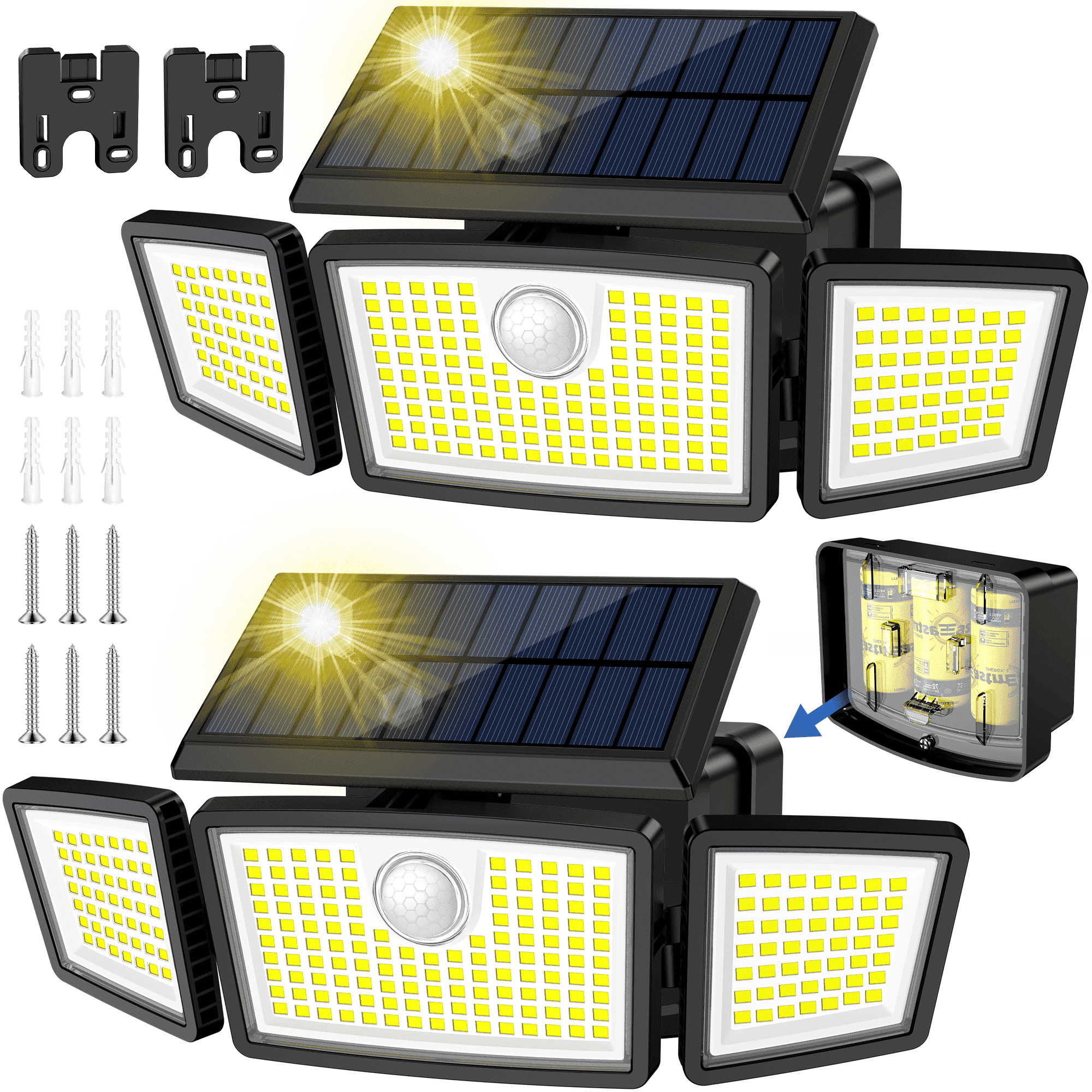
The Litom 3-Head solar light stands out as an exceptional all-rounder for general yard and driveway security. Featuring an innovative multi-head design, the outer two light panels can be adjusted horizontally and vertically to cast light across a wide 270-degree arc.
- Lumen Output: Up to 2,500 lumens on maximum activation.
- Sensor Specs: 120-degree wide-angle PIR sensor with a 26-foot detection range.
- Best Suited For: Driveways, large backyards, and wide garage entryways.
- Pros: Exceptional lighting coverage, durable ABS housing, multiple working modes (dim light + motion sensor, strong light + motion sensor, and steady-on mode).
- Cons: The plastic adjustment joints require careful handling during installation to prevent over-tightening.
2. Ring Solar Floodlight (Best Smart Integration)
For homeowners embedded in a smart home ecosystem, the Ring Solar Floodlight offers seamless integration with the Ring app, Alexa, and other smart devices. It delivers crisp, reliable illumination and instantly alerts your phone when motion is detected.
- Lumen Output: 1,200 lumens when hardwired to the solar panel.
- Sensor Specs: 160-degree horizontal detection field up to 30 feet.
- Best Suited For: Front porches, smart-home enthusiasts, and perimeter monitoring.
- Pros: Highly customizable motion zones, excellent app control, group-link capabilities with other Ring devices.
- Cons: Requires a Ring Bridge for full smart functionality, making upfront costs higher than standalone units.
3. Aootek 128 LED Solar Outdoor Light (Best Budget Value)
The Aootek 128 LED model is a perennial favorite for budget-conscious buyers who refuse to sacrifice performance. It utilizes a compact, single-panel design that packs surprising illumination and features an integrated security mode alongside a permanent night light mode.
- Lumen Output: Approximately 800 to 1,000 lumens.
- Sensor Specs: Upgraded sensitive PIR motion inductor with a 120-degree angle up to 26 feet.
- Best Suited For: Side pathways, garden sheds, and apartment balconies.
- Pros: Highly affordable, compact footprint, includes a convenient "three-mode" setting button on the front face.
- Cons: Smaller solar panel requires optimal placement to charge fully during shorter winter days.
4. URPOWER Upgraded 8 LED Solar Lights (Best for Pathways and Landscaping)
While floodlights dominate security discussions, ground-level accent and path lighting play an equally vital role in preventing slips and falls. The URPOWER 8 LED stake lights combine low-profile aesthetics with dependable dusk-to-dawn and motion-activated illumination.
- Lumen Output: ~350 lumens (focused accent beam).
- Sensor Specs: Dusk-to-dawn sensor combined with localized motion-step brightening.
- Best Suited For: Garden borders, walkways, and patio steps.
- Pros: Easy ground-stake installation, low visual profile during the day, waterproof construction.
- Cons: Not bright enough to serve as a primary security deterrent for large intruders.
5. InnoGear Solar Gutter Lights (Best Versatile Low-Profile Mount)
If you lack flat walls or wooden fences for mounting traditional lights, the InnoGear Solar Gutter Lights clip directly onto standard roof gutters, fences, or overhangs without drilling permanent holes in siding.
- Lumen Output: 450 lumens.
- Sensor Specs: 120-degree motion detection up to 20 feet.
- Best Suited For: Roof overhangs, perimeter fences, and rental properties.
- Pros: Zero-drill installation brackets included, excellent angle for capturing direct overhead sunlight.
- Cons: Limited to structures with compatible gutter or rail edges unless screwed directly into a flat surface.
Comparison of Recommended Solar Motion Lights
| Product Name | Estimated Lumens | Sensor Angle | Standout Feature | Ideal Application |
|---|---|---|---|---|
| Litom 3-Head Security Light | 2,500 | 270° | Adjustable multi-head design | Driveways & large yards |
| Ring Solar Floodlight | 1,200 | 160° | Smart app integration & alerts | Smart-home perimeters |
| Aootek 128 LED Light | 1,000 | 120° | High efficiency & low cost | Side pathways & sheds |
| URPOWER 8 LED Stake Lights | 350 | N/A (Path) | Low-profile ground stakes | Garden borders & walkways |
| InnoGear Gutter Lights | 450 | 120° | No-drill gutter mounting | Overhangs & fences |
Installation Best Practices for Maximum Performance
Even the most expensive solar motion sensor light will fail to perform if installed incorrectly. Achieving optimal efficiency requires careful attention to environmental placement, angle orientation, and seasonal adjustments.
1. Maximizing Solar Panel Exposure
The photovoltaic panel is the lifeblood of your lighting system. It must receive direct, unfiltered sunlight for at least 4 to 6 hours daily.
- Orientation: In the Northern Hemisphere, mount panels facing true South. In the Southern Hemisphere, face them true North.
- Obstruction Avoidance: Ensure that tree branches, roof overhangs, or utility wires do not cast shadows across the panel during peak sunlight hours (10:00 AM to 3:00 PM).
- Cleaning Routine: Dust, pollen, bird droppings, and winter grime accumulate on glass surfaces and reduce charging efficiency. Wipe panels down with a damp microfiber cloth every few months.
2. Optimizing Motion Sensor Sensitivity
PIR sensors react to changes in infrared thermal radiation. To prevent false triggers (such as passing cars on a distant street or stray neighborhood cats) while ensuring human movement is caught instantly:
- Height Considerations: Mount security floodlights at a height of 7 to 10 feet. Mounting them too low reduces coverage area; mounting them too high weakens the sensor's ability to detect body heat.
- Angle Adjustment: Point the sensor slightly downward and across the expected path of travel rather than directly outward toward an oncoming subject. PIR sensors are exceptionally sensitive to motion cutting across their field of view, rather than moving straight toward them.
Troubleshooting Common Solar Light Issues
When a solar light stops working correctly, homeowners often assume the battery is dead and throw the unit away. However, most issues stem from temporary environmental or configuration problems.
- The Light Stays On All Night or Drains Quickly: This is usually caused by heavy cloud cover preventing a full charge, or a sensor blocked by foliage that constantly triggers re-activation. Switch the unit to a lower-draw mode or trim surrounding bushes.
- The Light Flickers Intermittently: Water may have leaked into the internal wiring compartment due to a compromised seal or incorrect vertical mounting angle. Disassemble the unit, dry it out completely in a warm room, and reseal housing gaskets.
- Reduced Runtime During Winter: Solar output drops significantly during shorter winter days due to lower sun angles and shorter daylight hours. This is normal behavior for off-grid lighting. Consider wiping snow off the panels immediately after a storm to maximize remaining daylight absorption.
Frequently Asked Questions
Do solar powered motion sensor lights work during winter and cloudy days?
Yes, but with reduced performance. Modern solar panels can still absorb ambient UV light through heavy clouds, though battery charging speeds drop by 50% to 80%. Consequently, the light may only stay illuminated for shorter durations at night until sunny weather returns.
How long do the internal batteries last before needing replacement?
High-quality rechargeable lithium-ion batteries inside reputable solar lights typically last between 2 to 4 years (roughly 500 to 1,000 charge cycles) before holding significantly less charge. Many modern units feature accessible battery compartments allowing users to swap in fresh cells rather than replacing the entire fixture.
Can solar lights function properly behind window glass?
No. Standard window glass filters out a significant portion of the ultraviolet and infrared spectrum required by photovoltaic cells to generate electricity. Solar panels must always be installed outdoors in an open-air environment.
Will security lights trigger from small pets like cats and dogs?
Most quality PIR sensors include a sensitivity threshold designed to ignore small animals weighing under 15 to 20 pounds. However, if your pet climbs directly onto a porch railing close to the sensor, it may inadvertently trigger the light. Adjusting the sensor angle slightly higher usually resolves this issue.
Conclusion
Investing in the right solar powered motion sensor light enhances home security, brightens dark pathways, and eliminates ongoing electricity costs. By carefully evaluating lumen outputs, battery capacities, and installation environments—such as choosing the versatile Litom 3-Head for wide coverage or the smart-enabled Ring Floodlight for app integration—you can create a safer, more welcoming exterior environment tailored to your household needs.