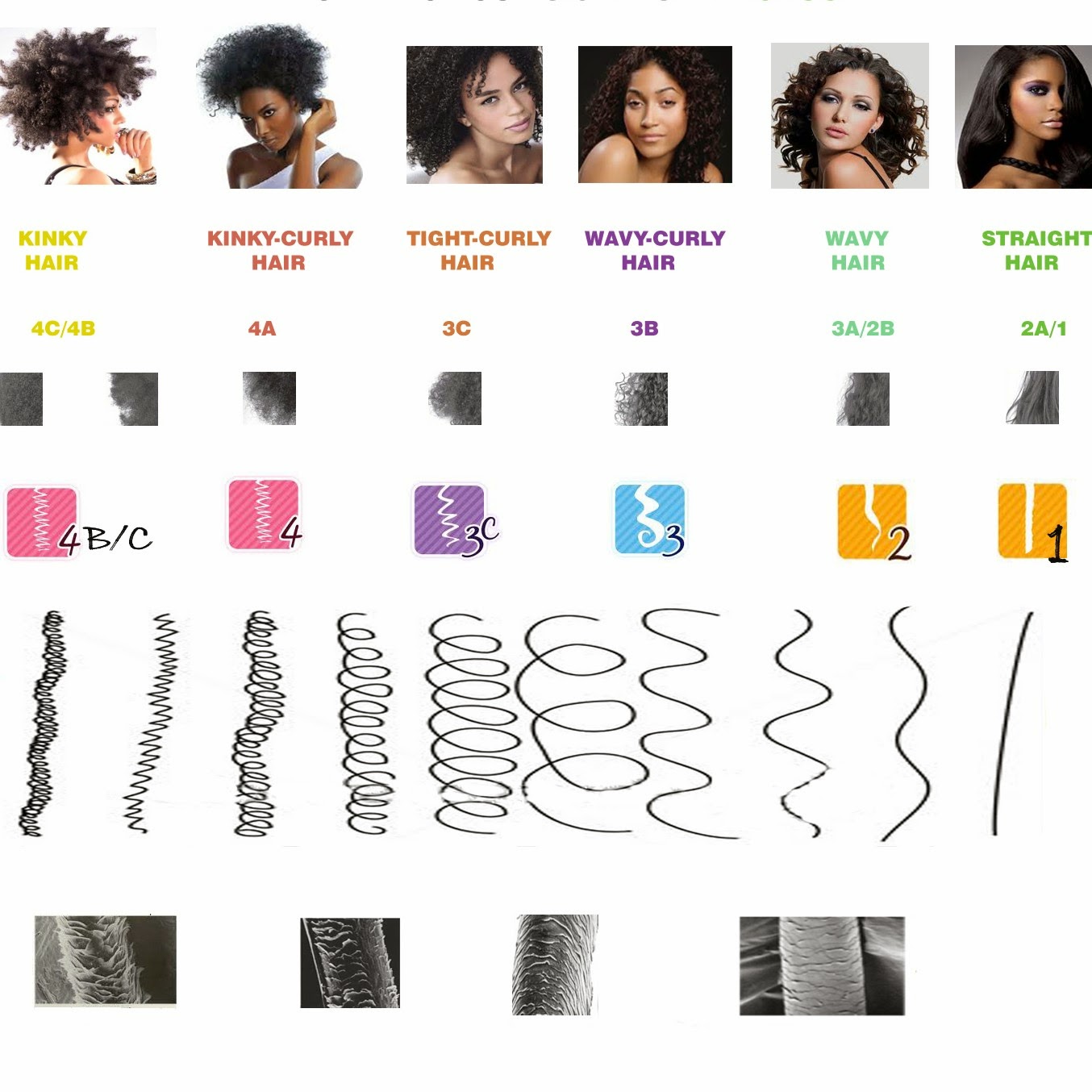
Type 4B and 4C hair represent the tightest textures in the Andre Walker Hair Typing System, characterized by high density and significant shrinkage. 4B hair features a distinct "Z" or zigzag pattern with sharp angles, while 4C hair consists of even tighter coils that often lack a discernible pattern without specific styling. Both types require intensive moisture and gentle handling due to their structural fragility.
The Evolution of the Hair Typing System
To understand 4B and 4C hair, one must first understand the framework from which they emerge. The hair typing system most commonly used today was popularized by stylist Andre Walker in the 1990s. Originally, the system categorized hair into four types: Type 1 (straight), Type 2 (wavy), Type 3 (curly), and Type 4 (kinky/coily). Within these categories, sub-types A, B, and C were eventually defined to describe the diameter and tightness of the curl pattern.
For many years, Type 4 stopped at 4B. However, the natural hair community advocated for the inclusion of 4C, as many individuals possessed hair that was significantly tighter and more prone to shrinkage than the original 4B definition allowed. By 2026, the industry has fully embraced 4C as a distinct and vital category, leading to the development of specialized products designed to address its unique moisture and elasticity needs. Understanding these nuances is the first step in moving from a struggle with "unmanageable" hair to a successful, health-focused hair journey.
Defining 4B Hair: The Zigzag Texture
Type 4B hair is defined primarily by its "Z" shape. Unlike Type 4A hair, which follows a more traditional "S" or coiled "O" pattern, 4B strands bend at sharp angles, resembling the letter Z. This structural difference is more than just aesthetic; it fundamentally changes how the hair behaves and how it must be treated.
Visual and Tactile Characteristics
When 4B hair is viewed closely, the zigzag pattern is often visible even when the hair is dry. However, because the bends are so sharp and frequent, the hair can appear as a dense, fluffy cloud from a distance. To the touch, 4B hair can feel "wiry" or "cottony" because the sharp angles of the hair shaft create more friction between strands than a smooth curl would.
The Shrinkage Factor
Shrinkage is a defining trait of all Type 4 hair, but in 4B textures, it typically ranges from 50% to 70%. This means that a person with twelve inches of actual hair length may appear to have only four or five inches when the hair is in its natural, unstretched state. This shrinkage is a sign of healthy elasticity, but it also means 4B hair is highly prone to tangling and "single-strand knots" (trichonodosis) if not properly managed.
Structural Fragility
The "bends" in the Z-pattern are the weakest points of the 4B hair shaft. Each sharp angle represents a spot where the cuticle may be slightly raised or thinner, making the hair more susceptible to breakage. Consequently, 4B hair requires a balance of high-slip products and minimal mechanical tension to thrive.
Defining 4C Hair: The Tightest Coils
Type 4C hair is the most densely packed and tightly coiled of all hair types. While it shares some similarities with 4B, the primary difference lies in the definition and the degree of shrinkage. 4C hair is so tightly coiled that the individual strands may not exhibit a clear "Z" or "S" pattern unless they are saturated with water or heavy styling products.
The "Cloud" Effect
4C hair is often described as having a "cloud" or "puff" appearance. Because the coils are so tiny and frequent, they do not naturally "clump" together as easily as other hair types. This results in a texture that excels in defying gravity, making it the ideal canvas for afros, puffs, and structural updos. By 2026, the "cloud" aesthetic has become a celebrated hallmark of 4C identity, moving away from older trends that tried to force 4C hair into more defined, elongated curl patterns.
Extreme Shrinkage
4C hair experiences the highest level of shrinkage of any hair type, often exceeding 75%. It is not uncommon for hair that reaches the mid-back when stretched to appear only ear-length when dry. This extreme contraction can lead to severe matting if the hair is not regularly detangled or kept in "stretched" styles like twists or braids.
Sebum Distribution Challenges
A major physiological characteristic of 4C hair is the difficulty of sebum distribution. Sebum is the natural oil produced by the scalp to lubricate the hair shaft. In straight hair (Type 1), sebum travels easily down the strand. In 4C hair, the tight coils and high density act as a series of roadblocks. As a result, the scalp may be oily while the ends of the hair remain chronically dry and brittle.
Key Differences Between 4B and 4C Hair
While 4B and 4C are often grouped together, several technical differences distinguish them. Understanding these helps in selecting the right products and techniques.
| Characteristic | Type 4B Hair | Type 4C Hair |
|---|---|---|
| Primary Pattern | Sharp "Z" (zigzag) angles. | Tightly coiled; often no visible pattern. |
| Clumping Ability | Higher; strands group into "Z" clusters. | Low; requires manipulation to clump. |
| Average Shrinkage | 50% – 70% | 75% or more |
| Texture Feel | Cottony or wiry. | Densely packed, very soft or coarse. |
| Moisture Needs | High | Extremely High |
| Porosity Variation | Mixed; often medium porosity. | Frequently low porosity (but varies). |
Structural Characteristics and the Role of Porosity
To effectively care for 4B and 4C hair, one must look beyond the curl pattern and consider the hair's porosity. Porosity refers to the hair's ability to absorb and retain moisture, which is determined by the state of the cuticle (the outermost layer of the hair).
Low Porosity in Type 4 Hair
Many individuals with 4B and 4C hair possess low porosity. In this state, the cuticle scales are tightly closed and overlapping like shingles on a roof. While this makes it hard for moisture to escape once it is inside, it makes it incredibly difficult for moisture to enter in the first place. For low porosity 4B/4C hair, heat is often necessary during deep conditioning to "open" the cuticles and allow products to penetrate.
High Porosity in Type 4 Hair
Conversely, high porosity 4B/4C hair has gaps or holes in the cuticle, often due to chemical processing, heat damage, or genetics. While this hair absorbs water instantly, it loses it just as fast. High porosity hair requires heavier butters and oils (like shea butter or castor oil) to "plug" the gaps in the cuticle and lock moisture in.
The Impact of the Cortex
The inner part of the hair, the cortex, contains the keratin bundles that give the hair its strength. Because 4B and 4C hair have so many bends and coils, the cortex is under constant "torsional stress." This makes the hair structurally weaker than straight or wavy hair, meaning it cannot withstand the same level of heat or chemical manipulation without breaking.
Comprehensive Care Regimen for 4B/4C Hair
A successful regimen for 4B and 4C hair focuses on three pillars: moisture, protection, and patience.
1. Cleansing Without Stripping
Traditional shampoos often contain harsh sulfates that strip the hair of its already scarce natural oils. For 4B/4C hair, "co-washing" (washing with a conditioning cleanser) or using "moisturizing shampoos" is essential. In 2026, many experts recommend focusing the cleanser on the scalp and allowing the suds to run down the length of the hair, rather than scrubbing the fragile ends.
2. The Power of Deep Conditioning
Deep conditioning is not an optional luxury for Type 4 hair; it is a necessity. A weekly deep treatment helps to restore elasticity and replenish the moisture lost to the environment. For 4B/4C hair, look for ingredients like hydrolyzed proteins (to strengthen the cortex) and humectants like glycerin or honey (to draw moisture into the hair).
3. The LOC/LCO Method
To keep hair moisturized for days, the layering of products is critical.
- L (Liquid/Leave-in): Water or a water-based leave-in conditioner.
- O (Oil): An oil to seal the moisture (e.g., jojoba, avocado, or almond oil).
- C (Cream): A thick cream or butter to further lock in the hydration. Some prefer the LCO order (Liquid, Cream, then Oil), finding that the cream penetrates better when applied directly over the liquid.
4. Gentle Detangling
Detangling 4B/4C hair when dry is a recipe for breakage. It should always be done when the hair is saturated with water and a high-slip conditioner. Finger detangling—using your hands to gently separate knots—is the gold standard for preserving length, though wide-tooth combs or specialized flexible-bristle brushes can also be used.
Styling and Maintenance in 2026
In 2026, the philosophy of 4B/4C hair care has shifted toward low manipulation. The goal is to touch the hair as little as possible to prevent mechanical damage.
Protective Styling
Styles like box braids, twists, and bantu knots serve to tuck the ends of the hair away, protecting them from friction and environmental dryness. However, it is vital to avoid "tension" at the roots. Traction alopecia, a form of hair loss caused by pulling too tightly, remains a concern if protective styles are installed incorrectly.
The Evolution of the "Wash and Go"
In the past, the "wash and go" style was considered impossible for 4C hair. However, with the development of botanical gels and advanced defining creams, many 4C individuals now embrace their natural coil pattern. The key is applying products to soaking wet hair in small sections and allowing the hair to dry completely without being touched, which "sets" the coils in place.
Scalp Health and Biotechnology
Modern hair care in 2026 emphasizes the scalp microbiome. For 4B/4C hair, a healthy scalp is the foundation of growth. Products containing prebiotics and peptides are now frequently used to ensure the hair follicles are nourished and the scalp environment is balanced, preventing issues like dandruff or inflammation which can hinder growth.
Common Challenges and Troubleshooting
Even with a perfect regimen, 4B/4C hair can present specific challenges.
Single-Strand Knots (Fairy Knots)
These occur when a single hair strand curls back on itself and ties into a knot. They are common in 4B/4C hair due to the tight coils. The best way to prevent them is to keep the hair in stretched styles and to ensure the ends are regularly trimmed.
Hygral Fatigue
This happens when the hair is over-moisturized. The hair shaft expands when wet and contracts when dry; if this happens too often or if the hair stays wet for too long, it loses its elasticity and becomes limp and mushy. 4B/4C hair needs a balance of moisture and protein to maintain its structural integrity.
Breakage vs. Shedding
It is important to distinguish between the two. Shedding is a natural part of the hair growth cycle, and shed hairs usually have a white bulb at the end. Breakage consists of shorter pieces of hair without a bulb, indicating that the hair is snapping due to dryness or excessive manipulation.
Frequently Asked Questions
Can 4C hair grow long? Yes. 4C hair grows at the same average rate as other hair types (about half an inch per month). The challenge is length retention. Because 4C hair is fragile and prone to breakage, many people feel their hair "isn't growing" when it is actually breaking off at the ends as fast as it grows from the roots.
How often should I wash 4B/4C hair? Most experts recommend washing every 7 to 10 days. Washing too frequently can lead to dryness, while waiting too long can cause product buildup and scalp irritation.
Is 4B hair better than 4C hair? No. Hair typing is a descriptive tool for texture and behavior, not a hierarchy of quality. Both types have unique strengths—4B has more natural clumping and definition, while 4C has incredible volume and structural versatility.
How do I know if I have 4B or 4C hair? The best way to tell is to observe your hair when it is freshly washed and free of products. If you see "Z" shaped bends and some clumping, you likely have 4B. If your hair appears as a dense, uniform texture with very tight coils that don't easily clump, you likely have 4C. Many people have a mix of both on different parts of their head.
Does 4C hair need protein? Absolutely. While moisture is often the focus, 4C hair is structurally fragile. Regular light protein treatments help reinforce the hair shaft and improve elasticity, preventing breakage during styling.
Practical Recommendation for 4B/4C Hair Success
To achieve the best results with 4B or 4C hair, the most important action you can take is to prioritize moisture retention through consistency. Do not wait until your hair feels like "straw" to moisturize it. Establish a weekly routine that includes a thorough cleanse, a deep condition with heat, and a sealing method (LOC or LCO). Furthermore, embrace the shrinkage; trying to fight it with excessive heat will only lead to damage. By 2026 standards, the healthiest 4B/4C hair is that which is kept hydrated, handled with extreme gentleness, and allowed to exist in its natural, gravity-defying state.