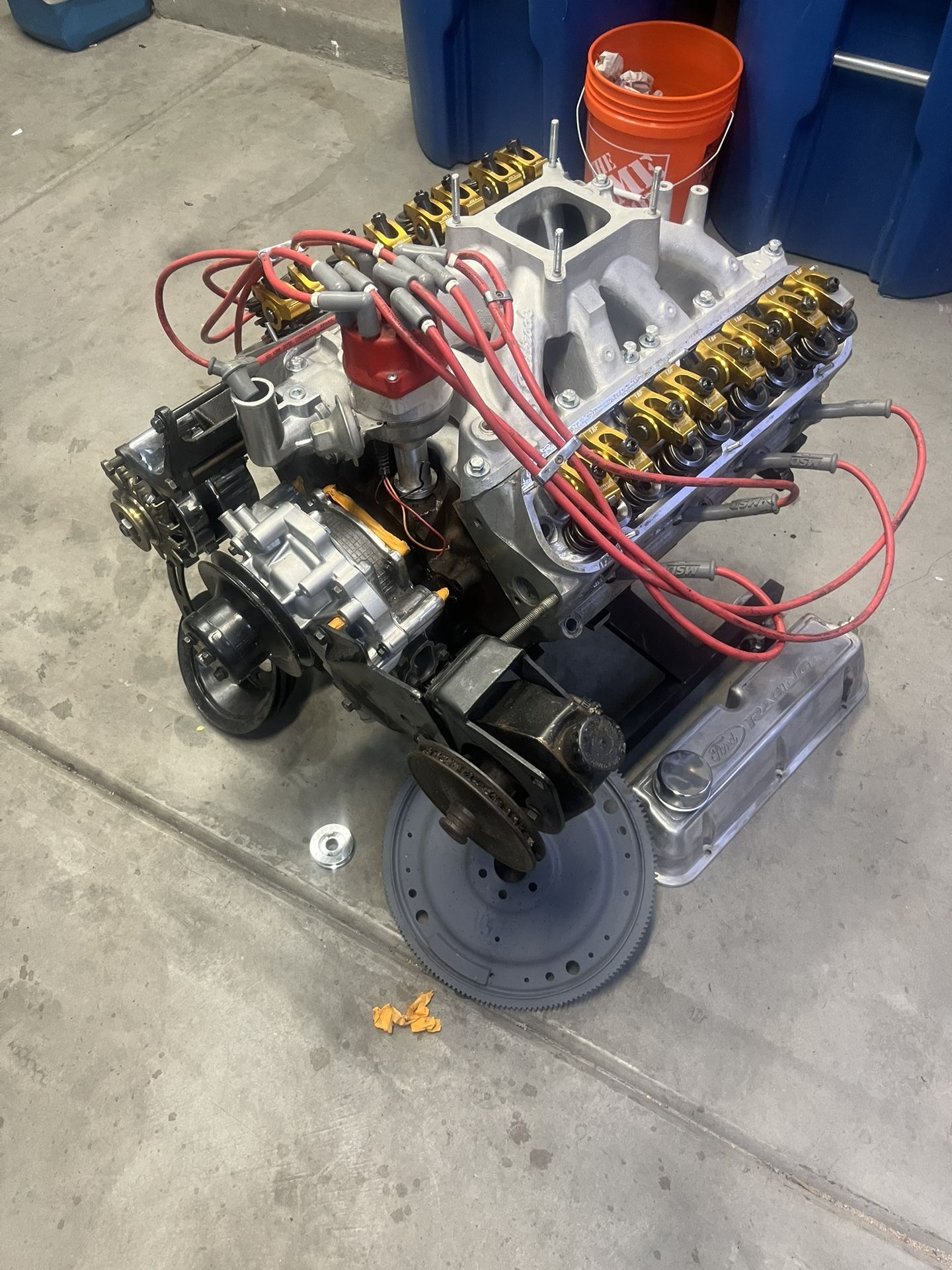
To upgrade a 351 Windsor (351W) effectively, you must address its primary bottleneck: restrictive factory cylinder heads. Replacing stock iron heads with high-flow aluminum alternatives, such as those from AFR or Trick Flow, combined with a matched hydraulic roller camshaft and a modern EFI conversion, typically yields the most significant power gains for street and strip applications in 2026.
The Foundation: Why the 351 Windsor is an Ideal Platform
The Ford 351 Windsor remains one of the most versatile and beloved small-block engines in the automotive world. Originally introduced in 1969, it shares much of its architecture with the smaller 289 and 302 engines but features a significantly taller deck height (9.503 inches compared to the 302’s 8.202 inches). This increased deck height allows for a longer stroke, which translates directly into more displacement and massive torque potential.
As of 2026, the 351W is often preferred over the 351 Cleveland for most builds due to its superior oiling system and the sheer volume of aftermarket support. While the Cleveland heads are legendary for their high-RPM flow, the Windsor’s cooling passages and internal lubrication are more robust for sustained high-performance use. When planning upgrades, it is essential to identify your block's vintage. The 1969–1974 castings are known for being slightly heavier and stronger, often capable of handling 700+ horsepower in stock form, whereas the later "lightweight" castings from the 1980s and 1990s are better suited for moderate street builds.
Stage 1: Optimizing Airflow and Induction
The 351 Windsor is essentially a large air pump. To increase power, you must increase the efficiency with which air enters and exits the combustion chamber. For most enthusiasts, this begins with the intake manifold and the fuel delivery system.
Intake Manifolds and Carburetion
For those maintaining a classic carbureted setup, the choice of intake manifold is critical. A dual-plane manifold, like the Edelbrock Performer RPM Air-Gap, is the gold standard for street performance. It provides a broad powerband by keeping the intake charge cooler and maintains high intake velocity for low-end torque. If your 2026 build is destined for the drag strip or high-RPM road racing, a single-plane manifold like the Victor Jr. may be more appropriate, though it will sacrifice some drivability below 3,000 RPM.
Modern EFI Conversions
In 2026, many restorers are moving away from carburetors in favor of self-tuning Electronic Fuel Injection (EFI) systems. Systems like the Holley Sniper 2 or the FiTech GoEFI have revolutionized the 351W platform. These systems replace the carburetor and offer features such as integrated ignition timing control, improved cold-start reliability, and superior fuel economy. When upgrading to EFI, ensure your fuel system can handle the pressure; this usually requires an in-tank electric fuel pump and a high-pressure return line.
Exhaust Headers
Factory exhaust manifolds are notoriously restrictive. A set of long-tube headers with at least 1.75-inch primaries is recommended for a modified 351W. Shorty headers are easier to install in tight engine bays (like those in Fox-body Mustangs or early Broncos), but they do not provide the same scavenging effect as long-tubes. Pairing these with a high-flow 2.5-inch or 3-inch dual exhaust system is necessary to prevent backpressure from choking your new performance components.
Stage 2: The Power is in the Heads
If you only perform one major upgrade, it should be the cylinder heads. The factory iron heads (including the E7TE and even the celebrated GT40/GT40P variants) are simply too small to feed 351 cubic inches of displacement efficiently.
Choosing Aluminum Heads
Modern aluminum heads offer two primary advantages: they flow significantly more air and they reduce the overall weight of the engine by approximately 40 to 50 pounds. For a street-driven 351W, a head with an intake runner volume between 170cc and 195cc is ideal.
- AFR (Air Flow Research) 195 Enforcer/Renegade: Known for exceptional "out-of-the-box" flow numbers and high-quality valvetrain components.
- Trick Flow Specialty (TFS) Twisted Wedge 170/190: These heads utilize a unique combustion chamber and valve arrangement that improves flow and allows for more piston-to-valve clearance with aggressive camshafts.
When selecting heads, pay close attention to the combustion chamber size. A smaller chamber (e.g., 58cc) will increase the compression ratio, which boosts power but may require higher octane fuel. A larger chamber (e.g., 64cc or 72cc) is safer for forced induction or lower-octane pump gas.
Valvetrain and Camshaft Selection
The camshaft is the "brain" of the engine, determining when and how long the valves stay open. For 2026 builds, hydraulic roller camshafts are the preferred choice. They offer a more aggressive lobe profile than flat-tappet cams without the risk of "wiping" a lobe during break-in.
If you are using a non-roller block (pre-1994), you will need a "link-bar" style hydraulic roller lifter or a conversion kit. A cam with a duration of 220–230 degrees at .050" lift and a total lift of around .550" is usually the "sweet spot" for a 351W that needs to remain street-legal and vacuum-friendly for power brakes.
Stage 3: The Stroker Transformation
One of the greatest strengths of the 351 Windsor is its ability to be "stroked." By replacing the factory crankshaft with one featuring a longer throw, you can significantly increase displacement without changing the external dimensions of the engine.
The 408 Stroker: The Modern Standard
While 393 and 427 cubic inch kits are available, the 408 stroker (using a 4.000-inch stroke and a .030-inch overbore) has become the most popular choice in 2026. It provides a massive jump in torque—often exceeding 500 lb-ft—without the clearancing issues sometimes found in 427 builds.
A typical stroker kit includes:
- Crankshaft: Forged steel is preferred for high-horsepower or boosted applications, though cast steel is sufficient for street cruisers.
- Connecting Rods: H-beam rods are stronger and better for high-RPM use, while I-beam rods are lighter and suitable for moderate builds.
- Pistons: Forged aluminum pistons are essential for durability, especially if you plan to use nitrous or a supercharger.
| Build Level | Displacement | Est. HP/Torque | Primary Upgrades |
|---|---|---|---|
| Mild Street | 351 ci | 325 HP / 380 TQ | Intake, Headers, 4-Barrel Carb/EFI |
| Performance Street | 351 ci | 425 HP / 430 TQ | Aluminum Heads, Roller Cam, EFI |
| Street/Strip Stroker | 408 ci | 525 HP / 540 TQ | 4" Crank, Forged Pistons, 195cc+ Heads |
| Full Competition | 427+ ci | 650+ HP / 600 TQ | Aftermarket Block, Solid Roller Cam, Ported Heads |
Essential Supporting Upgrades
Increasing horsepower is useless if the engine cannot stay cool or if the oiling system fails. Furthermore, the rest of the drivetrain must be capable of handling the increased torque.
Cooling System Improvements
A high-performance 351W generates significant heat. In 2026, an aluminum radiator with at least two rows of 1-inch tubes is considered the minimum requirement. Pair this with a high-flow water pump and a dual electric fan setup controlled by your EFI system. This ensures that the engine stays within its optimal operating temperature (usually 180°F to 195°F) even in heavy traffic.
Ignition and Electrical
The factory TFI (Thick Film Ignition) or older points-based systems are inadequate for a high-performance build. Upgrading to a capacitive discharge (CD) ignition box, like those from MSD Performance, provides a much stronger spark at high RPM, ensuring complete combustion. Additionally, an upgraded 130-amp or 200-amp alternator is often necessary to support electric fans and high-pressure fuel pumps.
Drivetrain Considerations
The stock Ford AOD or T5 transmissions are rarely capable of surviving behind a well-built 351W for long. For manual enthusiasts, the Tremec TKX is the 2026 industry standard, rated for 600 lb-ft of torque. For automatic users, a built AOD-E or a 4R70W with a standalone controller offers both strength and the benefit of overdrive for highway cruising.
Common Mistakes to Avoid
When upgrading a 351W, the most common error is "over-camming" the engine. A camshaft that is too aggressive for the compression ratio or the intake flow will result in a sluggish car that is difficult to drive at low speeds.
Another frequent mistake is neglecting the oiling system. While the Windsor's oiling is better than the Cleveland's, it still benefits from a high-volume (not necessarily high-pressure) oil pump and a baffled oil pan, especially if the car will see any lateral G-forces on a track. Always use a high-quality zinc-rich oil or a zinc additive if you are running a flat-tappet camshaft to prevent premature wear.
Frequently Asked Questions
Can I use 302 parts on my 351 Windsor?
While many parts are interchangeable (such as cylinder heads, timing covers, and water pumps), several critical components are not. Because of the taller deck height, the 351W requires a specific intake manifold, distributor, oil pan, and headers. The 351W also uses larger 3-inch main bearings compared to the 302’s 2.25-inch bearings.
What is the maximum horsepower a stock 351W block can handle?
Most factory 351W blocks are safely capable of handling up to 600–700 horsepower. The early 1969–1974 castings are the strongest. If you are aiming for four-digit horsepower with a turbocharger or supercharger, it is highly recommended to move to an aftermarket block from manufacturers like Dart or World Products.
Do I need to change my firing order when upgrading?
The 351 Windsor uses the 1-3-7-2-6-5-4-8 firing order. This is different from the standard 289/302 firing order (1-5-4-2-6-3-7-8) but the same as the 302 HO and 5.0L EFI engines. Ensure your spark plug wires and camshaft are matched to the 351W/302HO sequence.
Is the 351 Windsor better than the 351 Cleveland?
"Better" depends on the application. The 351W has a massive advantage in parts availability and engine bay fitment. The 351C has superior factory cylinder head flow but suffers from a more restrictive oiling system and limited aftermarket intake options. For most 2026 builds, the Windsor is the more practical and cost-effective choice.
Should I use a flat-tappet or roller camshaft?
Unless you are performing a budget-restricted restoration, always choose a hydraulic roller camshaft. They are more reliable with modern oils, provide better performance profiles, and do not require the stressful "break-in" procedure that often leads to flat-tappet failure in modern engines.
Final Recommendations for Your Build
For the best results in 2026, approach your 351 Windsor upgrades as a "total package" rather than a collection of random parts. If you are building a street-focused car, prioritize a 408-cubic-inch stroker kit, 190cc aluminum heads, and a self-tuning EFI system. This combination provides the modern reliability, ease of starting, and massive torque that makes the 351 Windsor one of the greatest V8 engines ever produced. Always ensure your cooling and braking systems are upgraded alongside the engine to maintain safety and longevity.