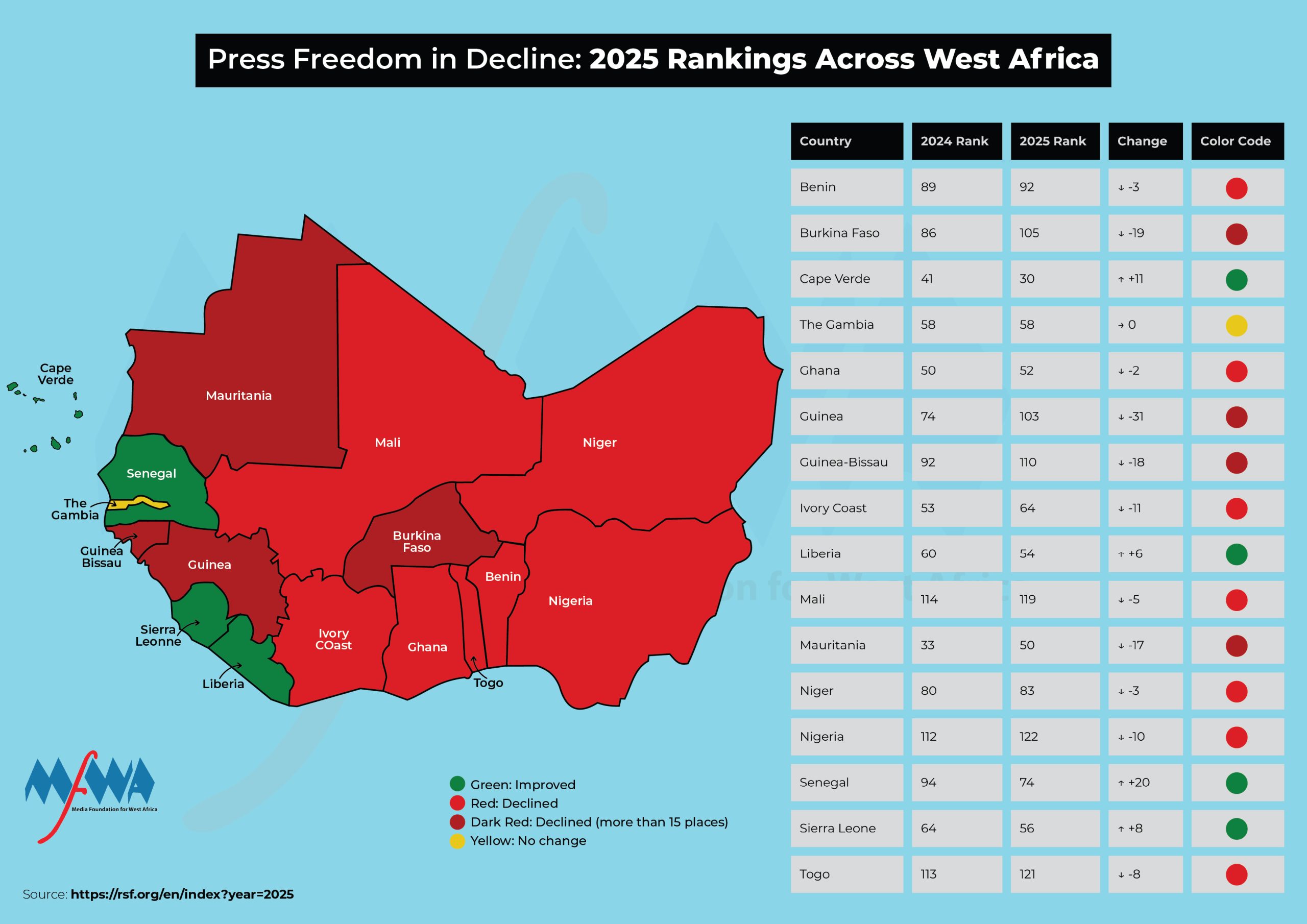
Global freedom has experienced a sustained multi-year decline, marked by deteriorating political rights, civil liberties erosion, and expanding digital authoritarianism. Major indices document ongoing democratic backsliding across both consolidated democracies and authoritarian regimes. Key drivers include electoral manipulation, restrictions on independent media, judicial subversion, and systemic crackdowns on civic space, reshaping international governance dynamics.
Key Findings and Global Democratic Indicators
Annual evaluations from premier democracy and human rights research institutions confirm that global freedom faces its most severe prolonged recession in decades. According to data tracked by monitoring organizations, democratic norms have continuously degraded across every region of the world, reversing post-Cold War democratic gains.
GLOBAL FREEDOM TIPPING POINTS
- Executive Aggrandizement
- Subversion of Judicial and Legislative Checks
- Information Control
- Press Suppression & Transnational Censorship
- Civic Space Suppression
- Severe NGO Registration & Funding Laws
- Election Subversion
- Disqualification of Viable Opposition Groups
The annual Freedom in the World report produced by Freedom House documents nearly two decades of consecutive annual declines in net global freedom. In these evaluations, countries experiencing aggregate score reductions have consistently outnumbered those achieving improvements. The erosion is not confined to fragile democracies or autocracies; established democracies in North America and Western Europe have also exhibited institutional vulnerabilities, polarization, and weakened safeguards for civil liberties.
Similarly, the V-Dem Institute at the University of Gothenburg highlights in its long-term democracy reports that the level of democracy enjoyed by the average global citizen has declined to levels last seen in the late 1980s. The V-Dem dataset shows that "autocratization"—the gradual deterioration of democratic traits—is increasingly driven by legally elected incumbents who systematically dismantle checks and balances from within, rather than by sudden military coups.
Core Drivers of Global Freedom Decline
The contraction of global freedom stems from interconnected legal, technological, and political mechanisms. Autocratic actors and illiberal leaders employ increasingly sophisticated toolkits to consolidate control without entirely discarding democratic facades.
1. Electoral Subversion and Institutional Capture
Modern autocratization rarely begins with explicit violence. Instead, ruling factions use incremental legislative changes to tilt the playing field:
- Gerrymandering and Electoral Law Alterations: Redrawing district boundaries and modifying voting thresholds to favor incumbent parties.
- Judicial Packing and Interference: Altering appointment procedures to ensure constitutional courts favor executive power over constitutional checks.
- Disqualification of Opposition Candidates: Utilizing administrative delays, tax audits, or fabricated legal charges to bar competitive challengers prior to election cycles.
2. Press Suppression and Information Manipulation
Independent journalism faces legal harassment, economic pressure, and physical threats. Authoritarian and illiberal regimes often use broad "fake news," anti-terrorism, or cybersecurity laws to criminalize critical reporting. Furthermore, state-directed media ecosystems and coordinated digital disinformation campaigns saturate the public sphere, drowning out independent investigative journalism.
3. Transnational Repression and Digital Surveillance
Advancements in digital technology have allowed states to extend surveillance beyond their national borders. State actors increasingly use commercial spyware, targeted digital harassment, and intelligence networks to monitor and intimidate dissidents, journalists, and diaspora populations living abroad. Organizations monitoring international legal standards, such as the UN Office of the High Commissioner for Human Rights (OHCHR), have repeatedly warned against the unchecked deployment of invasive surveillance technologies without stringent judicial oversight.
4. Restrictions on Civil Society and Assembly
Civil society organizations (CSOs) face administrative hurdles designed to paralyze operations. "Foreign agent" registration laws, complex tax reporting regimes, and arbitrary asset freezes prevent non-governmental organizations (NGOs) from receiving international support or operating without constant threat of liquidation.
Comparative Assessment of Major Democracy Indices
Tracking changes across different global indices provides a detailed view of how political rights and civil liberties are evaluated.
| Index / Organization | Scope & Primary Focus | Recent Core Findings | Primary Evaluation Methodology |
|---|---|---|---|
| Freedom House (Freedom in the World) | 195 countries & 15 territories; Political Rights (0–40) & Civil Liberties (0–60). | Over 19 consecutive years of net global decline; freedom scores contracting in all major regions. | Expert ratings based on 10 political rights and 14 civil liberties indicators. |
| V-Dem Institute (Democracy Report) | 202 countries; Liberal Democracy Index (LDI) and Electoral Democracy Index (EDI). | Autocratization affects over 70% of the world's population; global democracy levels match 1985–1989 averages. | Multi-expert assessments using Bayesian item-response theory models across hundreds of micro-indicators. |
| EIU Democracy Index | 167 countries & territories; Electoral process, functioning of government, political participation, culture, and civil liberties. | Global average democracy index scores hit historical lows; full democracies remain a small minority of world population. | Scoring based on 60 indicators categorized into 5 major operational categories. |
| CIVICUS Monitor | Civic space openness across 198 countries and territories. | Only a small fraction of the global population lives in countries categorized as having "Open" civic space. | Real-time monitoring of freedoms of association, peaceful assembly, and expression. |
| RSF World Press Freedom Index | 180 countries and territories; Journalists' safety, media independence, political & legislative framework. | Press freedom faces severe economic, legislative, and technological pressures worldwide. | Quantitative tallies of abuses against journalists alongside qualitative expert survey responses. |
Regional Dynamics and Field Observations
The decline in freedom manifests differently across global regions, driven by localized geopolitical shifts, legal changes, and economic dynamics.
REGIONAL DYNAMICS BREAKDOWN
- EUROPE & EURASIA
- Rise of illiberal governance & legal pressure on NGOs
- AMERICAS
- Polarization, contested elections & executive pressure
- ASIA-PACIFIC
- Digital oversight, national security laws & censorship
- MIDDLE EAST & NA
- Deepened authoritarianism & systemic opposition bans
- SUB-SAHARAN AFRICA
- Constitutional manipulation, election delays & coups
Europe and Eurasia
While Western Europe retains some of the world's highest overall scores for political rights and civil liberties, illiberal governance structures have taken root in parts of Central and Eastern Europe.
- Executive bodies have tightened state control over public broadcasting and media ownership.
- Legislative assemblies have introduced regulations targeting foreign-funded human rights organizations.
- Geopolitical conflicts have led to heightened emergency declarations, suspended legal processes, and increased state security mandates.
The Americas
Political polarization remains a significant vulnerability across North, Central, and South America.
- In several Latin American nations, executives have used emergency state powers to address gang violence or economic corruption, bypassing judicial procedures and suspending fundamental civil protections.
- Judicial independence has faced persistent political interference, with opposition figures regularly targeted by state prosecutors.
- In consolidated democracies, public trust in electoral institutions continues to be tested by discrediting campaigns surrounding election mechanics.
Asia-Pacific
The Asia-Pacific region demonstrates a mix of entrenched autocratic systems and eroding democratic governance.
- Strict national security statutes have been used to dismantle independent media, restrict public demonstrations, and suppress regional pro-democracy advocacy.
- Digital governance frameworks in several Asian countries require tech platforms to censor content deemed critical of public authorities, creating pervasive internet monitoring regimes.
- Coups and military rule continue to negate democratic progress in fragile states, severely restricting basic civil rights.
Middle East and North Africa (MENA)
The MENA region maintains the lowest aggregate scores across major democracy indices worldwide.
- Systemic crackdowns on opposition parties, independent journalists, and civil rights lawyers have normalized closed civic spaces.
- Socioeconomic instability has often prompted governments to expand military oversight, limit free expression online, and deploy advanced intelligence networks against public criticism.
Sub-Saharan Africa
Sub-Saharan Africa displays significant divergence: resilient civil society movements compete directly against persistent autocratization trends.
- Unconstitutional changes of government (coups d'état) have disrupted democratic governance across the Sahel region.
- Several long-standing leaders have engineered constitutional amendments to alter or eliminate presidential term limits.
- Peaceful public protests regularly encounter state security resistance, including internet shutdowns and administrative bans on assembly.
Impact on Press Freedom, Digital Rights, and Civic Space
The decline of political freedom directly correlates with systemic pressures on press freedoms, digital privacy, and independent civic space.
The Press Freedom Crisis
According to the Reporters Without Borders (RSF) World Press Freedom Index, economic insecurity combined with state hostility has left media outlets vulnerable to political takeover. Investigative journalists face legal tactics known as Strategic Lawsuits Against Public Participation (SLAPPs), which impose crippling financial burdens through protracted litigation. Furthermore, physical violence against journalists in conflict zones and high-crime environments continues with high rates of impunity.
CHANNELS OF CIVIC REPRESSION
- Legal Harassment
- Broad Security Laws
- SLAPP Lawsuits
- Term Limit Alters
- Digital Surveillance
- Targeted Spyware
- Social Media Monitoring
- Telecom Shutdowns
- Economic Pressure
- Asset Freezes
- Foreign Funding Restrictions
- Advertising Blockades
Internet Freedom and Algorithmic Control
Digital spaces, once envisioned as decentralized forums for free expression, are increasingly controlled by state regulation and surveillance infrastructure. Common practices documented by digital rights monitoring groups include:
- Network Shutdowns: Intentional disruption of internet services during political demonstrations, elections, or periods of civil unrest to limit organizational capacity and information sharing.
- Data Localization Mandates: Regulations forcing foreign tech firms to store citizen data domestically, subjecting users to host-country law enforcement demands without clear international privacy protections.
- Censorship via AI: Automated filtering systems that remove social media posts and media content based on political keywords or state-issued blocklists.
Contraction of Civic Space
The global tracking database managed by the CIVICUS Monitor indicates that only a minor percentage of the global population resides in countries where civic space is categorized as truly "Open." In many jurisdictions:
- Freedom of assembly is contingent upon restrictive, rarely granted state permits.
- Human rights organizations face onerous registration criteria, mandatory state representation on boards, and strict caps on international donor funding.
- Activists encounter travel bans, asset freezes, and systemic harassment.
Countermeasures and Recommendations for Safeguarding Freedom
Reversing the downward trajectory of global freedom requires coordinated efforts among international institutions, national governments, civil society organizations, and private technology providers.
1. Strengthening Electoral and Judicial Integrity
To counter executive capture, democratic societies must reinforce legal protections surrounding electoral management bodies (EMBs) and the judiciary. Key initiatives include:
- Guaranteeing independent funding mechanisms for constitutional courts to prevent political leverage.
- Establishing non-partisan appointment commissions for election administrators to protect elections from political bias.
- Inviting international, independent election monitoring bodies early in campaign cycles to audit voter registries, campaign finance, and media access.
2. Protecting Independent Journalism and Free Expression
Safeguarding the press requires both legal defenses and financial sustainability models:
- Enacting anti-SLAPP legislation to discourage frivolous legal actions aimed at silencing investigative reporters.
- Creating independent public-interest media funds supported by philanthropic and public revenues, managed without political influence.
- Establishing legal frameworks that protect whistleblowers and journalist sources from state surveillance and prosecution.
3. Establishing Standards for Commercial Surveillance
To limit digital authoritarianism, international regulatory bodies must govern invasive technologies:
- Implementing strict export controls on commercial spyware and surveillance software sold to regimes with poor human rights records.
- Mandating end-to-end encryption standards and privacy protections across communication platforms to defend against unauthorized state interception.
- Requiring technology companies to conduct rigorous human rights impact assessments before deploying algorithmic moderation tools in unstable environments.
4. Supporting Civil Society and Human Rights Defenders
International institutions and funding networks can mitigate legal pressures on civil society by:
- Establishing international legal defense funds to support criminalized activists, journalists, and civic leaders.
- Developing flexible funding channels that bypass restrictive national regulations without violating international law.
- Providing secure digital security infrastructure, encrypted hardware, and threat monitoring tools to at-risk human rights defenders globally.
Frequently Asked Questions
What is the current status of global freedom metrics?
Democracy monitoring organizations document a multi-decade net decline in global freedom. Aggregate metrics show that the number of countries experiencing score declines routinely exceeds those achieving improvements, with autocratization trends affecting both emerging and established democracies.
How do indices like Freedom House measure freedom?
Freedom House evaluates countries based on political rights (such as electoral processes, political participation, and government functioning) and civil liberties (including freedom of expression, assembly rights, rule of law, and personal autonomy). Experts assign scores based on observable legal protections, state compliance, and real-world conditions.
What is the difference between an autocracy and a flawed democracy?
A flawed democracy maintains free and fair elections and basic civil liberties, but suffers from structural weaknesses such as institutional corruption, low civic engagement, media concentration, or political polarization. An autocracy features severe limitations on political competition, lack of judicial independence, restricted press freedoms, and widespread suppression of civic rights.
How does digital technology contribute to freedom decline?
While digital platforms provide tools for communication, state actors frequently use them for surveillance, algorithmic content moderation, targeted discrediting campaigns, and coordinated disinformation. Additionally, network shutdowns and commercial spyware allow governments to control information access and monitor civic groups.
Why are term limits and executive power shifts critical to tracking democracy?
The removal or modification of executive term limits is a common indicator of democratic backsliding. When executives alter constitutional structures to remain in power, checks and balances weaken, judicial independence erodes, and opposition parties face systematically unequal political competition.
How can citizens and civil society counter democratic backsliding?
Citizens and civic groups can protect democratic norms by engaging in non-partisan election monitoring, supporting independent local journalism, advocating for judicial independence, utilizing encrypted digital security practices, and challenging illegal administrative restrictions in national and international courts.
Practical Action Plan for Researchers and Policy Advocates
For institutional researchers, policy analysts, and advocacy organizations tracking democratic trends, the following step-by-step framework facilitates precise monitoring and targeted policy intervention:
ACTIONABLE MONITORING FRAMEWORK
Step 1: Audit Legislative Changes (Trace bills affecting judicial independence)
Step 2: Monitor Digital Rights (Track internet shutdowns & digital censorship)
Step 3: Document Civic Restrictions (Log NGO registration laws & asset freezes)
Step 4: Engage International Oversight (Submit evidence to UN & regional bodies)
Audit Legislative Proposals: Systematically track pending legislation related to judicial appointments, election administration rules, NGO registration requirements, and press oversight to identify early indicators of institutional capture.
Deploy Standardized Digital Rights Monitoring: Establish secure baseline tracking for network connectivity disruptions, web censorship orders, and target spyware incidents using standardized international methodologies.
Establish Legal Response Mechanisms: Build networks of pro bono legal professionals capable of challenging arbitrary arrests, SLAPP suits, and regulatory sanctions against independent journalists and non-profit organizations.
Engage Multilateral Mechanisms: Submit documented evidence of civil liberties violations to human rights monitoring mechanisms, including treaty bodies, special rapporteurs, and universal periodic review processes operated by the United Nations and regional bodies.