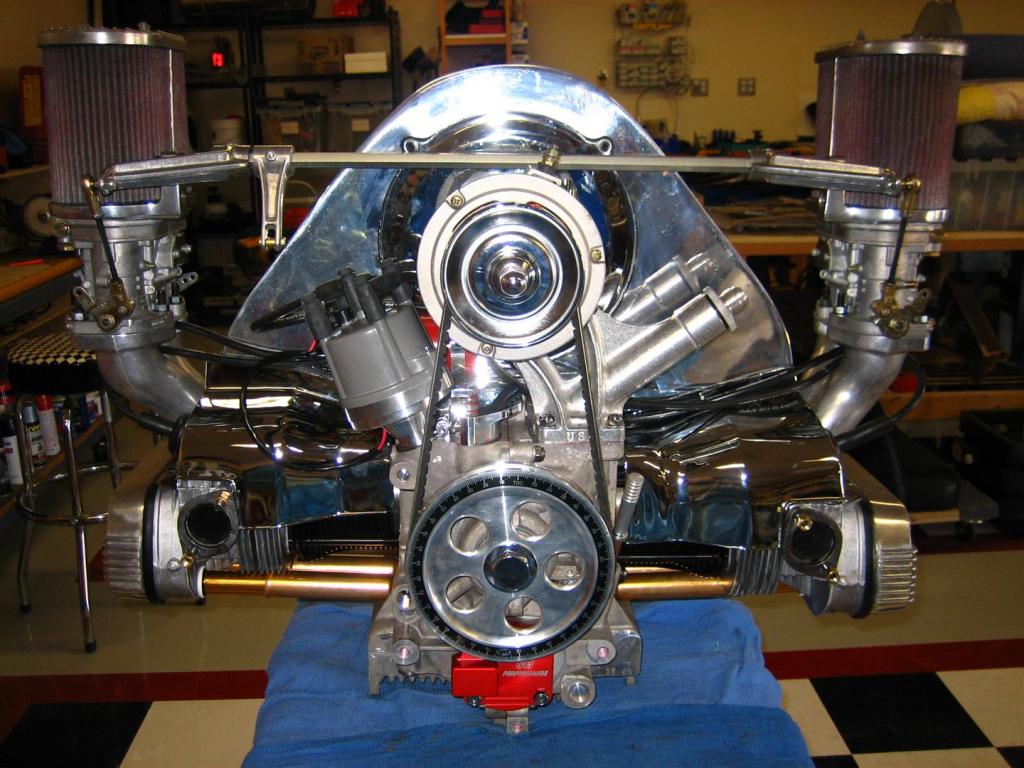
The 2023 Volkswagen 2332cc Type 1-style air-cooled engine represents a high-displacement, performance-oriented modification of the classic VW flat-four architecture, utilizing a 84mm stroke crankshaft combined with a 94mm cylinder bore to deliver substantial torque and horsepower for vintage VW restorations, dune buggies, and custom hot rods.
Introduction to the VW 2332cc Air-Cooled Engine Architecture
The Volkswagen air-cooled engine platform has served as a cornerstone of the automotive aftermarket and custom fabrication world for decades. Among the various displacement configurations derived from the legendary Type 1 block, the 2332cc engine occupies a unique space. Built by combining a robust 84mm stroke crankshaft with 94mm bore cylinders, this engine pushes the physical boundaries of the traditional Volkswagen crankcase.
Disambiguating this specific configuration from smaller variants like the 1600cc, 1776cc, or 1915cc engines is essential for builders, enthusiasts, and mechanics. While smaller displacement engines often prioritize reliability and economy for daily driving, the 2332cc setup is engineered primarily for high-output street performance, off-road rail applications, and competitive motorsports. Understanding its structural prerequisites, component synergy, and maintenance demands is crucial to ensuring longevity and reliable operation.
Core Technical Specifications and Internal Geometry
Building a reliable 2332cc Volkswagen engine requires strict adherence to precise mechanical tolerances and heavy-duty component selection. Because the engine reaches a displacement of 2,332 cubic centimeters through a long-stroke configuration, internal clearances and case modifications demand careful engineering.
The foundation of any high-performance 2332cc build is the crankcase. Standard stock magnesium cases often lack the structural integrity required to handle the increased stress and heat generated by a stroker motor. Consequently, builders typically utilize heavy-duty aftermarket aluminum cases or clearanced magnesium cases reinforced with steel studs.
Key Engine Specifications Table
| Component / Parameter | Standard Specification / Common Build Standard |
|---|---|
| Displacement | 2,332 cc (2.3 Liters) |
| Bore Size | 94 mm |
| Stroke Length | 84 mm |
| Crankshaft Material | Forged 4340 Chromoly Steel (Counterweighted) |
| Connecting Rods | 5.400-inch to 5.500-inch H-beam or I-beam Chromoly |
| Camshaft Type | Performance Hydraulic or Solid Roller/Flat Tappet |
| Cylinder Heads | Dual-port, ported/polished with upgraded valve sizes (e.g., 40x35.5mm or larger) |
| Compression Ratio | Typically 8.5:1 to 10.5:1 (Depending on fuel octane and application) |
The 84mm stroke crankshaft requires significant clearance work inside the crankcase. The interior walls of the case, camshaft clearance areas, and connecting rod journals must be physically machined to prevent internal collision during rotation. Additionally, the 94mm pistons and cylinders require the crankcase spigots to be bored out to a larger diameter, transitioning the engine away from standard factory dimensions.
Component Breakdown: Choosing the Right Parts for a 2332cc Build
Achieving long-term durability in a high-displacement air-cooled engine relies entirely on component synergy. Selecting mismatched parts can lead to premature wear, catastrophic mechanical failure, or thermal management issues.
Crankshaft and Rotating Assembly
The heart of the 2332cc engine is its 84mm counterweighted crankshaft. A counterweighted crank is mandatory at this stroke length to mitigate harmful harmonic vibrations at high RPMs. Forged 4340 chromoly steel cranks are the industry standard, offering superior tensile strength compared to cast alternatives. These are paired with high-performance connecting rods—often measuring between 5.400 and 5.500 inches—to optimize the rod-to-stroke ratio and reduce side-loading on the cylinder walls.
Cylinder Heads and Induction
Breathing is critical for a 2.3-liter engine. Standard single-port or unmodified dual-port cylinder heads will severely choke the engine's potential. Builders generally opt for high-flow, dual-port aftermarket aluminum heads featuring enlarged intake and exhaust valves (such as 40x35.5mm or 42x37mm configurations), heavy-duty dual valve springs, and chromoly retainers.
Induction is typically handled by dual Weber IDF or Dellorto DRLA carburetors ranging from 40mm to 48mm, or modern electronic fuel injection (EFI) conversion kits. Dual carburetors ensure equal fuel distribution to all four cylinders and provide the precise air-fuel ratios necessary to prevent destructive lean-out conditions under heavy acceleration.
Valvetrain and Camshaft Selection
The choice of camshaft dictates the engine’s power band. Performance camshafts with higher lift and duration are common, paired with heavy-duty pushrods, hardened followers, and 1.1:1 or 1.25:1 ratio rocker arms. Whether selecting a mechanical flat tappet or a hydraulic profile, proper valvetrain geometry must be measured and shimmed during assembly to prevent premature guide wear and valve float.
Thermal Management and Oil System Requirements
Air-cooled engines lack the benefit of a liquid cooling jacket, meaning they rely entirely on ambient air flow, finned cylinder heads, engine oil, and specialized sheet metal (doghouse oil cooler shrouds) to dissipate heat.
With a displacement of 2332cc, thermal management becomes exponentially more challenging. Increased displacement generates more combustion heat, which can quickly overwhelm stock cooling systems.
- External Oil Cooler: An auxiliary external oil cooler with an electric cooling fan is virtually mandatory for street-driven or off-road 2332cc engines.
- Full-Flow Oil System: Modifying the engine case for a "full-flow" oil filtration system ensures that 100% of the engine oil passes through an external spin-on oil filter before entering the bearings, removing particulate matter that could otherwise destroy high-performance bearings.
- Deep Sump: Adding an aluminum oil sump extension increases total oil capacity, keeping oil temperatures lower and ensuring the oil pickup tube remains submerged during hard cornering, acceleration, or steep inclines.
- Sheet Metal Sealing: Factory cooling tin and rubber seals must be kept in pristine condition. Air leaks around the engine compartment allow hot exhaust air to recirculate into the cooling fan, causing rapid overheating.
Performance Profiles, Power Output, and Driving Dynamics
The power characteristics of a well-tuned 2332cc Volkswagen engine are defined by robust low-end torque and a broad power band. Depending on the compression ratio, carburetor sizing, and camshaft selection, a typical street-tuned 2332cc engine produces anywhere from 130 to 180 horsepower, with radical race configurations pushing past 200 naturally aspirated horsepower.
In a lightweight chassis such as a classic Beetle, Karmann Ghia, Porsche 356 replica, or Meyers Manx dune buggy, a 150-horsepower 2332cc engine transforms the driving experience. Acceleration is aggressive, and passing power is readily available across all gears. However, drivers must adapt to the increased torque load on the rest of the drivetrain.
Drivetrain Upgrades and Compatibility Considerations
Dropping a high-output 2332cc engine into a vintage Volkswagen chassis requires evaluating the downstream components responsible for transferring power to the ground. Factory stock transmissions, axles, and clutches are generally not engineered to handle the torque output of a modified 2332cc powerplant.
- Clutch Assembly: A heavy-duty pressure plate (such as a Kennedy Stage 1 or Stage 2) paired with an organic or daikin disc is required to prevent clutch slippage.
- Transmission Ring and Pinion: Factory swing-axle or independent rear suspension (IRS) transaxles should ideally be built with hardened gears, heavy-duty side covers, and upgraded differential spiders to withstand sudden shock loads.
- Axles: Upgraded chromoly axles and heavy-duty CV joints are essential for off-road sand rails or heavy-street applications to prevent snapping under hard launches.
Common Build Mistakes and Troubleshooting Guidance
Building or maintaining a high-performance air-cooled engine involves navigating several well-documented pitfalls. Recognizing these common errors can prevent catastrophic engine failure.
- Improper Deck Height: Failing to measure and set correct deck height (the distance the piston travels to the top of the cylinder at top dead center) can result in incorrect compression ratios and piston-to-head contact.
- Inadequate Break-in Procedures: Flat tappet camshafts require specific high-zinc (ZDDP) break-in oils and precise initial RPM management (running the engine at 2,000 to 2,500 RPM for the first 20 minutes) to prevent wiping out cam lobes.
- Neglecting Fuel Octane Requirements: Building a 2332cc engine with a high compression ratio (e.g., 10.0:1) without planning for high-octane fuel leads to destructive engine detonation and cracked piston lands.
- Oil Pressure Fluctuations: Ignoring low hot idle oil pressure is a primary cause of premature bearing failure. Always verify oil clearances with precision micrometers and plastigage during assembly.
Conclusion and Next Practical Actions
The 2332cc Volkswagen engine stands as a premier choice for enthusiasts seeking modern performance metrics within a classic air-cooled package. Its combination of an 84mm stroke and 94mm bore delivers exceptional torque and horsepower, provided the build is approached with meticulous attention to detail, thermal management, and structural reinforcement.
For builders planning a project, the next practical steps include defining the intended vehicle application (street, track, or off-road), selecting matched induction and exhaust systems, and sourcing a reputable machinist familiar with heavy case-clearing procedures for large-stroke air-cooled blocks.