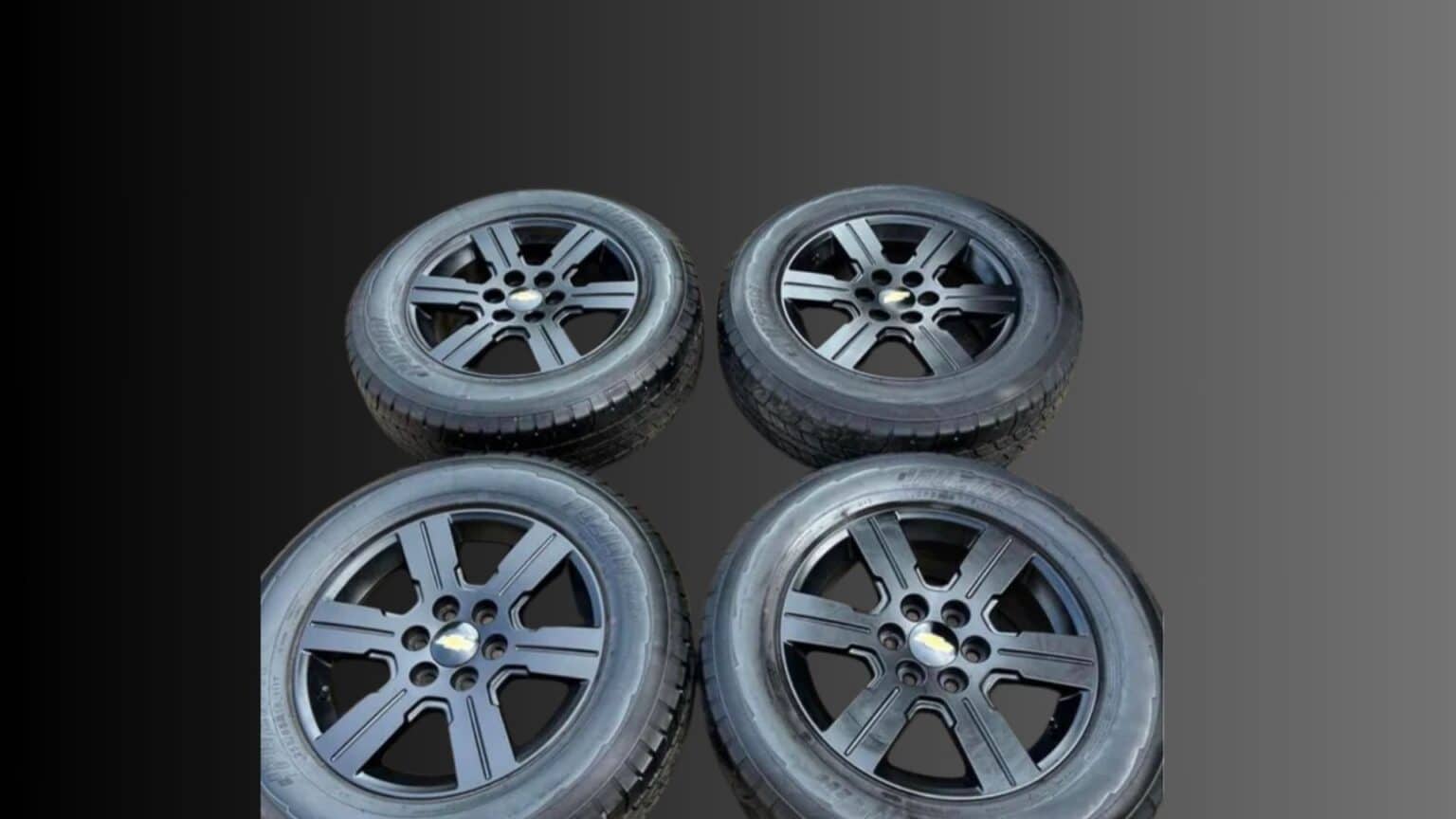
The 2003 Chevrolet Silverado features two primary factory bolt patterns determined by its Gross Vehicle Weight Rating (GVWR) and drivetrain configuration: light-duty 1500 models typically utilize a 6x5.5-inch (6x139.7mm) pattern, while heavy-duty 2500HD and 3500 models use an 8x6.5-inch (8x165.1mm) pattern. Understanding these specifications is essential for safe wheel and tire upgrades, routine maintenance, and proper vehicle operation.
Introduction to Chevrolet Silverado Wheel Configurations
Navigating the world of automotive wheel modifications requires a precise understanding of factory specifications, measurements, and compatibility constraints. For owners of the 2003 Chevrolet Silverado, wheel selection is heavily dictated by the truck's factory build configuration. General Motors produced several distinct weight classes for the 2003 model year, ranging from the light-duty half-ton variants up to the heavy-duty three-quarter-ton and one-ton workhorses.
Each weight class utilizes a specific wheel hub design engineered to handle varying payloads, towing capacities, and suspension loads. Attempting to install aftermarket wheels or swapping factory components from a different model year without verifying the bolt pattern, center bore, and offset can lead to catastrophic mechanical failures, unsafe driving dynamics, or an inability to properly torque the wheel assembly. This guide explores the engineering behind the 2003 Silverado bolt pattern options, examines the differences between half-ton and heavy-duty configurations, and provides actionable guidance for selecting replacement wheels or utilizing adapters safely.
Understanding Bolt Patterns: Measurements and Terminology
Before examining the specific configurations of the 2003 Silverado, it is helpful to establish a baseline understanding of how wheel bolt patterns are measured and designated. A bolt pattern, often referred to as the pitch circle diameter (PCD), consists of two primary components: the number of lug holes and the diameter of the imaginary circle drawn through the center of those holes.
In the United States, measurements are traditionally expressed in inches, while international standards rely on millimeters. For example, the common half-ton GM pattern is expressed as either 6x5.5 inches or 6x139.7mm.
- Number of Lugs: This is the physical count of stud holes on the wheel and matching wheel hub. The 2003 Silverado utilizes either six or eight lugs, depending on the chassis rating.
- Pitch Circle Diameter (PCD): Measuring this value depends entirely on whether the wheel has an even or odd number of lug holes. Because the 2003 Silverado utilizes even-numbered patterns (6-lug and 8-lug), measuring is relatively straightforward.
- Measuring Even Lug Patterns: To measure a 6-lug or 8-lug pattern, measure from the outer edge of one stud hole straight across the center hub to the center of the stud hole directly opposite.
Critical Supporting Dimensions
Beyond the bolt pattern itself, three additional measurements dictate whether a wheel will physically fit a 2003 Silverado:
- Center Bore (CB): The machined hole in the center of the wheel that centers the wheel precisely over the hub lip. The 2003 Silverado requires a specific center bore diameter to ensure hub-centric mounting, which minimizes vibrations.
- Thread Pitch: The 2003 Silverado utilizes standard wheel studs with specific thread pitches (typically M14x1.5 for modern half-ton and heavy-duty trucks of this era), which dictates the lug nuts required for secure installation.
- Backspacing and Offset: These measurements determine how far inward or outward the wheel sits relative to the suspension uprights, brake calipers, and fender wells.
2003 Silverado 1500 (Half-Ton) Bolt Pattern
The 2003 Chevrolet Silverado 1500 (half-ton) is the most common variant on the road, encompassing standard cabs, extended cabs, and crew cabs with short or long beds.
The 6x5.5-Inch Standard
The factory bolt pattern for almost all standard 2003 Silverado 1500 models is 6x5.5 inches (commonly referenced in metric as 6x139.7mm). This pattern has been a staple of General Motors trucks and SUVs for decades, making aftermarket wheel selection exceptionally broad.
- Compatibility: Wheels from many other GM trucks and SUVs (such as the Tahoe, Suburban, and older C/K series trucks) share this exact 6-lug configuration.
- Hub Centric Design: Factory wheels are hub-centric, meaning the weight of the vehicle rests on the center hub ring rather than purely on the shear strength of the wheel studs. Aftermarket wheels designed for this pattern often require hub rings if their center bores are manufactured oversized to fit multiple vehicle brands.
Exceptions in the 1500 Lineup
While the standard 1500 utilizes the 6-lug pattern, buyers and restorers must account for special-edition models produced during this era:
- Silverado SS: Introduced for the 2003 model year, the performance-oriented Silverado SS utilized the standard 6x5.5-inch bolt pattern, though it came equipped from the factory with large 20-inch wheels designed to clear performance disc brake packages.
- Silverado 1500HD: Despite carrying the "1500" designation, the heavy-duty half-ton (1500HD) built on the heavier frame shared its chassis architecture and running gear with the 2500 series. Consequently, the 1500HD utilizes an 8-lug pattern, not a 6-lug pattern. Verifying the door jamb sticker or counting the physical wheel studs is mandatory before purchasing wheels for a 1500HD.
2003 Silverado 2500HD and 3500 (Heavy-Duty) Bolt Patterns
Stepping up to the heavy-duty platforms—the 2500HD (Three-Quarter Ton) and the 3500 (One Ton)—brings significantly higher payload capacity, heavier axles (such as the corporate 14-bolt rear end), and larger braking systems.
The 8x6.5-Inch Heavy-Duty Standard
The 2003 Silverado 2500HD and 3500 models utilize an 8x6.5-inch (or 8x165.1mm) bolt pattern. This robust 8-lug configuration is engineered to distribute immense towing loads and heavy tongue weights safely across a wider surface area.
- Interchangeability: This 8x6.5-inch pattern is shared across multiple generations of GM heavy-duty trucks, as well as historical Dodge Ram 2500/3500 trucks up to 2010. However, brake caliper clearance and center bore sizing must still be verified when cross-shopping wheels between different truck brands.
- Dual Rear Wheel (DRW) Considerations: The 3500 series includes dually configurations. While the rear axle hubs still utilize the fundamental 8x6.5-inch pattern, the inner and outer dual wheels have specialized offset requirements and utilize unique hub-piloted or stud-piloted mounting hardware to ensure proper alignment and safety under maximum loads.
Comparison of 2003 Silverado Wheel Specifications
To quickly determine which category a specific 2003 Silverado falls into, consult the comparison table below outlining factory specifications across the model lineup.
| Model Variant | GVWR Class | Factory Bolt Pattern | Metric Equivalent | Stock Wheel Diameters | Hub Configuration |
|---|---|---|---|---|---|
| Silverado 1500 | Light-Duty (Half-Ton) | 6 x 5.5 in | 6 x 139.7 mm | 16 in, 17 in (SS) | Hub-Centric |
| Silverado 1500HD | Heavy Half-Ton | 8 x 6.5 in | 8 x 165.1 mm | 16 in | Hub-Centric |
| Silverado 2500HD | Heavy-Duty (3/4 Ton) | 8 x 6.5 in | 8 x 165.1 mm | 16 in | Hub-Centric |
| Silverado 3500 | One-Ton (SRW/DRW) | 8 x 6.5 in | 8 x 165.1 mm | 16 in | Hub/Stud-Centric |
Aftermarket Options, Adapters, and Potential Pitfalls
Upgrading wheels on a 2003 Silverado is a popular modification, but deviations from factory specifications introduce potential mechanical risks if not executed properly.
Wheel Adapters and Spacers
When owners wish to install wheels with a different bolt pattern (for example, putting newer 6-lug wheels from a modern truck onto an older chassis, or vice versa), wheel adapters are often considered.
- Safety Implications: Cheap aluminum or cast spacers can crack under heavy torque, towing loads, or off-road stress. If wheel adapters are used, they must be hub-centric, constructed from forged billet aluminum (such as 6061-T6), and secured with high-grade steel studs.
- Scrub Radius and Bearings: Adding spacers or selecting wheels with aggressive negative offsets pushes the centerline of the tire outward. This increases the load on wheel bearings, ball joints, and steering components, leading to accelerated wear.
Brake Clearance Issues
The transition from factory 16-inch wheels to aftermarket configurations—particularly on 2500HD models—frequently encounters clearance problems with brake calipers and steering knuckles.
- Backspacing Verification: Ensure that any aftermarket wheel offers sufficient interior barrel clearance. A wheel with an improper offset may rub against the inner control arms during tight turns or strike the brake caliper housing, preventing the wheel from bolting flush against the hub.
Frequently Asked Questions
Will wheels from a newer 2019+ Silverado fit a 2003 Silverado 1500?
No. General Motors changed the half-ton bolt pattern on the Silverado starting with the 2019 model year to a 6x5.31-inch (6x135mm is Ford; GM moved to a 6x5.5 pattern continuing on some, but hub bores and offsets changed dramatically). Specifically, modern 1500 trucks use a different thread pitch (M14x1.5 vs older configurations) and hub sizing, meaning direct wheel swaps across distant generations require careful measurement and often custom hub rings or adapters.
How can I verify my 2003 Silverado's bolt pattern if I am unsure of its trim level?
The most reliable method is to physically measure the distance between the center of one lug stud across the hub to the center of the opposite stud using a tape measure or specialized bolt pattern gauge. Additionally, checking the tire and loading information placard located on the driver-side door jamb will display the exact GVWR and original equipment specifications for your specific truck.
Are 1500 and 2500HD wheel hubs interchangeable?
No. The wheel hubs, spindles, axle shafts, and brake assemblies on a 1500 are completely different in scale and strength compared to a 2500HD. A 6-lug wheel cannot be bolted to an 8-lug hub, and vice versa, without unsafe structural modifications.
What is the factory torque specification for 2003 Silverado lug nuts?
For standard 2003 Silverado 1500 models, factory wheel lug nuts should typically be torqued in a star pattern to approximately 100 lb-ft. Heavy-duty 2500HD and 3500 models require a significantly higher torque specification, usually around 140 lb-ft, to handle heavier loads. Always verify specific torque values against your owner's manual or factory service documentation.
Do I need an alignment after changing my Silverado's wheels?
If you are changing only the wheels and maintaining the exact same tire overall diameter, width, and offset, a wheel alignment is generally not required. However, if you are installing significantly larger tires, lifting the vehicle, or changing suspension components during the wheel upgrade, a professional four-wheel alignment is mandatory to prevent premature tire wear and erratic steering.
Conclusion and Next Actions
Accurately identifying your 2003 Silverado bolt pattern—whether confirming the standard 6x5.5-inch setup on a half-ton or the heavy-duty 8x6.5-inch configuration on a 2500HD—prevents costly purchasing mistakes and ensures optimal vehicle safety. Before ordering new wheels or tires, physically verify your stud count, measure the pitch circle diameter, and double-check center bore and offset measurements against your truck's specific suspension and braking setup.