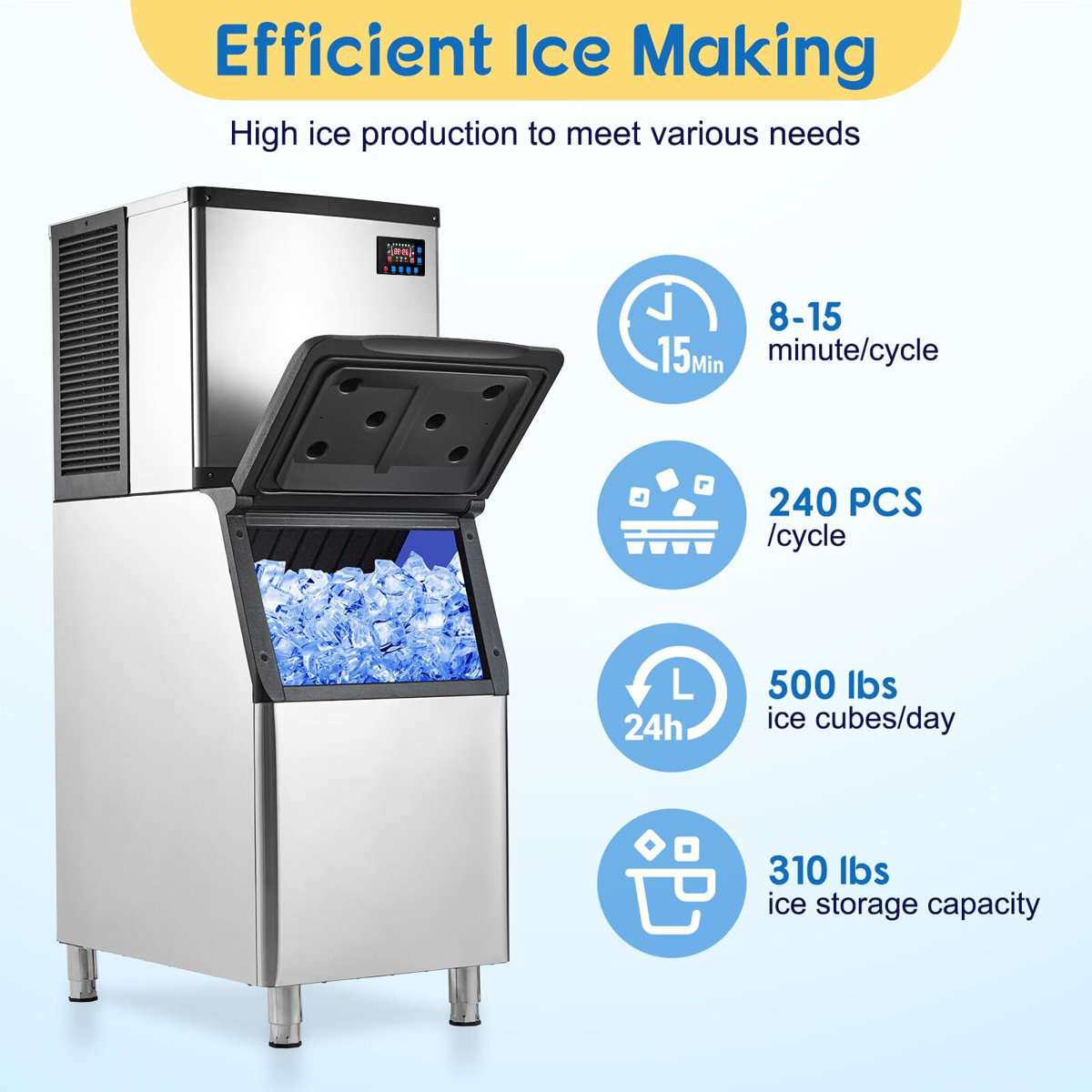
A commercial ice machine with a 150 lb daily ice production capacity yields approximately 150 pounds of ice over a 24-hour cycle, making it ideal for small-to-medium businesses such as cafes, convenience stores, and bars. Selecting and operating a unit of this size requires careful evaluation of spatial constraints, continuous water supply, specialized drainage, and electricity requirements.
Operating a commercial kitchen, bar, or hospitality venue requires a reliable and consistent supply of ice. When analyzing the equipment necessary to keep operations running smoothly, understanding output capacity is paramount. A machine rated for 150 lb daily ice production occupies a specific sweet spot in the commercial refrigeration market. It provides ample inventory for establishments that do not require industrial-scale output but demand far more reliability and volume than standard residential appliances can offer. Navigating the purchase, installation, and daily maintenance of these units involves balancing operational output, utility demands, and spatial realities.
Defining 150 lb Daily Ice Production and Output Realities
The phrase "150 lb daily ice production" refers to the maximum theoretical volume of ice a commercial ice maker can manufacture under optimal environmental conditions over a 24-hour period. Manufacturers typically test these machines in controlled environments—usually with an ambient air temperature of 70°F and a water temperature of 50°F. Because real-world commercial kitchens and back-of-house areas rarely maintain these exact laboratory conditions, actual daily yields often fluctuate.
When ambient temperatures rise above 70°F—which is common in busy kitchens during peak service hours—the cooling efficiency of the refrigeration compressor decreases. Warmer incoming water also extends the freeze cycle, leading to a reduction in total daily output. Facility managers and business owners must factor in these environmental variables when sizing their equipment. A machine rated for 150 pounds may produce closer to 110 or 120 pounds of ice in a hot, humid environment.
Furthermore, production capacity must not be confused with storage capacity. An ice machine head capable of producing 150 pounds per day rarely holds 150 pounds of ice inside its built-in bin or compatible storage dispenser. Most units in this output class feature integrated bins holding between 50 and 80 pounds of ice, requiring proper harvesting cycles throughout the day to meet peak demand periods without running dry.
Ideal Business Applications and Use Cases
A 150-pound daily production capacity serves specific operational profiles across the food service, hospitality, and healthcare sectors. Identifying whether this capacity aligns with daily consumption patterns prevents both ice shortages and costly over-purchasing.
Food Service and Beverage Operations
- Coffee Shops and Cafes: Primarily use ice for iced espresso drinks, cold brew, and blended beverages. A 150 lb unit easily supports mid-volume cafes serving a few hundred customers daily.
- Bars and Pubs: Cocktails, highballs, and spirit-cooling require steady ice availability. Small neighborhood bars find this capacity sufficient, provided peak evening rushes are balanced with continuous production cycles.
- Convenience Stores and Quick-Service Restaurants: Often utilize this size for self-service fountain beverage stations or bagging small amounts of ice for retail sale, though high-volume soda fountains may require larger modular units.
Non-Commercial and Institutional Settings
- Small Offices and Corporate Breakrooms: Organizations with large workforces or frequent client visits install these units to maintain constant access to beverage ice.
- Assisted Living and Healthcare Facilities: Nursing stations and small break areas rely on clean ice for patient hydration and therapeutic uses.
- Fitness Centers and Gyms: Supplementing hydration stations with readily accessible ice for water coolers and sports drinks.
Technical Specifications, Utilities, and Installation Prerequisites
Installing a 150 lb daily ice production machine requires dedicated utility infrastructure. Unlike standard plug-and-play kitchen appliances, commercial ice makers demand precise electrical, water, and drainage connections to operate safely and efficiently.
Electrical Requirements
Most commercial ice makers in the 150-pound output class operate on standard 115V power (15 or 20 amp dedicated circuit), but technicians must verify exact nameplate voltage requirements. Because refrigeration compressors draw significant amperage upon startup, these units generally require a dedicated electrical outlet without extension cords or shared breakers to prevent tripping and electrical hazards.
Plumbing and Water Quality
A continuous potable water supply is mandatory. Water lines must feature an accessible shut-off valve and typically require a 1/4-inch or 3/8-inch outer diameter copper or food-grade flexible tubing.
- Water Filtration: Installing a commercial-grade water filtration system is strongly recommended. Filtration removes sediment, reduces chlorine taste, and drastically minimizes scale buildup on the evaporator plate, extending the operational lifespan of the machine.
- Hardness Limits: High mineral content (hard water) accelerates scale accumulation, reducing ice clarity and impeding heat transfer during the freezing cycle.
Drainage and Airflow Clearance
Ice machines produce wastewater during automatic cleaning and harvest cycles, requiring a floor drain or gravity-fed drain line situated nearby. Because these machines rely on air-cooled refrigeration condensers, they also require adequate physical clearance around their side and rear panels. Obstructing airflow forces the compressor to work harder, reducing ice output and increasing energy consumption.
| Feature / Requirement | Typical Specification for 150 lb Units | Operational Importance |
|---|---|---|
| Electrical Supply | 115V / 60Hz / 1-Phase, 15A Dedicated | Prevents circuit overloads and compressor failure. |
| Water Supply Line | 1/4" to 3/8" OD Copper or Approved Tubing | Ensures consistent water volume for batch freezing. |
| Drainage Type | Gravity Drain or Condensate Pump | Removes meltwater and harvest cycle runoff safely. |
| Ambient Air Temp | 50°F to 100°F (Optimal: 70°F) | Directs efficiency and overall daily yield potential. |
| Bin Storage Capacity | 50 lb to 80 lb Integrated Bins | Buffers supply for peak demand periods. |
Evaluating Ice Types: Cube, Flake, and Nugget
When selecting a machine within the 150 lb daily production tier, buyers must choose the specific style of ice best suited to their menu and customer expectations. Different ice types melt at different rates and interact with liquids uniquely.
Dice and Half-Dice Cubes
Standard cube ice melts slowly, making it ideal for carbonated soft drinks, iced tea, and spirits. Half-dice cubes pack more tightly into glasses, displacing liquid effectively and chilling beverages rapidly. These cubes are the industry standard for general restaurant and bar applications.
Nugget Ice (Sonic Ice)
Nugget ice consists of compacted flake ice formed into soft, chewable pellets. Popularized by quick-service drink chains, nugget ice absorbs beverage flavors and is easily blended for smoothies. Healthcare facilities also favor nugget ice because it is gentle on patients' teeth.
Flake Ice
Flake ice is soft, compressed snow-like ice that packs closely around items. It is rarely used in beverage service; instead, restaurants and seafood markets utilize flake ice for produce displays, salad bars, and transporting perishable goods.
Maintenance Schedules and Operational Best Practices
Maintaining a 150 lb commercial ice machine requires adhering to strict cleaning and sanitization protocols. Because ice is classified as a food product by health departments, neglecting machine hygiene poses serious public health risks and voids manufacturer warranties.
Routine Cleaning Checklist
- Daily / Weekly Tasks: Wipe down exterior surfaces, inspect the ice scoop, and ensure the scoop holder remains clean and sanitary. Never store the ice scoop inside the bin if it contacts the ice directly unless using an approved hanging bracket.
- Monthly to Bi-Monthly Descaling: Run an approved nickel-safe scale remover or cleaner through the machine's water circuit to dissolve calcium and mineral deposits.
- Sanitization Cycles: Follow up cleaning cycles with a food-contact sanitizer to eliminate slime, mold, and bacteria growth inside the water trough and bin walls.
- Air Filter Maintenance: If the unit utilizes a removable air filter on the condenser, remove and wash it monthly to maintain unobstructed airflow.
Common Operational Mistakes to Avoid
Avoiding operational pitfalls ensures lower utility bills, fewer repair calls, and extended equipment longevity.
- Ignoring Water Quality: Operating an ice machine on untreated hard water leads to rapid scale formation on the evaporator plates. This compromises ice harvest efficiency and eventually cracks plastic components or damages water pumps.
- Inadequate Ventilation: Pushing an ice machine into a tight, unventilated alcove causes heat to trap around the condenser coils, severely depressing ice production and overheating the compressor.
- Skipping Professional Service: While daily and monthly cleaning can be handled by in-house staff, scheduling an annual preventive maintenance check with a certified refrigeration technician helps catch worn components, refrigerant leaks, or electrical faults before catastrophic failure occurs.
Frequently Asked Questions
How many people can a 150 lb daily ice production machine support?
In an office setting, a 150-pound machine easily supports 75 to 100 employees consuming standard amounts of beverage ice. In a commercial food service environment, consumption rates are much higher; a busy bar or cafe with heavy beverage sales may find this capacity sufficient for 50 to 75 daily patrons, depending on glass sizes and drink types.
Does a 150 lb ice maker require a floor drain?
Yes, commercial ice machines require a drain to handle meltwater and the water purged during automatic harvest cycles. If a gravity drain is not located directly beneath or adjacent to the machine, an external condensate pump must be installed to lift wastewater to an elevated drain line.
Why is my ice machine producing less than 150 pounds of ice?
Reduced output is typically caused by high ambient room temperatures, warm incoming water supply, restricted condenser airflow, or heavy mineral scale buildup on the evaporator grid. Cleaning the condenser filters and descaling the water circuit often restores normal production levels.
Can I connect a 150 lb ice machine to a standard refrigerator water line?
While it is technically possible, standard 1/4-inch refrigerator supply lines designed for residential door dispensers often fail to provide the continuous, high-volume flow required by a commercial ice maker during active harvest cycles. Dedicated commercial plumbing lines are strongly recommended.
How often should a commercial ice machine be sanitized?
Health codes and manufacturer guidelines generally recommend thorough cleaning and sanitizing at least every six months. High-dust environments, hard water areas, or heavy-use commercial kitchens often necessitate cleaning every three months to prevent biological growth and mineral scaling.
Next Actions and Purchasing Guidance
Before purchasing or installing a 150 lb daily ice production unit, conduct a thorough site survey of your facility. Measure available floor or counter space, verify that dedicated electrical circuits and water supply lines are accessible, and confirm that a proper drain route exists. Consult with a commercial refrigeration supplier or licensed plumber to select the exact ice form and storage bin configuration that aligns with your operational throughput and local health department regulations.