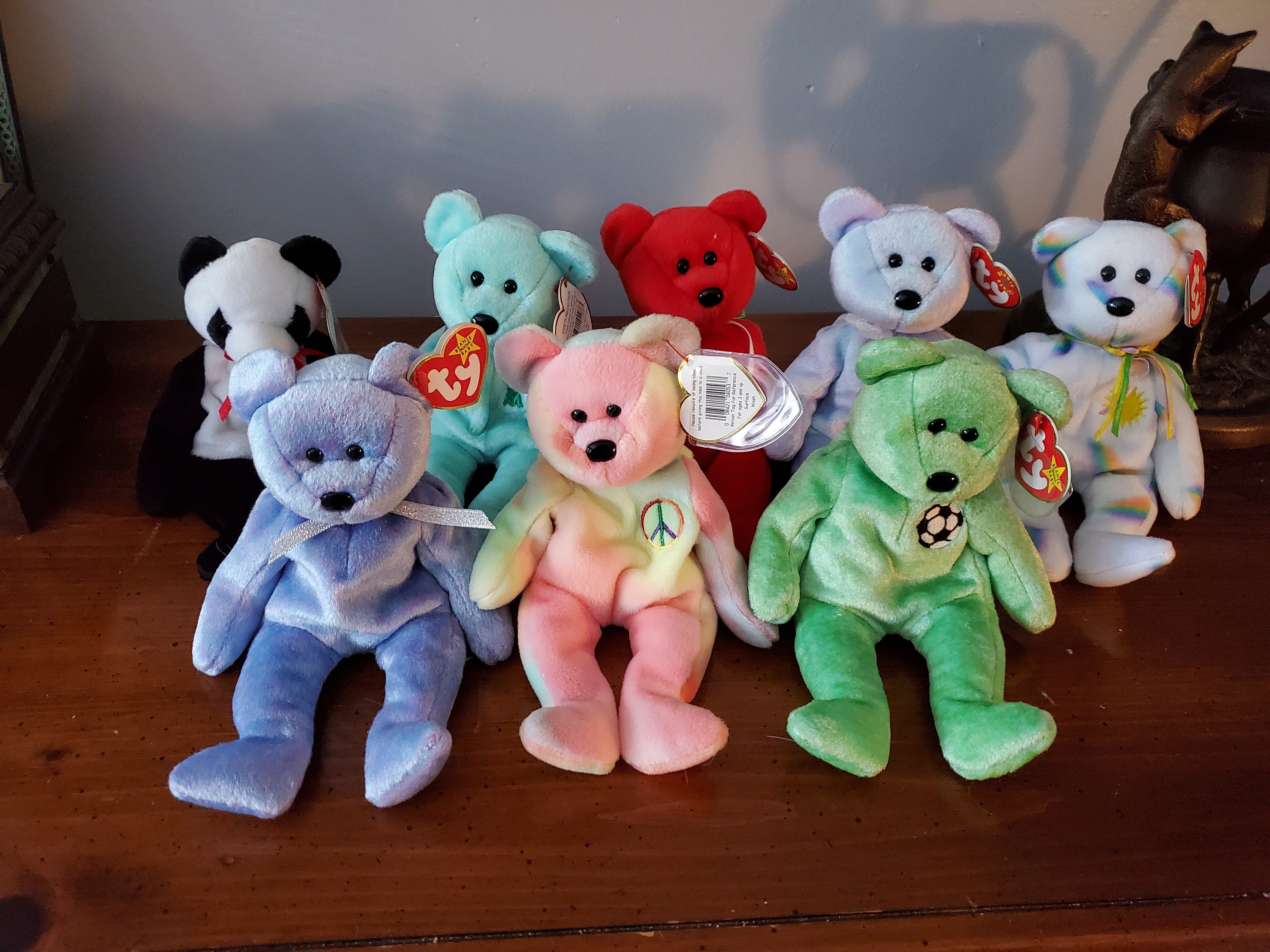
The 10 most valuable Beanie Babies are rare plush toys from the 1990s—such as Princess Diana Bear, Claude the Crab with style errors, and certain authenticated 1st Generation swing-tag items—that command thousands of dollars from collectors due to extreme scarcity, manufacturing anomalies, and pristine condition.
The cultural phenomenon of Beanie Babies in the mid-to-late 1990s represents one of the most unique economic and social bubbles in modern retail history. Created by Ty Warner and his company Ty Inc. starting in 1993, these bean-filled plush animals were intentionally produced in limited quantities, retired abruptly, and marketed with the radical notion that they would one day fund college tuitions and retirements. While the vast majority of the hundreds of millions of Beanie Babies produced are worth little more than sentimental value today, a select echelon of rarities, prototypes, and error-laden versions commands remarkable prices on the secondary market. Understanding which items retain genuine value requires separating internet myth from actual auction results, authentication standards, and historical market behavior.
The Anatomy of Beanie Baby Value: What Makes a Plush Worth a Fortune?
To understand why certain Beanie Babies are valued in the thousands while others struggle to fetch a dollar at a garage sale, one must examine the strict criteria used by professional appraisers and high-end toy auction houses. Value is never accidental; it is driven by a precise combination of manufacturing era, tag generation, error status, and physical preservation.
Swing Tags and Generation Markers
The paper heart-shaped swing tag attached to the ear of every Beanie Baby is the primary document of its authenticity and pedigree. Ty Inc. updated these tags regularly, leading to generations ranging from 1st Generation (extremely rare, featuring a gold-embossed logo and simple text) to 4th and 5th generations, which were printed by the millions.
- 1st and 2nd Generation Tags: Found only on the earliest releases from 1993 and 1994, these tags significantly multiply a toy's value.
- Tush Tags: The fabric tag stitched into the bottom rear of the toy acts as a secondary confirmation. The presence of a hologram, specific Korean or Chinese manufacturing marks, or specific material dates can drastically alter the evaluation.
Condition and Grading
Much like comic books or trading cards, Beanie Babies are subject to strict condition grading. A "mint" Beanie Baby must feature a pristine, uncreased swing tag protected by a hard plastic case (often referred to as a "Tag Protector"), clean fabric with no fading, intact whiskers (where applicable), and original factory stuffing distribution. Even a slight crease in the heart tag can instantly slash a toy's collector value by fifty percent or more.
The Myth vs. Reality of Factory Errors
For decades, internet rumors suggested that any spelling error on a tag or a mismatched tush tag made a Beanie Baby instantly valuable. In reality, mass production in the 1990s meant that thousands of typographical errors slipped past quality control. Most errors—such as minor punctuation mistakes, spacing issues, or slight color variations in the thread—are common and add little to no value. True manufacturing anomalies that command high prices are rare prototypes or colorways that slipped out of the factory before production standards were finalized.
The 10 Most Valuable Beanie Babies
While thousands of variations exist, verified auction sales and collector registries point to ten specific items that consistently command the highest market valuations.
1. The 1997 Princess Diana Bear (First Edition with PVC Pellets)
Released in late 1997 following the death of Princess Diana, this deep purple bear with a white rose embroidered on its chest was created to benefit the Diana, Princess of Wales Memorial Fund. While millions were produced, the very first batch manufactured in Indonesia used Polyvinyl Chloride (PVC) pellets rather than Polyethylene (PE) pellets. Mint-condition PVC versions with flawless swing tags have commanded prices ranging from $3,000 to upwards of $10,000 at specialized toy auctions.
2. Valentina the Bear (with Fabric and Tag Errors)
Valentina was released in 1999 as a Valentine's Day special featuring a pink body and a white heart. The standard version is common and worth very little. However, a small batch of Valentinas was produced with a severe tag error where the tush tag indicates a different animal entirely (such as a bear named "Hissy" the snake or "Lefty" the lobster) or features glaring misspellings. These verified error specimens have traded for $2,000 to $6,000 among dedicated variant collectors.
3. Claude the Crab (with Multi-Color Tie-Dye Errors)
Claude the Crab was introduced in 1997 featuring a multi-colored tie-dye pattern. Because of the nature of the fabric printing process, no two Claudes looked identical. However, early prototypes and rare production runs featured a distinct lack of proper coloring or inverted shell designs. Pristine specimens featuring authenticated early generation tags have realized prices between $1,500 and $3,500.
4. Brownie the Bear (1st Generation Swing Tag)
Brownie the Bear is one of the original "Original Nine" Beanie Babies released in 1993. Featuring simple brown plush and black button eyes, Brownie was retired very early in the production run and replaced by Cubby the Bear. Finding a Brownie in acceptable condition with an intact, authentic 1st Generation swing tag is exceptionally difficult, pushing valuations into the $2,000 to $3,000 range.
5. Gobbles the Turkey (1st Generation Tag Variants)
Introduced in 1997, Gobbles is a colorful plush turkey complete with a fan-like tail. Early versions of Gobbles featuring 1st or early 2nd generation swing tags—or specific factory stitching flaws on the snood—are heavily sought after. Top-tier specimens in protective cases routinely command between $1,500 and $2,500.
6. Peace the Bear (Tie-Dye Multi-Color Variations)
Peace the Bear, adorned with a tie-dye pattern and a peace sign embroidery on its chest, was a massive hit in 1997. Because the fabric roll was cut randomly during manufacturing, every Peace bear has a unique pattern distribution. Collectors pay significant premiums for bears where the peace sign is centrally positioned on the face or chest, alongside early generation tags, driving prices up to $2,000.
7. Bubbles the Fish (1st Generation Tag with Yellow Ribbon Error)
Bubbles the yellow-and-black fish was released in 1995. A rare subset of early releases featured a manufacturing error on the swing tag or tush tag, occasionally misidentifying the creation date or combining text elements from other aquatic releases. Authenticated error variants in mint condition have fetched upwards of $1,500.
8. Magic the Dragon (Signed Prototypes and Early Editions)
Magic the Dragon, featuring a purple body, yellow wings, and a yarn mane, was released in 1995. While standard versions are widely available, rare pre-production prototypes or versions personally signed by Ty Warner at early trade shows have achieved secondary market values between $1,000 and $1,500.
9. Lucky the Ladybug (Without Wings Error)
Lucky the Ladybug was released in 1996 with black spots and felt wings. A factory error occurred during a brief production run where the wings were omitted entirely from the assembly process. These wingless Ladybugs, when verified by reliable third-party toy authenticators, command prices around $1,000.
10. Peanut the Elephant (Light Blue 1st Generation Edition)
Peanut the Elephant was originally produced in a very dark royal blue color in 1995. However, due to a dyeing mistake, the factory produced a small batch in a much lighter, pastel blue. Ty quickly corrected the color to dark blue, making the light blue version exceptionally scarce. Light blue Peanuts with early generation tags regularly trade for $1,000 to $2,500 depending on overall condition.
| Beanie Baby Name | Release Year | Rarity Factor / Primary Identifier | Estimated Market Value Range |
|---|---|---|---|
| Princess Diana Bear | 1997 | Indonesian manufacture with PVC pellets | $3,000 – $10,000+ |
| Valentina the Bear | 1999 | Severe tush tag and fabric mismatches | $2,000 – $6,000 |
| Claude the Crab | 1997 | Multi-color tie-dye anomaly with 1st Gen tag | $1,500 – $3,500 |
| Brownie the Bear | 1993 | One of the Original Nine with 1st Gen tag | $2,000 – $3,000 |
| Gobbles the Turkey | 1997 | Early generation tag with stitching variants | $1,500 – $2,500 |
| Peace the Bear | 1997 | Centered tie-dye pattern with rare tag | Up to $2,000 |
| Bubbles the Fish | 1995 | Early tag text and date error variants | $1,000 – $1,500 |
| Magic the Dragon | 1995 | Pre-production prototype or Ty Warner signature | $1,000 – $1,500 |
| Lucky the Ladybug | 1996 | Factory error lacking felt wings | $800 – $1,200 |
| Peanut the Elephant | 1995 | Light pastel blue color mistake (1st Gen) | $1,000 – $2,500 |
Verifying and Selling Valuable Beanie Babies
If you suspect you possess one of these rare plush items, navigating the market requires a methodical approach to verification and sales preparation.
Authentication Services
Because the market is saturated with counterfeit tags, spliced tush tags, and fraudulent "error" modifications, buyers rarely purchase high-value items without professional third-party authentication. Specialized grading companies evaluate the plush fabric, inspect tag fonts using microscopic analysis, and encapsulate the item in tamper-evident acrylic holders with a certified grade.
Avoiding Common Valuation Pitfalls
Many owners mistake asking prices on online marketplaces like eBay for actual realized sales. Sellers can list any common Beanie Baby for thousands of dollars, but listings do not reflect market reality. To find genuine values, search for "sold" or "completed" listings of authenticated items handled by reputable auction houses such as Heritage Auctions or Skinner.
Preservation Best Practices
To maintain or enhance the value of a collectible Beanie Baby:
- Never store plush toys in direct sunlight, which causes rapid fading of the fabric and discoloration of paper tags.
- Keep items away from high humidity and fluctuating temperatures to prevent mold growth and paper degradation.
- Invest in acrylic tag protectors immediately to prevent accidental creasing of the swing tag.
Frequently Asked Questions About Beanie Baby Valuation
Are any Beanie Babies currently worth millions of dollars?
No. Despite viral internet claims and urban legends suggesting certain collections are worth millions, no single Beanie Baby has ever sold for that amount. The absolute peak verified auction sales for ultra-rare prototypes or error variants generally cap out between $5,000 and $10,000.
Do Beanie Baby tag spelling errors automatically make them valuable?
No. Spelling errors were common during the 1990s due to rapid mass production across multiple overseas factories. Unless an error is documented as a verified pre-production prototype or affects an extremely limited early release, it typically adds no financial value.
How can I tell if my Princess Diana Bear has PVC or PE pellets?
To determine pellet type, check the tush tag of the bear. The material type is usually abbreviated as "P.V.C." or "P.E." under the stuffing description line. Additionally, PVC pellets feel harder and heavier, whereas PE pellets feel softer, lighter, and more uniform.
Is it worth getting my Beanie Baby professionally graded?
Professional grading and encapsulation are only financially viable if you possess an authenticated, high-tier rarity (such as a 1st Generation Brownie or a light blue Peanut) in mint condition. Grading common 4th or 5th generation Beanie Babies costs more than the market value of the toy itself.
Where is the best place to sell a valuable Beanie Baby?
High-end rare collectibles are best consigned through established auction houses that specialize in vintage toys and pop-culture memorabilia, as they attract serious, verified collectors worldwide rather than casual browsers.
Summary and Next Actions
The era of effortless fortunes built on plush toys has passed, but a discerning market remains for authenticated rarities, manufacturing anomalies, and pristine early-generation specimens. If you believe you own a valuable item, begin by inspecting the swing and tush tags, comparing them against verified collector databases, and consulting a professional toy appraiser before attempting a private sale.