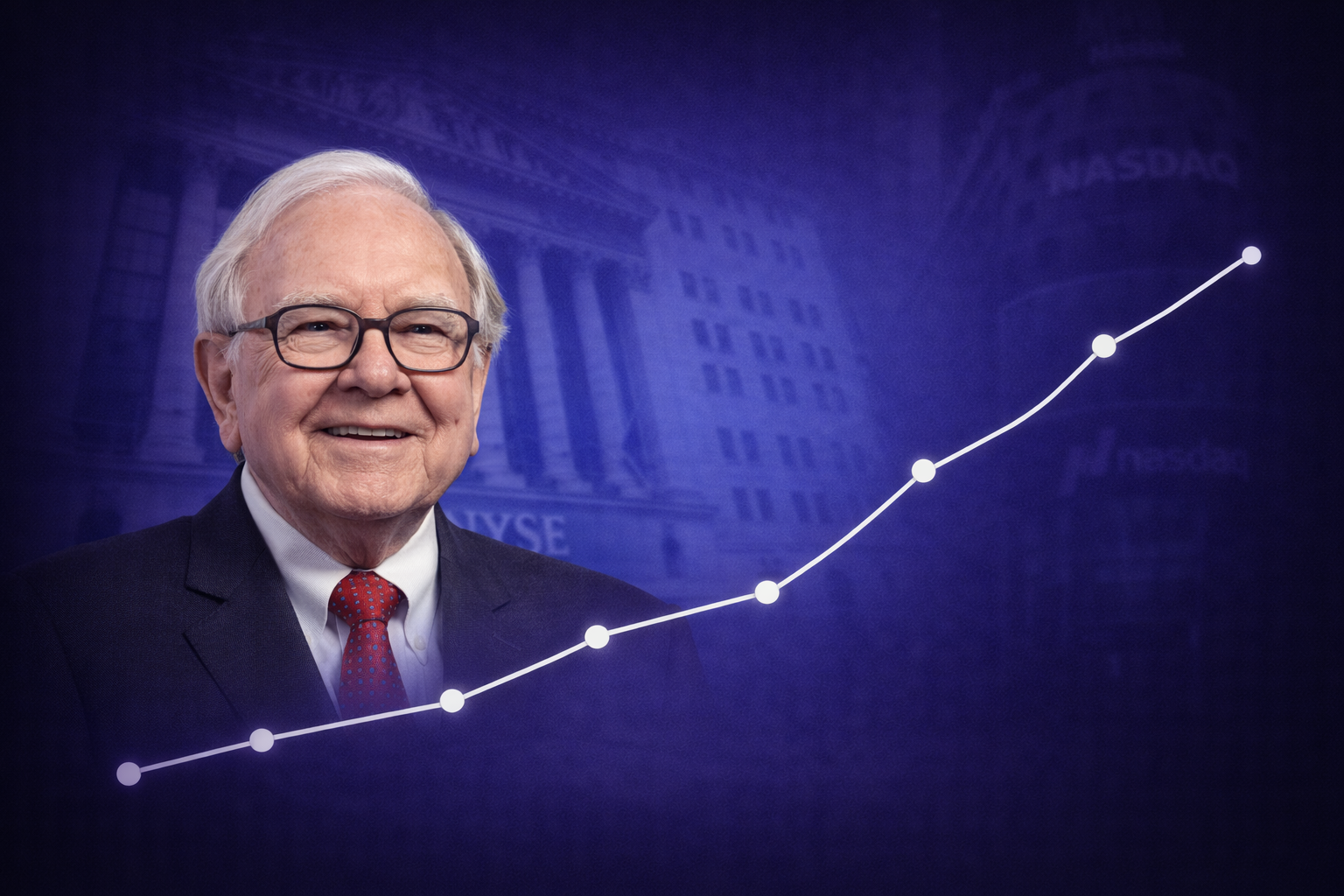
Warren Buffett's net worth is not the result of speculative trading or quick market wins, but rather the compounding power of long-term value investing, economic moats, and disciplined reinvestment within Berkshire Hathaway.
When examining the staggering financial legacy of Warren Buffett, observers frequently focus on the final dollar figure, the multi-billion-dollar quarterly earnings of Berkshire Hathaway, or the sheer scale of his stock portfolio. Yet, fixating purely on the accumulation of wealth misses the operational engine that made it possible. Understanding Warren Buffett’s net worth requires isolating a single, profound insight: his fortune is the ultimate byproduct of treating common stocks as fractional ownership stakes in operating businesses, fueled by an insatiable appetite for compounding and an uncompromising emotional discipline. This philosophy diverges sharply from modern day-trading mentalities and speculative asset bubbles. It is a systematic approach to capital allocation that prioritizes fundamental intrinsic value over short-term price fluctuations.
To fully grasp this dynamic, one must look past the headlines and examine the mechanics of how his wealth was built, sustained, and structured. This analysis explores the foundational principles of value investing, the role of economic moats, the unique vehicle of Berkshire Hathaway, and the timeless lessons retail and institutional investors can extract from the Oracle of Omaha.
The Core Philosophy: Stocks as Businesses
The single most transformative insight underpinning Warren Buffett’s net worth is his deep-seated conviction that buying a share of stock is identical to buying a piece of a private local business. Most market participants view tickers on a screen as tokens to be traded rapidly based on momentum, sentiment, or macroeconomic trends. Buffett, heavily influenced by his mentor Benjamin Graham, rejected this premise entirely.
When Buffett analyzes a publicly traded company, he does not ask whether the chart looks bullish or whether the Federal Reserve will cut interest rates next month. Instead, he asks fundamental operational questions:
- What are the normalized earnings of this enterprise over a complete economic cycle?
- Who are the managers running the business, and are they allocating capital rationally?
- What is the competitive advantage protecting this company from aggressive market rivals?
- Can the business raise prices during inflation without losing its customer base?
By viewing stocks as living, breathing commercial enterprises, Buffett insulated himself from the emotional rollercoaster of Mr. Market—Graham’s famous allegory for the irrationality of stock exchanges. When market panics drive stock prices down, Buffett does not see a failing asset class; he sees businesses going on sale. This paradigm shift changes an investor’s emotional response to volatility from anxiety to opportunistic patience.
The Power of Compounding and Time Horizon
Albert Einstein allegedly called compound interest the eighth wonder of the world, and Warren Buffett is living proof of that mathematical reality. A critical insight into Buffett’s net worth is that the vast majority of his wealth was accumulated after his 50th birthday.
| Age Milestone | Estimated Net Worth | Primary Wealth Driver |
|---|---|---|
| Early 30s | ~$1 million | Early partnerships, deep-value plays |
| 50th Birthday | ~$300 million | Early Berkshire Hathaway scaling |
| 65th Birthday | ~$16 billion | Maturation of insurance float model |
| 80th Birthday | ~$47 billion | Full market-cycle compounding |
| Recent Years | Over $100 billion | Massive operational scale & earnings |
The table above illustrates a stark reality: compounding requires an exceptionally long runway. Buffett started investing as a young child, purchasing his first shares of stock at age eleven. However, the geometric growth phase of his net worth occurred decades later, once the underlying cash flows of his conglomerate had scaled to monumental levels.
Compounding is deceptively slow in its early stages. It requires decades of reinvesting retained earnings without interruption. Buffett’s refusal to withdraw large sums of capital for extravagant lifestyles during his prime building years allowed the compounding engine to run unhindered. Every dollar retained by Berkshire Hathaway was deployed into high-return internal projects or exceptional external acquisitions, multiplying the long-term value of the enterprise.
The Secret Weapon: Economic Moats
Another vital component of Buffett’s wealth accumulation is his obsession with "economic moats." Borrowing a medieval metaphor, Buffett evaluates companies based on how effectively they can defend their commercial castle from invading competitors. Without a sustainable competitive advantage, even a rapidly growing business will eventually see its profit margins compressed to zero as new entrants flood the market.
Buffett classifies economic moats into several distinct categories:
- Intangible Assets: Brands, patents, or regulatory licenses that prevent copycats. For instance, the Coca-Cola brand allows the company to command pricing power that generic beverage makers cannot replicate.
- Switching Costs: The friction, expense, or operational risk a customer faces when abandoning one product for a competitor. Enterprise software and financial infrastructure companies often benefit heavily from this dynamic.
- Network Effects: Services that become more valuable to each user as more total users adopt them. Credit card networks and digital marketplaces fit this description.
- Cost Advantages: Scale, proprietary geographic positioning, or unique supply chains that allow a firm to produce goods cheaper than anyone else. Geico, a core Berkshire subsidiary, leverages cost advantages in insurance marketing and administration.
Companies possessing wide economic moats generate high returns on invested capital (ROIC). Because they do not need to constantly reinvest massive amounts of capital merely to defend their existing market share, they generate excess free cash flow. Buffett routes this free cash flow into acquiring entirely new businesses or purchasing shares of other wide-moat giants like Apple, American Express, and Moody's.
Berkshire Hathaway as an Operational Engine
It is impossible to analyze Warren Buffett’s net worth without examining Berkshire Hathaway itself. Berkshire is not a traditional mutual fund or hedge fund; it is a sprawling multinational conglomerate holding operating companies across insurance, rail transport, energy generation, manufacturing, retail, and services.
This corporate structure provides distinct structural advantages over traditional investment vehicles:
- Permanent Capital: Unlike mutual fund managers who face sudden redemptions when retail investors panic, Buffett manages permanent capital. He never has to sell a wonderful business at an unfavorable price to satisfy client withdrawal requests.
- Insurance Float: Berkshire owns major insurance operations, most notably GEICO and General Re. Insurance companies collect premiums long before they pay out claims. This pool of money—known as "float"—acts as interest-free capital that Buffett can invest in safe income-generating instruments or exceptional equities.
- Tax Efficiency: By retaining earnings within the conglomerate rather than distributing them as taxable dividends to shareholders, Berkshire avoids immediate tax drag, allowing the full sum of capital to continue compounding.
Through this engine, Buffett transformed a struggling textile mill into one of the most valuable corporations in human history, anchoring his personal net worth securely to the productive output of the American and global economy.
Common Misconceptions About Value Investing
Despite decades of public documentation, letters to shareholders, and televised annual meetings, several persistent myths surround Warren Buffett’s wealth generation strategy. Dispelling these misconceptions is essential for anyone attempting to apply his insights.
- Myth 1: Buffett only buys cheap, struggling companies. While his early career focused on "cigar butts"—deeply discounted companies with one puff left—his investment style evolved significantly under the influence of his late business partner, Charlie Munger. Munger convinced Buffett that buying a wonderful business at a fair price is vastly superior to buying a fair business at a wonderful price.
- Myth 2: Berkshire is a tech-phobic dinosaur. Critics often point out Buffett’s historical skepticism toward technology startups. However, this is frequently misconstrued as a rejection of technology entirely. In reality, Buffett avoids businesses whose future cash flows he cannot predict with a high degree of certainty. Once he understood the consumer lock-in and ecosystem stickiness of Apple, he made it one of Berkshire’s largest equity holdings.
- Myth 3: Stock picking is the sole driver of his wealth. While stock selections capture headlines, the operational earnings of Berkshire’s wholly owned subsidiaries—such as BNSF Railway and Berkshire Hathaway Energy—generate massive, reliable cash flows that dwarf public equity dividends.
Actionable Lessons for Individual Investors
While few individuals possess the capital allocation prowess or temperament of Warren Buffett, everyday investors can integrate his core insights into their own financial planning.
- Adopt a Multi-Decade Horizon: Stop checking portfolio balances daily. Accept that wealth generation is a slow process that rewards patience and penalizes frequent trading through taxes, fees, and emotional errors.
- Prioritize Quality Over Speculation: Focus capital on robust businesses with proven cash flows and structural competitive advantages rather than speculative trends, meme stocks, or unproven digital assets.
- Minimize Frictional Costs: High management fees, advisory costs, and transactional commissions drain the compounding engine over time. Low-cost broad-market index funds often outperform active managers over long horizons for this exact reason.
- Maintain Emotional Fortitude: Cultivate the temperament required to ignore market crashes, media sensationalism, and short-term economic turbulence.
Ultimately, Warren Buffett’s net worth is a lagging indicator of rational behavior, intellectual honesty, and disciplined patience applied over more than half a century.
Frequently Asked Questions
How did Warren Buffett make most of his money?
Warren Buffett made the majority of his wealth through long-term equity investing and by building Berkshire Hathaway into a massive conglomerate. By acquiring cash-generative operating businesses, utilizing insurance float, and retaining earnings to compound capital over decades, his net worth scaled exponentially during the later decades of his life.
Is Warren Buffett’s strategy still relevant for modern investors?
Yes, the foundational principles of value investing—focusing on cash flows, business fundamentals, management integrity, and economic moats—remain timeless. While the specific industries driving the global economy have shifted toward technology and digital infrastructure, the underlying mathematics of compounding and business valuation have not changed.
What is an "economic moat" in investing?
An economic moat is a structural competitive advantage that allows a company to protect its market share and profit margins from competing firms over a long period. Examples include strong brand loyalty, high customer switching costs, network effects, and proprietary cost advantages.
Why does Berkshire Hathaway not pay dividends?
Berkshire Hathaway does not pay dividends because management believes they can reinvest retained earnings within the conglomerate at a higher rate of return than the average shareholder could achieve independently. Retaining earnings also avoids the immediate capital gains tax burden that would otherwise apply if profits were distributed.
How can a beginner start investing using Buffett’s principles?
Beginners can apply Buffett’s philosophy by studying corporate financial statements, prioritizing businesses with strong balance sheets and understandable models, and focusing on long-term ownership rather than short-term trading. For many retail investors, purchasing low-cost index funds that mirror the broader economy is the most practical way to capture long-term compounding without individual stock-picking risk.