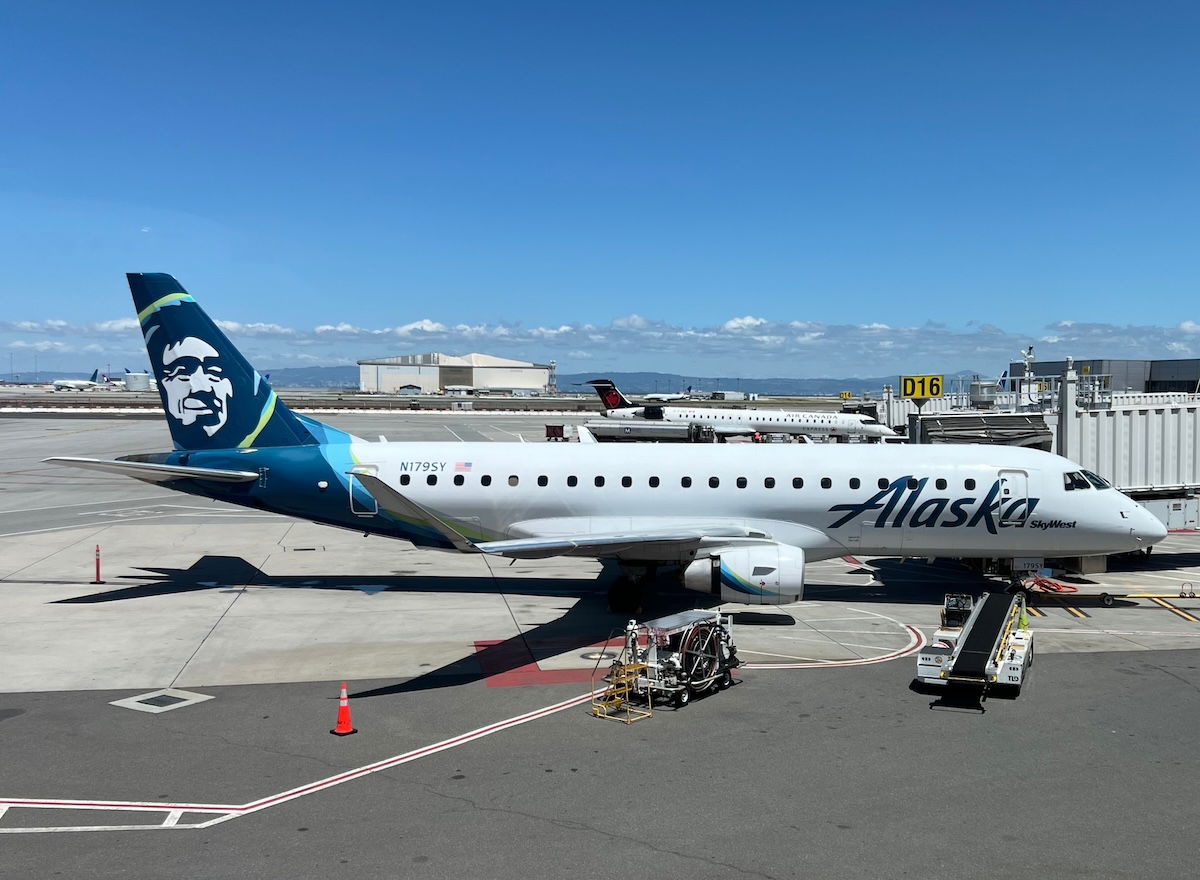
At the conclusion of the 2023 fiscal year, Alaska Air Group, Inc. reported a total of $1.791 billion in cash and marketable securities. This figure represents the company’s primary liquidity buffer, crucial for managing operational volatility, funding capital expenditures for its Boeing fleet expansion, and navigating the strategic acquisition of Hawaiian Airlines announced in late 2023.
Understanding the $1.791 Billion Figure
To understand the financial health of Alaska Airlines at the end of 2023, one must look beyond the raw number. The $1.791 billion reported in the company’s 10-K filing represents "unrestricted" liquidity. In the airline industry, cash is the lifeblood of operations, providing the necessary cushion to handle fluctuating fuel prices, labor contract adjustments, and unforeseen maintenance events.
This $1.791 billion was composed of two primary categories:
- Cash and Cash Equivalents: Highly liquid assets that can be converted to cash immediately, typically including bank deposits and short-term government paper.
- Marketable Securities: Short-term investments that are easily traded on public exchanges, such as corporate bonds or commercial paper, which earn a slightly higher yield than standard cash accounts while remaining accessible.
In 2023, this liquidity level was a strategic choice. While it represented a decrease from the approximately $2.4 billion held at the end of 2022, the reduction was a deliberate result of the company’s capital allocation strategy, which focused on debt reduction and the modernization of its fleet.
The Role of Liquidity in Airline Operations
For a major carrier like Alaska Airlines, maintaining a "cash snapshot" near $1.8 billion is a balancing act. Airlines are capital-intensive businesses with high fixed costs. The $1.791 billion figure at the end of 2023 served several critical functions:
Operational Resilience
Airlines are uniquely sensitive to external shocks. Whether it is a spike in Brent Crude prices or weather-related grounding events, having nearly $1.8 billion in the bank ensures that Alaska Airlines can meet its payroll and fuel obligations without needing to tap expensive credit lines during a crisis. By the end of 2023, Alaska was maintaining a liquidity-to-revenue ratio that aligned with its goal of investment-grade credit metrics.
Debt Management
Throughout 2023, Alaska Air Group prioritized the "fortress balance sheet." By using excess cash to pay down high-interest debt accrued during the pandemic era, the company reduced its interest expense. This strategy is reflected in the transition from 2022 to 2023, where cash was converted into equity value by reducing the "Net Debt" profile of the company.
Capital Expenditures (CapEx)
A significant portion of Alaska’s cash flow in 2023 was directed toward its fleet transition. The airline was in the midst of retiring its Airbus A321neo fleet (inherited from the Virgin America merger) and transitioning to an all-Boeing mainline fleet. This required significant "pre-delivery payments" (PDPs) for Boeing 737-9 and 737-10 MAX aircraft. The $1.791 billion snapshot accounts for the cash remaining after these massive investments were made.
Comparative Analysis: 2022 vs. 2023
To see the true trajectory of Alaska Airlines' finances, we must compare the 2023 year-end snapshot with the previous year.
| Financial Metric | Year-End 2022 | Year-End 2023 | Change (%) |
|---|---|---|---|
| Cash & Marketable Securities | $2.447 Billion | $1.791 Billion | -26.8% |
| Total Operating Revenue | $9.646 Billion | $10.435 Billion | +8.2% |
| Net Income (GAAP) | $58 Million | $235 Million | +305% |
| Total Debt & Finance Leases | $2.315 Billion | $2.148 Billion | -7.2% |
| Fuel Price per Gallon (Avg) | $3.55 | $3.29 | -7.3% |
The table illustrates a "stronger but leaner" company. Even though the cash snapshot dropped by roughly $656 million, the net income rose sharply, and total debt decreased. This indicates that the $1.791 billion was a healthy "residual" after the company funded its own growth and paid down its liabilities.
Strategic Context: The Hawaiian Airlines Acquisition
The timing of the $1.791 billion cash snapshot is particularly relevant because of the announcement made in December 2023 regarding the acquisition of Hawaiian Airlines for approximately $1.9 billion (including $900 million in assumed debt).
Investors at the time scrutinized the $1.791 billion figure to determine if Alaska could afford the $18.00 per share cash offer. Because Alaska Airlines generated strong "Operating Cash Flow" (roughly $1.1 billion in 2023), the $1.791 billion on hand provided the foundation for the deal. It signaled to lenders and shareholders that Alaska had the internal resources to initiate such a large transaction without over-leveraging its balance sheet.
Factors That Influenced Cash Flow in 2023
Several specific economic and operational factors shaped the final $1.791 billion figure. Understanding these helps explain why the cash position was lower than in 2022 despite higher revenues.
Labor Agreements
2023 was a year of significant labor investment. Alaska Airlines finalized or implemented several contracts, most notably with its pilots and flight attendants, which included retroactive pay and immediate salary increases. These investments in human capital are "front-loaded," meaning they require a large initial cash outlay that impacts the year-end snapshot.
Fuel Volatility
While the average fuel price in 2023 ($3.29) was lower than in 2022 ($3.55), the volatility within the year required Alaska to maintain a higher-than-average cash buffer. The airline does not hedge fuel as aggressively as some competitors (like Southwest), meaning its cash position is more sensitive to sudden swings in the energy market.
The Retirement of the Airbus Fleet
The move to an all-Boeing fleet was a strategic masterstroke for long-term maintenance savings, but it carried short-term costs. Retiring the A321neo fleet involved lease exit costs and training expenses for crews transitioning to Boeing aircraft. These "one-time" costs were a significant draw on the cash reserves throughout 2023.
Technical Liquidity Ratios
Financial analysts use specific ratios to determine if $1.791 billion is "enough" for a company of Alaska's size. Looking back from 2026, we can see that these metrics were leading indicators of the company’s stability.
- Current Ratio: This measures a company's ability to pay short-term obligations. At the end of 2023, Alaska maintained a current ratio that suggested it could comfortably cover its liabilities due within one year using its current assets (including the $1.791B in cash).
- Operating Cash Flow Margin: Alaska demonstrated a robust ability to convert ticket sales into actual cash. In 2023, for every dollar of revenue, a significant portion was retained as cash before accounting for investments.
- Net Debt to EBITDAR: This is a standard airline metric. By keeping cash at $1.791 billion and reducing debt, Alaska kept its leverage ratio low, which allowed it to maintain a credit rating superior to many of its "Legacy" peers.
Challenges to the Cash Position
While the snapshot was positive, it was not without risks. The end of 2023 was marked by increasing scrutiny of Boeing's delivery schedules. Alaska’s cash planning was heavily dependent on the timely delivery of new, fuel-efficient aircraft. When deliveries are delayed, the airline is forced to keep older, more expensive aircraft in service longer, which drains cash through higher fuel burn and maintenance costs.
Furthermore, the "1 791b" figure did not include "Restricted Cash." Restricted cash is money held for specific purposes, such as passenger facility charges or collateral for insurance. When evaluating the total financial power of the airline, analysts only focus on the unrestricted $1.791 billion because that is the money management can actually spend on strategic initiatives.
Expert Perspective on the 2023 Snapshot
Financial editors and aviation analysts viewed the $1.791 billion figure as a "normalization" of liquidity. During the height of the 2020-2022 period, airlines hoarded cash at unprecedented levels due to existential uncertainty. By the end of 2023, Alaska Airlines was signaling a return to a more efficient capital structure.
Keeping $2.5 billion or more in cash is actually "expensive" for a company because that money earns relatively little interest compared to the returns generated by investing in new routes or better technology. Therefore, the drop to $1.791 billion was generally viewed by the market as a sign of confidence—a move toward using capital rather than just sitting on it.
Frequently Asked Questions
Is $1.791 billion in cash considered high for an airline?
For a mid-sized "Major" carrier like Alaska Airlines, $1.791 billion is a healthy and standard liquidity level. It represents roughly 17-18% of their annual revenue, which is within the target range for most stable airlines. It is significantly less than a global giant like Delta or United, but appropriate for Alaska's regional and transcontinental scale.
Why did Alaska Airlines' cash decrease from 2022 to 2023?
The decrease was primarily driven by capital expenditures (buying new Boeing aircraft), paying down long-term debt, and the costs associated with retiring their Airbus fleet. It was a transition from "survival mode" liquidity to "growth mode" investment.
Did the $1.791 billion include the money for the Hawaiian Airlines merger?
The $1.791 billion was the cash on hand at the end of the year. While that cash provided the "proof of funds" needed to announce the merger, the actual acquisition was designed to be funded through a combination of existing cash, new debt, and the assumption of Hawaiian's existing debt.
How does "Marketable Securities" differ from "Cash" in this snapshot?
Cash is immediate (checking accounts), while marketable securities are low-risk investments like Treasury bills. Alaska combines them in their reporting because marketable securities can be sold and converted into cash within a few days if an emergency arises.
What happened to this cash position in early 2024?
While the 2023 snapshot was $1.791 billion, the company faced a temporary liquidity challenge in Q1 2024 due to the grounding of the Boeing 737-9 MAX fleet. However, because they started the year with a strong $1.791 billion buffer, they were able to absorb the operational losses and receive subsequent compensation from Boeing without a liquidity crisis.
Next Steps for Investors and Analysts
When reviewing the 2023 cash snapshot of Alaska Airlines, the primary takeaway is stability. For those looking to verify these figures, the Alaska Air Group 2023 Form 10-K, filed with the SEC, remains the definitive source of truth.
Moving forward, the key metric to watch is how that $1.791 billion liquidity evolves as the integration with Hawaiian Airlines continues. Investors should monitor the "Free Cash Flow" (Operating Cash Flow minus CapEx) to see if the airline can replenish its cash reserves while simultaneously paying for its massive fleet expansion and merger integration.