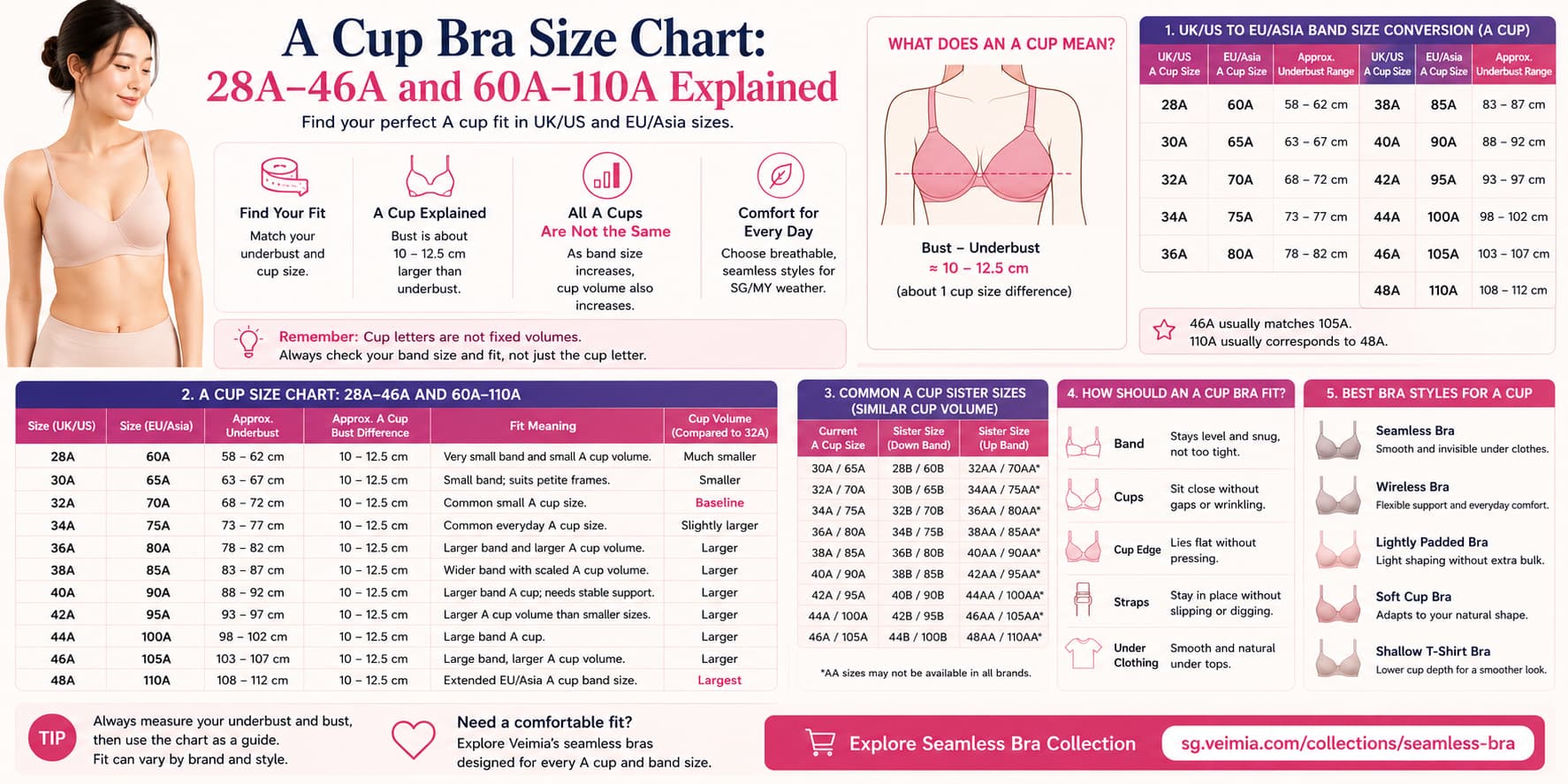
The "1a 70" notation refers to a specific international bra sizing standard commonly found in European markets, particularly in France and Italy, representing a combination of a band size (70) and a cup size (A). In this system, the number 70 denotes the underbust measurement in centimeters, while the letter "A" indicates a cup volume representing the difference between the underbust and the full bust circumference.
Decoding the European Bra Sizing System
To understand what 1a 70 means, one must first dismantle the components of the label. European sizing, specifically the French and Italian systems, differs significantly from the more commonly encountered UK or US sizing standards.
The number "70" is the most objective measurement in the label. It refers to the band size, which corresponds to the measurement of the ribcage directly beneath the breasts. In the European system, this measurement is typically taken in centimeters. When you see a label marked 70, it indicates that the bra is designed to fit a ribcage measuring approximately 70 centimeters.
The letter "A" designates the cup size. Unlike the band size, which is a static measurement of the torso, the cup size is a relative measurement. It is determined by calculating the difference between the circumference of the bust at its fullest point and the circumference of the underbust. An "A" cup is generally recognized in international standards as the smallest standard cup size, signifying that the breasts have a relatively modest volume compared to the width of the ribcage.
The Role of the "1a" Prefix and Regional Variation
In some specific retail contexts, you may encounter the prefix "1a" alongside the size 70. This is often a classification used by specific manufacturers or boutique retailers to denote a "first-tier" or standard fit within a specific collection. However, it is important to distinguish this from the core measurement.
French and Italian sizing can be a source of confusion because these countries sometimes use unique scales compared to the standardized EU system. In many French systems, the band size is calculated by adding 15 centimeters to the ribcage measurement. Consequently, a person wearing a 70 in a standard international EU bra might find themselves needing a different numerical value in a French brand. Always consult the specific manufacturer’s size guide when shopping, as there is no single global regulatory body that mandates an identical physical fit for every garment labeled "70A."
How to Measure for a 70A Fit
Achieving an accurate fit requires two distinct measurements taken while wearing a non-padded, supportive bra. Using a flexible measuring tape is essential for precision.
- The Underbust (Band) Measurement: Wrap the measuring tape firmly around your ribcage, directly beneath your breasts. Ensure the tape is level all the way around your back. This measurement, in centimeters, should align with the "70" component of your size.
- The Bust (Cup) Measurement: Wrap the tape around the fullest part of your breasts, usually across the nipples. Ensure the tape is not too tight, as compressing the breast tissue will lead to an inaccurate cup measurement.
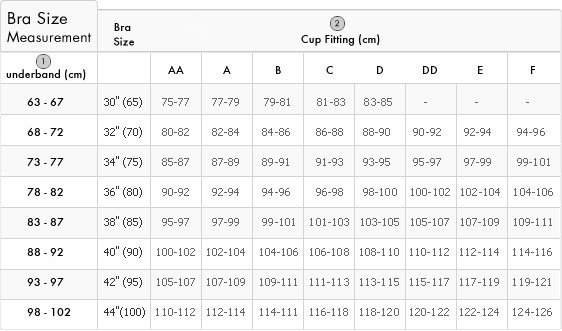
- The Calculation: Subtract your underbust measurement from your bust measurement. If the difference is approximately 10 to 12 centimeters, you are likely an A-cup. If your underbust is 70 centimeters and your bust is roughly 80 to 82 centimeters, 70A is the appropriate size.
Comparing 70A to Other International Standards
Because garment sizing is not universal, it is helpful to look at how a 70A translates into other systems. This comparison is vital for consumers purchasing lingerie from global marketplaces.
| Region | Equivalent Size | Note |
|---|---|---|
| UK / US | 32AA or 32A | 70cm converts to roughly 32 inches. |
| International EU | 70A | The baseline standard for this measurement. |
| Australia | 10A | Australian sizing follows a different numeric scale. |
| Japan | 70A | Closely mirrors the standard EU sizing convention. |
Understanding these conversions prevents the common mistake of assuming that a size 70 in one brand will feel identical to a 70 in another. Factors such as the elasticity of the fabric, the presence of underwire, and the intended silhouette of the bra can significantly alter how a 70A feels during wear.
Common Signs of an Incorrect Fit
Wearing the wrong bra size can lead to discomfort, poor posture, and even skin irritation. If you are currently wearing a 70A, evaluate the fit against these common troubleshooting markers:
- Band Ride-up: If the back band of the bra creeps upward toward your shoulder blades, the band is too loose. Despite the label saying 70, the material may have stretched, or the construction may not suit your specific ribcage shape.
- Cup Gaping: If there is a visible gap between the top of the cup and your breast tissue, it is a sign that the cup size is too large. Even if you are a 70-band, you may need a different cup volume.
- Spillage (Quad-boob): If breast tissue bulges over the top or sides of the cups, the A-cup is likely too small for your current breast volume.
- Digging Straps: If the straps leave deep indentations on your shoulders, you may be relying on the straps for support rather than the band. A properly fitted bra should derive the majority of its support from the band, not the straps.
Factors Influencing Fit Beyond Measurements
While measurements provide a starting point, they do not account for breast shape. Factors such as the projection (how far the breasts extend from the chest), whether the breasts are shallow or full, and the width of the breast root all influence which styles will fit a 70A wearer best.
A person with "shallow" breasts might find that a 70A fits well in a balconette style, which offers coverage without requiring the deep projection of a full-coverage bra. Conversely, those with more "projected" breasts might find that a 70A in a molded-cup t-shirt bra causes discomfort, as the rigid foam cannot accommodate the shape of the tissue.
Furthermore, the materials used in the construction matter. Spandex-heavy blends provide more "give" and can accommodate minor fluctuations in body weight or hormonal changes, whereas silk or non-stretch lace requires a more precise fit. If you find your 70A bra feels tight after a meal or during certain times of the month, consider an extender rather than sizing up, as the cup size will increase proportionally with the band size in most brands.
Expert Guidance on Bra Care and Longevity
The longevity of your 70A bra depends heavily on maintenance. The elastic fibers that provide the support (the spandex, elastane, or Lycra) are susceptible to heat and friction. To maintain the integrity of the fit:
- Hand Wash When Possible: While the busy lifestyle of 2026 often pushes us toward machine cycles, hand-washing in cool water with a mild detergent is the gold standard for preserving elasticity.
- Avoid the Dryer: High heat is the enemy of elastic. Air-drying your bras flat or hanging them by the gore (the center piece between the cups) is essential. Never put a bra in a tumble dryer.
- Rotation: Do not wear the same bra two days in a row. The elastic needs time to recover its shape after being stretched throughout the day. Rotating between three or four bras will significantly extend the lifespan of each garment.
- Proper Storage: Store your bras laid flat or hooked together in a drawer to ensure the cups do not become crushed or deformed. Stacking them one inside the other is a common way to maintain their molded shape.
Frequently Asked Questions
Does a 70A mean I am flat-chested? No. Bra sizing is a system of proportions, not a value judgment. The 70A indicates the relationship between your ribcage and your bust tissue. It is a standard size that provides support and shaping for millions of people.
Why does my 70A feel tighter in some brands than others? Manufacturing inconsistencies and fabric choices play a major role. Brands have "fit models" that they design for, and these models vary by company. Additionally, darker dyes or heavy lace overlays can make the fabric feel stiffer, leading to a tighter sensation than a lighter, more elastic garment of the same size.
Should I measure myself every time I buy a new bra? It is recommended to re-measure yourself every six months or if you notice a change in your body. Weight fluctuations, hormonal changes, and lifestyle factors can all alter your measurements over time.
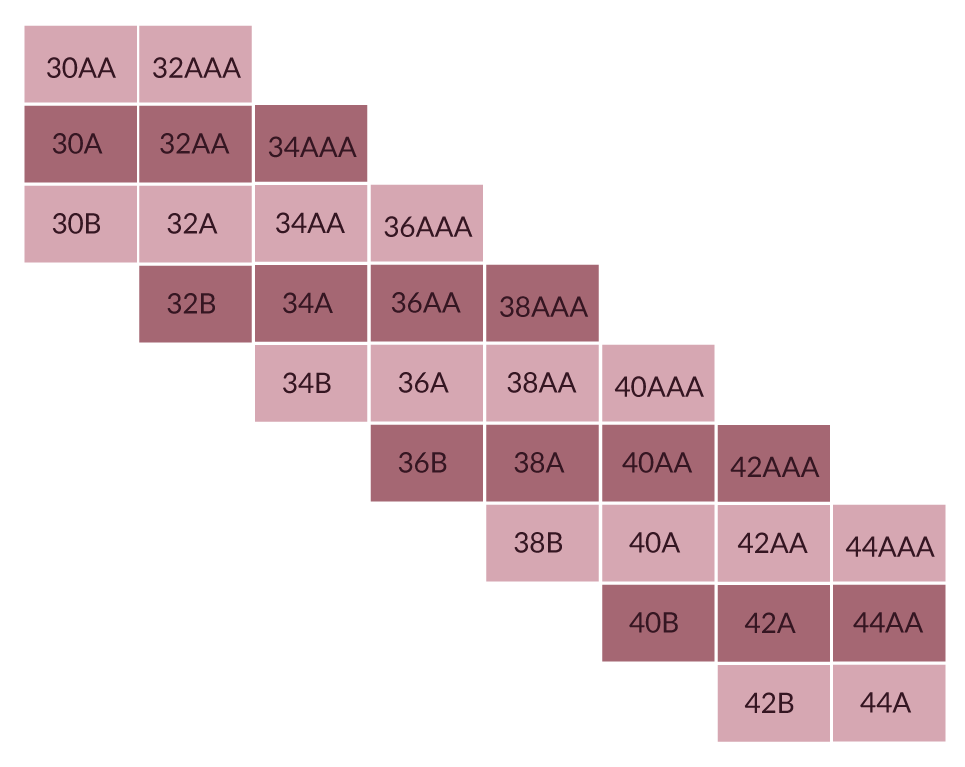
Can I wear a different size if I am a 70A? Yes, this is known as "sister sizing." If you find that a 70A is slightly too tight in the band but the cups fit perfectly, you might experiment with a 75AA, though this is rare. Generally, changing your band size requires adjusting your cup size to maintain the same volume.
What is the "gore" and why does it matter? The gore is the center piece of the bra that sits between the breasts. In a well-fitting 70A, the gore should sit flat against your sternum. If it floats or hovers away from your chest, the bra is likely ill-fitting, often indicating that the cup size is too small or the shape is wrong for your frame.
Recommended Next Steps
If you are currently struggling to find comfort in a 70A size, your next step should be a professional fitting. Many high-end lingerie retailers and department stores offer complimentary fitting services. When you go, wear a thin, non-padded top so the consultant can see how the bra sits against your body.
If you prefer to shop independently, use the measurement steps outlined in this guide to confirm your current size. If your measurements have changed, do not be discouraged by the number on the tag; prioritize the feel of the band and the alignment of the cups. A well-fitted bra should feel like a supportive garment that you barely notice throughout the day, providing both confidence and comfort.