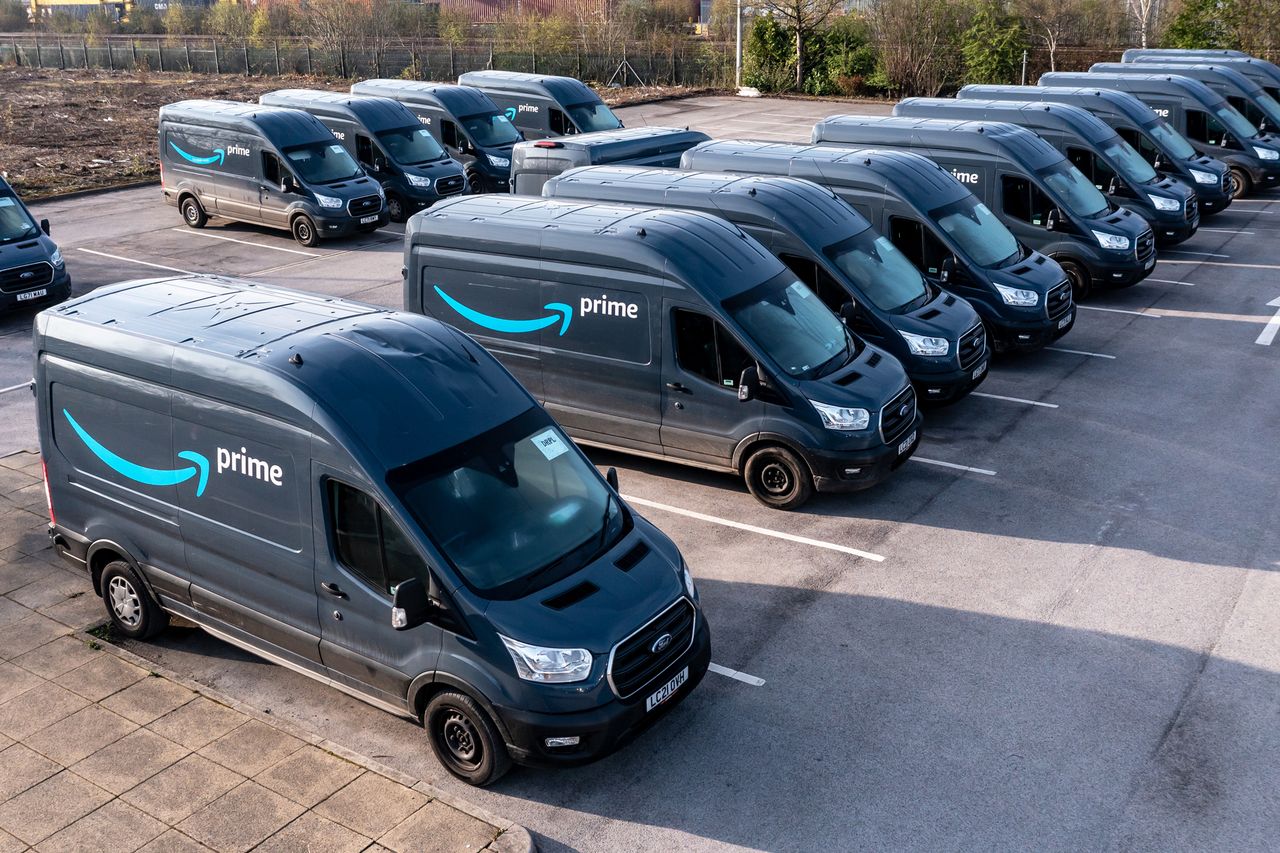
The relationship between the United States Postal Service (USPS) and Amazon remains one of the most significant partnerships in the global logistics industry. While specific contract details are often shielded by proprietary non-disclosure agreements, historical analysis and regulatory filings suggest that Amazon’s annual contribution to USPS revenue has frequently hovered around or exceeded the $1.6 billion mark for specific service segments, particularly within the Parcel Select and last-mile delivery categories.
As of 2026, this partnership continues to be a cornerstone of the USPS’s "Delivering for America" (DFA) plan. The contract is governed by Negotiated Service Agreements (NSAs), which allow the Postal Service to provide customized pricing to high-volume shippers. This overview explores the financial mechanics, operational requirements, and strategic evolution of the USPS-Amazon contract, providing a comprehensive look at how these two entities navigate the complex landscape of modern e-commerce.
Understanding the USPS-Amazon Financial Relationship
The $1.6 billion figure often cited in discussions regarding the USPS-Amazon relationship typically refers to the estimated annual revenue or the perceived "profitability gap" identified in various financial audits and independent analyst reports over the last decade. To understand this figure in 2026, one must look at the transition from traditional mail to package-centric revenue.
Negotiated Service Agreements (NSAs)
The core of the Amazon-USPS relationship is the Negotiated Service Agreement. Under the Postal Accountability and Enhancement Act (PAEA) of 2006, and subsequent updates, the USPS is permitted to enter into private contracts with shippers who can demonstrate that their volume will improve the net financial position of the Postal Service.
For Amazon, these NSAs focus heavily on Parcel Select services. In this model, Amazon utilizes its own massive logistics network—Amazon Logistics (AMZL)—to transport packages across the country, bypassing USPS processing centers. Amazon then drops these packages off at local Destination Delivery Units (DDUs). The USPS is then responsible only for the "last mile" of delivery.
The $1.6 Billion Context
Historically, analysts from firms such as Citigroup and Bernstein have estimated that if Amazon were charged "market rates" equivalent to those of UPS or FedEx, the USPS would receive billions more in revenue. However, the $1.6 billion threshold is frequently used to describe the baseline revenue generated from specific high-volume contracts. In the 2026 fiscal environment, this number serves as a benchmark for the "contribution" Amazon makes to the USPS's fixed costs. Because the USPS has a mandate to deliver to every address in the United States, the high density provided by Amazon’s "last-mile" packages helps offset the cost of maintaining the universal service network.
The Mechanics of Parcel Select and Last-Mile Delivery
The technical efficiency of the USPS-Amazon contract relies on a concept known as Worksharing. Worksharing is a system where the mailer (Amazon) performs some of the processing and transportation functions that the USPS would otherwise handle, in exchange for a lower postage rate.
Destination Delivery Unit (DDU) Injection
Under the current contract terms, Amazon’s primary interaction with the USPS occurs at the DDU level.
- Sorting: Amazon sorts packages at its fulfillment and sortation centers down to the 5-digit ZIP code level.
- Transportation: Amazon’s "middle-mile" fleet transports these sorted pallets to the local post office that serves that specific ZIP code.
- Induction: The USPS accepts the packages early in the morning.
- Final Mile: The mail carrier loads the package onto their vehicle and delivers it to the customer’s door.
This process is significantly cheaper for the USPS than a "retail" package that must be picked up, sorted at a regional hub, transported across the country, and then sorted again. By 2026, the integration of Amazon’s internal tracking systems with the USPS's Informed Visibility platform has created a seamless data flow, allowing customers to track a package from an Amazon warehouse to a USPS mail truck without interruption.
Impact of the "Delivering for America" Plan (2026 Update)
Since the implementation of the Delivering for America plan, the USPS has undergone a massive structural overhaul. This has directly influenced the Amazon contract in three primary ways:
1. Network Modernization
The USPS has transitioned toward a hub-and-spoke model featuring Regional Processing and Distribution Centers (RPDCs). While Amazon still prefers DDU injection, the USPS has incentivized larger shippers to move toward S&DC (Sorting and Delivery Center) injection. These larger centers allow the USPS to consolidate operations and reduce the number of individual stops Amazon trucks must make, potentially altering the discount structures within the NSA.
2. Pricing Adjustments and Regulatory Oversight
The Postal Regulatory Commission (PRC) maintains strict oversight to ensure that competitive products (like Amazon’s packages) are not being subsidized by market-dominant products (like First-Class letters). By law, the revenue from the Amazon contract must cover 100% of the "attributable costs" associated with delivering those packages, plus a contribution to the USPS's institutional (fixed) costs.
In 2026, the "appropriate share" of institutional costs that competitive products must cover has been adjusted upward. This means that while Amazon still receives a volume discount, the gap between "contract rates" and "commercial rates" has narrowed compared to previous years.
3. Service Standard Reliability
A key component of the $1.6 billion value proposition is reliability. Under the current contract, the USPS is held to strict delivery windows. As the USPS has modernized its fleet with Next Generation Delivery Vehicles (NGDVs), the capacity to handle Amazon’s bulky or heavy items has increased, making the USPS a more viable partner for items that Amazon’s own "flex" drivers might find difficult to deliver.
Competitive Landscape: USPS vs. Amazon Logistics (AMZL)
The relationship is often described as "co-opetition." Amazon is the USPS's largest customer, but it is also a formidable competitor.
| Feature | USPS Last-Mile (Contract) | Amazon Logistics (AMZL) |
|---|---|---|
| Delivery Reach | Every US address (including PO Boxes/Rural) | Primarily high-density urban/suburban areas |
| Pricing Model | Negotiated Service Agreement (NSA) | Internal cost-centers |
| Asset Utilization | Existing daily routes (Incremental cost) | Dedicated delivery vans and "Flex" drivers |
| Regulatory Status | Quasi-government agency oversight | Private corporate entity |
| Sunday Delivery | Contractually obligated for Amazon | Standard operational day |
| Volume Limit | High capacity for "long-tail" and rural | Priority for high-margin, fast-turnaround items |
As Amazon continues to expand its own delivery fleet, it tends to "cherry-pick" high-density routes where it can deliver more cheaply than the USPS. This leaves the USPS with the more expensive "long-tail" deliveries—rural routes where houses are miles apart. The $1.6 billion revenue stream is essential because it provides the volume necessary to make those rural routes financially sustainable.
Legal and Regulatory Framework
The USPS-Amazon contract is not a simple handshake deal; it is a complex legal document subject to federal law.
The Role of the Postal Regulatory Commission (PRC)
The PRC reviews every NSA to ensure it is not "unduly discriminatory." If a competitor, such as UPS, believes the USPS is giving Amazon an unfair advantage that violates the PAEA, they can file a complaint. Over the years, several such challenges have been brought before the PRC. To date, the PRC has consistently found that the Amazon contract is profitable for the USPS and contributes billions to the overhead that would otherwise have to be covered by postage stamp increases.
Cost Attribution and Transparency
One of the most debated technical aspects of the contract is attributable cost. This includes the direct labor of the carrier and the fuel used for the "last-mile" deviation. Critics often argue that the USPS does not accurately account for the "wear and tear" on its infrastructure caused by the massive volume of Amazon boxes. In response, the USPS in 2026 uses advanced AI-driven cost-attribution models to prove to the PRC that every Amazon package pays its fair share of the bills.
Strategic Outlook: The Future of the Partnership
Looking forward through 2026 and beyond, the USPS-Amazon contract is expected to focus on sustainability and automation.
- Green Logistics: With the USPS deploying a massive electric vehicle fleet, Amazon is increasingly looking to leverage the USPS to meet its "Climate Pledge" goals for zero-carbon deliveries.
- Dynamic Routing: New software integrations allow the USPS to predict Amazon's volume with 99% accuracy 48 hours in advance, allowing for better staffing at the local post office level.
- The "Rural Moat": While Amazon may eventually deliver 90% of its own packages in cities, the USPS maintains a "moat" in rural America. No private company can yet match the cost-efficiency of a mail carrier who is already visiting a rural farmhouse to deliver mail.
Common Misconceptions About the Contract
To provide a clear overview, it is necessary to address several persistent myths regarding the USPS-Amazon relationship:
- Myth: USPS delivers Amazon packages at a loss.
- Fact: By law, the USPS cannot enter into a contract that does not cover its attributable costs. Every annual audit by the PRC has confirmed the Amazon contract is net-positive for the Postal Service.
- Myth: Taxpayers fund Amazon's deliveries.
- Fact: The USPS does not receive taxpayer funding for its operations. It relies entirely on the sale of postage and services. The revenue from the Amazon contract actually helps keep stamp prices lower for the average citizen.
- Myth: Amazon can cancel the contract at any time without impact.
- Fact: While the contract has termination clauses, both entities are deeply "locked in." Amazon relies on the USPS for rural reach and PO Box access, while the USPS relies on Amazon's volume to fund its infrastructure.
Summary of Key Terms and Definitions
To navigate the documentation surrounding these contracts, stakeholders should be familiar with the following technical terms:
- Parcel Select: The specific USPS mail class used for high-volume, pre-sorted ground packages.
- Last-Mile: The final leg of a delivery from a local distribution center to the recipient's door.
- Contribution: The amount of money a product provides toward the Postal Service’s fixed institutional costs after its own direct costs are paid.
- DDU (Destination Delivery Unit): The local post office where Amazon drops off packages.
- NSA (Negotiated Service Agreement): A custom contract between the USPS and a specific mailer.
FAQ
Is the $1.6 billion figure the total amount Amazon pays the USPS?
The $1.6 billion figure is often cited as a specific revenue or profit benchmark for certain segments of the contract, but the total annual exchange is likely much higher. In 2026, when accounting for all Parcel Select and Priority Mail services, the total revenue generated from Amazon's volume is estimated to be a multi-billion dollar figure, though the exact "net contribution" remains a closely guarded secret of the PRC’s non-public filings.
How does the 2026 USPS fleet modernization affect Amazon?
The deployment of Next Generation Delivery Vehicles (NGDVs) significantly benefits the Amazon contract. These vehicles have much larger cargo capacities and improved ergonomics compared to the aging LLVs (Long Life Vehicles). This allows carriers to deliver larger Amazon packages more safely and efficiently, reducing the number of "second trips" required for bulky items and lowering the overall cost of the contract's execution.
Can other companies get the same deal as Amazon?
The USPS offers similar Negotiated Service Agreements to any company that can meet the volume and worksharing requirements. Companies like UPS and FedEx also have contracts with the USPS for their "SurePost" and "SmartPost" services, respectively. However, due to Amazon's unprecedented volume, its specific discounts and terms are unique to its scale.
What happens if Amazon stops using the USPS entirely?
If Amazon were to move 100% of its volume to its own network, the USPS would face a significant "contribution gap." Without the billions in revenue from Amazon, the USPS would likely have to increase the price of First-Class stamps and other mail products significantly to cover the fixed costs of its universal service mandate (maintaining post offices and delivery routes in every town).
Why is the contract kept secret from the public?
Under federal law, the USPS is allowed to keep "commercial sensitive" information private to protect its competitive position. If the exact per-package rate Amazon pays were made public, it would give competitors like UPS and FedEx an unfair advantage in negotiations and could allow Amazon's retail competitors to demand the same proprietary logistics data.
Practical Recommendation for Businesses
For businesses looking to emulate the Amazon-USPS model, the key takeaway is the value of Worksharing. Small to mid-sized e-commerce companies should look into consolidator services. These third-party companies aggregate volume from many small shippers to meet the USPS’s Parcel Select requirements, allowing smaller businesses to access the same "last-mile" efficiencies that Amazon utilizes.