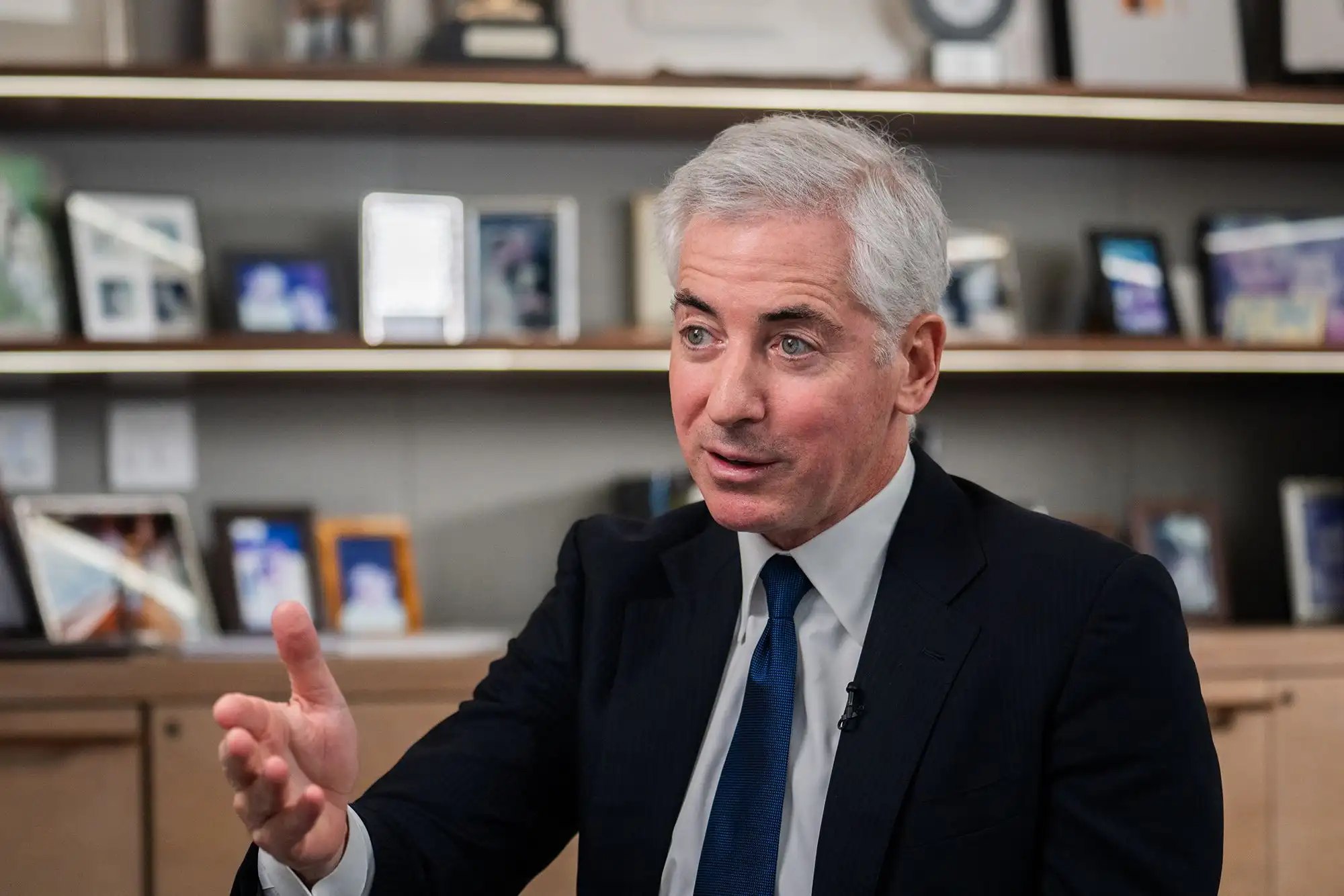
In 2013, Bill Ackman’s net worth was officially estimated at $1.2 billion according to the Forbes 400 list. This valuation reflected his position as one of the most influential activist investors on Wall Street, primarily driven by his ownership in Pershing Square Capital Management and his concentrated, high-stakes portfolio.
Bill Ackman, the founder and CEO of Pershing Square Capital Management, has long been a polarizing figure in the world of high finance. By 2013, he had cemented his reputation as a "corporate agitator"—an investor who doesn't just buy stocks but actively seeks to change how companies are run. The $1.2 billion figure reported in late 2013 was a significant marker of his financial status, arriving during a year characterized by massive public feuds, historic investment wins, and high-profile setbacks. To understand how Ackman maintained this billionaire status during such a volatile period, one must examine the specific mechanics of his hedge fund, his primary investment vehicles, and the macroeconomic environment of the early 2010s.
The Composition of Bill Ackman’s $1.2 Billion Net Worth in 2013
Determining the net worth of a hedge fund manager involves more than just looking at a bank balance. For Ackman in 2013, the $1.2 billion figure was an aggregate of several financial components. The primary driver was his GP (General Partner) interest in Pershing Square Capital Management. As the founder and majority owner, Ackman was entitled to a significant portion of the firm's management fees—typically 2% of assets under management (AUM)—and performance fees, which were generally 20% of the profits generated for clients.
In 2013, Pershing Square was managing approximately $11 billion to $13 billion in assets. Even in years where performance was mixed, the management fees alone provided a massive, steady stream of capital. Furthermore, Ackman frequently reinvested his own capital back into his funds, meaning his personal wealth was directly tied to the daily fluctuations of Pershing Square’s core holdings.
The Forbes valuation also accounted for personal assets, including high-end real estate and liquid investments outside of the fund. However, the "billionaire" label in 2013 was largely a reflection of the market's valuation of his firm and the performance of his concentrated portfolio, which included massive stakes in companies like Canadian Pacific Railway and Air Products & Chemicals.
Pershing Square Capital Management: The Wealth Engine
By 2013, Pershing Square had evolved from a mid-sized hedge fund into a global powerhouse. The firm’s strategy was uniquely "concentrated," meaning instead of holding hundreds of stocks, Ackman held only 8 to 12 positions at a time. This concentration is a double-edged sword: it allows for astronomical gains if a few bets go right, but it exposes the manager’s personal net worth to significant "drawdown" risk if a single position fails.
The year 2013 was a testament to this volatility. While the broader market, represented by the S&P 500, was seeing a banner year with gains exceeding 30%, Pershing Square's main funds lagged behind, returning roughly 9% to 10% net of fees. This underperformance relative to the index was largely due to two specific situations that dominated financial news cycles: the ongoing crusade against Herbalife and the collapse of the J.C. Penney turnaround. Despite the lagging percentage returns, the absolute dollar value of the assets remained high enough to sustain Ackman’s $1.2 billion personal valuation.
The Defining Bet of 2013: The Herbalife Short
No discussion of Bill Ackman’s wealth or career in 2013 is complete without the Herbalife short. In late 2012, Ackman announced a $1 billion short position against Herbalife (HLF), a multi-level marketing company. He released a massive 300-page presentation alleging that the company was a pyramid scheme and predicted its stock price would eventually go to zero.
Throughout 2013, this trade became a "battle of the billionaires." Because Ackman had made his short position public, other institutional investors took the opposite side, essentially trying to trigger a "short squeeze." The most notable antagonist was Carl Icahn, who famously called into CNBC in January 2013 to argue with Ackman live on air.
The Impact on Ackman's Financial Standing
While the Herbalife trade did not immediately bankrupt Ackman, it created a significant "mark-to-market" loss for Pershing Square in 2013. As the stock price rose—partially driven by Icahn’s massive purchases—Ackman was forced to maintain his position with additional collateral. For a man with a $1.2 billion net worth, the psychological and reputational stakes were perhaps higher than the immediate financial ones. The Herbalife saga demonstrated how an activist’s net worth is often leveraged against their public credibility.
Success Stories: Canadian Pacific and Air Products
While Herbalife captured the headlines, other investments were the true foundations of Ackman’s $1.2 billion net worth in 2013. The most successful was Canadian Pacific Railway (CP).
Ackman had initiated a proxy battle at Canadian Pacific in 2011 and 2012, eventually installing Hunter Harrison as CEO. By 2013, the operational turnaround was in full swing. The stock price soared as profit margins improved and the railway became significantly more efficient. This single trade generated billions in gains for Pershing Square and significantly bolstered Ackman’s personal wealth through performance fees.
Similarly, Ackman’s entry into Air Products & Chemicals (APD) in mid-2013 was a classic activist play. He accumulated a stake worth over $2 billion, making Pershing Square the company's largest shareholder. By demanding management changes and cost-cutting measures, he signaled to the market that he was not backing down from his aggressive style, despite the distractions of the Herbalife trade.
The J.C. Penney Setback
Every billionaire faces a "waterloo," and for Ackman in 2013, it was J.C. Penney. Ackman had attempted to transform the legacy retailer by hiring former Apple executive Ron Johnson. The plan—which involved removing sales/coupons and redesigning stores—failed spectacularly.
In August 2013, after a public dispute with the J.C. Penney board, Ackman resigned his director seat and Pershing Square sold its entire 18% stake. The loss was estimated at approximately $500 million. While this was a staggering blow to the fund's performance for the year, it was not enough to knock Ackman off the Forbes 400 list. His diversified (though concentrated) interests and the high valuation of his management company provided a sufficient buffer.
Analyzing the Activist Investor Business Model
To understand how someone maintains a $1.2 billion net worth while losing $500 million on a single trade, one must understand the hedge fund business model. In 2013, Ackman’s wealth was structured to withstand individual failures through the following mechanisms:
- Management Fees: Pershing Square’s 2% management fee on $12 billion in assets equates to $240 million annually. This revenue covers all operating expenses and provides a significant "floor" for the owner’s income, regardless of stock performance.
- Permanent Capital: Unlike many hedge funds, Ackman began moving toward "permanent capital" structures (which eventually led to the 2014 IPO of Pershing Square Holdings in Amsterdam). This reduces the risk of investors pulling money out during bad years, allowing the manager's net worth to remain stable even during volatility.
- Compounding High-Water Marks: In finance, a high-water mark ensures that a manager only gets performance fees if the fund's value exceeds its previous peak. While 2013 was a "down" year for some of his specific trades, previous massive wins (like General Growth Properties) had already established a high base of wealth.
Key Financial Metrics: Bill Ackman & Pershing Square (2013)
| Metric | Estimated Value (2013) | Notes |
|---|---|---|
| Personal Net Worth | $1.2 Billion | Forbes 400 Estimate |
| Assets Under Management (AUM) | ~$12 Billion | Total capital managed by Pershing Square |
| Primary Short Position | Herbalife (HLF) | $1 Billion notional short |
| Major Exit | J.C. Penney (JCP) | Sold 18% stake at a loss |
| Major Success | Canadian Pacific (CP) | Continued gains from 2012 turnaround |
| New Major Position | Air Products (APD) | ~$2.2 Billion stake initiated |
The Role of Philanthropy in 2013
Even as his net worth hovered at $1.2 billion, Ackman was active in philanthropy. He had already signed The Giving Pledge, a commitment by the world's wealthiest individuals to give away the majority of their wealth. Through the Pershing Square Foundation, Ackman supported initiatives in healthcare, education, and social justice.
In 2013, the foundation was notably involved in the "Pershing Square Sohn Prize," which funds young cancer researchers. This philanthropic arm is a critical component of how high-net-worth individuals like Ackman manage their long-term capital and legacy, often serving as a vehicle for large-scale social impact that is legally distinct from their personal investment accounts.
Frequently Asked Questions
Was Bill Ackman the richest hedge fund manager in 2013?
No. While $1.2 billion is a massive fortune, Ackman was significantly lower on the list than peers like George Soros, Ray Dalio, or James Simons, some of whom had net worths exceeding $15 billion in 2013. Ackman’s wealth was notable more for his public profile and the "activist" nature of his investments than for its absolute size relative to the titans of the industry.
How did the 2013 CNBC debate with Carl Icahn affect his net worth?
The debate itself did not directly change his net worth, but it caused a significant spike in the stock price of Herbalife, which Ackman was shorting. This spike resulted in "paper losses" (unrealized losses) on his short position. However, his long positions in other companies generally stayed stable or rose, mitigating the damage.
Did Bill Ackman lose money in 2013?
On a personal level, his net worth stayed relatively flat or saw modest growth compared to previous years. Pershing Square’s main fund returned roughly 9.7% in 2013. While this was a positive return, it was far below the S&P 500's 32% return that year, leading many to view 2013 as a "down" year for Ackman’s relative performance.
What was Ackman’s biggest win in 2013?
The ongoing appreciation of Canadian Pacific Railway was his most significant "win." After winning the proxy battle in 2012, the operational improvements throughout 2013 caused the stock to outperform the broader market significantly, providing the bulk of the profits that offset the J.C. Penney loss.
How does Ackman’s 2013 wealth compare to his wealth today in 2026?
Looking back from 2026, Ackman’s wealth has grown substantially since 2013. His successful bets on companies like Chipotle, Lowe’s, and his legendary "big short" during the 2020 market crash propelled his net worth significantly higher into the multi-billion dollar range. The 2013 period is now viewed as a formative era where he learned the limits of public short-selling and refined his long-term activist approach.
Practical Takeaway for Investors
The story of Bill Ackman’s $1.2 billion net worth in 2013 offers a masterclass in risk management and conviction. For the average investor, the takeaway is not to engage in billion-dollar short wars, but to understand the importance of a "margin of safety." Ackman was able to survive a $500 million loss in J.C. Penney and a massive squeeze in Herbalife because he had other high-quality, cash-flowing assets like Canadian Pacific.
If you are managing your own portfolio, ensure that no single "high-conviction" bet can wipe out your financial foundation. Diversification—even within a concentrated strategy—is the primary reason Bill Ackman remained a billionaire through one of the most challenging years of his career.
Professional Advice Limitation: This article is for informational and educational purposes only and does not constitute financial, investment, or legal advice. Net worth estimates are based on historical public records and journalistic reporting. Individual financial results may vary based on market conditions and specific investment timing.