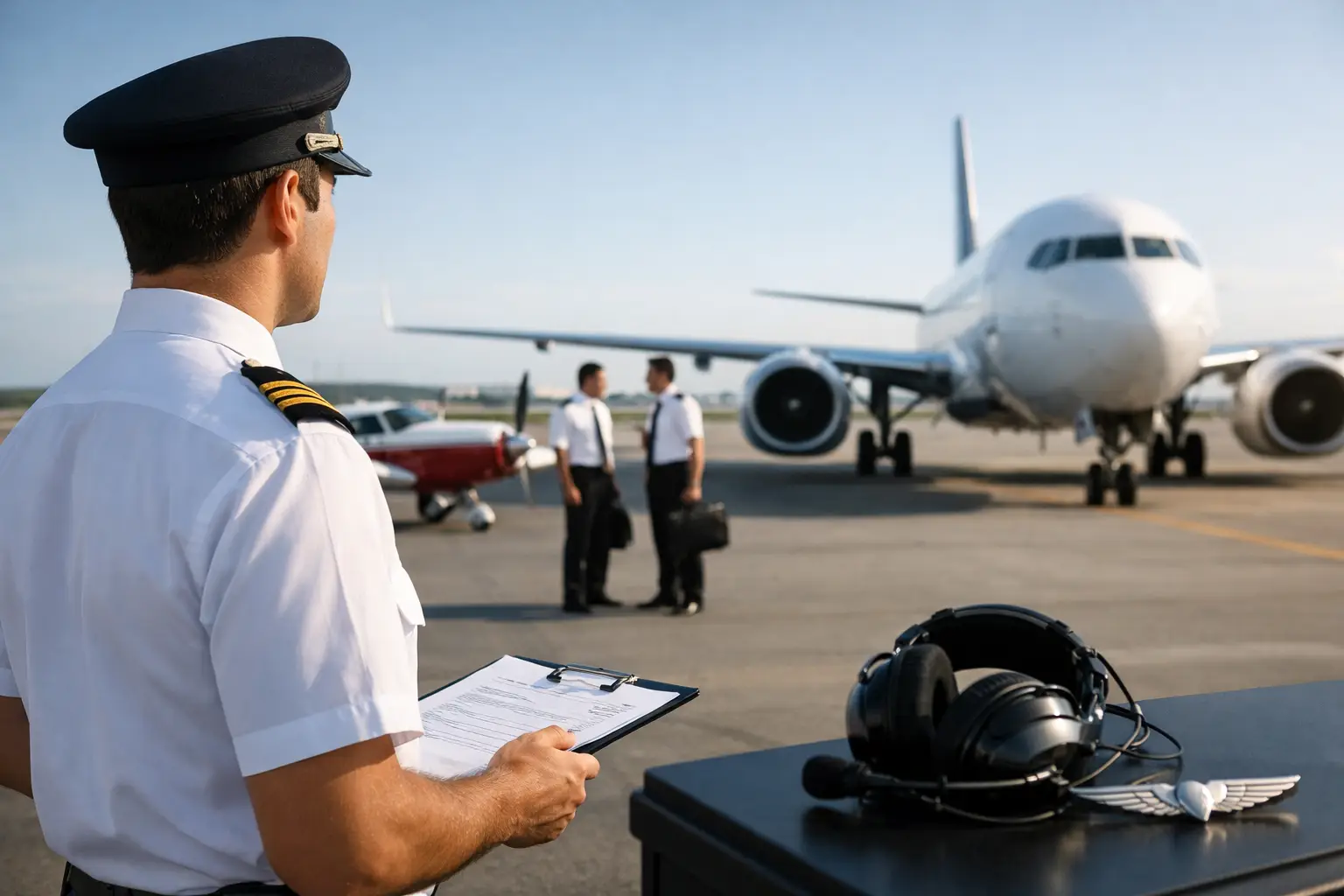
Becoming an airline transport pilot is the pinnacle of a professional aviator’s career, representing the highest level of aircraft pilot certification. While the primary focus for any aspiring pilot is the attainment of the Airline Transport Pilot (ATP) certificate, candidates frequently balance this rigorous technical training with the pursuit of a bachelor's degree. Understanding how these two distinct paths—formal academic education and specialized aeronautical certification—interact is essential for long-term career planning in the aviation industry as of 2026.
The Airline Transport Pilot (ATP) certificate is the prerequisite for operating as a pilot in command for scheduled air carriers. It requires a significant investment of time, flight hours, and financial resources, distinct from the academic rigor of a university degree. Although a bachelor's degree is not a universal legal mandate for flight certification under federal aviation regulations, it has become a standard, if not strictly required, qualification for competitive employment at major airlines.
Understanding the Airline Transport Pilot (ATP) Certificate
The Airline Transport Pilot certificate is the highest level of pilot certification issued by aviation authorities. In the United States, for instance, the Federal Aviation Administration (FAA) dictates strict requirements for the ATP, emphasizing safety, advanced decision-making, and mastery of complex, multi-engine aircraft.
Prerequisites and Eligibility
To be eligible for an ATP certificate, a pilot must generally be at least 23 years of age, hold a commercial pilot certificate with an instrument rating, and satisfy specific medical standards. The most significant barrier for many is the "ATP minimums"—the requirement to have logged 1,500 hours of total flight time. This total must include specific cross-country, night, and instrument time, as well as time spent as pilot-in-command.
The ATP-CTP Course
Since 2014, candidates must complete the Airline Transport Pilot Certification Training Program (ATP-CTP). This program serves as a bridge between commercial flight training and the advanced requirements of operating an airliner. It consists of ground school and simulator training that covers aerodynamics, automation, adverse weather conditions, and high-altitude operations.
The Role of the Bachelor's Degree in Aviation Careers
While the ATP certificate validates a pilot's technical competency to fly transport-category aircraft, a bachelor’s degree serves as a demonstration of professional maturity and academic capability. In the competitive job market of 2026, major airlines often view a four-year degree as a key differentiator among candidates who otherwise meet the same flight-hour requirements.
Academic Degrees vs. Vocational Training
Aviation programs are broadly divided into two categories: collegiate aviation degree programs and independent Part 61 or Part 141 flight schools.
- Collegiate Aviation Programs: These offer a structured environment where students earn a degree while simultaneously pursuing flight ratings. They often provide a "Restricted ATP" (R-ATP) pathway, allowing graduates to qualify for the ATP certificate with fewer than the standard 1,500 flight hours, provided they meet specific credit hour requirements.
- Independent Training: This route focuses solely on the acquisition of certificates and ratings. While this path can be faster, it lacks the broader educational foundation that many human resources departments at major carriers value during the hiring process.
Why Employers Value Academic Credentials
Major airlines operate on a scale where management skills, analytical thinking, and the ability to work within complex organizational structures are critical. A bachelor’s degree—whether in aviation science, business, or a completely unrelated field—indicates to recruiters that a candidate has the discipline to complete a long-term goal. In times of industry contraction, when seniority lists are impacted, the possession of a degree provides a pilot with vital career insurance outside the cockpit.
Comparison of Pilot Qualifications
The following table summarizes the differences between the technical requirements of the ATP and the value-add of higher education.
| Feature | Airline Transport Pilot (ATP) | Bachelor's Degree |
|---|---|---|
| Authority | Federal/Regulatory Agency | Accredited University |
| Primary Focus | Safety, Systems, Manipulation | Critical Thinking, Theory, Broad Knowledge |
| Legal Mandate | Required for Airline Command | Highly Recommended/Preferred |
| Time Investment | 1,500 Hours (Standard) | 4 Academic Years |
| Career Impact | Provides Eligibility to Fly | Enhances Competitive Hiring Profile |
Navigating the Path to Airline Employment
The progression toward a career as an airline pilot requires a multifaceted strategy. Many successful pilots adopt a "concurrent" approach, where they attend university while building their flight hours at a local flight school or through their university’s flight department.
1. Planning for the R-ATP
For those pursuing a university degree, understanding the R-ATP is vital. The FAA allows graduates of certain four-year aviation programs to apply for the ATP certificate with reduced flight hours (1,000 or 1,250 hours depending on the specific program). This significantly reduces the time and cost required to reach the right seat of an airliner.
2. The Importance of Medical Certification
Before committing to the heavy expense of both a degree and flight training, aspiring pilots must secure a First-Class Medical Certificate. This is a non-negotiable legal requirement for airline operations. If an applicant has medical conditions that preclude them from obtaining this certificate, they should reassess their career goals before investing in a bachelor's degree specifically designed for aviation.
3. Financial Considerations and ROI
Both university tuition and flight training carry high price tags. Students should explore federal financial aid, scholarships from aviation-focused organizations (such as the Aircraft Owners and Pilots Association or the Organization of Black Aerospace Professionals), and potential airline bridge programs. In 2026, many regional airlines offer tuition reimbursement or signing bonuses that help mitigate the combined cost of education and training.
Challenges and Common Pitfalls
Aspiring pilots often encounter hurdles that can derail their progress if not managed correctly. These include burnout, inadequate financial planning, and failing to maintain professional standards.
Burnout from Dual-Track Pursuit
Attempting to maintain a high GPA while logging the necessary flight hours is a demanding endeavor. Effective time management is not just a skill; it is a necessity. Students who struggle to balance these two often see their performance suffer in both the classroom and the cockpit. It is advisable to maintain a flexible schedule that allows for periods of intense flight training during summer breaks or reduced course loads during heavy flight training blocks.
The "Degree-First" vs. "Flight-First" Debate
There is ongoing discussion regarding whether a pilot should prioritize the degree or the flight training. The consensus among recruiters is to never pause one entirely for the other. A pilot who spends four years on a degree without flying will lose proficiency and require significant retraining. Conversely, a pilot who focuses only on flying may find themselves with limited options if their medical status changes or the airline industry undergoes a sudden downturn.
Future-Proofing Your Aviation Career
In 2026, the aviation industry remains sensitive to global economic trends. A bachelor’s degree serves as more than just a credential for an airline application; it is a fundamental asset that ensures long-term career resilience. Many pilots eventually transition into management, training, or safety oversight roles within their airlines, all of which typically require or strongly prefer a bachelor's degree.
Continuing Education
Once a pilot enters the workforce, the learning does not stop. Airlines often provide training on new aircraft models and updated safety procedures. Maintaining an environment of continuous learning—starting with the foundational degree—sets a precedent for the type of professional excellence that airline hiring boards look for.
Next Steps for Aspiring Pilots
If you are currently mapping out your career, begin by researching accredited collegiate aviation programs that offer the R-ATP pathway. Evaluate your financial situation and your aptitude for the rigorous academic and practical training required. If you already hold a degree, research the most efficient ways to achieve your flight ratings, focusing on schools with a strong safety record and established connections to regional or major airlines.
Frequently Asked Questions
Is a bachelor’s degree legally required to be an airline pilot?
No, the FAA does not require a bachelor's degree to hold an Airline Transport Pilot (ATP) certificate. However, nearly all major air carriers in the United States list a bachelor's degree as a "preferred" qualification, and in a competitive market, it is often treated as a de facto requirement for hiring.
Can I get an ATP with fewer than 1,500 flight hours?
Yes, you may qualify for the Restricted ATP (R-ATP) if you meet specific academic criteria, such as graduating from an approved four-year collegiate aviation program. This can allow you to earn your certificate with as few as 1,000 or 1,250 flight hours.
Does it matter what my bachelor's degree is in?
While an aviation-related degree can offer benefits like the R-ATP and specialized training, airlines generally accept bachelor's degrees in any field. The primary goal is demonstrating the academic discipline and critical thinking skills associated with higher education.
What is the purpose of the ATP-CTP?
The Airline Transport Pilot Certification Training Program (ATP-CTP) is an essential bridge between commercial pilot training and the airline environment. It ensures that pilots are prepared for the specific demands of high-altitude, multi-crew flight operations before they take their ATP practical test.
What should I prioritize: flight training or my degree?
It is recommended to pursue both simultaneously. Focusing solely on one can lead to either a lack of technical proficiency or a lack of career options. Consult with an academic advisor and a certified flight instructor to build a schedule that balances your course load with your flight training requirements.
How do I verify if a flight school is reputable?
Look for schools that are Part 141 certified by the FAA, which subjects them to more rigorous oversight than Part 61 schools. Research the school's safety record, maintenance standards, and their placement success rate with regional airlines.