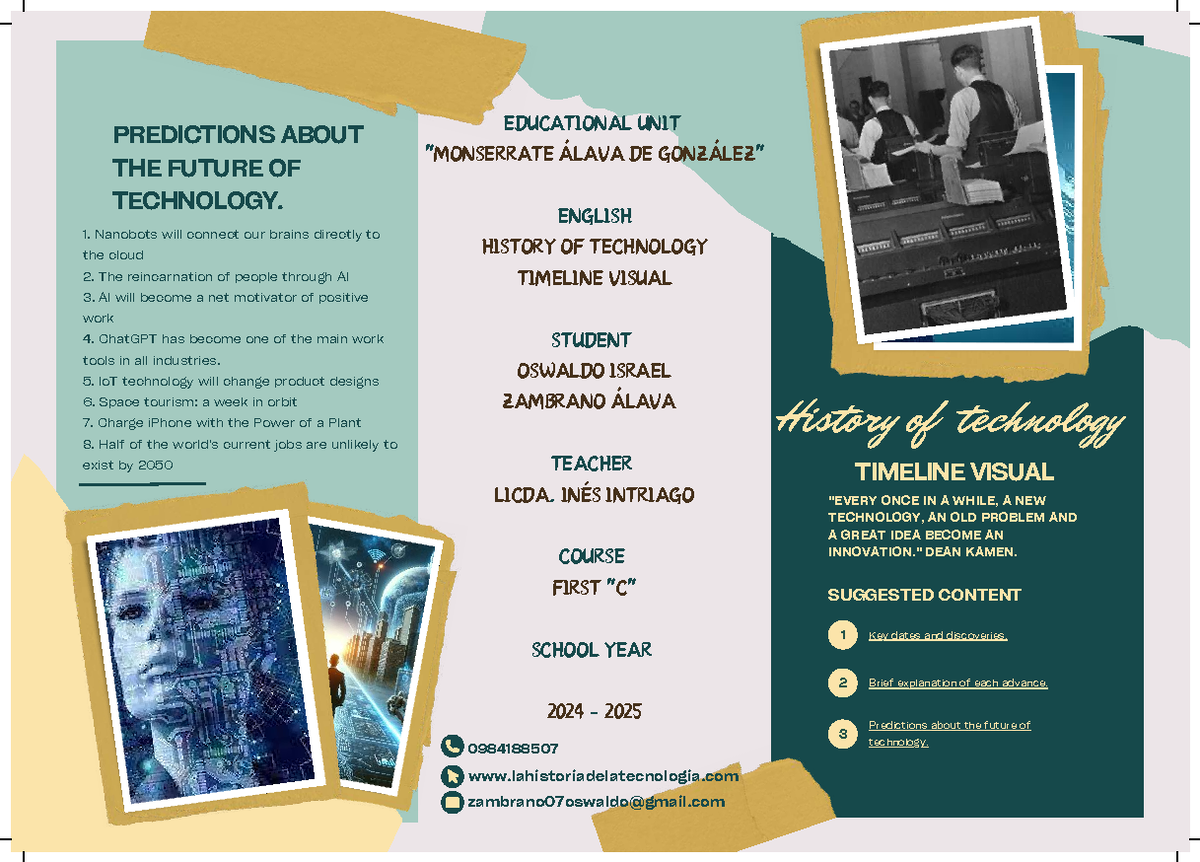
The evolution of technology spans from the first stone tools used by hominids millions of years ago to the sophisticated artificial intelligence and quantum systems of 2026. This timeline tracks the progression of human ingenuity, highlighting how foundational discoveries in energy, communication, and materials have fundamentally reshaped the human experience and continue to project our species toward a post-scarcity future.
The Foundations of Human Ingenuity: Pre-Industrial Innovation
The history of technology began not with silicon or steam, but with the manipulation of raw materials to extend biological capabilities. For hundreds of thousands of years, technology was synonymous with survival. The control of fire (approx. 1 million years ago) represents the first major energetic shift, allowing humans to unlock more calories from food and survive in diverse climates.
The transition to the Neolithic era introduced the most significant technological leap of the ancient world: agriculture and the wheel. Around 3500 BCE, the invention of the wheel in Mesopotamia revolutionized transport and pottery. This was followed by the Bronze and Iron Ages, where metallurgy allowed for the creation of durable tools and weapons, leading to the rise of complex civilizations.
Perhaps the most influential pre-industrial technology was the Gutenberg printing press (c. 1440). By automating the reproduction of text, it broke the monopoly of information held by the elite. This democratization of knowledge was the prerequisite for the Renaissance, the Scientific Revolution, and eventually, the Industrial Revolution. It established the principle that information technology is the primary driver of societal acceleration.
The Industrial Revolutions: From Steam to Electricity
The late 18th century marked the beginning of the First Industrial Revolution, defined by the transition from hand production methods to machines. James Watt’s improvements to the steam engine (1776) provided a reliable source of power that did not depend on wind or water. This era saw the birth of the factory system and the expansion of the railway, which compressed geographical distances for the first time.
The Second Industrial Revolution, often called the Technological Revolution (late 19th to early 20th century), introduced electricity, the internal combustion engine, and mass production. Thomas Edison and Nikola Tesla’s work on electrical grids fundamentally changed how humans lived, extending the productive day into the night.
Communication technology during this period moved at a blistering pace. The telegraph (1830s) allowed information to travel faster than a horse for the first time in history. This was followed by Alexander Graham Bell’s telephone (1876) and Guglielmo Marconi’s radio (1895). These inventions laid the groundwork for a globalized world, proving that as energy becomes more efficient, communication becomes more instantaneous.
The Digital Revolution and the Rise of Silicon
The mid-20th century saw a pivot from mechanical and analog technology to digital electronics. The invention of the transistor in 1947 at Bell Labs is arguably the most important technical milestone of the modern era. Transistors allowed for the miniaturization of electronic components, replacing bulky and unreliable vacuum tubes.
This era, known as the Third Industrial Revolution or the Digital Revolution, saw the birth of the personal computer and the internet.
- 1969: ARPANET, the precursor to the internet, sends its first message.
- 1971: The Intel 4004, the first commercially available microprocessor, is released.
- 1989: Tim Berners-Lee invents the World Wide Web, creating a standardized way to navigate the internet.
- 2007: The launch of the iPhone catalyzes the mobile computing era, making the internet a ubiquitous, "always-on" utility.
By the early 21s century, Moore’s Law—the observation that the number of transistors on a microchip doubles approximately every two years—held steady, leading to an exponential increase in computing power. This surge enabled the processing of "Big Data," which would eventually become the fuel for the next great leap: Artificial Intelligence.
The State of Technology in 2026: The Age of Autonomy
As of 2026, we have moved beyond the "Digital Revolution" into what many call the Age of Autonomy or the Fourth Industrial Revolution (4IR). The defining characteristic of 2026 is the integration of Agentic AI—artificial intelligence systems that do not just respond to prompts but can plan, reason, and execute complex tasks across multiple software environments autonomously.
Artificial Intelligence and Large World Models
In 2026, AI has transitioned from Large Language Models (LLMs) to Large World Models (LWMs). These systems understand physical laws and spatial relationships, enabling more robust robotics and autonomous vehicles. AI is now deeply embedded in the scientific method, accelerating drug discovery and materials science at a rate previously thought impossible.
Energy and Sustainability
The global energy mix in 2026 shows a significant shift toward "electrification of everything." Next-generation solid-state batteries are beginning to enter the high-end EV market, offering higher energy density and improved safety over traditional lithium-ion cells. Additionally, small modular reactors (SMRs) are receiving increased regulatory approval as a means to provide carbon-free baseload power to massive AI data centers.
Quantum Computing Progress
While universal fault-tolerant quantum computers are still a work in progress, 2026 marks the era of "Quantum Utility." Companies are using noisy intermediate-scale quantum (NISQ) devices to optimize supply chains and simulate molecular interactions that were computationally expensive for classical supercomputers.
Major Technological Milestones and Their Impact
| Era | Primary Innovation | Societal Impact | Long-term Legacy |
|---|---|---|---|
| Ancient | The Wheel (3500 BCE) | Revolutionized trade and transport. | Foundation of mechanical engineering. |
| Renaissance | Printing Press (1440) | Democratized knowledge and literacy. | Started the information age. |
| Industrial | Steam Engine (1776) | Shifted labor from humans to machines. | Urbanization and mass production. |
| Electrical | The Transistor (1947) | Enabled miniaturization of electronics. | The basis for all modern computing. |
| Information | World Wide Web (1989) | Created a global, instant information network. | Globalized the economy and culture. |
| Autonomous | Agentic AI (2024-2026) | Automation of cognitive tasks. | Potential for post-scarcity economy. |
Future Projections: 2027 to 2050 and Beyond
The trajectory of technology suggests that the next few decades will be defined by the convergence of biology, computing, and space exploration.
Artificial General Intelligence (AGI) and Beyond
Experts predict that the window for achieving Artificial General Intelligence—where a machine can perform any intellectual task a human can—will likely open between 2028 and 2035. The arrival of AGI would represent a "singularity" event, where the pace of technological growth becomes so rapid that it is difficult for current human systems to predict or regulate.
Biotechnology and Human Augmentation
The use of CRISPR-Cas9 and subsequent gene-editing technologies is expected to move from treating rare diseases to more broad applications in human longevity. By the 2030s, "bio-digital" interfaces, such as advanced neural links, may allow for direct communication between the human brain and external computing systems, potentially evolving the way humans learn and communicate.
Space Colonization and the Multi-Planetary Future
With the success of reusable rocket technology pioneered in the early 2020s, the cost of reaching orbit has plummeted. By the late 2030s, the establishment of permanent lunar bases is a high-probability milestone, serving as a staging ground for the first crewed missions to Mars. This shift represents the transition of humanity from a single-planet species to a multi-planetary one.
Fusion Energy
The "holy grail" of energy—nuclear fusion—has seen significant breakthroughs in magnetic confinement and laser ignition in recent years. By 2040, the first commercial fusion pilot plants are expected to come online, promising a nearly limitless source of clean energy with minimal waste, effectively solving the global energy crisis and enabling energy-intensive projects like large-scale carbon capture.
Critical Challenges and Ethical Considerations
The rapid pace of technological advancement is not without significant risks. As we look toward the future, several critical "bottlenecks" and dangers must be addressed:
- AI Alignment: Ensuring that autonomous systems act in accordance with human values and do not pursue goals that result in unintended harm.
- Digital Divide: The risk that advanced technologies, particularly life-extension and cognitive enhancements, will only be available to the wealthy, creating a biological caste system.
- Cybersecurity in a Quantum World: As quantum computers become more powerful, they threaten to break current encryption standards, requiring a global transition to post-quantum cryptography.
- Resource Scarcity: While technology can solve many problems, the production of high-tech hardware requires rare earth elements, the mining of which has significant environmental and geopolitical implications.
The International Energy Agency (IEA) and World Economic Forum frequently update their frameworks for managing these transitions, emphasizing that technology must be steered by policy to ensure equitable outcomes.
Frequently Asked Questions
What is the most important technology ever invented?
While subjective, many historians point to the printing press or the transistor. The printing press allowed for the storage and transmission of knowledge across generations, while the transistor enabled the automation of logic and the creation of the digital world we live in today.
When will AI surpass human intelligence?
In the context of 2026, we already see AI surpassing humans in specific domains like data analysis, coding, and medical diagnostics. Full Artificial General Intelligence (AGI) is projected by many researchers to be achieved within the next 5 to 15 years, though definitions of "intelligence" vary.
Is fusion energy actually possible for commercial use?
Yes, experimental results from facilities like the National Ignition Facility and progress on the ITER project have proven that "net energy gain" is physically possible. The remaining challenges are primarily engineering-related—specifically, building materials that can withstand the extreme heat and radiation of a sustained fusion reaction.
How has technology impacted the environment?
Technology has historically been a driver of carbon emissions through the burning of fossil fuels. However, in 2026, technology is also the primary tool for environmental restoration. High-efficiency solar cells, carbon capture systems, and satellite-based methane monitoring are essential for meeting climate goals.
What will the world look like in 2050?
By 2050, if current trends continue, the world will likely be powered by a mix of renewables and fusion, with AI handling most manual and administrative labor. Human life expectancy may increase significantly through biotech, and the first "space economy" involving lunar mining and orbital manufacturing will likely be operational.
Practical Recommendations for Navigating the Future
To stay relevant in an era of exponential technological change, individuals and organizations should focus on technological literacy and adaptability. Rather than mastering a single tool, the goal should be to understand the underlying logic of systems—such as how AI agents function or how decentralized networks operate.
Invest in "future-proof" skills that AI still struggles with: complex empathy, high-level strategic planning, and interdisciplinary problem-solving. Stay informed by following reputable scientific journals and technical standards bodies like the IEEE or ACM. The future belongs not to those who fear automation, but to those who learn to orchestrate it.