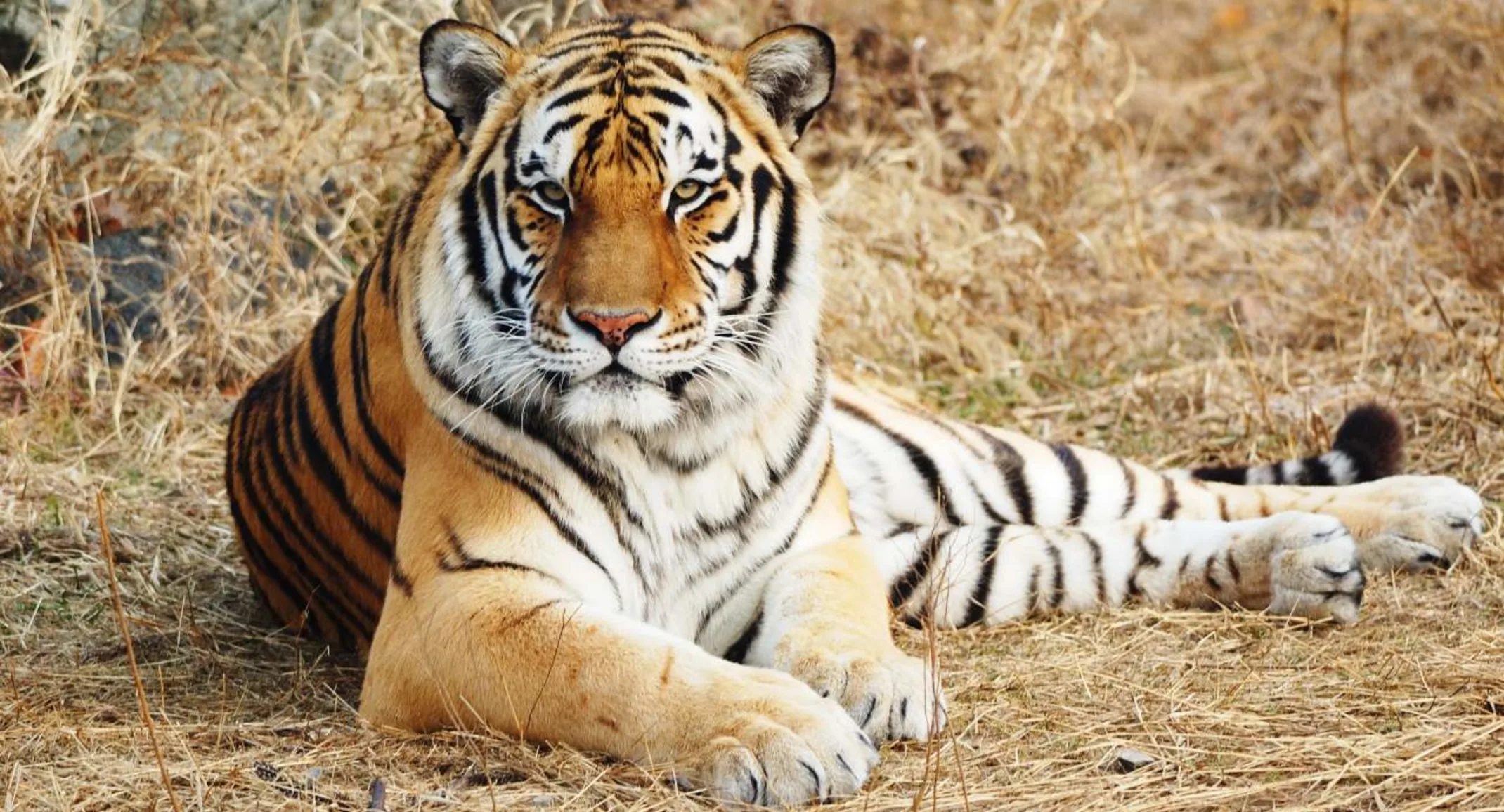
Tigers are obligate carnivores, meaning their biological design, metabolic requirements, and digestive systems require a diet consisting exclusively of animal flesh. They cannot survive on plant matter, as their bodies lack the necessary specialized organs and microbial flora to break down and extract nutrients from vegetation.
To understand why tigers occupy the apex of their food webs, it is necessary to examine their taxonomy, anatomy, evolutionary history, and ecological role. While plant life forms the foundational trophic level of terrestrial ecosystems, sustaining primary consumers like deer and wild boar, tigers operate several steps higher as top-tier predators. This comprehensive guide explores the dietary classification of tigers, addressing the physiological, ecological, and behavioral realities that separate them entirely from herbivores.
Zoological Classification: What is an Obligate Carnivore?
In the hierarchy of nutritional science and zoology, animals are categorized based on their primary food sources. Herbivores consume plants, algae, and photosynthesizing bacteria. Omnivores consume both plant and animal matter. Carnivores consume other animals. Within the carnivorous category, scientists distinguish between facultative carnivores—such as dogs and bears, which can incorporate plant material into their diets to varying degrees—and obligate (or hyper) carnivores.
Tigers (Panthera tigris) belong to the family Felidae, all members of which are obligate carnivores. This specialization is not merely a matter of behavioral preference; it is an absolute physiological necessity dictated by millions of years of mammalian evolution. Hyper-carnivores obtain 70% or more of their energy and nutritional intake from the meat of other animals. For tigers, this percentage approaches 100%.
The evolutionary trade-off for this specialized diet is the loss of metabolic pathways that other animals take for granted. Because their ancestral lineage has consumed meat almost exclusively for millennia, tigers have lost the genetic capability to synthesize certain essential nutrients independently. Instead, they must ingest these nutrients in their pre-formed states directly from the tissues of other animals.
Physiological and Anatomical Adaptations for Predation
Every aspect of a tiger's physical anatomy is fine-tuned for capturing, killing, and processing animal prey. Unlike herbivores, which feature flat, grinding molars and specialized digestive tracts designed to ferment cellulose, tigers possess physical traits optimized for absolute carnivory.
Cranial and Dental Morphology
A tiger's skull and jaw structure are engineered to deliver lethal force to large prey.
- Canine Teeth: Tigers possess long, conical canines that can measure up to three inches in length. These teeth are equipped with specialized pressure receptors that allow the tiger to locate the vital spots on prey, such as the windpipe or the back of the neck, to deliver a suffocating bite or sever the spinal cord.
- Carnassial Teeth: Unlike humans or herbivores, which use flat molars to crush seeds, grains, and leaves, tigers have specialized shearing teeth known as carnassials. The upper last premolar and lower first molar slide past each other like the blades of scissors, allowing the tiger to slice through tough skin, tendons, and muscle with ease.
- Jaw Muscles: The sagittal crest on top of the skull provides a massive anchor point for the temporalis muscles, giving tigers an exceptionally powerful bite force relative to their body size.
Digestive Tract Specialization
Plant cell walls are composed of cellulose and lignin, substances that are notoriously difficult to break down. Herbivores like cows, horses, and elephants rely on enormously complex digestive systems—often featuring multi-chambered stomachs or specialized hindguts populated by symbiotic bacteria—to ferment and digest plant matter over long periods.
Tigers possess simple, short digestive tracts. Meat is nutrient-dense and chemically straightforward to break down compared to vegetation, requiring far less time and surface area to digest. A tiger’s digestive tract is roughly three to four times the length of its body, whereas a herbivore's gut can be ten or more times its body length. A short digestive tract ensures that rapidly decaying animal matter passes through the system quickly, minimizing the risk of bacterial toxins building up in the body.
| Feature | Tigers (Obligate Carnivores) | Herbivores (e.g., Deer, Cattle) |
|---|---|---|
| Primary Diet | Meat, organs, and tissue of other animals | Grasses, leaves, bark, and seeds |
| Dental Structure | Sharp canines and shearing carnassials; flat grinding molars absent | Broad, flat molars optimized for grinding tough plant fibers |
| Digestive Tract Length | Short (approx. 3-4x body length) | Long and complex (up to 10-20x body length) |
| Gut Fermentation | Minimal; rapid digestion of proteins and fats | Extensive foregut or hindgut fermentation via symbiotic microbes |
| Nutrient Synthesis | Cannot synthesize key vitamins/amino acids independently | Synthesizes many essential compounds from plant digestion |
Nutritional Requirements: Why Plant Matter Cannot Sustain a Tiger
The physiological dependence of tigers on meat comes down to specific biochemical requirements. Plant matter simply does not contain the complete suite of amino acids, fatty acids, and vitamins that a tiger's body requires to function, or it contains them in forms that feline metabolism cannot process.
Essential Amino Acids
Proteins are built from amino acids. While plants synthesize many amino acids, they often lack sufficient quantities of specific ones required by felines.
- Taurine: This sulfur-containing amino acid is critical for normal heart function, vision, and reproductive health. While omnivores and herbivores can synthesize taurine internally from precursor amino acids, cats have lost this ability. They must acquire taurine directly from animal flesh, particularly from muscle tissue like the heart and skeletal muscles, as well as the brain and eyes. A taurine deficiency in felines leads to severe health issues, including dilated cardiomyopathy and central retinal degeneration.
- Arginine: Arginine is essential for the urea cycle, which allows animals to detoxify ammonia produced by protein breakdown. Cats are so sensitive to arginine deficiency that a single meal devoid of it can induce hyperammonemia, resulting in severe neurological symptoms, vomiting, and potentially rapid death.
Essential Fatty Acids and Vitamins
Tigers also rely on pre-formed animal fats and vitamins that are absent or poorly represented in the plant kingdom:
- Vitamin A: Herbivores can convert beta-carotene (found in plants) into active Vitamin A in their intestines. Tigers lack the necessary intestinal enzyme (dioxygenase) to make this conversion. They must ingest pre-formed Vitamin A, which is found abundantly in the liver and organ meats of herbivores.
- Arachidonic Acid: This polyunsaturated fatty acid is essential for regulating inflammation and maintaining cell membrane integrity. Like Vitamin A, felines cannot synthesize arachidonic acid from plant-based precursors and must obtain it directly from animal fats.
What Do Tigers Eat in the Wild?
As apex predators throughout their range—spanning from the Siberian taiga to the mangrove forests of the Sundarbans and the tropical jungles of Southeast Asia—tigers target a wide variety of prey depending on local availability.
Their diet consists primarily of large and medium-sized ungulates (hoofed mammals). Common prey species include:
- Sambar deer and Chital (spotted deer): Frequently hunted across the Indian subcontinent.
- Wild boar: A staple prey item across most of the tiger's historical and contemporary range.
- Cervids and bovids: Including swamp deer, barking deer, nilgai, and gaur (the world's largest wild cattle, which healthy adult tigers are capable of bringing down).
- Smaller prey: When large ungulates are scarce, tigers will opportunistically hunt smaller animals, including hares, porcupines, peafowl, and even fish or freshwater crabs. In rare instances, elderly or injured tigers may target livestock, leading to human-wildlife conflict.
A single tiger requires roughly 50 to 60 deer-sized prey animals per year to meet its energetic demands. An adult tiger can consume up to 30 to 40 kilograms of meat in a single feeding after a successful hunt, though it may then go several days without food while tracking new prey.
Do Tigers Ever Eat Plants?
Given that tigers are strictly carnivorous, observers are occasionally surprised to see captive or wild tigers chewing on grass or other vegetation. This behavior does not mean the tiger is deriving nutritional value from the plants or transitioning toward herbivory.
Instead, zoologists and veterinarians generally attribute plant consumption in big cats to a few specific behaviors:
- Emetic Aid: Eating grass or fibrous plant matter can irritate the lining of the stomach and induce vomiting, helping the tiger expel indigestible components of a recent meal, such as hair, feathers, bone chips, or internal parasites.
- Behavioral Enrichment: In captivity, big cats often interact with non-toxic plants (such as catnip, wheatgrass, or bamboo) as a form of sensory enrichment to alleviate boredom or stress.
- Moisture Intake: In extremely dry environments or during periods of heat stress, animals may occasionally ingest succulent plant parts for moisture, though this is rare for tigers, which prefer drinking fresh water directly from rivers, streams, and pools.
Even when these instances occur, the ingested plant material passes through the tiger's digestive tract largely undigested and contributes virtually nothing to its caloric or nutritional intake.
Ecological Impact and Trophic Dynamics
Understanding that tigers are carnivores highlights their critical role in maintaining the health of forest and grassland ecosystems. Through predation, tigers act as a keystone species.
By preying predominantly on herbivores, tigers help regulate the population densities of grazers and browsers. This top-down regulation prevents overgrazing, which in turn protects forest understories, riverbanks, and soil stability from severe degradation. When tiger populations decline or disappear due to poaching or habitat loss (a phenomenon known as an "ecosystem trophic cascade"), herbivore populations can surge, stripping vegetation bare, altering forest regeneration patterns, and ultimately collapsing the broader biodiversity of the habitat.
Thus, the strict carnivory of the tiger is not only a biological trait of the individual animal but a foundational mechanism that sustains entire ecological communities.
Conclusion
Tigers are unequivocally carnivores, specifically adapted as obligate hyper-carnivores whose survival depends entirely on the consumption of other animals. Their dental anatomy, shortened digestive tracts, and inability to synthesize essential amino acids, fatty acids, and vitamins from plant matter completely preclude any possibility of an herbivorous lifestyle. Recognizing these physiological limits underscores the importance of protecting wild prey populations and preserving the vast forest habitats required for these apex predators to hunt, survive, and maintain ecological balance.